PoolGearGuide

Best Robotic Pool Cleaners for Fiberglass Pools

By the PoolGearGuide editorial team · Updated 2026-07-03

Share

The best robotic pool cleaner for fiberglass pools is one that can grip a smooth shell, clean without grinding in one place, and handle fine dirt without making you babysit it like a toddler with a garden hose.

Fiberglass pools are usually smooth, pretty, and very good at making a tiny pile of dirt look like a crime scene. That means the best robot is not always the most aggressive one. It is the one that matches the surface, the debris, and the shape of the pool.

Key takeaways

  • Confirm the exact robot model is compatible with fiberglass or smooth pool surfaces before buying.
  • Traction and brush type matter more in fiberglass pools than they do in rougher pool finishes.
  • Fine filtration is important because pollen, sand, and dust are easy to see on a smooth shell.
  • Wall and waterline cleaning are useful, but only if the robot can grip your pool's curves and slope.
  • A lighter robot is often better if you will lift it over coping, steps, or a narrow equipment area.

Table of contents

What makes a robotic cleaner good for fiberglass pools?

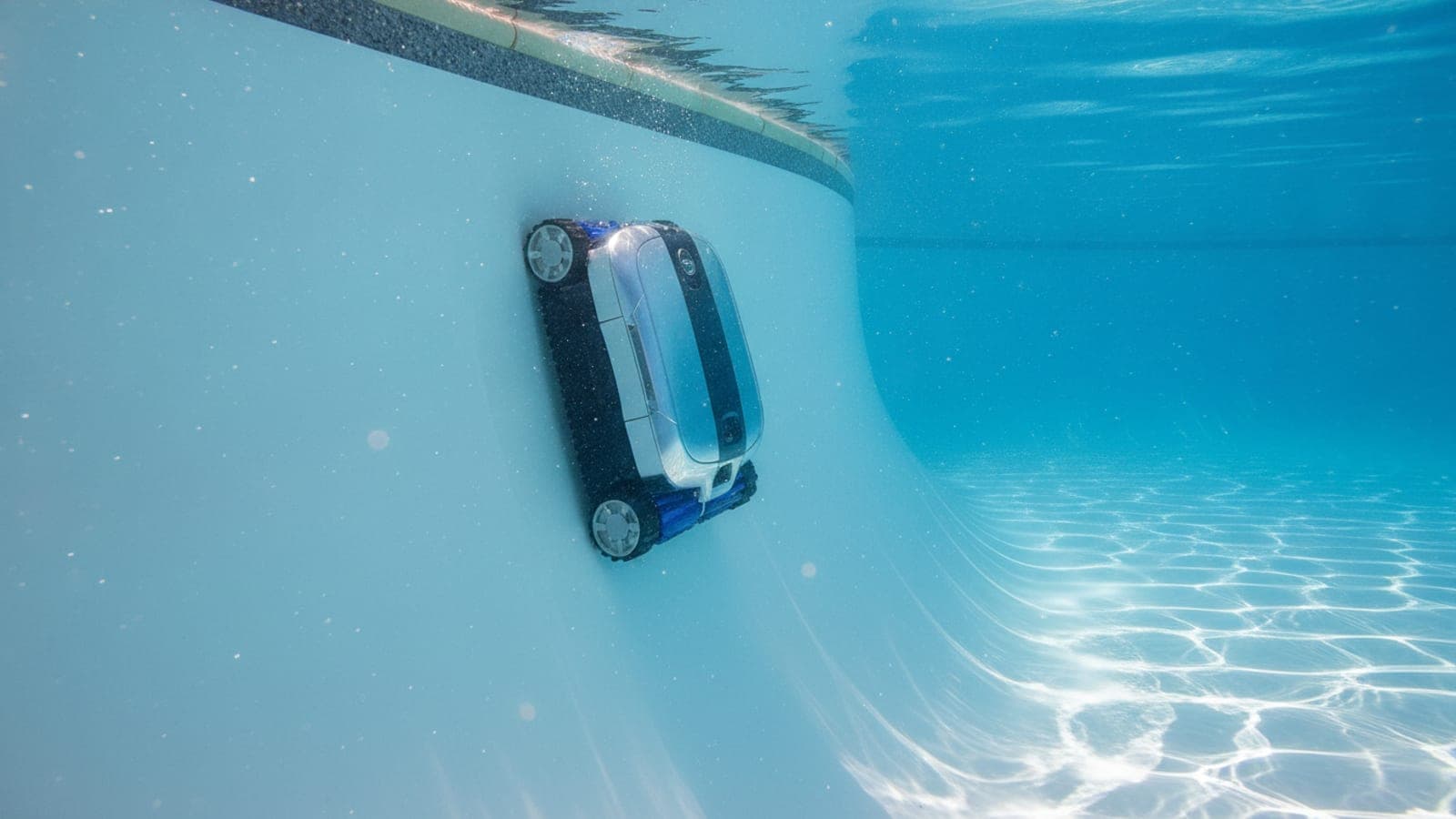
A good robotic cleaner for fiberglass pools has the right surface compatibility, enough traction for a smooth shell, and filters that can catch the fine stuff you actually notice. It should clean confidently without skidding, spinning, or doing that sad little dance in the deep end.

Fiberglass changes the buying decision because the surface is smoother than many plaster, concrete, or gunite pools. The robot needs to move correctly across curves, coves, benches, steps, and slopes.

Look for these checks:

  • Fiberglass compatibility: The product page, manual, or retailer should clearly say the model works with fiberglass.
  • Brush/traction design: Smooth surfaces need traction, not just suction claims.
  • Wall behavior: Some robots climb walls better than others, especially on slick surfaces.
  • Filter options: Fine filters help with dust, pollen, and small grit.
  • Pool size rating: Do not buy a small-pool robot for a long fiberglass pool and expect hero behavior.
  • Wet weight: If it is awful to lift, you will avoid using it.
  • Service parts: Brushes, tracks, filters, and power supplies should be available.

The buying mistake is choosing only by brand or price. Fiberglass owners need surface fit first, features second, and app screenshots somewhere near the bottom of the list.

Which specs matter most for fiberglass?

The most important fiberglass-pool specs are surface compatibility, brush type, traction, wall/waterline coverage, filter style, weight, and replacement-part availability. Suction numbers matter less if the robot cannot stay planted on the shell.

SpecWhy it matters in fiberglassWhat to publish on the page
Surface compatibilityPrevents guessing with the shellExact manufacturer or retailer language
Brush typeAffects grip and scrubbingStandard, combined, foam, or brand-specific brush note
Wall climbingFiberglass walls can be slickFloor-only, wall, or waterline coverage
Fine filtrationSmooth shells show dust clearlyIncluded filter and optional fine filter notes
Robot weightHeavy robots are annoying when wetWeight from official specs if available
Cable or batteryAffects convenience and retrievalCord length or battery/run-time note
WarrantyHelps compare real ownership riskWarranty length and authorized seller reminder

A fiberglass pool often benefits from a robot that can switch between debris loads. Leaves need a basket with room. Pollen and fine grit need tighter filters. The annoying part is that pools like to have both, because nature has a sense of humor.

This is where your site should push readers to the Pool Robot Finder. Ask for pool surface, debris type, pool size, budget, and cord preference. Then return a shortlist with disclosure-backed affiliate links.

Should a fiberglass pool cleaner climb walls?

A wall-climbing cleaner is worth considering for fiberglass pools that get waterline film, algae dust, sunscreen residue, or pollen lines. If your pool mostly gets dirt on the floor, a simpler floor-focused cleaner may be enough.

Wall climbing is not a trophy feature. It either solves a real cleaning problem or it is just another box checked on the product page.

Pool situationBetter robot choiceWhy
Small fiberglass pool with light dustLightweight floor cleanerEasier to use and store
Fiberglass pool with slippery wallsSurface-compatible wall climberBetter coverage if it can grip
Pool with visible waterline filmWaterline-capable modelTargets the scum line
Leaf-heavy backyardLarger basket modelDebris capacity matters more than app controls
Pollen and sand problemFine filter setupCaptures smaller particles

If a robot stops climbing, do not immediately buy a replacement. The problem can be dirty filters, worn brushes, wrong mode, slippery biofilm, or water chemistry. Link readers to Why Your Pool Robot Is Not Climbing Walls before they panic-shop at midnight.

What should you compare before buying?

Compare fiberglass robotic cleaners by surface fit, cleaning coverage, filtration, handling, and warranty. Do not let the comparison table become a beauty contest for app features.

Pick typeBest forMust-have checksWatch out for
Best overall fiberglass pickMost inground fiberglass poolsFiberglass compatibility, wall coverage, fine filtersExact model availability
Best lightweight pickSmaller fiberglass poolsLow wet weight, easy basket accessMay skip waterline cleaning
Best cordless pickSimple pool shapes and easy retrievalRuntime, parking/retrieval feature, surface compatibilityBattery aging and charge routine
Best for fine dirtPollen, sand, dustFine or ultra-fine filter optionFilters may clog faster
Best for leavesTrees near the poolLarger basket, easy cleanoutMay still need surface skimmer

[AFFILIATE_MODULE: fiberglass-pool-robot-shortlist]

  • Best overall research-based pick for fiberglass pools.
  • Best lightweight pick.
  • Best cordless pick.
  • Best for fine dirt.
  • Best for leaves.
  • Replacement fine filters.
  • Robot caddy or storage cover.

Place affiliate disclosure immediately above this module. Use both Amazon and specialty retailer buttons where available. Do not claim the site tested the products unless you actually have testing notes, photos, and measured results.

Which robot types are risky for fiberglass pools?

The riskiest robotic cleaner for a fiberglass pool is the one with unclear surface compatibility. A robot can have big suction, a dramatic product video, and enough buzzwords to fill a pool shed, and still be the wrong match for a smooth shell.

Be cautious with:

  1. Used robots with worn brushes or tracks.
  2. Models that do not list fiberglass compatibility.
  3. Robots that get stuck and spin in one spot.
  4. Heavy units that are hard to retrieve without scraping.
  5. Floor-only models sold as if they clean the whole pool.
  6. Any cleaner used while the pool has loose fittings, sharp debris, or damaged gel coat.

Fiberglass pools can also have built-in benches, tanning ledges, and curves. Many robots will not clean every step or shelf perfectly. Say that plainly. A robot can be excellent and still not replace a brush in every corner.

What does a real fiberglass pool buying scenario look like?

Say the reader has a 14-by-30 fiberglass pool with a few curves, two benches, and pollen that settles overnight. They do not need the most aggressive robot on the shelf. They need a surface-compatible cleaner with fine filtration, easy retrieval, and enough wall ability to handle the sides without slipping constantly.

A good shortlist might look like this:

  • A reliable corded wall climber if they want routine cleaning and do not mind managing a cable.
  • A cordless model if the pool shape is simple and they value easy storage.
  • A larger basket model if trees dump leaves into the pool every week.
  • A fine-filter accessory if the main problem is dust and pollen, not big debris.

The takeaway: buy for the actual mess. Leaves, pollen, and sand need different strengths. Buying the fanciest robot without naming the mess is how people end up with a very expensive pool pet.

What affiliate products belong on this page?

The affiliate products should help the reader solve the fiberglass-pool problem, not just fill space under a heading. This page can earn without feeling pushy if every module has a job.

Useful product modules:

  • Fiberglass-compatible robotic pool cleaner shortlist.
  • Fine and ultra-fine replacement filters.
  • Leaf canister or larger basket options where model-specific.
  • Robot caddy or storage stand.
  • Gentle wall brush for steps and benches.
  • Test kit for diagnosing slippery wall film before blaming the robot.

Add a short note above the product section:

We may earn a commission if you buy through these links. We only include products that fit the job described on this page, and you should confirm compatibility with your exact pool before buying.

This guide should act as a hub for fiberglass pool owners, not a lonely article floating in the deep end.

Link naturally to:

This internal-link pattern helps the reader move from surface type to debris type to final product shortlist.

Source notes

Manufacturer pages and support resources should be used to confirm surface compatibility, brush guidance, warranty ranges, and model-specific specifications. Maytronics notes that pool surface should be considered when choosing a robotic cleaner, and its support guidance discusses brush compatibility for surfaces including fiberglass. Aiper lists applicable pool materials for specific Scuba models, including fiberglass on some product pages. Always verify the exact model before publishing a product card.

External source URLs used for verification:

Frequently asked questions

Can you use a robotic pool cleaner in a fiberglass pool?

Yes, many robotic pool cleaners can be used in fiberglass pools, but you should confirm the exact model is compatible with fiberglass and smooth pool surfaces before buying. Brush type, traction, weight, and wall behavior matter.

What is the best robotic pool cleaner for fiberglass pools?

The best robotic pool cleaner for a fiberglass pool is one that lists fiberglass compatibility, has enough traction for smooth surfaces, includes fine filtration, and is easy to lift without scraping the shell. The best model depends on pool size, debris, and whether you need wall and waterline cleaning.

Why do some pool robots struggle in fiberglass pools?

Fiberglass can be smoother and more slippery than rough plaster or gunite. A robot may struggle if the brushes are wrong, the filters are clogged, the pool has slippery film, or the model is not designed for that surface.

Should a fiberglass pool robot climb walls?

Wall climbing is useful if the pool walls collect film, pollen, or algae, but it is not mandatory for every fiberglass pool. A small or simple pool may be fine with a floor-focused cleaner.

Do fiberglass pools need fine filters?

Fine filters are helpful because fiberglass pools often show dust, pollen, and fine sediment clearly against the smooth shell. Leaf-heavy pools may need a larger debris basket plus optional fine filters.

The weekly skim

One short email a week: what to test, what to buy, and what to skip. No daily drip. Unsubscribe anytime.

Keep reading