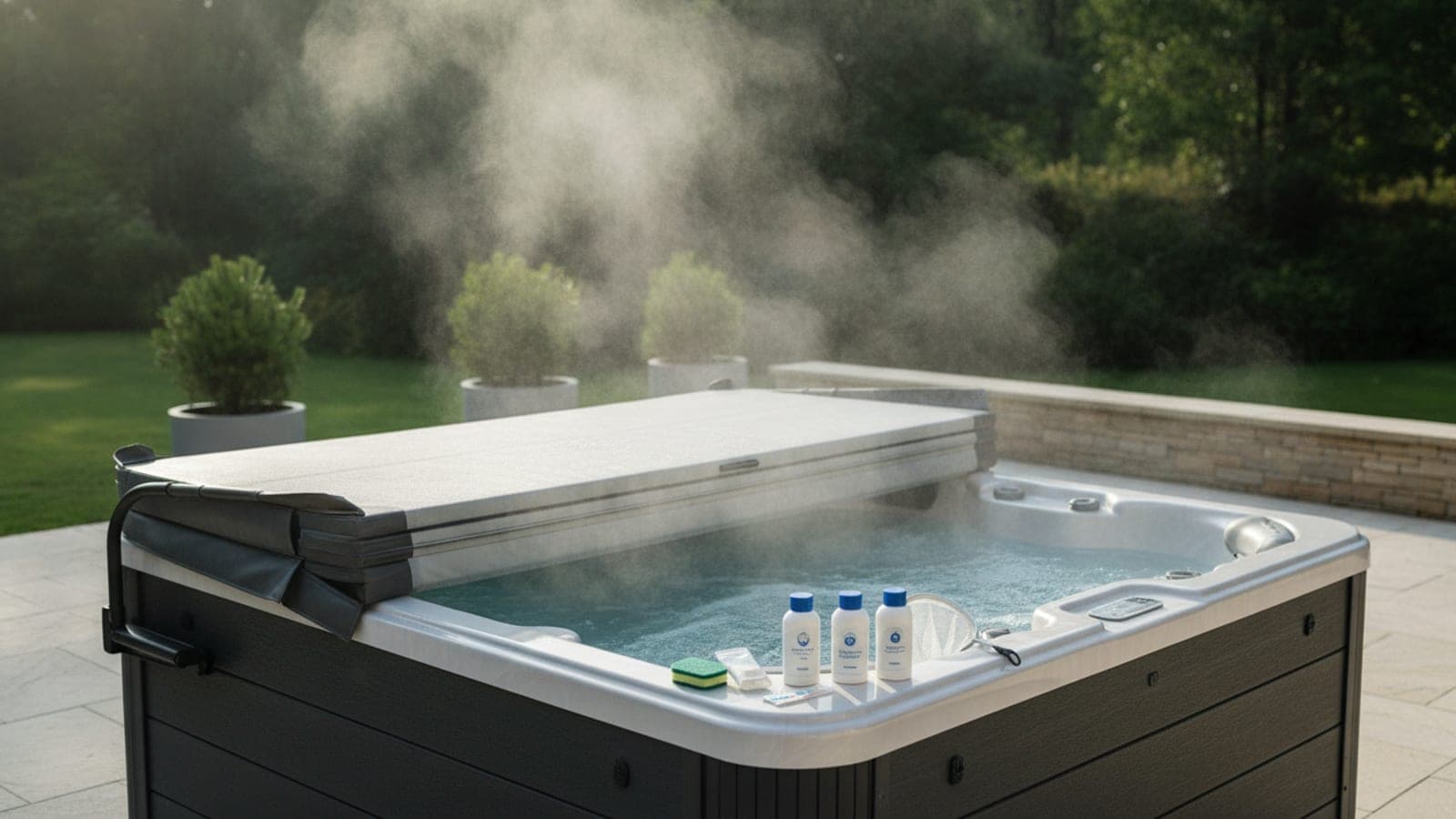
Hot tub maintenance for beginners is mostly four habits: test the water, keep sanitizer in range, clean the filter, and drain/refill before the water turns into soup with feelings. You do not need to become a chemist. You do need a routine.
Key takeaways
-
Test before soaking until you know your tub’s normal rhythm.
-
Keep sanitizer and pH in range before people get in, not after.
-
Clean filters regularly because hot tubs are tiny warm pools with a lot of body oil per gallon.
-
Add chemicals one at a time, with the cover open, following the product label.
-
If the water smells bad, foams constantly, looks cloudy, or irritates skin, stop soaking and fix the water first.
What does hot tub maintenance include?
Hot tub maintenance includes water testing, sanitizer management, pH control, filter cleaning, surface cleaning, cover care, and periodic draining. The whole job is smaller than pool maintenance, but the water is warmer and the volume is much lower, so mistakes show up faster.
A hot tub is basically a tiny warm pool full of jets, people, lotions, sweat, hair products, and the occasional person who says “I rinsed off” with the confidence of a courtroom witness. That is why the routine matters.
The beginner routine is:
- Test water.
- Adjust sanitizer if needed.
- Adjust pH if needed.
- Rinse or clean the filter.
- Keep the cover clean and working.
- Drain and refill before water gets stubborn.
Do not make it complicated at first. Start with the basics and get consistent.
What numbers should beginners check first?
Check sanitizer and pH first because they tell you whether the water is ready for people. Alkalinity matters too because it helps pH stay steadier.
CDC recommends pH 7.0–7.8 and at least 3 ppm chlorine in hot tubs. CDC also advises not using cyanuric acid or stabilized chlorine products with cyanuric acid in hot tubs. For public hot tub guidance, CDC lists bromine at 4–8 ppm, and many residential spa products follow similar label-based ranges.
Use your product label and test kit for dosing, but this is the beginner priority list:
| Number | Why it matters | Beginner action |
|---|---|---|
| Sanitizer | Helps control germs | Do not soak if too low |
| pH | Affects comfort and sanitizer performance | Adjust slowly |
| Total alkalinity | Buffers pH movement | Fix when pH keeps drifting |
| Calcium hardness | Helps protect surfaces/equipment | Check after fills and occasionally |
| Water clarity | Safety and comfort signal | Do not ignore cloudy water |
If the water looks cloudy, smells strange, or feels irritating, do not rely on vibes. Test it.
Use the safe-to-swim checker as a simple front-end tool for readers entering pH, sanitizer, and clarity.
Should you use chlorine or bromine?
Use chlorine if you want a common, fast sanitizer system. Use bromine if you want a sanitizer that many hot tub owners like for warm water and steadier soaking routines. Either system can work if you follow the label and test consistently.
| Sanitizer | Good fit | Watch out for |
|---|---|---|
| Chlorine | Simple, common, fast acting | Can drop faster in hot water; avoid stabilized chlorine with CYA in hot tubs per CDC guidance |
| Bromine | Popular for hot tubs, often steadier | Usually needs a feeder or routine; may cost more |
| Mineral systems | Can support sanitizer routine | Does not replace sanitizer/testing |
| Ozone/UV | Can support water care | Still requires sanitizer residual |
The biggest beginner mistake is switching products every time the water acts weird. Pick a system, read the label, and give the routine a fair chance.
Also, never mix chlorine and bromine products dry or in the same container. Store chemicals separately, dry, and away from heat. The pool chemical safety guide should be linked near every chemical recommendation.
What is the simple weekly hot tub routine?
A simple weekly routine keeps the water from becoming a tiny science fair. Test often, clean the filter, wipe the waterline, and correct small issues before they get loud.
Before each soak or several times per week
- Test sanitizer and pH.
- Confirm the water is clear.
- Make sure the temperature is safe.
- Check that the cover is secure when not in use.
Weekly
- Rinse the filter.
- Wipe the waterline.
- Check alkalinity if pH has been drifting.
- Shock if the product system calls for it.
- Check sanitizer supply.
- Look for foam, odor, cloudy water, or slimy surfaces.
Monthly or as needed
- Deep-clean the filter.
- Inspect the cover for damage and waterlogging.
- Clean around the cabinet and equipment area.
- Review whether the water is still easy to balance.
Every few months or as needed
- Drain and refill.
- Clean the shell.
- Replace filters if worn.
- Reset the routine with fresh water.
This can be turned into a checklist component at the top of the article.
Inputs: sanitizer type, usage frequency, number of bathers, covered/uncovered location.
Output: weekly checklist, refill reminder, shopping list.
How do you clean the hot tub filter?
Clean the filter because it is catching the stuff you do not want to soak in. A dirty filter can cause cloudy water, weak flow, poor heating, and sanitizer frustration.
Basic filter routine:
- Turn off power if your manual requires it.
- Remove the filter cartridge.
- Rinse between pleats with a hose.
- Use filter cleaner when oils or grime remain.
- Let it dry if rotating between two filters.
- Replace if pleats are crushed, torn, greasy, or permanently stained.
Do not blast the filter with a pressure washer unless the manufacturer says it is acceptable. That can damage the media and turn a cleaning attempt into a replacement order.
A helpful affiliate module here is replacement filters plus filter cleaner. Make sure the product cards are compatible with the user’s spa model. Random “universal” filters can become very non-universal when the package arrives.
When should you shock a hot tub?
Shock a hot tub when your sanitizer system calls for it, after heavier use, after water looks dull, or when combined contaminants build up. Shock is not a personality. It is a tool.
Common times to shock:
- After several people use the tub
- After a party
- When water looks dull or smells off
- After refilling, if the startup routine calls for it
- When sanitizer readings are stubborn
- As part of a weekly routine, depending on your product system
Follow the product label. Keep the cover open while gases clear if the label says so. Test before soaking again.
Do not use shock as a substitute for draining water that is past saving. At some point, fresh water is not surrender. It is mercy.
When should you drain and refill?
Drain and refill when the water becomes hard to manage, feels unpleasant, foams constantly, smells strange, or no longer responds normally to testing and adjustments. Heavy use shortens the interval.
Beginner signs it is time:
- Water stays cloudy after filter cleaning and sanitizer correction
- Foam keeps returning
- Strong odor persists
- pH is difficult to control
- Surfaces feel slimy
- The tub has had heavy use
- You cannot remember the last refill
A drain/refill routine should include:
- Turning off power according to the manual
- Draining safely
- Cleaning the shell
- Cleaning or replacing filters
- Refilling through the recommended area if the manual says so
- Balancing alkalinity and pH
- Establishing sanitizer before soaking
Link this section to hot tub maintenance for beginners if it is used as a standalone excerpt elsewhere.
What beginner mistakes cause most hot tub drama?
Most beginner problems come from guessing, skipping tests, overcorrecting, and treating a hot tub like a small bathtub instead of a small pool.
Avoid these mistakes:
- Adding chemicals without testing
- Adding multiple products at once
- Closing the cover immediately when the product says to leave it open
- Letting sanitizer hit zero
- Ignoring dirty filters
- Using pool products that are not labeled for spas
- Using stabilized chlorine with CYA in hot tubs despite CDC guidance
- Storing chemicals where they get damp
- Letting kids access the tub unsupervised
- Treating smell as normal
The smell point matters. A strong “chemical” smell is often a sign the water needs attention, not proof it is extra clean.
What should beginners buy first?
Beginners should buy a small, useful starter kit. Do not buy the entire chemical aisle before you know your sanitizer system.
What you need
- Spa test strips or a reliable drop kit
- Chlorine or bromine sanitizer
- pH increaser
- pH decreaser
- Alkalinity increaser
- Compatible spa shock
- Replacement filter cartridge
- Filter cleaner
- Clean measuring cup if product label allows measuring
- Dry chemical storage bin
- Gloves and eye protection for handling chemicals
- Spa test strips/drop kit
- Chlorine or bromine sanitizer
- pH increaser/decreaser
- Alkalinity increaser
- Spa shock
- Replacement filters
- Filter cleaner
- Gloves and goggles
Disclosure: We may earn a commission when you buy through our links.
This page should not recommend specialty products until the reader understands the basics. Stabilize the routine first. Fancy water-care gadgets can come later.
What is the practical answer?
Hot tub maintenance for beginners is not about memorizing chemistry. It is about testing often, keeping sanitizer and pH in range, cleaning the filter, and draining/refilling before the water becomes difficult.
Start with one sanitizer system. Follow the labels. Do not mix products. Keep the cover secure. Test before soaking. Clean the filter. When the water fights you for too long, drain it and begin again.
That is the whole beginner plan. The hot tub should be relaxing. The maintenance routine should not feel like you are defusing a warm backyard bomb.
Frequently asked questions
How often should beginners test hot tub water?
Test before soaking and several times per week at minimum. Test more often when the tub is used heavily, after parties, after refilling, and whenever the water looks or smells off.
What pH should a hot tub be?
CDC recommends pH 7.0–7.8 for home pools and hot tubs. Many product labels and test kits use a narrower ideal range, so use your product label for dosing decisions.
Should I use chlorine or bromine in a hot tub?
Both can work. Chlorine is common and fast, while bromine is popular in hot tubs because it can feel steadier in warm water. Follow the sanitizer system and product labels you choose.
How often should I clean a hot tub filter?
Rinse the filter regularly and deep-clean it based on use and the manufacturer's instructions. Replace it when it stays dirty, collapses, smells bad, or no longer maintains good flow.
When should I drain and refill a hot tub?
Drain and refill based on use, water quality, product instructions, and total dissolved solids. Heavy use and persistent cloudy or foamy water usually shorten the interval.