
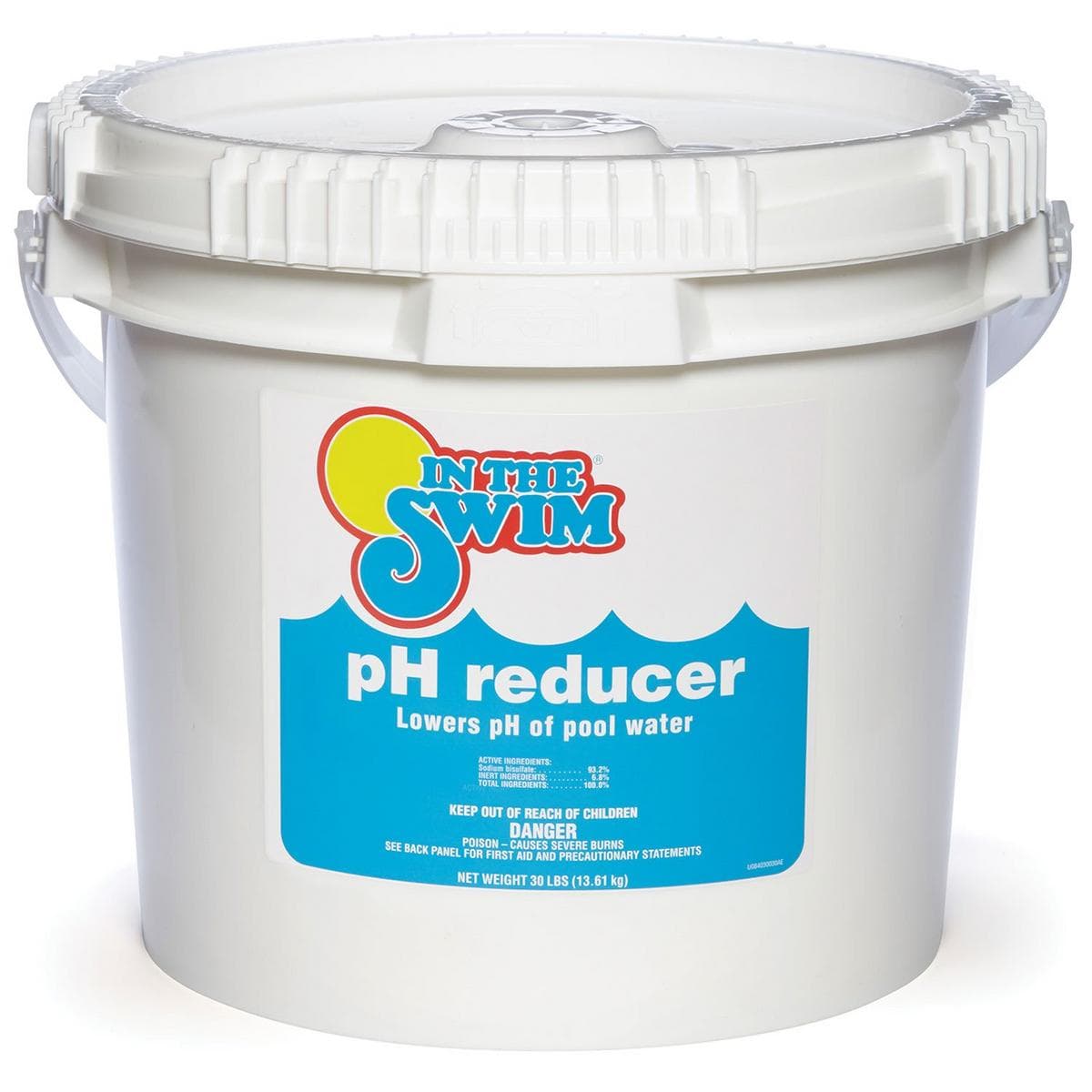
Quick verdict
The safer, granular way to lower pH versus liquid muriatic acid. Handle it carefully and dose gradually — it drops alkalinity too.
Ideal for
- Pools testing above 7.8 pH
- Salt pools (which tend to drift high)
- Owners who’d rather not handle liquid muriatic acid
Not ideal for
- Raising pH (use pH Increaser)
- Pools already balanced
The full picture
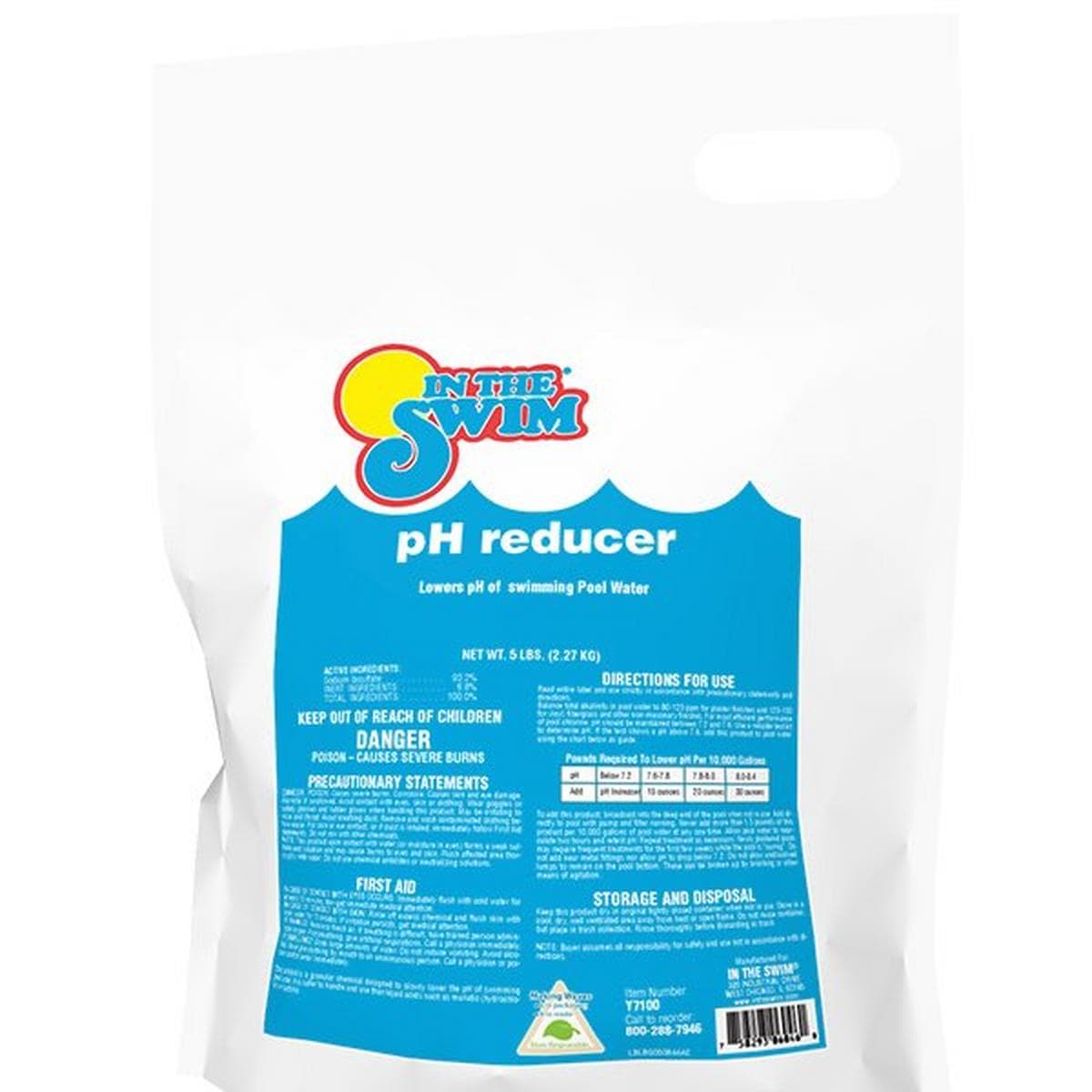
High pH makes chlorine sluggish and encourages scale and cloudy water, and it's one of the most common readings on a test kit — especially on salt pools and after adding soda ash. In The Swim pH Reducer is 90% sodium bisulfate (dry acid), a granular alternative to liquid muriatic acid that's far easier and safer to store and handle. It lowers both pH and total alkalinity, so use it thoughtfully when you're chasing one without tanking the other. Pre-dissolve or broadcast slowly with the pump running, and retest before adding more. A must-have staple that pairs with pH Increaser as the two halves of pH control.
In The Swim pH Reducer (Sodium Bisulfate, 30 lb) at a glance
- Type
- pH reducer / dry acid (lowers pH & alkalinity)
- How often
- As needed when pH is high
- Size / volume
- 30 lb
- Active ingredient
- 90% sodium bisulfate (dry acid)
- Coverage
- ~1.25 lb per 10,000 gal lowers pH modestly — dose gradually and retest
- Compatible pools
- All pool types, including salt
- Safety
- Acidic — wear gloves/eye protection, add slowly to water, never mix with chlorine or other chemicals.
- Storage
- Store cool, dry, sealed, and far from chlorine/oxidizers.
Source: Compiled from manufacturer specifications, label directions, industry practice, and aggregated owner feedback. Follow label instructions; specs and prices change — confirm before buying.
This is a research-based review — our analysis draws on manufacturer specifications, manuals, warranty terms, and verified owner feedback rather than our own hands-on testing, and we note where a detail couldn't be confirmed. How we review
The in-depth review
High pH makes chlorine sluggish and invites scale and cloudy water — and it's one of the most common test-kit readings, especially on salt pools. In The Swim pH Reducer is the fix.
How to use it
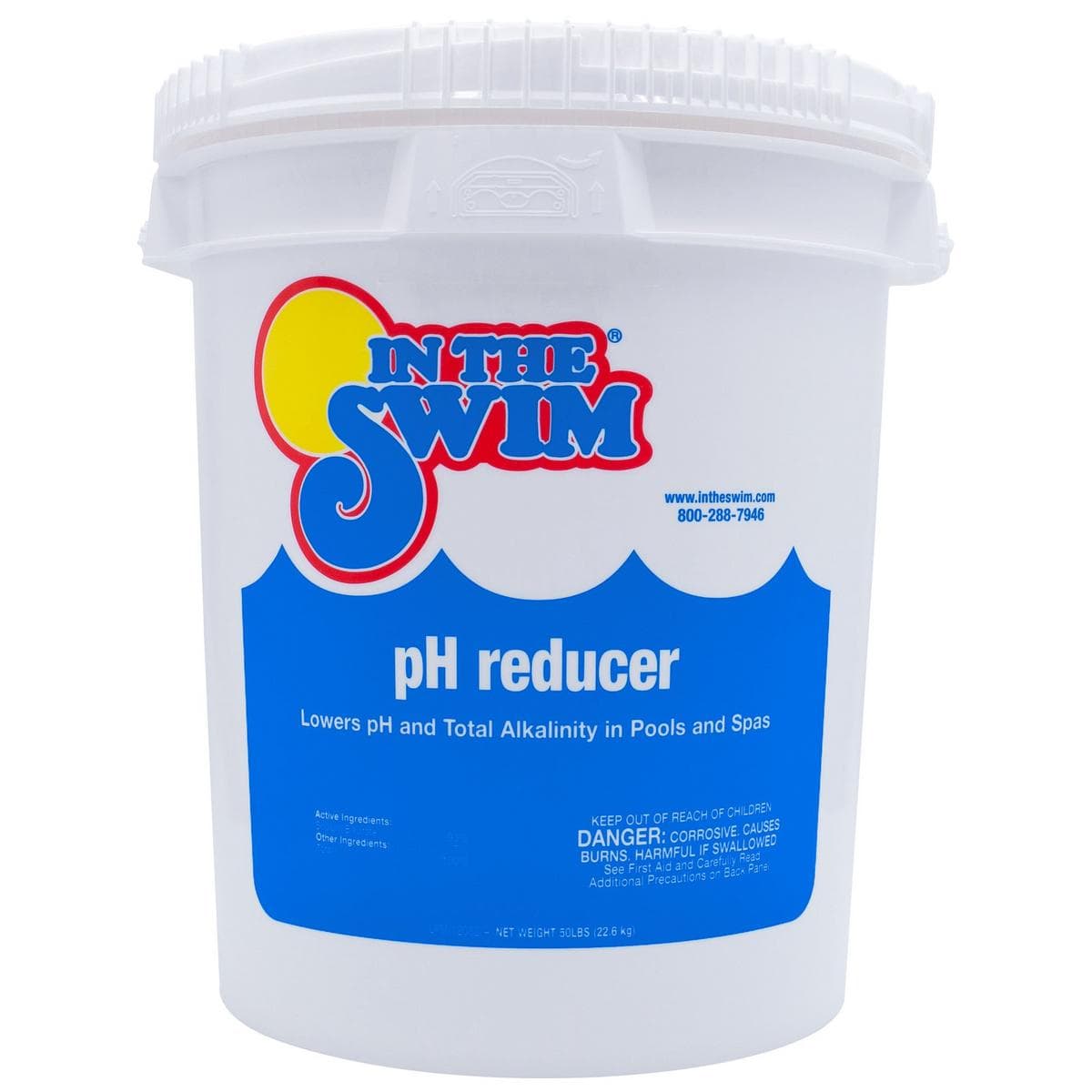
It lowers both pH and total alkalinity, so use it thoughtfully. Broadcast slowly with the pump running (about 1.25 lb per 10,000 gallons for a modest drop) and retest before adding more. Never add it alongside chlorine — always dose one chemical, let it circulate, then the other.
Who needs it
Anyone whose pH tests above ~7.8, and salt-pool owners in particular, since salt chlorine generation tends to push pH upward over time. It pairs with pH Increaser as the two halves of pH control — and on most salt pools, this is the half you'll use more.
Performance breakdown
Research-based editorial judgments from specs, warranty terms, and verified owner feedback — not lab measurements. How we score
Pros and cons
What works
- Safer to handle than liquid muriatic acid
- Lowers stubbornly high pH
- Granular — easy to measure
- Works in all pool types
What doesn't
- Also lowers total alkalinity
- Still an acid — needs careful handling
- Easy to overshoot
- Dust can irritate — avoid breathing it
Best alternatives to In The Swim pH Reducer (Sodium Bisulfate, 30 lb)
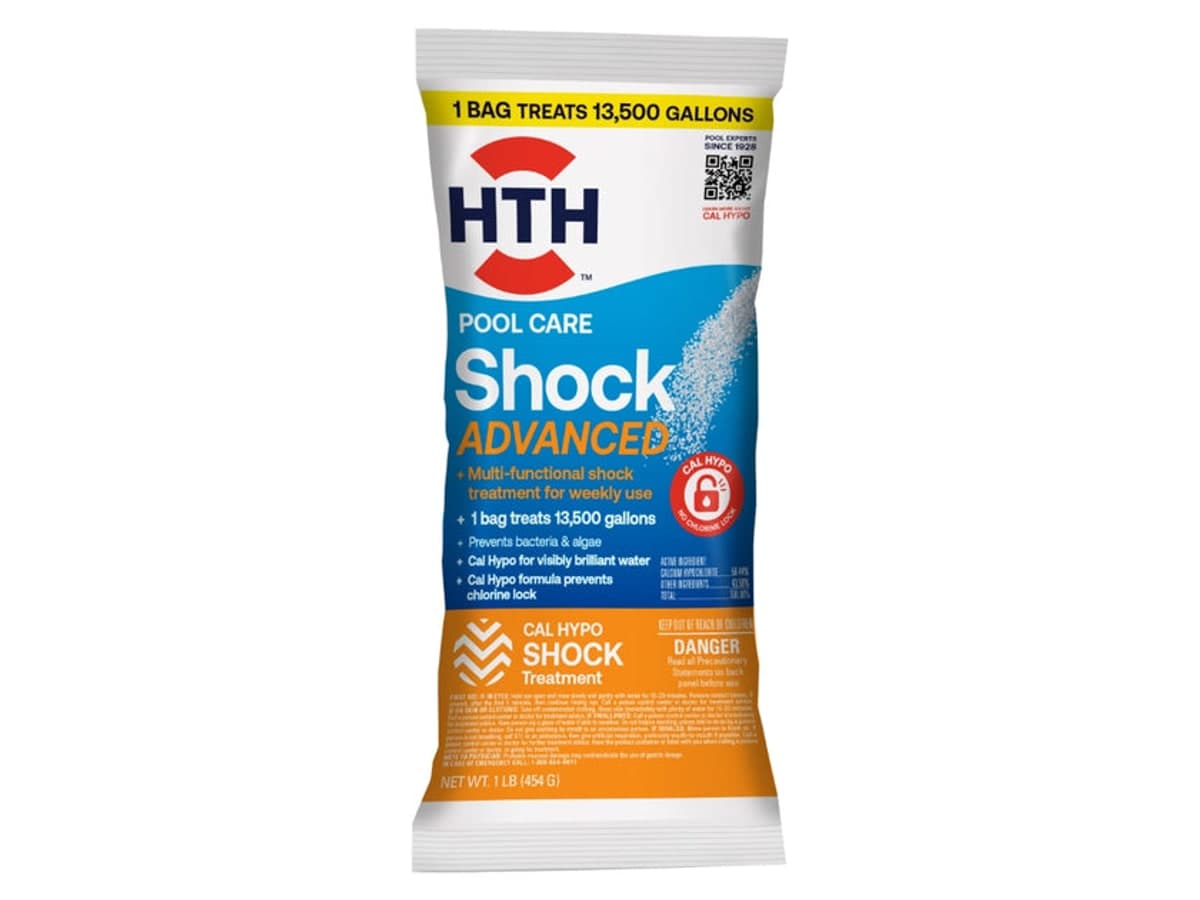
HTH
HTH Super Shock Treatment (Cal-Hypo, 1 lb bags)
Best default shock
Widely available calcium hypochlorite shock that raises chlorine fast without adding cyanuric acid — the right default for most pools.
Taylor
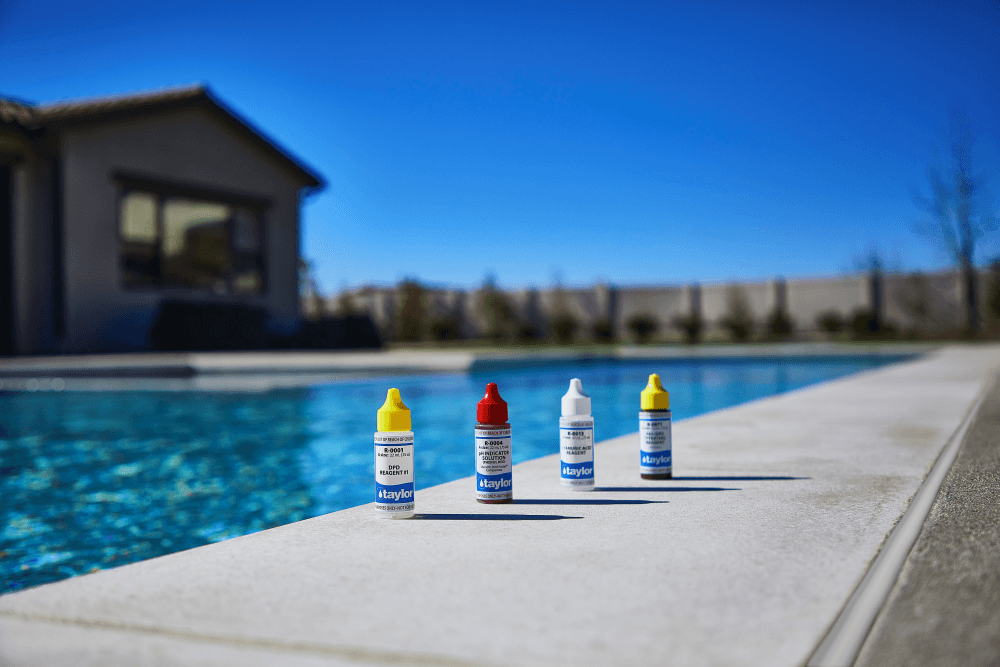
Taylor Reagent Refill Set
Best kit refresh
Fresh reagents for your Taylor kit — because expired reagents read wrong, not just weak.
In The Swim
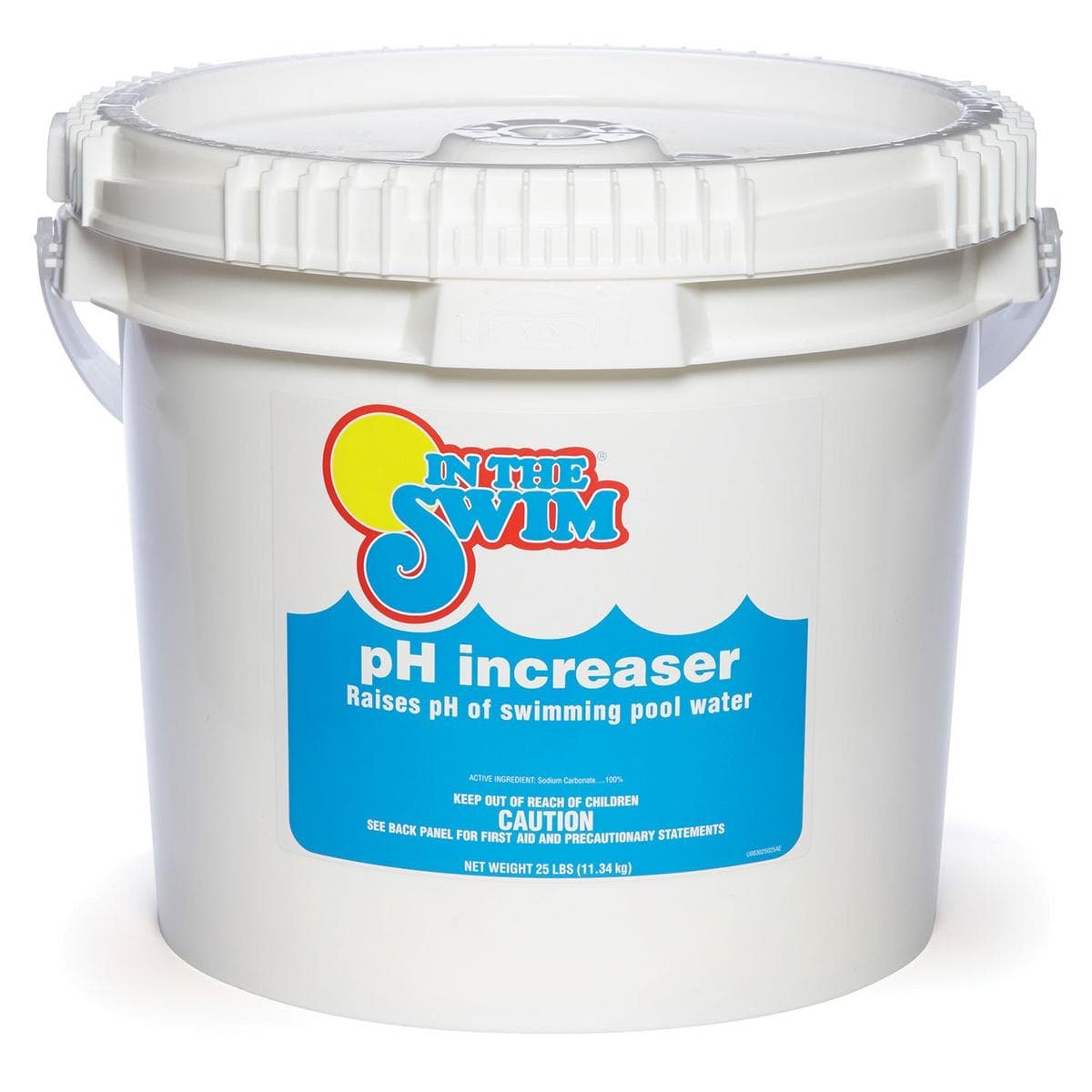
In The Swim pH Increaser (Soda Ash, 25 lb)
Raise pH
Granular soda ash to bring low pH back up — the fix when your water tests acidic and starts eating equipment and comfort.
In The Swim
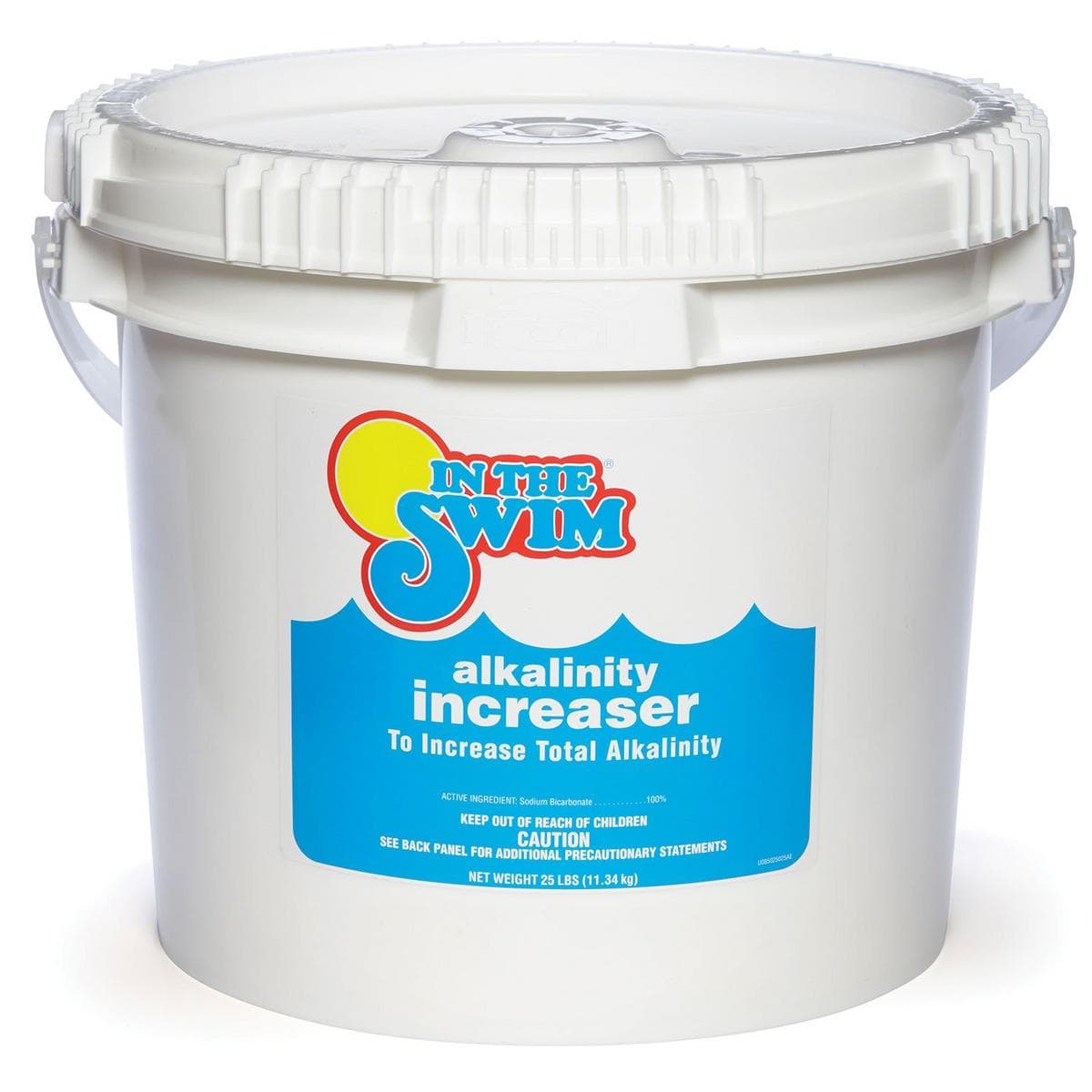
In The Swim Alkalinity Increaser (Sodium Bicarbonate, 25 lb)
Raise alkalinity
Pure sodium bicarbonate to raise total alkalinity — the buffer that keeps your pH from bouncing around.
Frequently asked questions
Dry acid or liquid muriatic acid?
Dry acid (sodium bisulfate) is easier and safer to store and handle — no fumes, no sloshing jugs — but costs a bit more per dose. Muriatic acid is cheaper and faster-acting but harsher to handle. Most homeowners prefer dry acid.
Does it lower alkalinity too?
Yes — sodium bisulfate lowers both pH and total alkalinity. If you need to drop alkalinity without crashing pH, add it in a concentrated spot and aerate; if you only want lower pH, dose lightly and retest.
How much should I add?
Roughly 1.25 lb per 10,000 gallons for a modest drop, but always dose gradually with the pump running and retest before adding more. pH is easy to overshoot.
Is it safe for salt pools?
Yes, and salt pools often need it, since salt chlorine generation tends to push pH upward over time. It’s one of the most-used chemicals on a salt pool.
Can I add it and chlorine at the same time?
No — never mix or add acids and chlorine products together. Add one, let it circulate, then the other later. Mixing pool chemicals can cause dangerous reactions.
Why does my pH keep rising?
High-pH drift is normal, especially with salt systems, aeration/water features, and fresh plaster. Keeping alkalinity in range and, on salt pools, watching your generator output reduces how often you need to add acid.