PoolGearGuide

Pool Skimmer Reviews: Manual, Solar, and Robotic Options

By the PoolGearGuide editorial team · Updated 2026-07-03

Share

Good pool skimmer reviews compare what each skimmer is actually good at: big leaves, tiny bugs, pollen, floating grass, acorns, or daily surface maintenance. A cheap net can beat a robot in one situation, and a robot can beat a cheap net in another. The trick is knowing which mess you are buying for.

Pool skimmers are not exciting until you do not have the right one. Then the pool gets leaves, the filter gets cranky, the water gets dull, and suddenly a net on a pole feels like critical infrastructure.

Key takeaways

  • Manual skimmers are still the best first buy for most pool owners.
  • Skimmer socks are excellent for fine debris, but only if you check them often.
  • Robotic and solar skimmers are best for pools with constant surface debris.
  • A pool-floor robot does not replace a surface skimmer.
  • The right skimmer setup prevents debris from becoming a filter and chemistry problem.

Table of contents

What should pool skimmer reviews actually test?

Pool skimmer reviews should test debris pickup, ease of use, basket cleaning, fine-debris capture, durability, compatibility, and whether the skimmer keeps junk from sinking. A pretty product photo does not tell you what happens after an oak tree sneezes into the pool.

A useful review should answer:

  • What debris does it collect well?
  • What debris slips through?
  • How often does it need emptying?
  • Does it restrict water flow?
  • Is it annoying to clean?
  • Does it work in corners?
  • Does wind help or hurt it?
  • Does it fit above-ground and inground pools?
  • Are replacement parts available?
  • Is it worth the price compared with a manual net?

For powered skimmers, add runtime, charging, obstacle handling, and water-depth requirements. For manual tools, add pole strength, net depth, frame stiffness, and mesh quality.

The review should also separate manufacturer specs from actual editorial notes. If a product has not been hands-on tested, say so. A research-based review is fine. Pretend testing is not.

Which skimmer type is best for most pools?

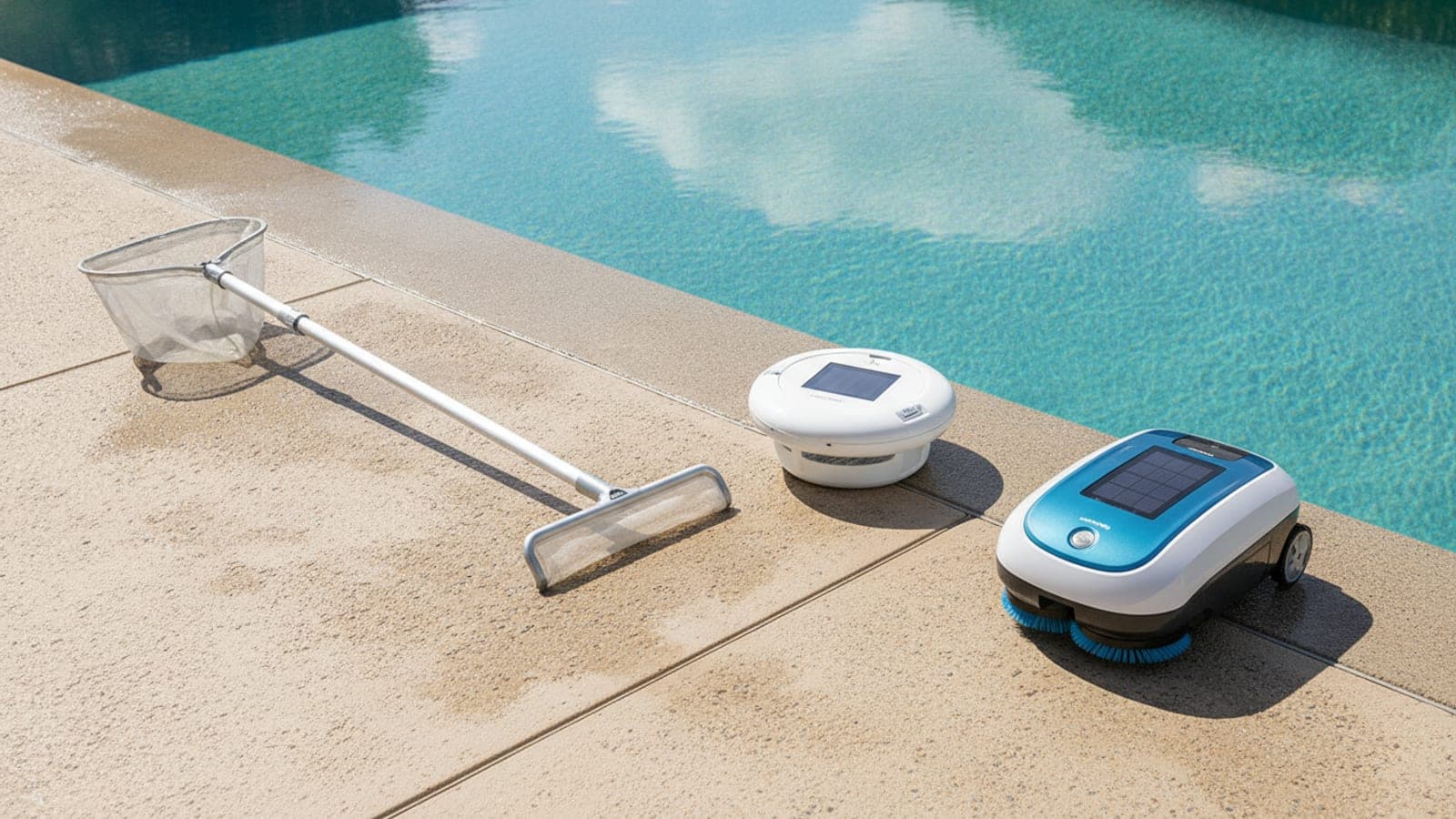
For most pools, the best skimmer setup is a manual leaf rake, a fine mesh net, clean skimmer baskets, and skimmer socks used during fine-debris season. A robotic skimmer is the upgrade when surface debris becomes daily work.

Here is the practical category comparison:

Skimmer typeBest forCost levelMain downside
Deep leaf rakeLeaves, seed pods, heavy debrisLowManual work
Fine mesh skimmer netBugs, pollen clumps, light debrisLowSlower with heavy leaves
Built-in skimmer basketCirculation-based debris captureAlready installedNeeds regular emptying
Skimmer sockFine debris before the filterLowCan clog and restrict flow
Solar robotic skimmerDaily surface patrolMedium to highSun/shade and basket limits
Premium robotic skimmerAutomation, sensors, app featuresHighPrice and complexity

This table should sit high on the page because it answers the real search intent quickly. The reader is asking, “What should I buy?” not “Please describe the proud history of pool nets.”

How do manual skimmer nets compare?

Manual skimmer nets compare by net depth, mesh type, frame stiffness, pole connection, and how they behave when full of wet leaves. A flimsy net is cheap until it turns one scoop into four scoops and a quiet emotional event.

There are two main types:

Flat skimmer nets

Flat skimmer nets are best for quick surface cleanup. They are fast, light, and easy to move across the water.

Use one for:

  • Bugs.
  • Pollen clumps.
  • Small floating leaves.
  • Pre-swim cleanup.
  • Light daily maintenance.

The downside is depth. A flat net does not hold much. If your pool gets heavy leaves, you will spend more time losing debris than collecting it.

Deep leaf rakes

Deep leaf rakes are better for big debris and heavier scoops. They hold more, reach corners well, and can collect some debris after it starts to sink.

Use one for:

  • Oak leaves.
  • Palm bits.
  • Acorns.
  • Seed pods.
  • Storm cleanup.
  • Opening the pool after neglect.

If you only buy one manual tool, buy the deep leaf rake. Then add a fine mesh net if bugs and pollen are a regular problem.

Are skimmer socks worth using?

Skimmer socks are worth using when fine debris is reaching the filter too quickly. They are especially useful for pollen, hair, small bugs, grass clippings, and dusty debris.

They are also easy to misuse. A skimmer sock that is doing its job can clog quickly. If you leave it packed with debris, water flow can drop. That is not a sock problem. That is a “we made a tiny debris lasagna in the basket” problem.

Use skimmer socks when:

  • Pollen is visible on the water.
  • The pool gets tiny bugs.
  • You just mowed nearby grass.
  • Fine debris reaches the filter too fast.
  • You want extra capture during heavy debris periods.

Do not use skimmer socks when:

  • You will not check them.
  • Your basket fills with large leaves quickly.
  • Your pump already has weak flow.
  • You are using them to hide a filter problem.

Skimmer socks are a small affiliate item that makes sense because they solve a real annoyance. Put them under “fine debris helpers,” not as a miracle product.

How do built-in skimmer baskets fit into the system?

Built-in skimmer baskets are the everyday catch point for debris pulled in by circulation. They are simple, important, and often ignored until water flow drops.

A built-in skimmer works best when:

  • The water level is correct.
  • The weir door moves freely.
  • The basket is not cracked.
  • The pump basket is clean.
  • Return jets help move surface water toward the skimmer.
  • Leaves are removed before they pack the basket.

Replacement baskets are boring but useful affiliate products. A cracked basket can let debris pass toward the pump basket. A warped basket may not sit correctly. A missing handle turns cleaning into wet finger archaeology.

This section should link to pool maintenance for beginners and weekly pool maintenance checklist. Surface cleaning should be part of the routine, not a panic response.

Are solar and robotic skimmers worth the money?

Solar and robotic skimmers are worth the money when your pool gets surface debris often enough that manual skimming becomes a recurring chore. They are less compelling for small, low-debris pools.

A powered skimmer helps when:

  • Leaves fall every day.
  • Bugs collect overnight.
  • Pollen covers the surface.
  • Wind pushes debris across the pool constantly.
  • You are away from home often.
  • You already have a floor robot but still fight floating junk.

Betta’s FAQ says robotic pool skimmers clean the surface by removing floating debris like leaves, pollen, and insects, while robotic pool cleaners operate on the floor and walls. That is the buying distinction.

Aiper’s Surfer S2 page lists solar-powered operation and 35 hours of battery life. Beatbot’s iSkim Ultra page lists app scheduling, 20 sensors, a 9L basket, solar charging, and a 2-year warranty. Betta’s pages list several solar skimmer models with different charging and control setups.

Use those specs as comparison points, not final proof. A real review still needs owner feedback, long-term basket notes, and actual debris performance.

What are the biggest mistakes people make with skimmers?

The biggest skimmer mistake is expecting one tool to solve every surface, floor, filter, and chemistry problem. Skimmers prevent some problems. They do not replace the rest of pool care.

Common mistakes:

  • Buying a robot before buying a decent manual net.
  • Ignoring skimmer and pump baskets.
  • Leaving skimmer socks clogged.
  • Expecting a floor robot to catch floating debris.
  • Letting leaves sink before cleanup.
  • Using surface tools while the filter is struggling.
  • Forgetting to test water after heavy debris.

CDC guidance for home pools covers pH and sanitizer targets. Skimming does not replace that. It simply removes organic junk earlier so the pool system has less work to do.

EPA’s pool chemical safety alert is also a reminder that chemical fixes should not become random garage chemistry. Remove debris first, test water, then dose based on actual readings.

How should you review skimmers by debris type?

Review skimmers by debris type because that is how pool owners experience the problem. “Best skimmer” means very little unless you know whether the pool gets leaves, pollen, bugs, or floating grass.

Debris typeBest toolGood backupReview note
Large leavesDeep leaf rakeRobotic skimmerBasket volume matters
PollenSkimmer socksFine mesh netCheck socks often
BugsFine mesh netRobotic skimmerNighttime patrol helps
AcornsDeep leaf rakeManual cleanupDo not rely on fine mesh
Grass clippingsFine mesh netSkimmer socksFilter may clog faster
Daily mixed debrisRobotic skimmerManual netAutomation can save time

This structure also keeps your internal links clean. The pollen section links to how to clean pollen from a pool. The leaf section links to how to clean leaves out of your pool. The robot section links to best robotic pool skimmers.

What should the affiliate product section include?

The affiliate product section should include one product group for each job. Avoid stuffing the page with random gear. People trust a page more when the product blocks match the advice.

Suggested product modules:

  • Start here: deep leaf rake and sturdy telescoping pole.
  • Fine debris kit: fine mesh net and skimmer socks.
  • Basket refresh: replacement skimmer and pump baskets.
  • Automation upgrade: robotic or solar surface skimmer.
  • Testing companion: liquid drop test kit.
  • Filter care: cartridge cleaner or filter maintenance tools.

Each product card should have:

  • Why this product type fits.
  • What to check before buying.
  • Who should skip it.
  • Amazon CTA.
  • Specialty retailer CTA.
  • Affiliate disclosure nearby.

The language should be calm. “This may help if…” beats “You need this now.” Nobody needs a pool net yelling at them.

What is the simplest buying path?

The simplest buying path is to buy manual tools first, add fine-debris helpers second, and upgrade to automation only when the pool’s debris load justifies it.

Use this order:

  1. Buy a deep leaf rake and sturdy pole.
  2. Add a fine mesh net if bugs and pollen are common.
  3. Replace cracked skimmer baskets.
  4. Use skimmer socks during fine-debris season.
  5. Add a robotic surface skimmer if debris is daily.
  6. Use a floor robot if debris is already settling.
  7. Keep testing water and cleaning filters.

That order saves readers money because it does not push the expensive item first. It also sets up affiliate revenue across price points: cheap accessories, replacement parts, and larger robotic purchases.

The page should end with a useful decision:

  • If your pool is occasionally messy, manual tools are enough.
  • If your pool gets surface junk every day, a robotic skimmer starts to make sense.
  • If your floor is dirty, buy or run a floor cleaner.
  • If the water is cloudy or green, go to the chemistry and troubleshooting guides.

That is a better review experience than a generic top-ten list. It helps the reader buy the right thing, not just something.

This is a research-based review — our analysis draws on manufacturer specifications, manuals, warranty terms, and verified owner feedback rather than our own hands-on testing, and we note where a detail couldn't be confirmed. How we review

Frequently asked questions

What should pool skimmer reviews compare?

Good pool skimmer reviews should compare debris type, basket capacity, manual effort, flow impact, maintenance, pool compatibility, price, and whether the tool solves surface debris before it sinks.

Are manual skimmers better than robotic skimmers?

Manual skimmers are better for quick targeted cleanup and low cost. Robotic skimmers are better for ongoing surface debris when the pool gets dirty every day.

Are solar pool skimmers the same as robotic pool skimmers?

Many solar pool skimmers are robotic surface skimmers, but not every robotic skimmer depends only on solar power. Some models include backup charging or app control.

Can skimmer socks damage a pump?

Skimmer socks can restrict flow if they clog and are ignored. They should be checked often, especially during pollen season or after heavy debris.

Do pool skimmers reduce chemical use?

They do not replace chemicals, but removing debris earlier can reduce the organic load that makes sanitizer and filtration work harder.

The weekly skim

One short email a week: what to test, what to buy, and what to skip. No daily drip. Unsubscribe anytime.