PoolGearGuide

Pool Volume Calculator: How Many Gallons Is My Pool?

By the PoolGearGuide editorial team · Updated 2026-07-03

Share

Pool volume calculator

Your pool holds roughly 16,031 gallons.

Rounded estimate — liners, steps, and benches change real volume. Use it for dosing math, not for filling out insurance forms.

A pool volume calculator estimates how many gallons your pool holds so every other pool number stops being a guess. Measure the pool shape, length, width or diameter, and average depth, then use that gallon estimate for salt, chlorine, shock, pH, alkalinity, pump sizing, heater sizing, and chemical cost planning.

Key takeaways

Why does pool volume matter so much?

Pool volume matters because most pool decisions are just gallon math wearing different outfits. Salt additions, chlorine doses, shock treatments, acid adjustments, alkalinity changes, stabilizer additions, heater sizing, pump sizing, and cost estimates all start with gallons.

A 10,000-gallon pool and a 25,000-gallon pool can need the same product for the same problem, but very different amounts. “Add a bag” is not a plan. It is a shrug with a barcode.

Use this calculator before:

  • Adding salt
  • Adding liquid chlorine
  • Shocking the pool
  • Raising or lowering pH
  • Raising or lowering alkalinity
  • Adding cyanuric acid
  • Choosing a pool pump
  • Choosing a pool heater
  • Estimating monthly chemical cost
  • Comparing a pool robot with weekly service

This is why the pool salt calculator, pool shock calculator, pool pH calculator, and pool chemical cost calculator should all link back here. Gallons are the starting line.

How do you calculate gallons for a rectangular pool?

For a rectangular pool, multiply length by width by average depth, then multiply by 7.48. That converts cubic feet into gallons.

Formula:

Length × Width × Average Depth × 7.48 = Gallons

Example:

  • Length: 30 feet
  • Width: 15 feet
  • Shallow end: 3 feet
  • Deep end: 6 feet
  • Average depth: 4.5 feet

30 × 15 × 4.5 × 7.48 = 15,147 gallons

You would probably round that to about 15,000 gallons for planning. For chemical dosing, you may start slightly under the dose, circulate, and retest.

MeasurementExample
Length30 ft
Width15 ft
Average depth4.5 ft
Estimated gallonsAbout 15,000

If your pool has steps, benches, or a sun shelf, the formula will be a little high because those features displace water. That is normal. The calculator should include a note that complex pools are estimates, not courtroom testimony.

How do you calculate gallons for a round pool?

For a round pool, use diameter, average depth, and a round-pool conversion factor.

Formula:

Diameter × Diameter × Average Depth × 5.9 = Gallons

Example:

  • Diameter: 24 feet
  • Average depth: 4 feet

24 × 24 × 4 × 5.9 = 13,594 gallons

That is roughly a 13,600-gallon pool. If the pool is an above-ground model, also check whether you are measuring to the wall height or actual water height. Those are not always the same thing.

A 52-inch wall does not mean the water is 52 inches deep. Usually the water level sits below the top rail. That small difference can affect chemical dosing more than people expect.

Round poolAverage depthEstimated gallons
15 ft diameter4 ftAbout 5,300
18 ft diameter4 ftAbout 7,600
24 ft diameter4 ftAbout 13,600
27 ft diameter4 ftAbout 17,200

Round pools are easier than freeform pools, but do not let the easy formula fool you. Measure actual water depth, not wall height, or the calculator will overestimate gallons.

How do you calculate gallons for an oval pool?

For an oval pool, multiply length by width by average depth, then multiply by 5.9. Oval pools use the same 5.9 conversion factor as round pools because the shape is closer to an ellipse than a rectangle.

Formula:

Length × Width × Average Depth × 5.9 = Gallons

Example:

  • Length: 30 feet
  • Width: 15 feet
  • Average depth: 4 feet

30 × 15 × 4 × 5.9 = 10,620 gallons

That is roughly 10,600 gallons.

Oval above-ground pools can be tricky because the listed size may include frame or buttress space. Measure the actual water area when possible. If your pool is a common kit size, compare the measurement result with the manufacturer’s listed water capacity at recommended fill height.

Oval pool issueWhat to do
Listed size includes frameMeasure water surface, not the support structure
Water line is below wall heightUse actual water depth
Deep center area existsUse a better average-depth estimate
Manufacturer capacity is availableCompare it with calculator result

A good calculator should allow “known manufacturer gallons” as an override. If a user has a reliable model capacity, let them enter it directly and skip the shape math.

How do you estimate gallons for a kidney or freeform pool?

For a kidney or freeform pool, split the pool into simpler shapes or use an average width. The goal is not perfect geometry. The goal is a gallon estimate good enough to dose carefully.

A simple freeform method:

Length × Average Width × Average Depth × 7.0 = Gallons

The 7.0 factor is a rough compromise for irregular shapes. Some freeform pools are closer to rectangles; others have curves, shelves, and sections that make them hold less water than the outer dimensions suggest.

Better method:

  1. Sketch the pool.
  2. Split it into rectangles, circles, or ovals.
  3. Estimate gallons for each section.
  4. Add them together.
  5. Subtract obvious shallow benches or shelves if they are large.

Example:

  • Main rectangle: 24 × 12 × 4.5 × 7.48 = about 9,700 gallons
  • Round spa spillover section: already separate, ignore if not part of pool circulation
  • Tanning ledge displaces water: subtract a rough amount if large

Freeform pools are where “close enough” needs a safety habit. Use the estimate, add partial chemical doses, circulate, and test again. That loop is less exciting than dumping chemicals, but it prevents expensive nonsense.

How do you find average depth?

Average depth is usually the shallow depth plus the deep depth divided by two. If the pool has a flat bottom, average depth is just the actual water depth.

Formula:

(Shallow depth + Deep depth) ÷ 2 = Average depth

Example:

  • Shallow end: 3 feet
  • Deep end: 8 feet

(3 + 8) ÷ 2 = 5.5 feet

That works well for a simple gradual slope. It can overestimate or underestimate for pools with sport bottoms, hopper bottoms, deep bowls, benches, shelves, and unusual slopes.

Pool bottomAverage-depth approach
Flat bottomUse actual water depth
Simple shallow-to-deep slopeShallow + deep divided by 2
Sport pool, shallow-deep-shallowAverage the three sections
Large tanning ledgeTreat ledge as a separate shallow section
Deep hopperUse a conservative estimate or builder specs

Do not measure from the deck to the floor unless the water reaches the deck, which would also be a separate problem. Measure water depth.

What should you measure before using the calculator?

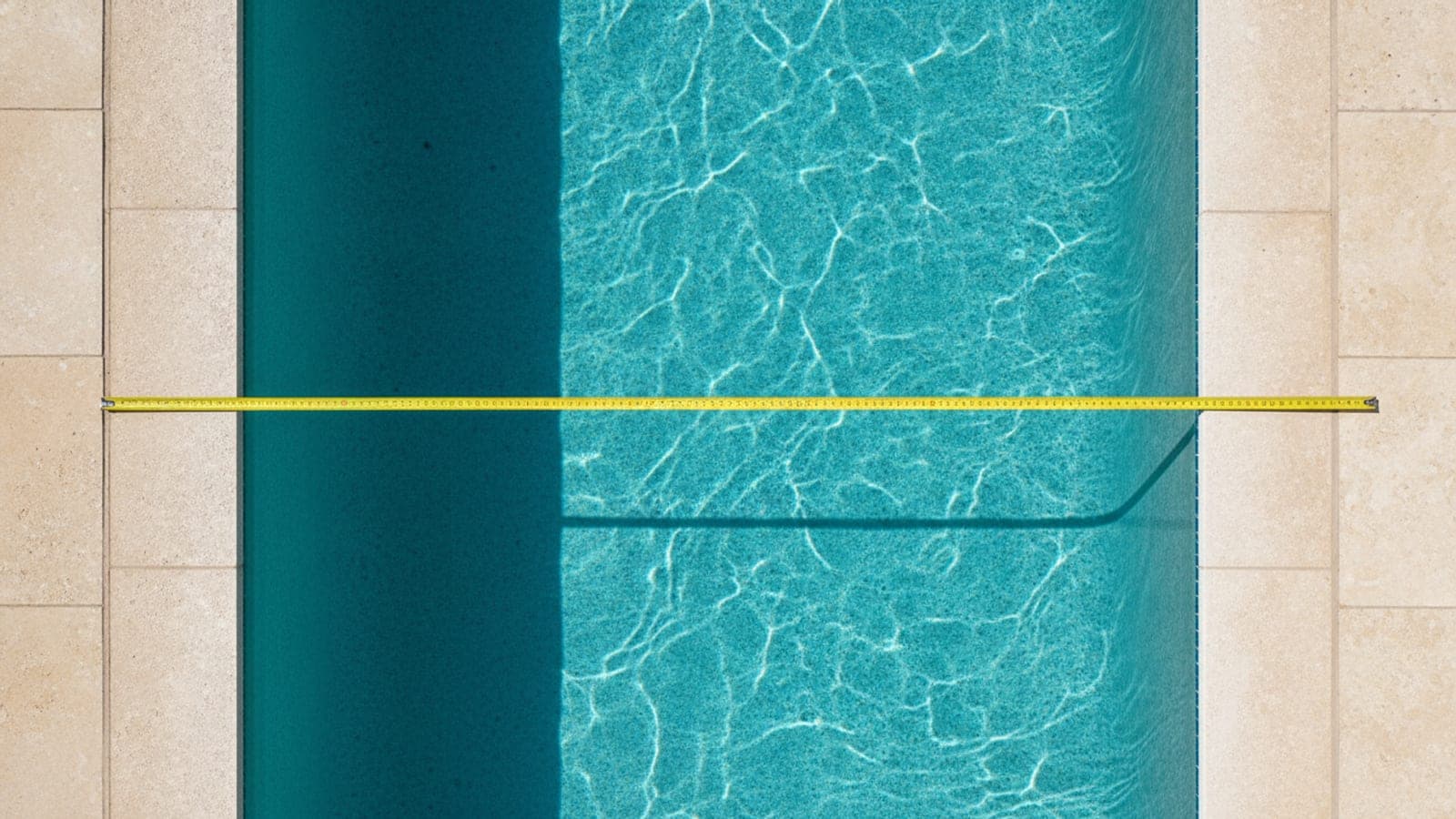
Measure the actual water surface and actual water depth. The pool label, builder paperwork, and online product page can help, but a tape measure is often more honest than memory.

What you need

  • Tape measure
  • Notebook or phone note
  • Pool shape
  • Length and width or diameter
  • Shallow depth
  • Deep depth
  • Waterline fill height
  • Manufacturer capacity if available
  • Test kit before dosing

For an above-ground pool, measure inside the walls across the water. For an inground pool, measure the main water area and note features that reduce volume, like steps and benches.

This page can include a product module for:

  • Measuring tape
  • Pool test kit
  • Chemical measuring cup
  • Water sample bottle
  • Maintenance log

That module fits naturally because measuring gallons is usually the moment before adding chemicals. The reader is already in “I should stop winging this” mode.

What goes wrong when pool gallons are wrong?

If pool gallons are wrong, chemical dosing gets weird. The test results may improve, but not enough. Or they may overshoot, and now the pool has a new personality.

Common problems:

Bad estimateWhat happens
Gallons too lowYou underdose salt, chlorine, acid, alkalinity increaser, or stabilizer
Gallons too highYou overdose and may have to wait, dilute, or correct
Average depth too highMost doses come out too strong
Using wall height instead of water depthAbove-ground pools get overestimated
Ignoring large shelvesInground pool volume gets overestimated

Example: if you think your pool is 20,000 gallons but it is closer to 15,000, a chemical dose based on 20,000 gallons is about 33% too high. That can turn a normal pH adjustment into a “why is the pool mad now” adjustment.

CDC’s home pool guidance focuses on testing water and keeping pH/chlorine in safe ranges. A calculator helps you choose a dose, but testing tells you whether the water actually landed where it should.

What should you buy before measuring and dosing?

Buy tools that improve the measurement and the follow-up test. The best affiliate section here is simple and practical.

What you need before using pool calculators

  • Tape measure for pool dimensions
  • Full pool test kit
  • Salt test strips if you have a salt pool
  • Measuring cup or chemical scoop
  • Gloves for chemical handling
  • Maintenance log
  • Smart water monitor if the reader wants reminders and trend tracking

Do not overload the page with every chemical product. This article is the hub. Let the follow-up tools recommend the specific chemical.

Better internal flow:

That structure makes this page one of the most important internal-link hubs on the whole site.

Where should this calculator send readers next?

After the calculator gives gallons, the page should route readers based on what they are trying to do. Do not leave them staring at a number like it is supposed to clean the pool by itself.

GoalNext page
Add saltPool salt calculator
Shock waterPool shock calculator
Add chlorinePool chlorine calculator
Lower pHPool acid calculator
Fix alkalinityPool alkalinity calculator
Choose a pumpPool pump size calculator
Estimate costsPool cost calculator

The final advice is boring and useful: measure carefully, use the pool volume calculator, dose less than the full amount if the estimate is uncertain, circulate, and test again. That habit keeps pool ownership from becoming a weekly chemistry argument with a hole in the ground.

Frequently asked questions

How do I calculate pool gallons?

Measure the pool shape, length, width or diameter, and average depth. Then use the matching formula for rectangular, round, oval, or irregular pools.

What is average depth in a pool?

Average depth is usually shallow depth plus deep depth divided by two. For a flat-bottom pool, the average depth is simply the pool depth.

Why does pool volume matter?

Pool volume affects chemical dosing, salt additions, shock treatment, pH adjustments, alkalinity changes, stabilizer additions, pump sizing, heater sizing, and cost estimates.

Should I round pool volume up or down?

For chemical dosing, it is usually safer to be conservative, add less than the full dose when uncertain, circulate, and retest.

Can I use the label gallons from my above-ground pool box?

Yes, if you still have the model and fill-height details, but many pools are not filled to the exact label height. A measurement-based estimate is often better.

The weekly skim

One short email a week: what to test, what to buy, and what to skip. No daily drip. Unsubscribe anytime.

Keep reading