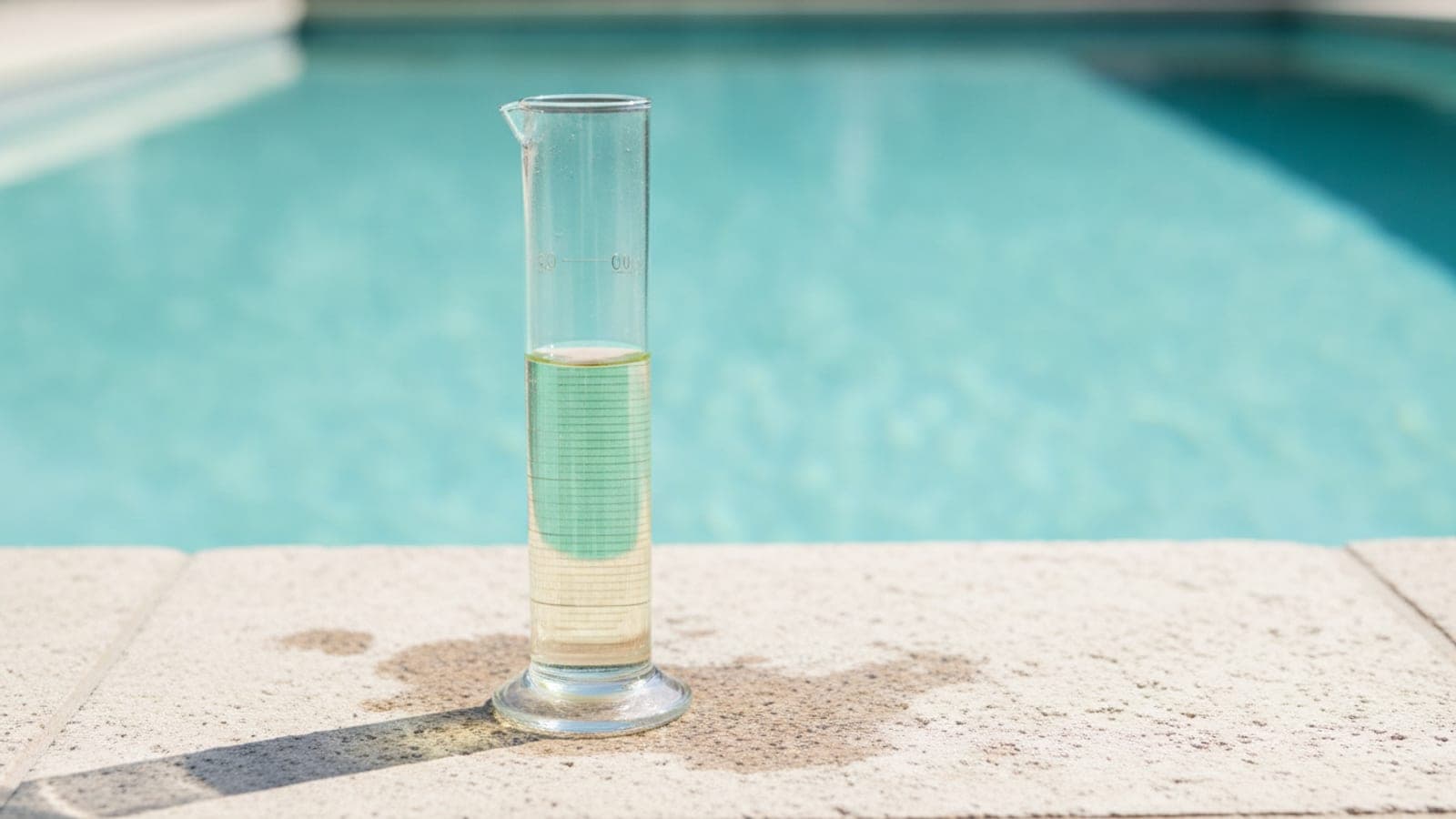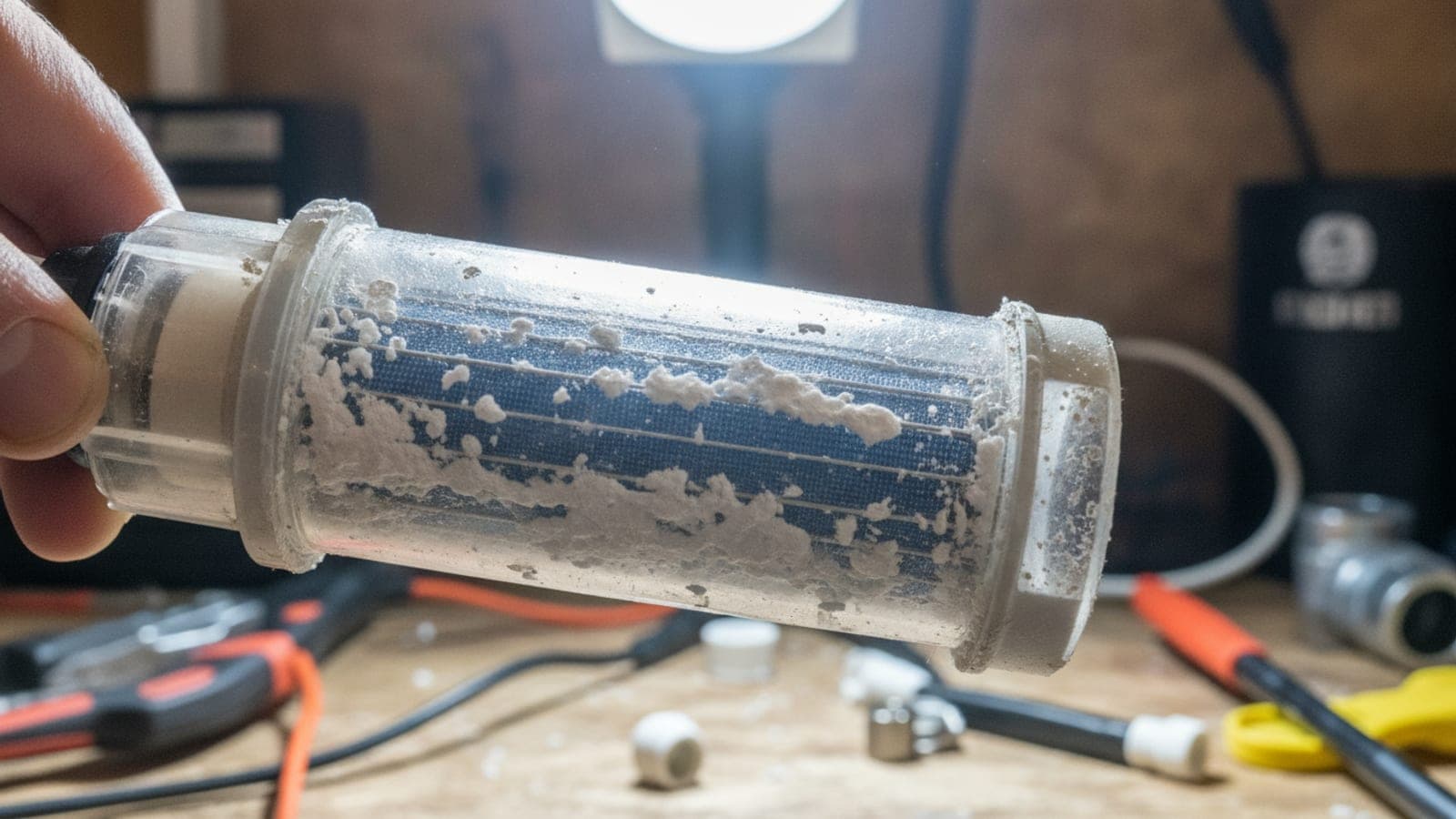
A salt cell replacement cost calculator helps you decide whether replacing the salt cell is cheaper than switching back to liquid chlorine, tablets, or another sanitation setup. It should compare the cell price, installation, expected seasons, salt testing, and the cost of doing nothing until the pool turns into a green negotiation.
Key takeaways
-
Do not replace a salt cell until you confirm salt level with an independent test and check the manual's troubleshooting steps.
-
The calculator should compare total replacement cost against expected seasons of use, not just the sticker price of the cell.
-
Brand, model, cell size, power center compatibility, plumbing unions, and warranty terms matter before buying.
-
Salt systems still need pH, chlorine, CYA, and salt testing. The cell is not a tiny pool butler.
-
If the old system is undersized or near the end of support, replacement may be a good time to rethink the whole setup.
How does a salt cell replacement cost calculator work?
A salt cell replacement cost calculator adds up the real replacement cost, then divides it by the number of seasons you expect to get from the new cell. It should also compare that seasonal cost with the cost of using another chlorine source.
The simple formula is:
(Cell price + install cost + related supplies - any credit/salvage) ÷ expected seasons = estimated cost per season
Then compare that with:
Estimated chlorine cost per season + testing supplies + extra handling time
This is not about proving saltwater pools are always cheaper or always better. That argument can ruin a perfectly good Saturday. The point is to answer the homeowner's real question:
Is replacing this cell still worth it for my pool, or am I throwing money at an old system?
The calculator should ask for:
| Input | Why it matters | Example user entry |
|---|---|---|
| Replacement cell price | Main cost | User enters actual quote or product price |
| Labor/install cost | Some cells are DIY; some are not | User enters installer quote |
| Expected seasons | Turns price into annual value | User estimate based on history/manual |
| Salt/test supplies | Salt systems still need upkeep | Salt kit, strips, salinity meter |
| Alternative chlorine cost | Gives a comparison path | Liquid chlorine/tablets estimate |
| Compatibility risk | Prevents bad purchases | Same model, compatible upgrade, unknown |
| System age | Old power centers change the decision | User enters age if known |
The output should be a decision helper, not a lecture. The reader came in annoyed because the cell light blinked again. Respect that mood.
What numbers do you need before replacing a salt cell?
Before replacing a salt cell, collect the brand, model, cell size, pool gallons, actual salt reading, water temperature, flow status, warranty status, and current replacement quote. Buying by photo alone is a nice way to own an expensive piece of plastic that does not fit.
Get these details first:
| Detail | Where to find it | Why it matters |
|---|---|---|
| Salt system brand | Control box or manual | Compatibility starts here |
| Cell model | Label on cell body | Prevents wrong replacement |
| Pool gallons | Volume calculator or records | Cell size must match demand |
| Current salt level | Independent salt test | Controller readings can mislead |
| Water temperature | System reading or thermometer | Cold water can reduce/stop production |
| Flow status | Flow light/controller | No flow can look like no chlorine |
| Cell age | Install receipt or memory | Helps estimate whether replacement is reasonable |
| Warranty | Manual/receipt/retailer | Can change the cost decision |
| Power center model | Equipment pad/control box | Determines compatibility |
Link the reader to the pool salt calculator before talking replacement. Low salt can make a working cell look lazy. High salt can cause its own problems. The manual is still the boss.
Pentair's current IntelliChlor materials describe diagnostic features such as salt level, system status, chlorine output, and cell-life tracking. Some Pentair IntelliChlor Plus/LT manual text also references low salinity conditions and adding salt to 3,600 ppm. Hayward Aqua Rite materials note that salt display readings can take time to respond after salt changes. The practical takeaway is simple: verify, wait where the manual says to wait, and do not replace a cell because one screen had a dramatic morning.
How do you know if the salt cell is actually bad?
A salt cell is more likely to be bad when the salt level is independently confirmed, flow is good, water is warm enough, the cell is clean, chemistry is reasonable, and the system still cannot produce chlorine or shows persistent cell-life warnings. One warning light is a clue, not a verdict.
Check these before buying:
| Symptom | Possible cause | What to do first |
|---|---|---|
| Low salt warning | Actual low salt, bad reading, cold water, sensor issue | Test salt independently |
| No chlorine production | Low output setting, short pump run time, low CYA, dirty cell, bad cell | Check settings and water balance |
| Scale on cell plates | High calcium/pH/alkalinity, poor maintenance | Clean only per manual |
| Flow warning | Pump/filter/valve issue | Fix flow before blaming the cell |
| Chlorine disappears daily | Sun, low CYA, algae demand, too little output | Use chlorine calculator and CYA check |
| Cell-life warning | Cell may be near end of useful life | Confirm with manual and system diagnostics |
CDC's pool guidance focuses on safe disinfectant levels and pH, not salt-system shopping. That matters because a salt pool is still a chlorine pool. The cell makes chlorine, but the water still has to test properly.
If free chlorine is low, do not automatically blame the cell. Check:
- Pump run time.
- Salt cell output percentage.
- CYA level.
- pH.
- Filter pressure.
- Water temperature.
- Visible algae.
- Recent rain or heavy swimmer load.
A struggling pool can make a good cell look bad. A bad cell can make a good pool go sideways. The calculator should help separate the two.
Should you clean the salt cell before replacing it?
You should inspect and clean the salt cell before replacing it if the manufacturer's manual recommends cleaning and you see scale or debris. Clean it exactly as directed, because aggressive acid cleaning can shorten cell life.
This section should be careful. Many homeowners hear “clean the cell” and immediately imagine a heroic acid bath. Not every cell needs that. Some modern cells are self-cleaning through polarity reversal, and some manuals warn against unnecessary or improper acid exposure.
A safe article stance:
- Turn off power according to the manual.
- Remove the cell only if you are comfortable and the manual allows it.
- Inspect for scale or debris.
- Rinse with water if appropriate.
- Use chemical cleaning only if the manual calls for it.
- Reinstall correctly.
- Let the system run and retest.
Never tell readers to mix chemicals casually. Never tell them to pour acid into random containers. Link to the pool pH calculator and chemical safety articles if you have them.
If the cell is clean, salt is right, flow is good, and the unit still fails diagnostics, replacement becomes more reasonable.
How do replacement cell costs compare with chlorine costs?
Replacement cell cost should be compared against the cost per season, not the one-time price. A costly cell can be reasonable if it gives several good seasons; a cheap wrong cell is expensive the moment it does not fit.
Use the calculator to compare scenarios:
| Scenario | What the calculator compares | Decision signal |
|---|---|---|
| Replace same cell | Cell + labor ÷ expected seasons | Good if system is compatible and otherwise healthy |
| Upgrade compatible cell size | Larger cell + labor ÷ expected seasons | Good if old cell was undersized and compatibility is confirmed |
| Repair sensor/module only | Part + labor | Good if manual supports modular repair and cell plates are healthy |
| Switch to liquid chlorine | Seasonal chlorine + testing + handling | Good if system is old or replacement cost is too high |
| Replace full salt system | New controller + cell + labor | Good if power center is old, unsupported, or incompatible |
A worked example without invented prices:
| User input | Example |
|---|---|
| Replacement cell quote | User enters actual quote |
| Labor quote | User enters installer quote or 0 for DIY |
| Expected seasons | User chooses 3, 4, 5, or custom |
| Alternative chlorine estimate | User enters local seasonal estimate |
| Result | Calculator shows cost per season and break-even point |
The page should not publish fake national salt-cell prices as if they never change. Let the user enter real quotes and product prices. That makes the tool more accurate and safer.
Should you replace the same cell or change sizes?
You should replace the same cell when the system worked well, the pool size has not changed, and the exact replacement is compatible. You might consider a larger compatible cell if the old one was undersized, ran near full output often, or could not keep up in peak sun.
The key word is compatible. Larger is not automatically better if it does not match the controller, plumbing, or manufacturer guidance.
| Choice | Good when | Risk |
|---|---|---|
| Same model replacement | Old setup worked well | Misses chance to fix undersizing |
| Larger compatible cell | Pool demand is high and controller supports it | Higher cost, compatibility confusion |
| Aftermarket/generic cell | Budget is tight and warranty is acceptable | Fit, warranty, diagnostics, and support may vary |
| Full system replacement | Controller is old or unsupported | Higher upfront cost |
This is a strong affiliate section, but it needs restraint. Use neutral CTA labels:
- “Compare replacement salt cells”
- “Check compatible cell models”
- “Shop salt test kits”
- “Shop salinity meters”
Do not say “this cell fits your system” unless the product data and compatibility chart prove it.
What should you buy with a replacement salt cell?
Buy the testing and maintenance tools that protect the new cell. A replacement cell without a good salt test kit is like buying new tires and never checking air pressure.
What you need
| Product | Why it helps | Affiliate note |
|---|---|---|
| Replacement salt cell | Main repair item | Must match brand/model/controller |
| Salt test kit or strips | Confirms actual salt level | High relevance |
| Digital salinity meter | Helpful cross-check | Needs calibration/maintenance |
| Pool salt | Adjusts level after water replacement | Link to salt calculator first |
| Cell cleaning stand | Makes manual-approved cleaning easier | Accessory product |
| Full water test kit | pH, chlorine, alkalinity, CYA matter | Recurring maintenance product |
| Smart water monitor | Optional tracking | Good premium add-on if honest about limits |
Affiliate disclosure: We may earn a commission if you buy through links in this section. Product prices and availability can change.
The internal link cluster should include:
- Pool salt calculator
- Saltwater pool maintenance for beginners
- Pool chlorine calculator
- CYA calculator
That cluster keeps saltwater readers moving through the site naturally.
How do you protect the new salt cell?
Protect a new salt cell by keeping salt in the manufacturer's range, maintaining pH and alkalinity, preventing scale, running the pump long enough for production, and inspecting the cell on the schedule in the manual. The cell cannot rescue water chemistry that is being ignored with confidence.
Good habits:
- Test salt with an independent method.
- Keep pH in the proper range for safe swimming and cell health.
- Keep total alkalinity stable.
- Keep CYA in the range recommended for your pool and product setup.
- Brush and filter the pool so the cell is not fighting algae demand.
- Do not run output at 100 percent by default if the pool does not need it.
- Follow the manual for cleaning, inspection, and winter/off-season care.
- Check flow before blaming chlorine output.
A salt cell is expensive enough that the page should help readers protect it. This is not just nice content. It reduces returns, builds trust, and makes future affiliate recommendations feel earned.
What should the calculator result show?
The calculator result should show total replacement cost, estimated cost per season, comparison with non-salt chlorine options, compatibility warnings, and a practical recommendation. It should also show what to test before buying.
A strong result card should include:
- Estimated replacement total: cell + labor + supplies.
- Estimated cost per season: based on user's expected seasons.
- Alternative chlorine comparison: user-entered seasonal chlorine estimate.
- Compatibility status: exact match, likely compatible, or needs verification.
- Before buying checklist: salt test, flow, water temp, cell inspection, manual check.
- Product links: replacement cells, test kits, salinity meters.
- Safety note: follow manual and product labels.
- Internal next step: salt calculator or saltwater maintenance guide.
The best final advice is simple:
Replace the cell when the system is compatible, the diagnostics point to the cell, and the cost per season still beats your alternative. If the system is old, undersized, or unclear, price the full path before buying parts.
That helps the reader make a real decision. It also makes the page a useful affiliate landing page instead of a product shelf wearing a blog costume.
Frequently asked questions
How do I know if my salt cell needs replacement?
Check the manual, inspect and clean the cell if appropriate, verify salt with an independent test, confirm water temperature and flow, and look for persistent low-output or cell-life warnings. Do not replace the cell based only on one dashboard reading.
How does a salt cell replacement cost calculator work?
It compares the replacement cell price, labor, expected remaining seasons, salt/test supplies, and alternative chlorine cost so you can estimate cost per season.
Can I replace only the salt cell?
Often yes if the power center and plumbing are compatible, but you must confirm the exact brand, model, cell size, unions, power center compatibility, and warranty terms before buying.
Should I buy a bigger salt cell?
A larger compatible cell may run at a lower output percentage and can be a smart choice for some pools, but it must match the system and the pool's chlorine demand. Check the manufacturer's sizing and compatibility guidance.
What salt level should my salt system use?
The target depends on the manufacturer and model. For example, some Pentair IntelliChlor guidance references adding salt to 3,600 ppm, while other systems use different target ranges. Always follow your own manual.