PoolGearGuide

Best Above-Ground Pools for Real Yards

By the PoolGearGuide editorial team · Updated 2026-07-03

Share

The best above ground pools are not always the biggest ones or the ones with the prettiest box photo. The best one is the pool that fits your yard, sits level, has a pump that can keep up, and does not make you regret every Saturday morning from May through September.

That sounds less exciting than “giant backyard oasis,” but it is much more useful.

A pool that is slightly smaller and easier to maintain usually beats a huge pool with a weak pump, a floppy ladder, and no space to walk around it. Water is heavy. Leaves are rude. Kids do not care about your filter flow rate. Buy the pool like a person who has to live with it, not like someone shopping from a brochure.

Key takeaways

  • The best above-ground pool for most homes is a sturdy frame pool that fits the flat, level space available and includes enough filtration for the water volume.
  • Round pools are usually easier in tight yards, while rectangular pools are better for games, floating, and short swim lanes.
  • The pump and filter matter almost as much as the pool wall because poor circulation turns a fun pool into a cloudy bucket.
  • Plan for the full setup: ground prep, ladder, cover, filter media, test kit, chemicals, skimmer, and either a vacuum or pool robot.
  • Do not choose by size alone. Choose by yard fit, maintenance effort, safety, and the parts you can replace later.

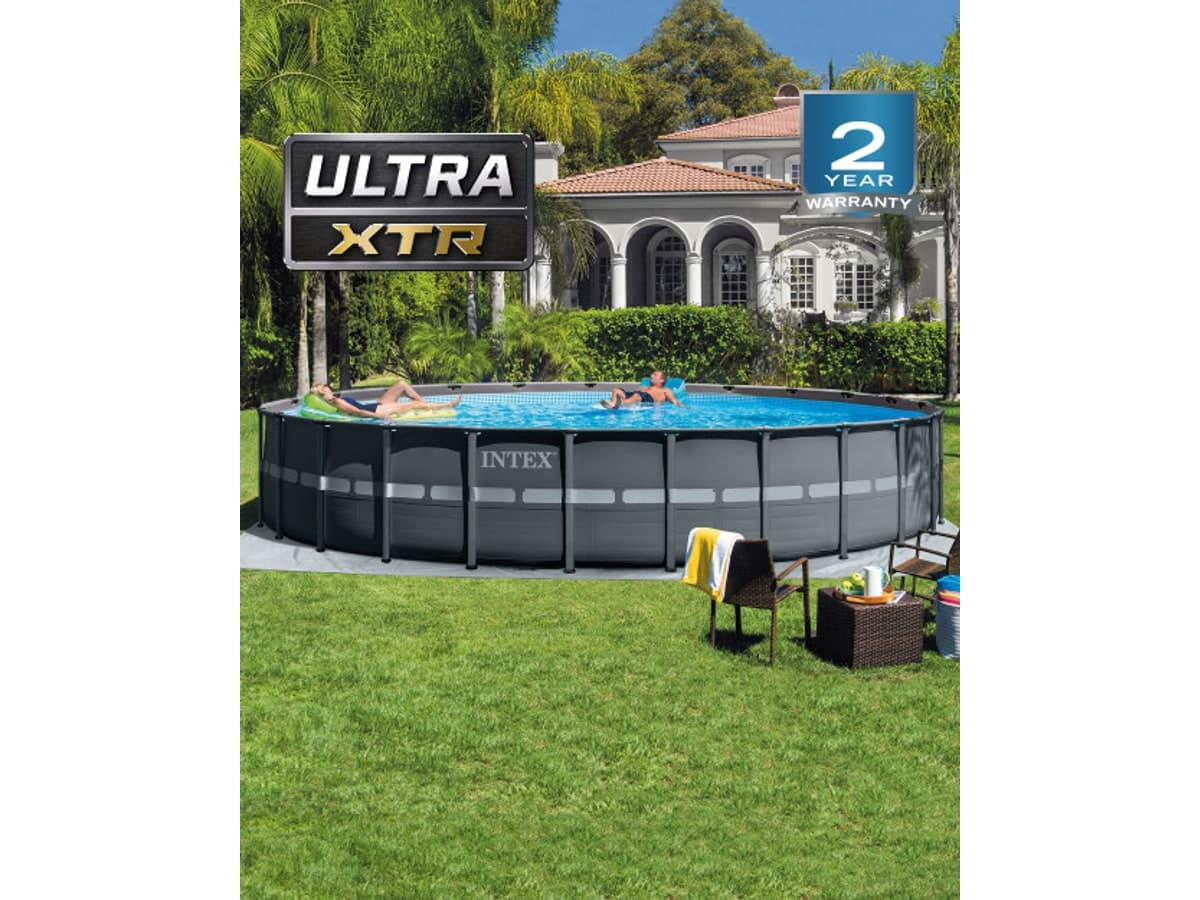
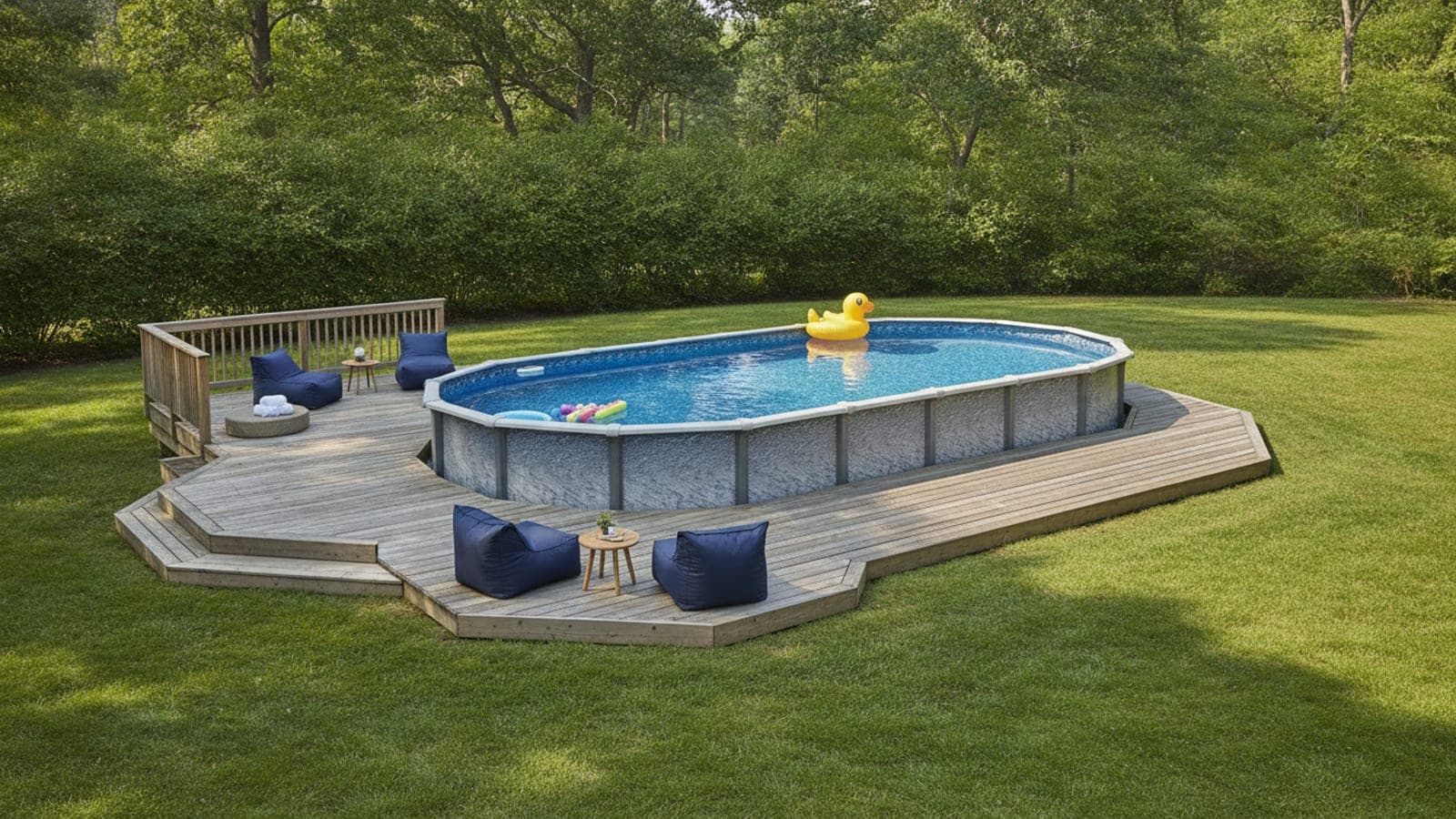
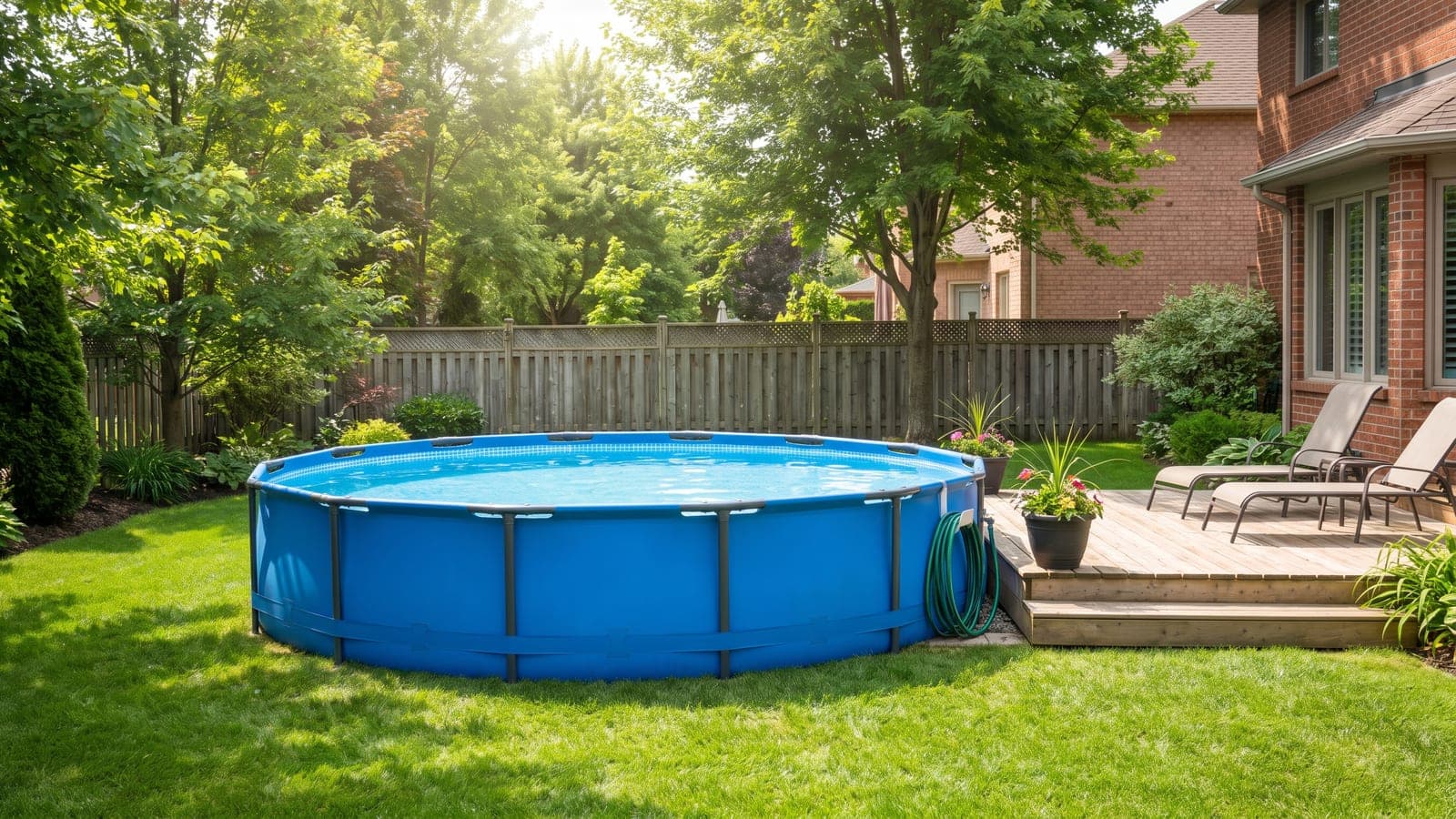
Above-ground pool set up on a level backyard pad with room around the ladder

Table of contents

What makes an above-ground pool good for a real yard?

A good above-ground pool is one you can place safely, fill confidently, clean without drama, and close without needing a second mortgage in accessories. The frame, liner, pump, ladder, and cover all matter.

Most bad above-ground pool purchases start with one sentence: “This one is bigger for only a little more money.”

That can work. It can also mean more water, more chemicals, a bigger pump need, more leveling, more ladder wobble, more cover wrestling, and more leaves doing synchronized swimming in the deep end.

Use this simple order:

  1. Measure the flat usable space.
  2. Choose the pool shape that fits that space.
  3. Check the gallons with the pool volume calculator.
  4. Make sure the pump and filter are not tiny for the water volume.
  5. Budget for the accessories before you buy the kit.

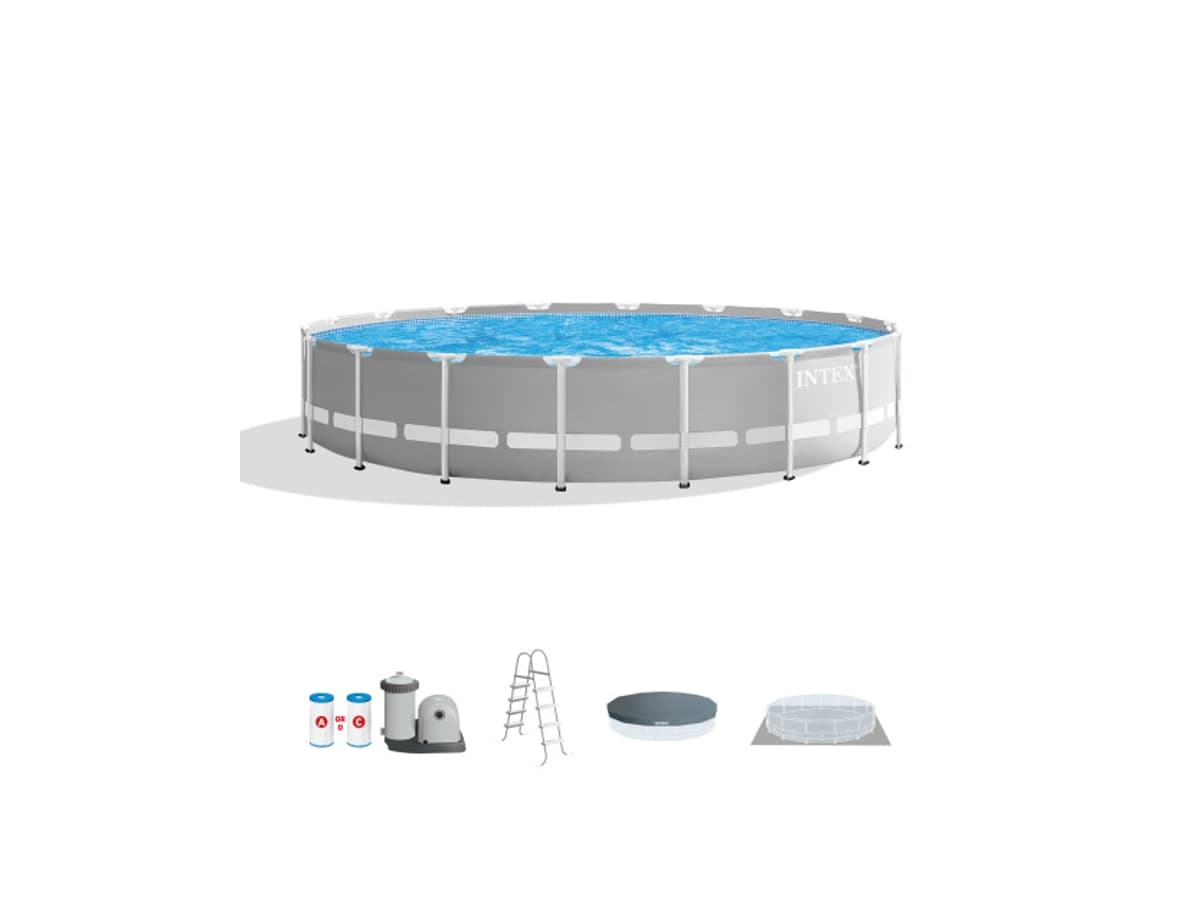
Intex’s above-ground pool category shows how many accessories and filtration options quickly become part of ownership: cartridge filter pumps, sand filter pumps, saltwater systems, covers, ground cloths, and maintenance kits. That is the right way to think about the purchase. The pool wall is only the beginning.

Which above-ground pool type should you buy?

Most buyers should choose between inflatable ring pools, metal-frame pools, rectangular frame pools, and hard-sided pools. Each one makes sense for a different kind of yard and patience level.

Pool typeBest forWatch out for
Inflatable ring poolCheap seasonal fun and younger kidsLess sturdy, less polished, often weaker filtration
Round steel-frame poolMost normal yardsNeeds level ground and enough side clearance
Rectangular frame poolGames, floating, short swim lanesMore leg spacing and careful setup
Hard-sided poolLonger-term backyard setupHigher cost and more serious installation
Saltwater above-ground kitSofter-feeling water preferenceStill needs chlorine balance, salt testing, and cell care

A soft-sided frame pool is the sweet spot for many homeowners. It is usually affordable enough to try pool ownership without building a permanent structure, but sturdy enough to feel like an actual pool.

Hard-sided above-ground pools make sense when you want something more semi-permanent. They usually deserve a stronger install plan, better base prep, and a more serious equipment pad.

Inflatable ring pools are fine if expectations are honest. They are not a maintenance-free loophole. They still need testing, circulation, cleaning, and safe storage.

How big should an above-ground pool be?

Your above-ground pool should be as large as your level space, pump plan, and maintenance tolerance allow. A too-small pool feels crowded, but a too-large pool can become a full-time water project.

Here is the plain version:

Yard situationSmarter pool size directionWhy
Tiny yard or patio-style spaceSmaller round or narrow rectangleEasier clearance and cleaning
Family with kidsMedium round or rectangleEnough room without huge upkeep
Adults floating and cooling offMedium to large roundComfortable without needing a swim lane
Fitness or lap-ish useRectangular poolBetter usable length
Long-term backyard centerpieceLarger hard-sided or premium frameWorth better ground prep and equipment

Before buying, use the above-ground pool cost calculator. Add the pool kit, site prep, ladder, cover, chemicals, skimmer, vacuum, and pump upgrades. The “cheap pool” number often changes once the boring pieces show up.

A simple yard-fit example

Say your yard has a flat area that is about 24 feet wide and 28 feet long.

A 24-foot round pool sounds possible until you remember that you need space around the outside for the ladder, pump hoses, cover work, brushing, skimming, and not smashing your shin into a metal leg every time you walk by.

A 16-foot or 18-foot round pool may be the better choice. Less glamorous on paper. Better on Tuesday.

What features matter more than the pool size?

The pump, filter, liner quality, frame stability, ladder, cover, and replacement parts matter more than two extra feet of diameter. A pool that stays clean is more fun than a bigger one that stays cloudy.

Focus on these features:

  • Frame material: Steel and resin-frame pools tend to feel sturdier than ultra-basic inflatable options.
  • Filter type: Cartridge filters are simple. Sand filters can be more convenient on larger pools.
  • Pump size: A weak pump makes everything harder.
  • Ladder quality: A shaky ladder makes the pool feel cheap immediately.
  • Cover fit: A cover helps with debris, evaporation, and heat loss.
  • Ground protection: Pads and ground cloths help protect the liner, but they do not fix an unlevel yard.
  • Parts availability: Hoses, valves, cartridges, ladders, and liners should not be mysteries.

Bestway’s pool assembly guidance, for example, includes pump-connection and air-purge steps that matter for basic circulation. That is the kind of “small detail” that becomes a big annoyance if you buy a pool and never read the setup instructions.

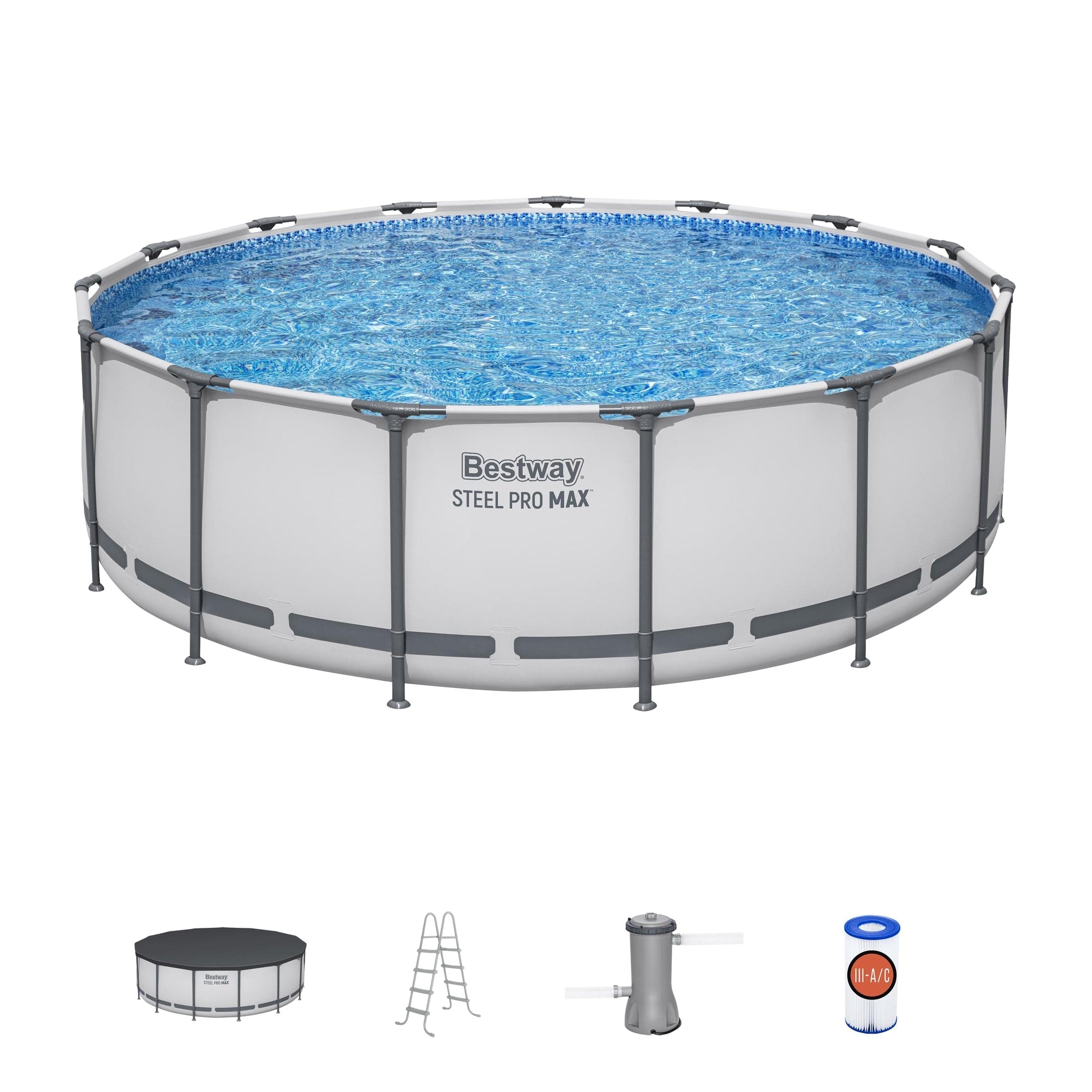
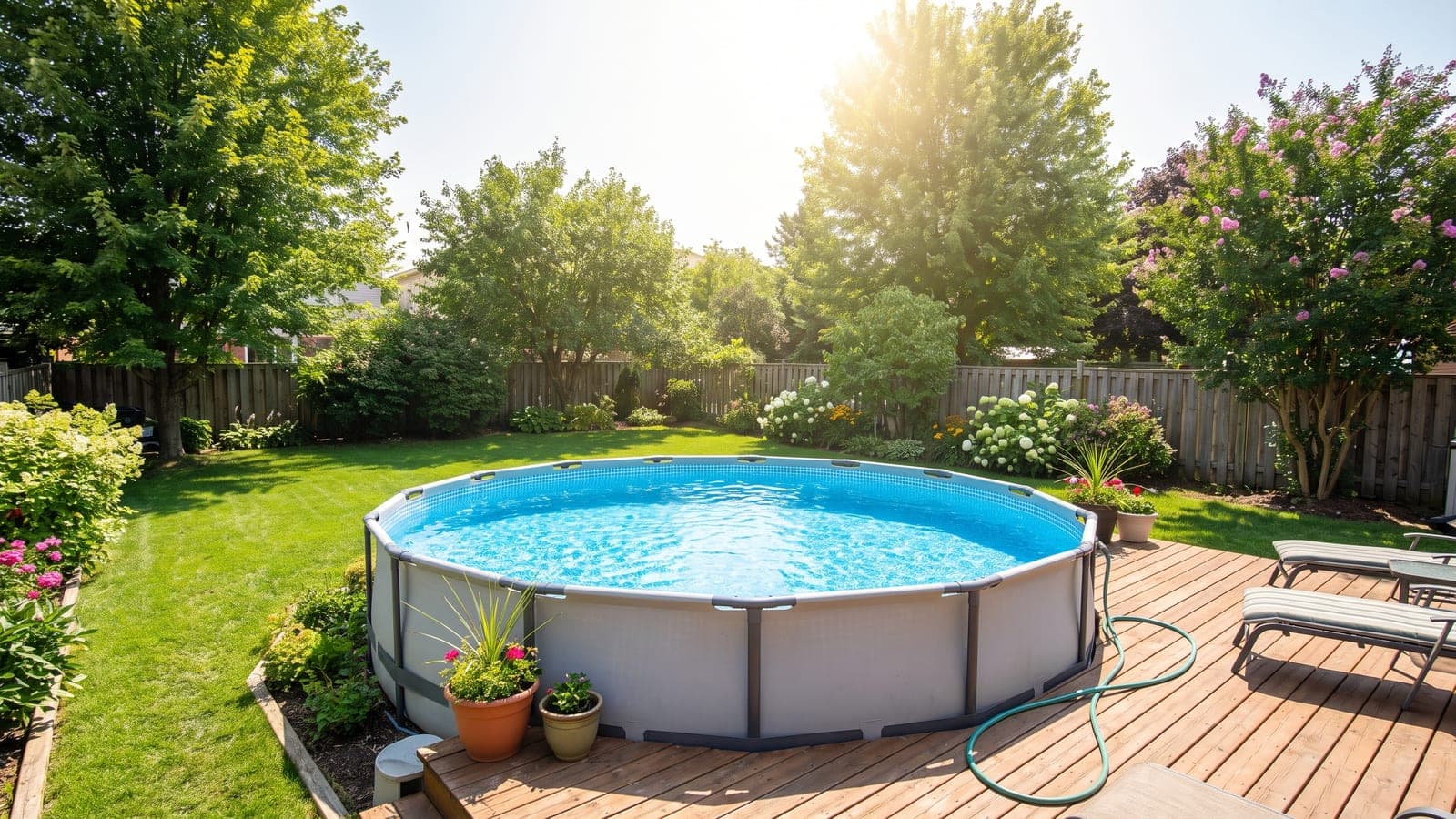
Pool pump and hoses connected beside an above-ground pool

Which pool is best for a small yard?

For a small yard, the best above-ground pool is usually a smaller round frame pool or a narrow rectangular pool with enough side clearance for the ladder and pump. Do not use every inch of the yard.

Small-yard buyers should read above-ground pool in a small yard before buying anything. The issue is rarely the pool diameter by itself. It is the pool plus the ladder, pump, cover, hose path, storage bin, and safe walking space.

A small pool can still be great if the goal is honest:

  • Cooling off
  • Kids playing
  • Floating
  • Quick evening swims
  • Low-pressure summer fun

A small pool is not great if the goal is serious swimming, big parties, or pretending your backyard is a resort. That is how people end up buying too much pool and too little equipment.

Which pool is best for families?

For families, the best above-ground pool is usually a medium frame pool with a sturdy ladder, enough water volume to avoid instant crowding, and a pump/filter setup that can handle heavy use. Kids turn clean water into science class very quickly.

Family pools need:

  1. A stable ladder.
  2. A cover that actually gets used.
  3. A skimmer net near the pool, not buried in the shed.
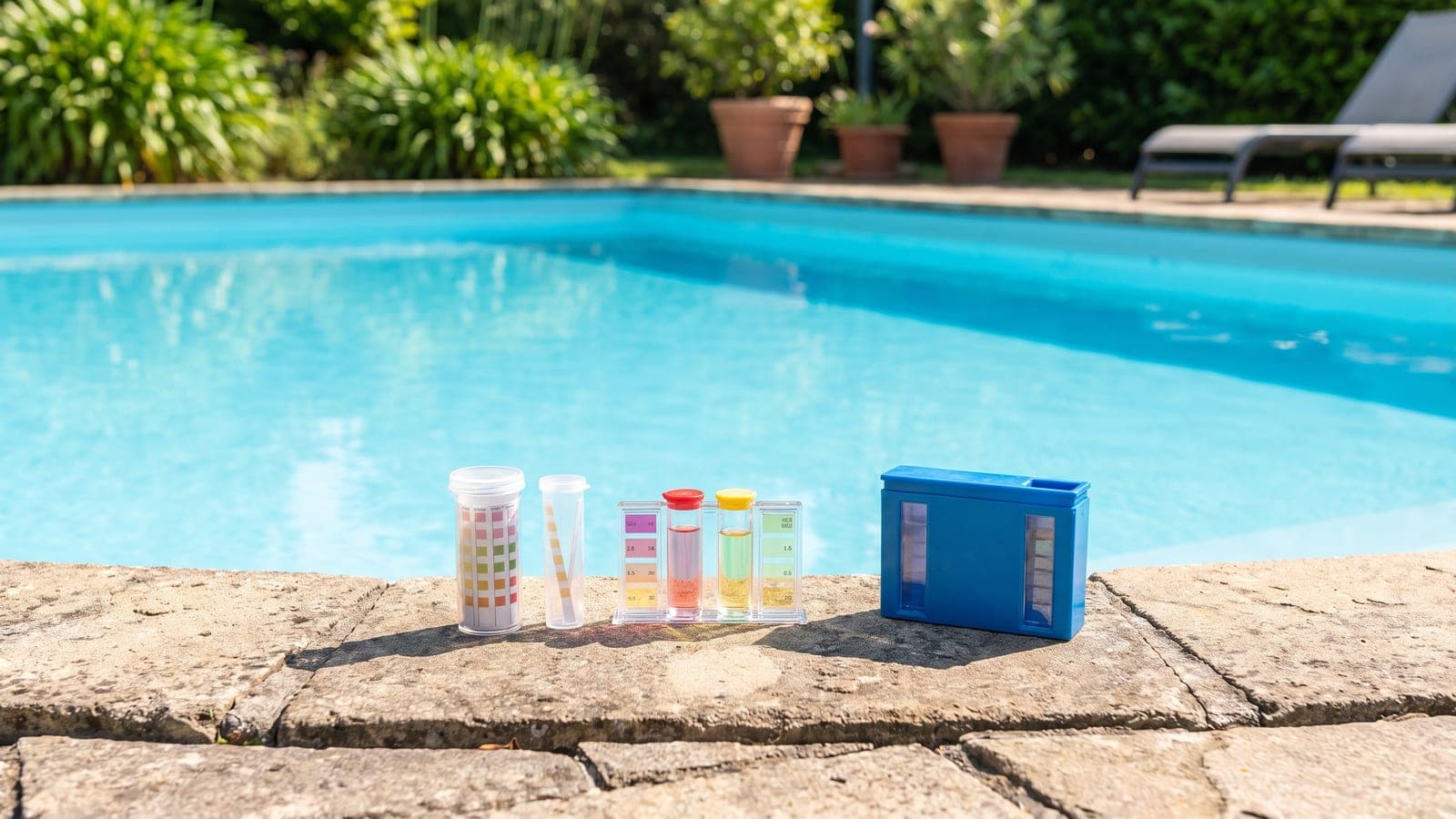
  4. Test strips or a liquid test kit.
  5. A pump schedule.
  6. Clear rules about toys, food, and “I definitely did not pee.”

A round pool works well for younger kids because everyone is in the same shared space. A rectangular pool works better for games and floating. If the pool will be used daily, upgrade the maintenance setup before upgrading the diameter.

The weekly pool maintenance checklist is the page to link here. Families do better with a short repeatable routine than a giant chemical chart taped to the garage wall.

Which pool is best if you hate maintenance?

If you hate maintenance, buy a smaller pool with a better pump, a good cover, a simple test routine, and an easy cleaning plan. Do not buy the largest pool your yard can physically hold.

Maintenance-haters should prioritize:

UpgradeWhy it helps
Better pump/filterKeeps water moving and makes chemistry easier
Pool coverReduces debris, evaporation, and heat loss
Robotic cleaner or vacuumHandles floor debris before it breaks down
Skimmer socksHelps catch pollen and fine surface junk
Liquid test kitReduces guessing
Storage binKeeps chemicals dry and separated

DOE’s pool-cover guidance is worth using in your buying logic. Covers can reduce heat loss and evaporation, which means less water replacement, less heater work if heated, and less junk falling into the pool when it is closed.

If the idea of weekly testing already annoys you, do not buy a huge above-ground pool because it looks good in a product photo. Buy the setup you will maintain when it is hot, buggy, and you have already had enough.

What should you buy with an above-ground pool?

Most above-ground pool kits are not complete ownership kits. You usually need more than the box includes.

What you need

[Affiliate module: above-ground pool starter kit]

Include product cards for:

  • Above-ground pool kit
  • Upgraded filter pump or sand filter
  • Pool ladder
  • Pool cover
  • Ground cloth or pool pad
  • Skimmer net
  • Vacuum or robotic cleaner
  • Test strips or liquid test kit
  • Startup chlorine or salt system supplies
  • Storage bin for chemicals

Use two CTA buttons on each card:

  • Shop Amazon
  • Shop Specialty Retailer

Add this disclosure above the cards:

We may earn a commission when you buy through links on this page. Prices and availability can change, so check the retailer before buying.

Do not hide the accessories. This page should be honest. The reader will trust the site more if you say, “The pool is only part of the cost,” before the retailer says it with a cart total.

What mistakes make above-ground pools annoying?

The biggest mistakes are buying too large, skipping ground prep, trusting the included pump too much, ignoring replacement parts, and forgetting that pools need a routine.

Here is the short danger list:

MistakeWhy it hurts
Buying the biggest pool that fitsLeaves no room to maintain it
Filling before checking levelWater weight exposes every shortcut
Relying on a tiny included pumpCloudy water becomes normal
Skipping a coverMore debris, evaporation, and heat loss
No test kitEvery chemical decision becomes guessing
No cleaning planDebris turns into stains and algae food
Ignoring local rulesFences, barriers, electric, and permits may apply

The safety side matters too. PoolSafely/CPSC resources are useful to link from any pool-buying page because barriers, supervision, drain safety, and child access are not optional details.

This is also where you can link to pool buying mistakes and how much a pool really costs.

This page should send readers into the calculator and maintenance cluster. The best next step is not “buy the biggest pool.” It is “run the numbers and choose the setup you can maintain.”

Suggested internal links:

The best above-ground pool is not the one with the most impressive product image. It is the one you can set up correctly, keep clean, and enjoy without turning your backyard into a part-time job.

Frequently asked questions

What is the best above-ground pool for most yards?

For most yards, the best above-ground pool is a steel-frame or resin-frame pool that fits the flat space you actually have, includes a properly sized pump, and leaves room around the outside for a ladder, cover, and maintenance access.

Is a round or rectangular above-ground pool better?

Round pools are usually easier to place and support in small yards. Rectangular pools feel better for floating, games, and short swim lanes, but they need more clear side space and careful leveling.

Should I buy an above-ground pool with a cartridge pump or sand filter?

A cartridge pump is simple and cheap for smaller pools. A sand filter is often less annoying for larger pools because it handles more water and does not require constant cartridge replacement.

Do above-ground pools need perfectly level ground?

Yes. Above-ground pools are heavy, and unlevel ground can stress the frame, liner, legs, and seams. Follow the pool maker's setup instructions and fix the site before filling.

What should I buy with an above-ground pool?

Plan for a pump, filter media, ladder, cover, ground protection, test kit, skimmer net, vacuum or robot, startup chemicals, and a safe way to store pool chemicals.
The weekly skim

One short email a week: what to test, what to buy, and what to skip. No daily drip. Unsubscribe anytime.

Keep reading