How long does a pool robot last? A good robotic pool cleaner can last several swimming seasons, but there is no magic number that applies to every model, pool, owner, and backyard circus.
The honest answer is that lifespan depends on build quality, run schedule, water chemistry, storage, debris load, repair parts, and whether you treat the robot like equipment or like a disposable pool toy with ambition.
Key takeaways
- Warranty length is not the same thing as expected lifespan.
- Filters, tracks, brushes, baskets, wheels, cords, and batteries are the parts most likely to need attention first.
- Good habits matter: clean the filter, remove the robot after cycles, and store it shaded and dry.
- A cheaper robot may still be a good buy if your pool is simple and the cost per year works.
- Before replacing a robot, compare repair cost, age, parts availability, and what a newer model actually fixes.
Table of contents
- What is a realistic lifespan for a pool robot?
- Why is warranty not the same as lifespan?
- What makes a pool robot wear out faster?
- Which parts usually fail or wear first?
- Do cordless pool robots have different lifespan issues?
- Is it worth repairing an old pool robot?
- What is the cost-per-year way to judge value?
- How do you make a pool robot last longer?
- What should you buy before replacing the whole robot?
- When should you replace it instead of fixing it?
What is a realistic lifespan for a pool robot?
A realistic pool robot lifespan is best thought of in seasons, not promises. A well-maintained cleaner from a reputable brand can often make it through several seasons, while a poorly matched or neglected cleaner may feel tired much sooner.
The lifespan depends on the job. A robot cleaning a screened, low-debris pool twice a week has an easier life than a robot eating oak leaves, sand, pollen, acorns, dog hair, and storm debris every day from April to October.
Main factors:
| Factor | Easy life | Hard life |
|---|---|---|
| Pool size | Small or medium pool | Large pool at the edge of the robot rating |
| Debris | Dust and small leaves | Heavy leaves, sand, acorns, palm fibers |
| Run schedule | 2–4 times weekly | Daily for long stretches |
| Storage | Dry, shaded, clean | Full sun, wet basket, tangled cord |
| Chemistry | Balanced water | Frequent high chlorine, low pH, or salt issues |
| Parts | Filters and brushes replaced when needed | Worn parts ignored until performance collapses |
A robot does not fail all at once most of the time. It starts by cleaning worse, climbing worse, getting stuck more often, taking longer, or leaving behind the exact dirt you bought it to remove. That is your clue to inspect parts before calling the whole machine dead.
Why is warranty not the same as lifespan?
Warranty length tells you how long the manufacturer covers certain defects under certain rules. It does not tell you exactly how long the cleaner will last in your pool.
Maytronics says Dolphin warranty length varies by model and is typically in the 24- to 36-month range. That is useful when comparing models, but it is not the same as saying every robot lasts only two or three years.
Warranty also may not cover:
- Normal wear parts
- Misuse
- Chemical damage
- Physical damage
- Improper storage
- Unauthorized repairs
- Commercial use if the model is residential
- Buying from an unauthorized seller
Always check the warranty page for the exact model and retailer. If a robot is expensive, warranty support and parts availability matter almost as much as the feature list.
A fancy robot with no easy parts path is like buying a sports car from a guy who says, “Good luck with the tires.”
What makes a pool robot wear out faster?
A pool robot wears out faster when it runs too often for the debris load, sits in poor water chemistry, is stored wet or in direct sun, collects oversized debris, or is used in a pool it was not built to clean.
Common robot-aging habits:
- Leaving the robot in the pool permanently.
- Forgetting to clean the filter basket.
- Pulling the cleaner out by the cord.
- Letting cords twist and kink.
- Running it after huge storms before skimming large debris.
- Using it during heavy chemical treatment.
- Storing it in full sun.
- Ignoring worn tracks, brushes, or filters.
- Buying a small robot for a large or complicated pool.
The wrong robot can also age faster. A cleaner designed for flat above-ground pools may struggle in an inground pool with slopes, benches, drains, and walls. A robot with basic filtration may disappoint if your pool gets fine sand or pollen.
Use the pool robot finder before buying, especially if your pool shape is weird. Weird pools are allowed. They just need honest matching.
Which parts usually fail or wear first?
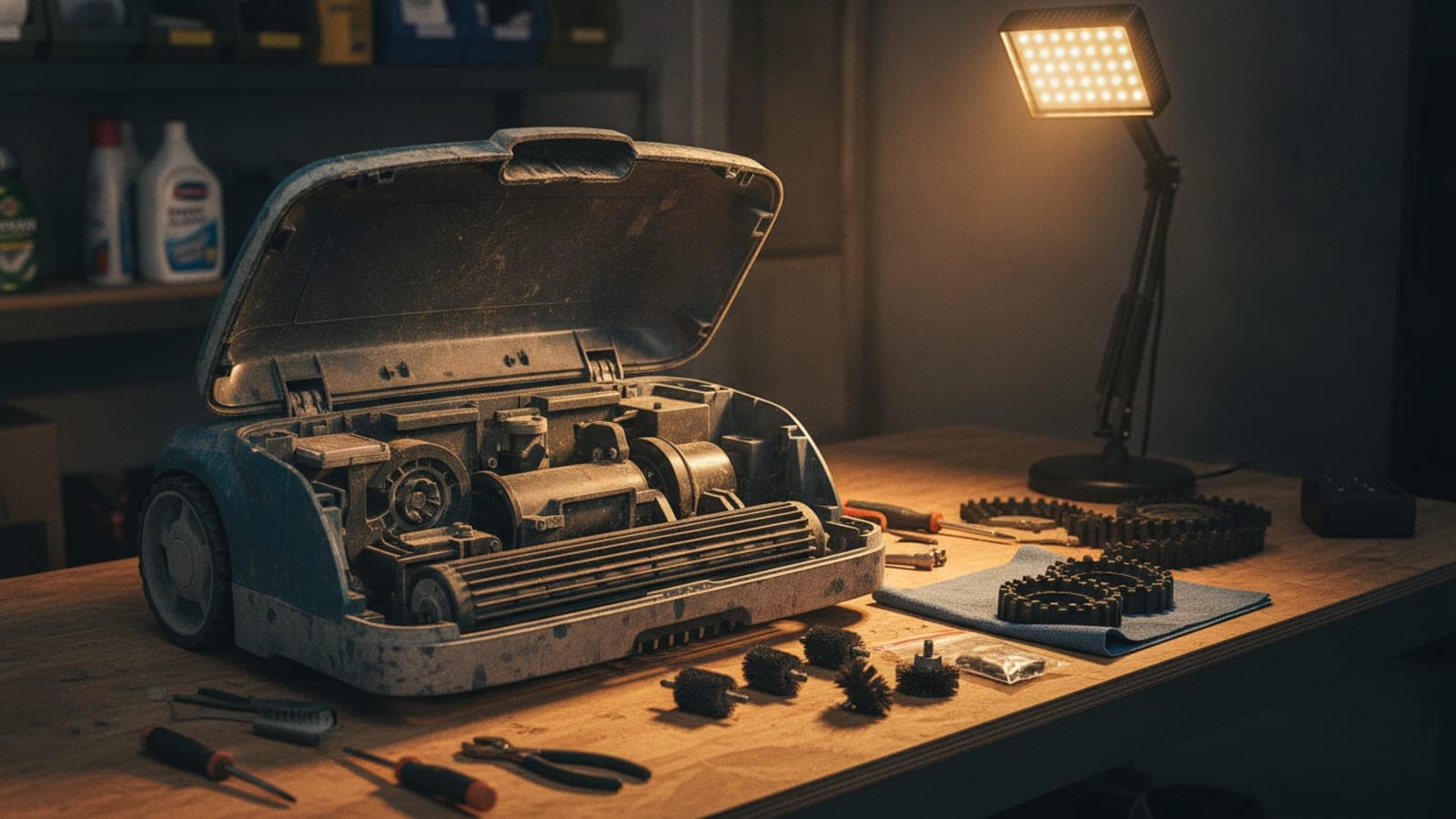
Filters, brushes, tracks, wheels, belts, cords, baskets, and seals are common pool robot wear items. On cordless models, battery health and charging contacts matter too.
| Part | Symptom | First move |
|---|---|---|
| Filter basket/panels | Poor pickup, debris escaping | Rinse deeply or replace filter |
| Brushes | Weak scrubbing, missed film | Replace worn brushes |
| Tracks/treads | Slipping, poor wall climbing | Inspect wear and fit |
| Wheels | Uneven movement or sticking | Clean axle area and inspect damage |
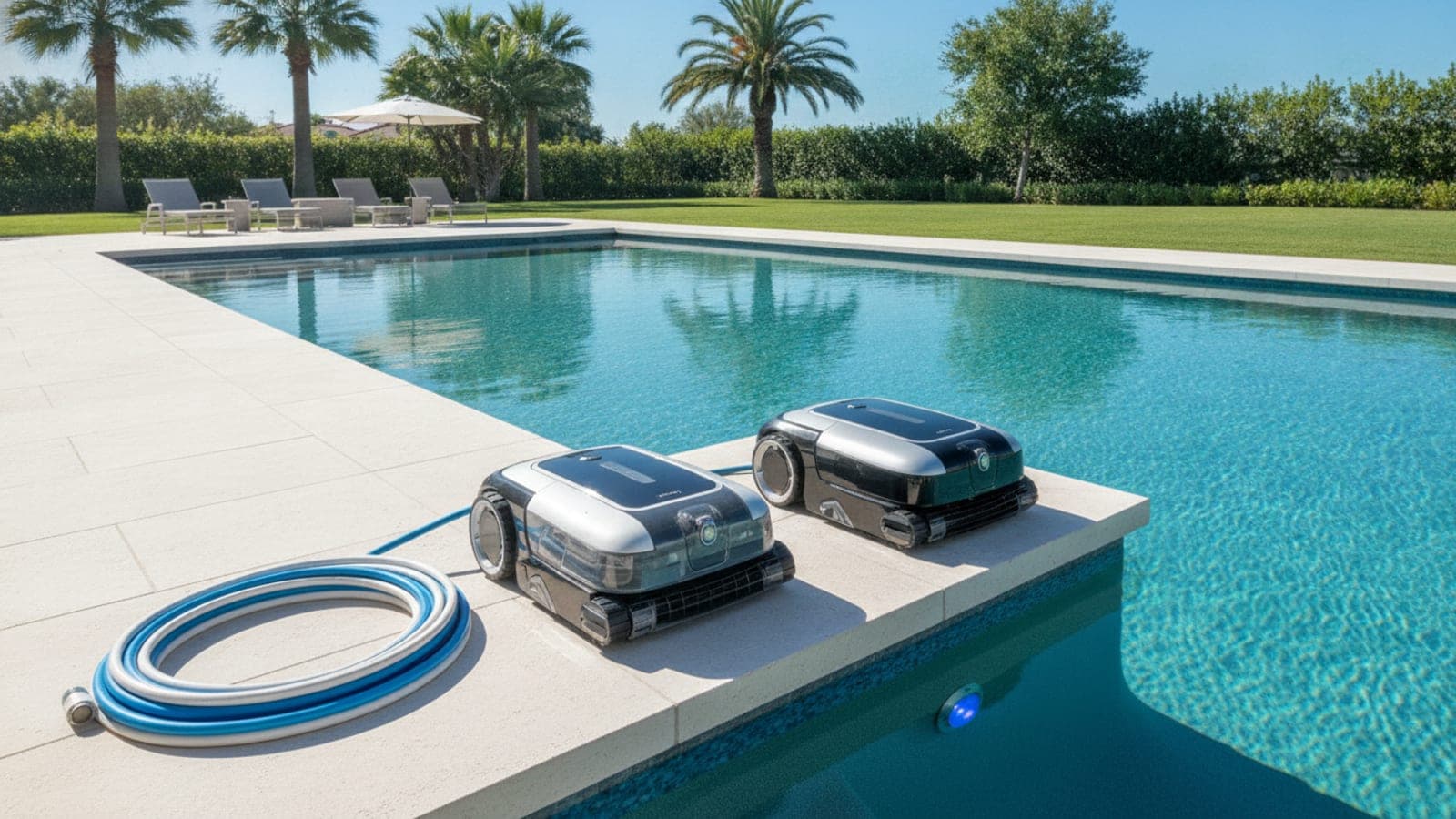
| Cord | Tangling or communication issues | Untwist, inspect, check swivel if present |
| Power supply | No start or intermittent power | Check outlet, connections, model support |
| Battery | Short runtime or charging problems | Follow manual, contact support |
| Impeller area | Weak suction or strange noise | Turn off, inspect for hair/string/debris |
Do not jump straight to replacement because the robot missed a patch. Start with filter cleaning, brush inspection, track inspection, and the manual’s troubleshooting steps.
Do cordless pool robots have different lifespan issues?
Cordless robots trade cord problems for battery and charging problems. That can be a great trade, but it is still a trade.
Cordless advantages:
- No floating cable across the pool.
- Less cord tangling.
- Easier setup for some owners.
- Good fit for simple pools and quick cleanups.
Cordless concerns:
- Battery runtime fades over time.
- Charging contacts need care.
- The robot must be removed and charged.
- Long cleaning cycles can be limited by battery size.
- Battery replacement may be expensive or unavailable on some models.
Corded robots have their own issues: cords can tangle, swivels can wear, and power supplies need dry, safe placement. Neither type wins every pool.
If your pool has heavy leaves and needs long cleaning cycles, do not buy cordless just because the word sounds convenient. If your main complaint is cord wrestling, cordless might be worth it.
Is it worth repairing an old pool robot?
Repair is worth considering when the robot is otherwise solid and the problem is a normal wear part. Replacement makes more sense when the motor, battery, electronics, and several wear parts are all asking for money at the same time.
Ask these questions:
- Is the robot still within warranty?
- Was it bought from an authorized retailer?
- Are replacement parts available?
- Is the issue a wear item or a major component?
- Would repair cost less than half the price of a better replacement?
- Does the current robot actually fit your pool?
- Would a new model fix a real problem, or just feel shiny?
Example:
A four-year-old robot needs new filters and tracks. It still starts, climbs, and runs full cycles. That is probably a repair candidate.
A five-year-old cordless robot has weak battery life, cracked plastic, poor climbing, unavailable parts, and a basket held together by optimism. That may be replacement time.
What is the cost-per-year way to judge value?
Cost per year is the purchase price plus expected parts and accessories divided by the years you realistically expect to use the robot. It is not perfect, but it beats judging only by sticker price.
Simple formula:
(robot price + expected parts/accessories) ÷ expected years of use = estimated cost per year
Example scenario:
| Option | Upfront cost | Parts/accessories | Expected useful years | Estimated cost per year |
|---|---|---|---|---|
| Budget robot | $500 | $100 | 2 | $300/year |
| Midrange robot | $900 | $150 | 4 | $262/year |
| Premium robot | $1,500 | $250 | 5 | $350/year |
Those are placeholder examples, not promises. Use your actual prices, warranty, pool size, and debris load in the robot vs pool service cost calculator.
The point is that the cheapest robot is not always the cheapest ownership. But the most expensive robot is not automatically the smartest either. Sometimes it is just wearing a tiny tuxedo.
How do you make a pool robot last longer?
You make a pool robot last longer by reducing unnecessary wear and keeping it clean between cycles. Most of the good habits take less than five minutes.
Do this:
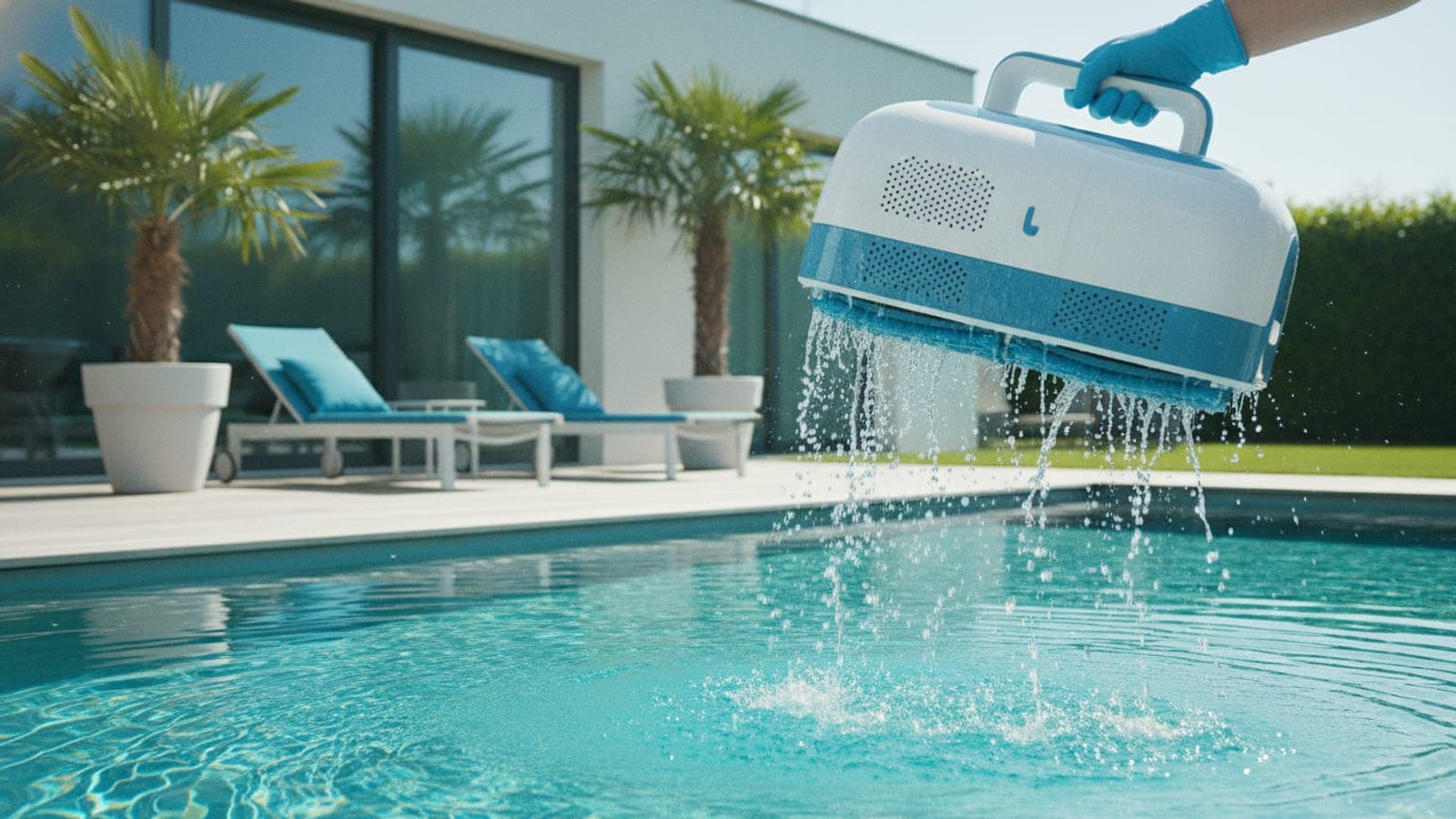
- Empty and rinse filters after each cycle.
- Remove the robot after use unless the manual allows scheduled in-pool operation.
- Store it dry and shaded.
- Do not pull it by the cord.
- Untwist and loosely coil cords.
- Keep charging contacts clean and dry on cordless models.
- Skim big debris before running the robot after storms.
- Brush stairs, benches, and corners the robot misses.
- Keep water chemistry in range.
- Replace worn filters, brushes, and tracks before performance falls apart.
Maytronics specifically emphasizes filter cleaning after use because a clogged filter blocks water flow. That is the kind of small maintenance habit that makes a cleaner feel stronger than it is.
What should you buy before replacing the whole robot?
Before replacing the whole robot, check whether a cheaper accessory or wear part solves the problem. Many owners buy a new cleaner when they actually need filters, tracks, brushes, or a better storage setup.
What you need
- Replacement filter panels or baskets if suction and pickup have dropped.
- Ultra-fine filters if the robot catches leaves but misses pollen, sand, or silt.
- Replacement tracks or treads if climbing has gotten worse.
- Replacement brushes if scrubbing is weak.
- A pool robot caddy if storage and cord handling are causing damage.
- A new robotic pool cleaner if the old unit is wrong for your pool or major parts are failing.
Disclosure: PoolPros may earn a commission when you buy through links on this page. As an Amazon Associate, we earn from qualifying purchases.
Internal product modules to add:
- Best robotic pool cleaners for real backyards
- Best robotic pool cleaners for fine dirt and sand
- Replacement pool robot filters
- Pool robot tracks, brushes, and caddies
When should you replace it instead of fixing it?
Replace the robot when repairs are expensive, parts are hard to find, cleaning performance no longer matches your pool, or the robot’s design is the real problem.
Replacement makes sense when:
- Parts are unavailable or oddly expensive.
- The robot is out of warranty and has a major motor/electronic issue.
- Battery runtime is no longer useful and battery service is not practical.
- It cannot clean your pool shape, walls, waterline, or debris type.
- It gets stuck constantly even after normal troubleshooting.
- You need features the old model simply does not have.
Repair makes sense when:
- The issue is filters, brushes, tracks, or baskets.
- The robot still runs full cycles.
- Warranty support is available.
- The cleaner fits your pool and used to perform well.
- Replacement cost is much higher than the repair.
The best answer is not “always repair” or “always upgrade.” It is “spend money where the problem actually is.” Pool ownership is expensive enough without buying a new robot because the old one needed a $40 filter and a rinse.
External sources to verify before publishing
Frequently asked questions
How long does a pool robot last?
A pool robot can last several swimming seasons with good care, but the exact lifespan depends on model quality, pool size, run frequency, water chemistry, storage, and whether replacement parts are available.
Is the warranty the same as lifespan?
No. Warranty length tells you the manufacturer’s coverage period, not the guaranteed life of the cleaner. Some robots last beyond warranty and some fail earlier because of misuse, damage, or bad conditions.
Which parts wear out first on a pool robot?
Filters, brushes, tracks, wheels, belts, cords, seals, and baskets are common wear items. Batteries are an important long-term concern on cordless models.
Is it worth repairing a robotic pool cleaner?
Repair is usually worth considering when the body, motor system, and power supply are still sound and the issue is a normal wear part. Replacement makes more sense when several expensive parts fail at once.
How do I make a pool robot last longer?
Remove it after cycles, clean the filter, store it shaded and dry, keep water balanced, avoid running it with people in the pool, and do not force it to collect large debris it was not designed to handle.
Do cordless pool robots last as long as corded models?
It depends on the model and battery system. Cordless robots remove cord problems but add battery care, charging, and long-term battery replacement considerations.