PoolGearGuide

How Much Does a Pool Really Cost After the Pretty Brochure?

By the PoolGearGuide editorial team · Updated 2026-07-03

Share

How much does a pool cost after the pretty brochure? More than the pool itself. The real cost is the pool plus site work, equipment, electrical, permits, safety, cleaning tools, chemicals, water, electricity, covers, repairs, and financing if you borrow the money.

That does not mean a pool is a bad idea. It means the brochure price is the opening scene, not the whole movie. The expensive part is usually not one surprise. It is ten reasonable extras arriving in a trench coat.

Key takeaways:

  • Pool cost should include installation and ownership, not just the pool shell or kit.
  • The same pool can cost very different amounts depending on yard access, soil, slope, decking, fencing, and equipment choices.
  • Ongoing costs include water care, pump electricity, filters, covers, cleaning, repairs, and heating if used.
  • Financing should be compared by APR, monthly payment, term, fees, and total repayment.
  • The smartest budget includes a “stuff we forgot” line, because pools are gifted at finding it.

Table of contents

![Pool cost planning worksheet with equipment safety and maintenance categories]([ADD IMAGE URL])

What does the pool price usually leave out?

The pool price often leaves out the parts that make the pool usable, safe, comfortable, and maintainable. That is why two people can buy “a pool” and end up with wildly different final costs.

Depending on the project, the full budget may include:

  • Pool kit, shell, liner, or structure.
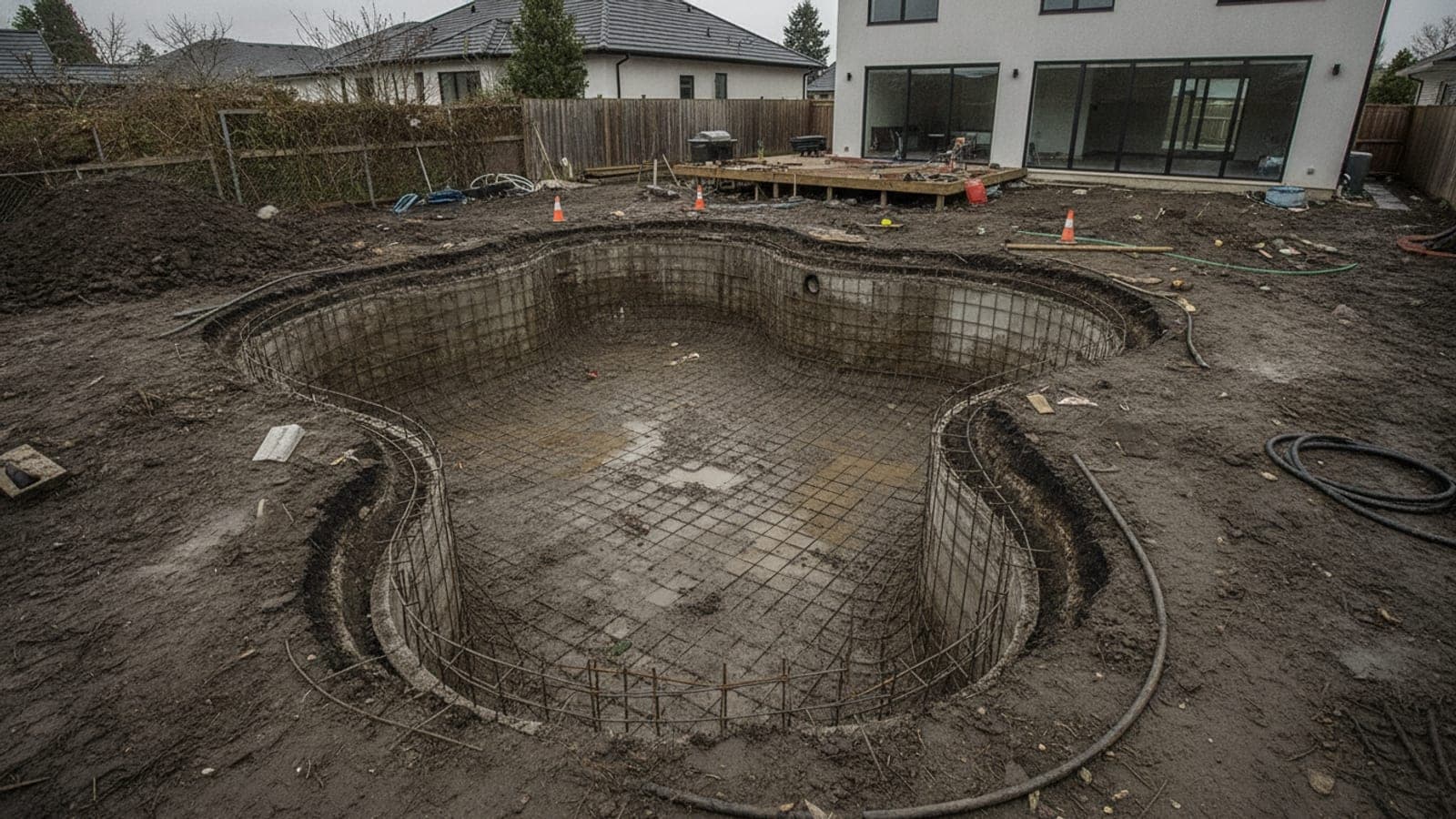
  • Excavation or ground prep.
  • Delivery and access work.
  • Permits.
  • Electrical.
  • Plumbing.
  • Pump and filter.
  • Heater or heat pump.
  • Salt system or chlorination equipment.
  • Decking, patio, or base materials.
  • Fence, gate, cover, ladder, and safety equipment.
  • Test kit and chemicals.
  • Cleaner or service.
  • Water fill.
  • Landscaping repairs.
  • Maintenance storage.

The brochure usually highlights the fun part. The invoice is where the trenching lives.

Use the pool cost calculator to create categories before you collect quotes. A category-based estimate is harder to fool than a single shiny number.

Why do pool estimates vary so much?

Pool estimates vary because the pool is only one part of the job. Yard access, soil, slope, drainage, utilities, local rules, equipment selections, finish choices, and safety requirements can all change the cost.

Major cost drivers include:

Cost driverWhy it matters
Pool typeAbove-ground, vinyl, fiberglass, concrete, plunge, and spa combinations differ
Yard accessTight access can slow labor and equipment movement
Soil and slopePrep, excavation, drainage, and retaining needs can change fast
EquipmentPump, filter, heater, automation, salt system, and cleaner choices vary
DeckingSimple access versus full patio changes the project
SafetyFence, gates, covers, alarms, and compliant hardware matter
UtilitiesElectrical and gas runs can be substantial
Local rulesPermits, inspections, setbacks, and code requirements vary

This is why “what does a pool cost” is hard to answer with one number. A better question is “what does this pool cost in this yard with this equipment and this maintenance plan?”

How should you compare above-ground and inground pool costs?

Compare above-ground and inground pool costs by looking at total ownership, not just upfront price. Above-ground pools often cost less to start, but they still need ground prep, equipment, safety, covers, water care, and eventual replacement planning.

CategoryAbove-ground poolInground pool
Upfront projectUsually lowerUsually higher
Site workStill importantOften major
Lifespan planningKit and liner replacement matterSurface, liner, shell, and equipment matter
EquipmentCan be basic or upgradedUsually more substantial
Decking/patioOptional but commonOften part of project
SafetyStill requiredStill required
MaintenanceReal pool careReal pool care

Above-ground is not “cheap pool mode.” It is “different pool mode.” You can keep it simple, or you can accidentally build a mini water park with receipts.

The above-ground pool cost calculator should separate kit cost, ground prep, pump/filter, ladder, cover, cleaning, chemicals, and accessories.

What equipment costs belong in the first budget?

Equipment belongs in the first budget because weak equipment can make a pool harder to own from the beginning. The pump, filter, cover, and cleaner are not afterthoughts.

Budget for:

  • Pump.
  • Filter.
  • Filter media or cartridges.
  • Heater or heat pump if desired.
  • Salt system if desired.
  • Skimmer and returns.
  • Timer or automation.
  • Cover and cover accessories.
  • Robotic cleaner or manual vacuum.
  • Test kit.
  • Startup chemicals.
  • Storage for chemicals and tools.

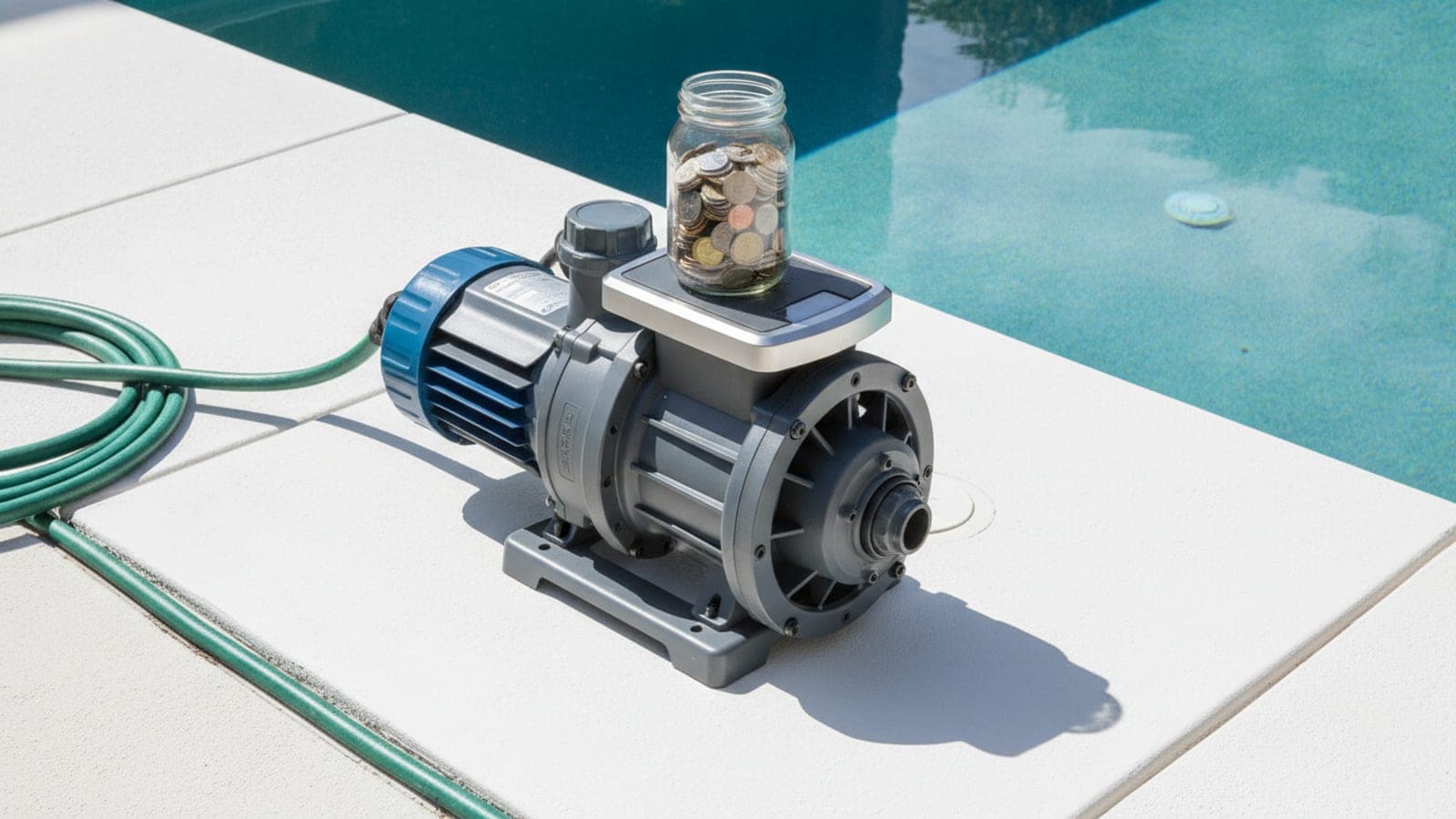
ENERGY STAR notes that certified pool pumps can use less energy than standard pumps. DOE also says pool covers are one of the most effective ways to reduce pool heating costs. Those two details belong in the cost conversation, especially if you plan to heat the pool or run equipment often.

What monthly pool costs should you expect?

Monthly pool costs usually include electricity, water care, cleaning, replacement supplies, and service if you hire it. Heated pools, leafy yards, heavy use, and older equipment can raise the number.

Instead of pretending there is one normal monthly cost, build your estimate from inputs:

  • Pump runtime.
  • Pump efficiency.
  • Heater use.
  • Chemical demand.
  • Pool volume.
  • Debris level.
  • Whether you hire service.
  • Filter replacement frequency.
  • Cleaner parts.
  • Water top-offs.

Use the pool chemical cost calculator, pool pump run time calculator, and robot vs service cost calculator to make the recurring cost visible.

How do covers, pumps, and robots change the math?

Covers, pumps, and robots can either add cost or reduce irritation. The trick is to judge them by the problem they solve, not just the price tag.

A cover can reduce debris and evaporation. If the pool is heated, DOE says covering the pool when not in use is a major way to reduce heating costs. A better pump may reduce energy use or improve circulation. A robot may reduce manual vacuuming or service needs.

UpgradeCosts more upfrontCan help with
Good coverYesDebris, evaporation, heat retention
Variable-speed pumpYesEnergy use, quieter operation, flexible schedules
Robotic cleanerYesFloor/wall cleaning, less manual vacuuming
Better test kitSlightlyFewer chemical guesses
Larger filterOftenLonger cycles between cleaning, better clarity

This is where cheap can get expensive and expensive can be sensible. Annoying, but true.

What you need module:

  • Pool cover matched to the pool.
  • Efficient pump or correctly sized replacement pump.
  • Test kit.
  • Robotic cleaner or manual vacuum.
  • Chemical starter kit.
  • Filter cartridges or media.
  • Storage bin and safety gear.

Affiliate placement idea: show “cost-control gear” product cards after this section: cover, test kit, pump timer, efficient pump, robot, and filter replacements.

How does financing change the real cost?

Financing changes the real cost by adding interest, fees, and time. The monthly payment may feel manageable while the total repayment is much larger than the pool price.

The CFPB explains that APR measures the interest rate plus certain fees charged with the loan. That makes APR useful when comparing options because two loans with similar payments can have different total costs.

Before financing, compare:

  • Amount borrowed.
  • Interest rate.
  • APR.
  • Fees.
  • Term length.
  • Monthly payment.
  • Total repayment.
  • Early payoff rules.

Use the pool loan calculator. If the project only works when you ignore total repayment, the pool is not cheaper. It is just quieter.

What is a realistic pool cost example?

Imagine two families buying pools.

Family A buys a modest above-ground pool, pays for proper ground prep, adds a cover, a reliable test kit, and a decent cleaning setup. The project is not the cheapest cart, but the water is manageable.

Family B buys a larger pool because the kit sale looks better. They skip the cover, keep the weak pump, and plan to figure out chemicals later. By mid-season they buy extra filters, shock, clarifier, a better vacuum, and eventually a bigger pump.

The cheaper pool was not cheaper. It was a payment plan disguised as frustration.

What should your pool cost calculator include?

A good pool cost calculator should include upfront and recurring costs. If it only asks for pool type and size, it is more of a wish list than a calculator.

Include these fields:

  • Pool type.
  • Pool size.
  • Site prep.
  • Installation labor.
  • Electrical.
  • Pump/filter.
  • Heater.
  • Cover.
  • Cleaner.
  • Safety barrier or ladder.
  • Water fill.
  • Startup chemicals.
  • Monthly chemical cost.
  • Pump electricity.
  • Service cost if hired.
  • Financing assumptions.
  • Maintenance reserve.

For internal linking, this page should point readers to the pool buying mistakes guide, pool cover guide, and weekly maintenance checklist.

![Homeowner comparing pool quote categories including equipment cover cleaner and monthly care]([ADD IMAGE URL])

When should you pause the project?

Pause the project when the budget only works by deleting safety, equipment, maintenance, or repair planning. Those are not luxury items. They are the parts that keep the pool usable.

Pause if:

  • You have no safety plan.
  • You have no maintenance budget.
  • The quote excludes major site work.
  • Financing terms are unclear.
  • The equipment is undersized.
  • The project depends on “we’ll figure that out later.”
  • You have not checked local rules.

A pool can be worth it. But it is much more enjoyable when the real cost is visible before the water shows up.

What numbers should you update after getting real quotes?

Once you have real quotes, update your calculator inputs instead of keeping the first rough estimate. A pool budget should get more accurate as you collect facts.

Update these fields after each quote:

Budget fieldWhy to update it
Site prepContractors may see slope, access, or drainage issues you missed
ElectricalEquipment location can change wire runs and panel needs
EquipmentModel choices affect upfront and operating cost
SafetyFencing, gates, covers, and alarms may be required
Decking/patioThis often grows after people imagine the finished yard
MaintenanceService quotes and chemical plans make recurring costs real
FinancingAPR and term change the total repayment

Keep the old estimate and the new estimate side by side. The change is useful. It tells you whether the project is becoming clearer or just becoming more expensive in slow motion.

What should PoolPros affiliate modules include on this page?

A cost guide should not shove random products at the reader. It should show items that actually affect the ownership budget.

Good modules for this page:

  • Pool cover comparison cards.
  • Efficient pump or timer cards.
  • Test kit cards.
  • Robotic cleaner decision cards.
  • Filter replacement or cartridge cards.
  • Chemical starter kit cards.
  • Safety ladder or gate reminder cards for above-ground readers.

Put the affiliate disclosure above the module and label the section plainly: “Gear that can change the cost.” That is more trustworthy than making every product look like a miracle.

Frequently asked questions

How much does a pool really cost?

A pool really costs the purchase or build price plus site work, equipment, safety, utilities, chemicals, cleaning, repairs, and financing costs if you borrow.

Why do pool estimates vary so much?

Estimates vary because yard conditions, pool type, size, equipment, access, permitting, decking, fencing, and finish choices can change the job.

What ongoing costs should pool owners expect?

Ongoing costs can include chemicals, electricity, water, replacement filters, covers, cleaner parts, service, heating, and occasional repairs.

Is an above-ground pool always cheaper than an inground pool?

Usually the upfront cost is lower, but the real comparison depends on site prep, equipment, deck plans, safety requirements, and how long you keep it.

Should I finance a pool?

Financing can make sense if the monthly payment and total repayment fit your budget, but compare APR, fees, term length, and total cost before signing.
The weekly skim

One short email a week: what to test, what to buy, and what to skip. No daily drip. Unsubscribe anytime.

Keep reading