A robotic pool cleaner is a machine that spends its life in a mild chemical bath, and the difference between one that lasts two seasons and one that lasts six is almost entirely maintenance. The good news: the routine is quick and mostly common sense. Here's how to keep yours running.
After every cycle
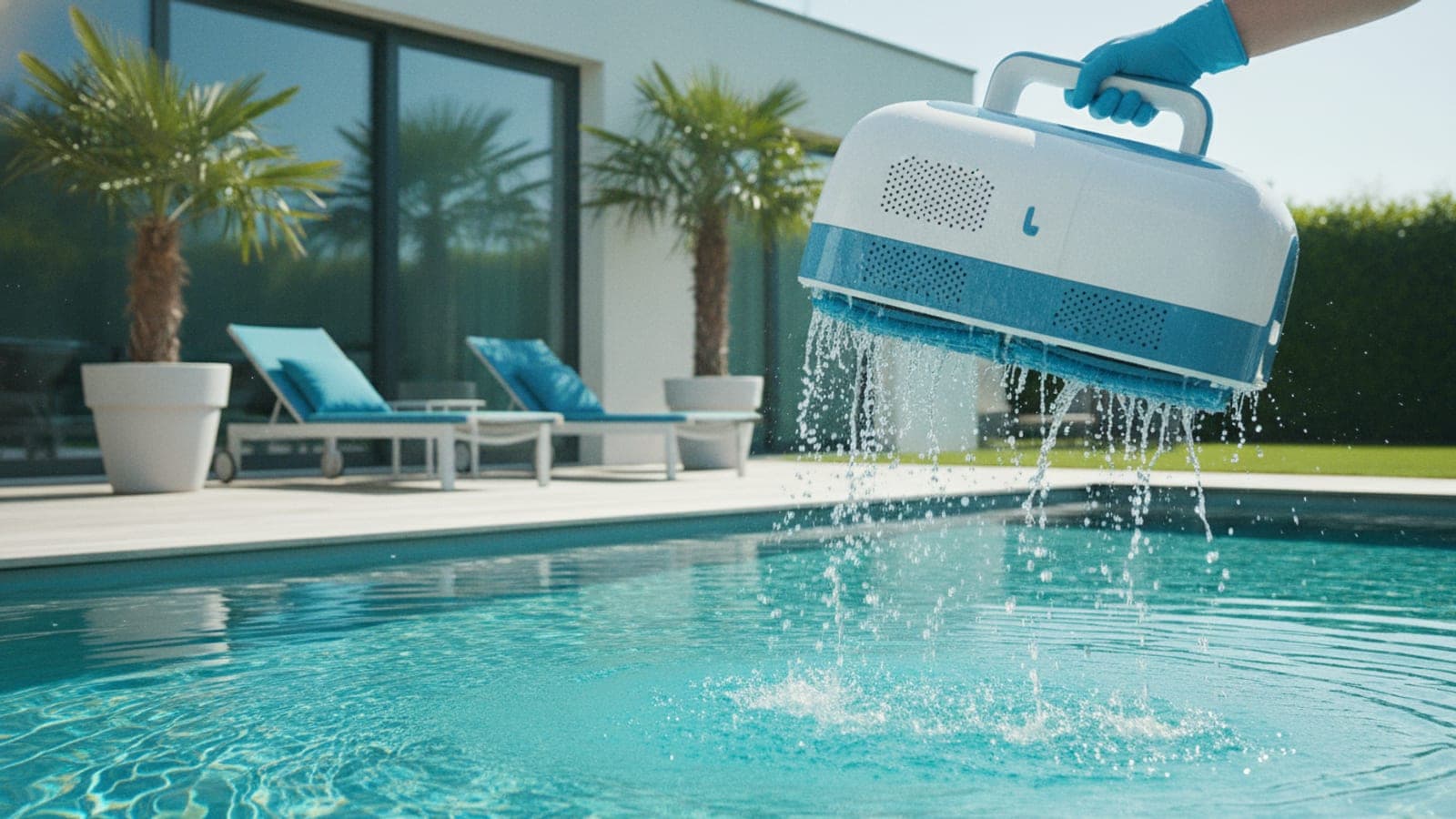
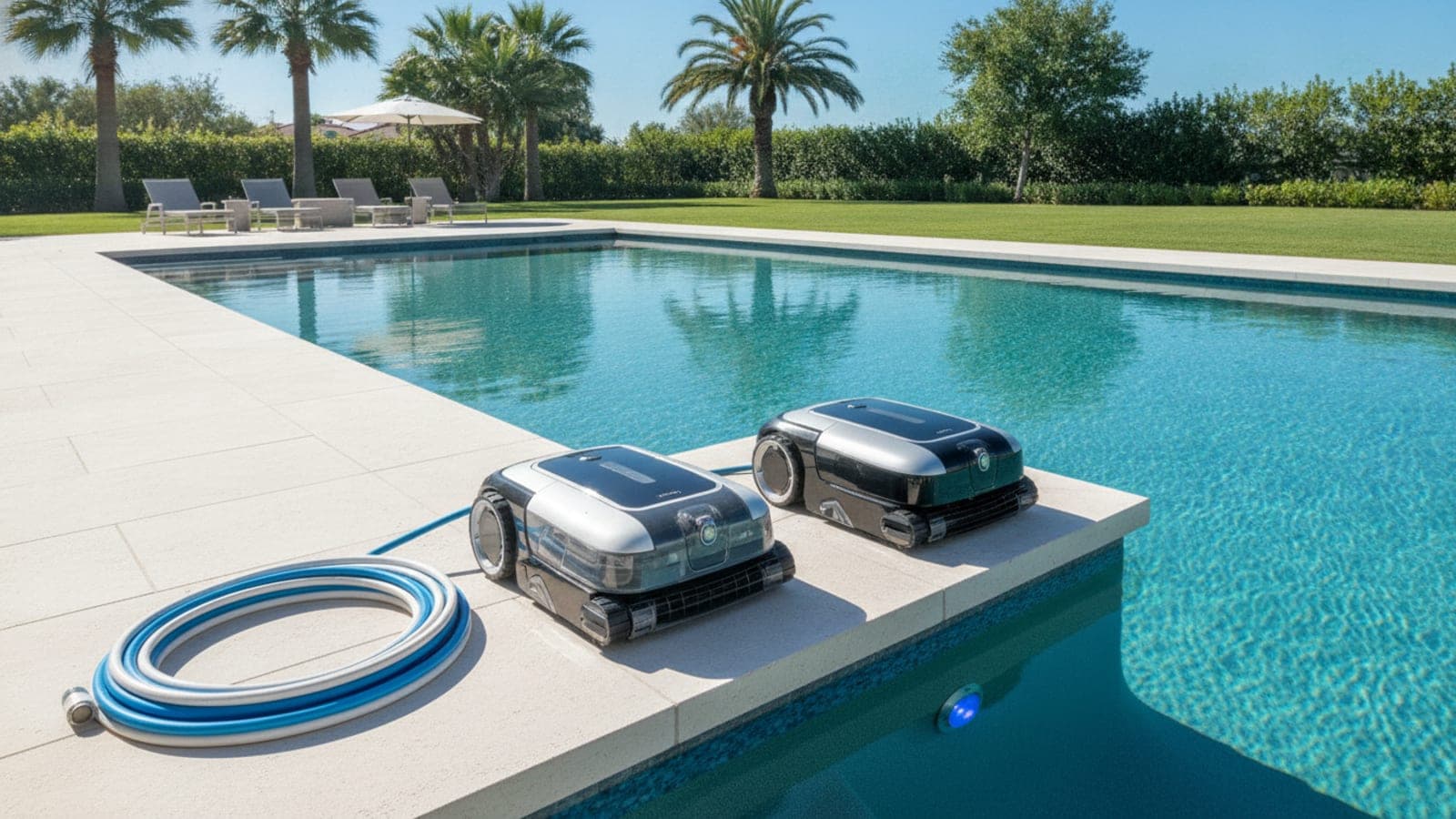
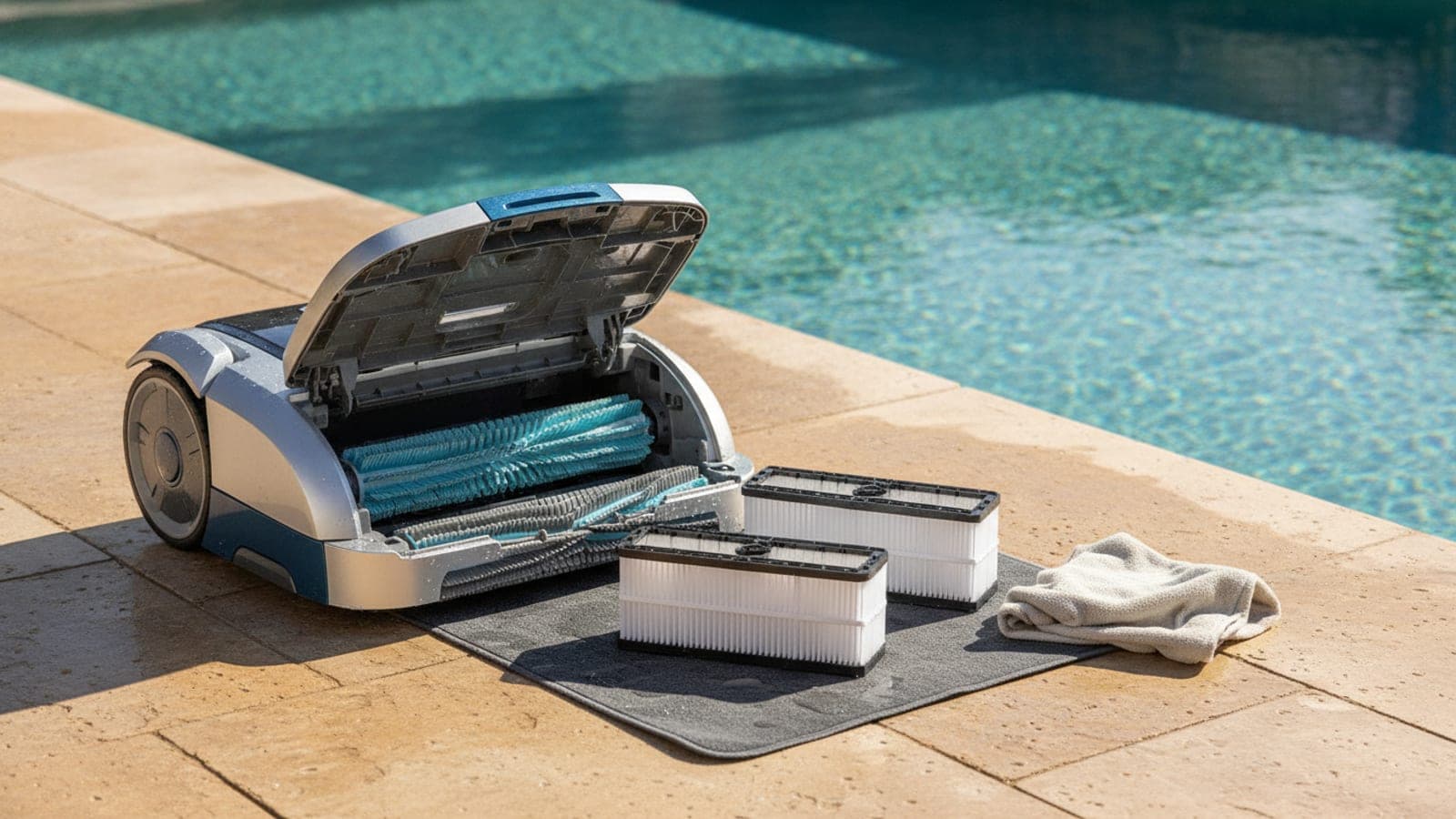
Build a five-minute habit around each run. When the robot finishes, lift it out of the pool — don't leave it sitting in the water between cycles — and open it up to empty the filter basket or cartridge. Hose the filter thoroughly with fresh water, spraying between the pleats or through the mesh to flush out the pollen, sand, and debris it just collected; a clogged filter is the number-one cause of weak suction and poor wall climbing. Rinse the body down, coil the cable loosely without kinks, and store the robot in the shade, out of direct sun.
Every few weeks
Give it a deeper check periodically through the season. Inspect the brushes and tracks for flattening, cracks, or missing material — worn brushes lose the grip a robot needs to climb walls, and they're cheap to replace. Check the filter cartridges for permanent clogging or tears and deep-clean them in a dedicated filter cleaner if a hose rinse no longer restores flow. Look over the cable for cuts or exposed wire, and make sure the swivel still turns freely so the cord doesn't tangle. Clear any hair or debris wrapped around the drive axles or impeller.
Water chemistry matters too
Your robot's lifespan is tied to your water. Balanced chemistry — pH and sanitizer in range — is far gentler on seals, brushes, and the housing than acidic or heavily over-chlorinated water, which accelerates wear. Never run the robot during or right after shocking the pool; wait until chlorine settles back to normal levels. Cloudy, algae-laden water also clogs filters fast and makes walls slick, so keeping the water clean actually reduces the strain on the machine.
Storage and winterizing
When you close the pool or store the robot for the off-season, do it properly: clean the filter and body one last time, make sure everything is fully dry to prevent mildew and corrosion, and store it indoors somewhere that won't freeze — freezing can crack the housing and damage seals and the battery. Coil the cable loosely rather than tightly. On cordless models, follow the manufacturer's guidance for storing the battery charged to the recommended level. A robot put away clean and dry comes back ready to work; one left damp and dirty comes back with problems.
Frequently asked questions
How do I clean my robotic pool cleaner?
After each cycle, remove and rinse the filter basket or panels with fresh water until they run clear, clear hair and debris from the brushes and tracks, and check the intake and impeller for anything wedged in. Do it while the debris is still wet — dried-on gunk is much harder to remove and chokes suction the next run.
How often should I clean the filter on my pool robot?
Every cycle is ideal, and non-negotiable during heavy debris season. A clogged filter is the number-one reason a robot stops picking up dirt or stops climbing walls, because both depend on water flow. A two-minute rinse after each run prevents most 'my robot stopped working' problems.
How do I take care of a cordless pool robot's battery?
Avoid fully draining it, store it charged rather than empty, and keep it out of extreme heat — a robot baking in the sun on hot coping is hard on the battery. Follow your model's charging guidance, and over winter store it indoors around room temperature with some charge, topping it up periodically.
Should I leave my pool robot in the pool between cycles?
It's better not to leave it in continuously. Long-term exposure to sun, chemicals, and heat ages the seals, cable, and battery faster. Pull it out after a cycle, rinse it, and store it shaded on its caddy — it's one of the biggest things you can do for its lifespan.
How do I store a pool robot over winter?
Clean it thoroughly, dry the filters, coil a corded model's cable loosely (or lay it out straight) to avoid set-in kinks, and store the unit indoors somewhere cool and dry — not a freezing shed. For cordless models, store the battery charged and top it up occasionally so it doesn't sit fully depleted for months.