Safe-to-swim checker
Numbers look swimmable: chlorine in range, pH in range, water clear. Go enjoy it.
A quick sanity check, not a lab. When in doubt — especially with visible algae or a recent fecal incident — follow CDC healthy-swimming guidance.
Pool water is safe to swim in only when the sanitizer, pH, clarity, circulation, and obvious safety conditions are all acceptable. Clear water helps, but a test kit gets the vote.
Key takeaways
- Do not judge swim safety by sparkle alone. Clear water can still have low chlorine or poor pH.
- CDC recommends pH 7.0–7.8 and gives minimum chlorine guidance, including a higher pool minimum when cyanuric acid is used.
- If you cannot see the bottom clearly, keep people out until you fix the cause.
- Use the pool chlorine calculator and pool pH calculator before adding chemicals.
- After dosing, follow the product label, circulate, and retest before letting anyone swim.
Table of contents
- What numbers decide if a pool is safe to swim in?
- What chlorine level should you check first?
- Why does pH matter for swim safety?
- Can you swim if the pool is cloudy?
- What does cyanuric acid change?
- What about combined chlorine and smell?
- When should everyone stay out immediately?
- How long after adding chemicals can you swim?
- What should you keep near the pool?
- What is the quick safe-to-swim checklist?
What numbers decide if a pool is safe to swim in?
The main swim-safety numbers are free chlorine, pH, cyanuric acid, and sometimes combined chlorine. You should also check clarity, circulation, water temperature, and physical hazards around the pool.
The simple version:
| Check | Why it matters | What to do if it fails |
|---|---|---|
| Free chlorine | Sanitizer available to kill germs | Add chlorine, circulate, retest |
| pH | Comfort and chlorine performance | Adjust slowly, circulate, retest |
| CYA/stabilizer | Changes chlorine protection and demand | Use CYA calculator and plan correction |
| Water clarity | Visibility and filtration health | Do not swim if bottom is hidden |
| Circulation | Moves water through filter and chemicals | Fix flow before trusting treatment |
| Physical hazards | Entrapment, broken covers, sharp parts | Keep swimmers out until fixed |
CDC home pool guidance recommends pH 7.0–7.8. It also recommends at least 1 ppm chlorine in pools without cyanuric acid and at least 2 ppm chlorine in pools using cyanuric acid or stabilized chlorine products.
That does not mean “barely above minimum” is the perfect backyard target. It means there are minimum safety guardrails. Your pool, usage, sun, stabilizer, and local code may call for a higher operating target.
What chlorine level should you check first?
Check free chlorine first because it tells you how much active sanitizer is available. If free chlorine is too low, the pool may not be ready for swimmers even if it looks blue.
Free chlorine is the sanitizer still available to work. Combined chlorine is chlorine already tied up with contaminants. Total chlorine is both together.
Use this plain-language table:
| Reading | What it usually means | Swim decision |
|---|---|---|
| Free chlorine below recommended level | Sanitizer is weak | Do not swim; dose and retest |
| Free chlorine in range | Sanitizer is available | Check pH and clarity too |
| Free chlorine very high after shocking | Water may irritate swimmers | Follow label, circulate, retest |
| Combined chlorine noticeable | Chlorine is fighting contaminants | Investigate smell, demand, and clarity |
If chlorine is low, use the pool chlorine calculator to estimate a dose from your current reading, target, product strength, and pool volume. Then read the product label before adding anything.
The calculator keeps you from doing the classic backyard pour: one glug for the pool, one glug for confidence, one glug because the bottle looked at you funny.
Why does pH matter for swim safety?
pH matters because it affects swimmer comfort, equipment health, and how chlorine behaves. Very high or very low pH is a reason to pause swimming and correct the water.
pH is a measure of how acidic or basic the water is. Low pH can feel harsh and may be corrosive. High pH can contribute to scale, cloudy water, and less comfortable swimming.
CDC’s recommended pH range for pools is 7.0–7.8. Many residential pool owners aim for a narrower working range inside that, often because water near the high end can become harder to manage if alkalinity, calcium, or sanitizer demand is also off.
Use the pool pH calculator to estimate a careful adjustment. If pH is high, read how to lower pH in a pool safely. If it is low, read how to raise pH without wrecking alkalinity.
Adjust pH slowly. The goal is not to win the test kit in one dramatic pour.
Can you swim if the pool is cloudy?
You should not swim in cloudy water if the bottom is not clearly visible. Cloudiness can hide a person in distress and often signals a sanitizer, filtration, circulation, or balance problem.
Cloudy water can come from:
- Low chlorine.
- High pH.
- Dirty or undersized filter.
- Poor circulation.
- Recent algae cleanup.
- Fine debris or pollen.
- High calcium or scale tendency.
- Too much clarifier or product stacking.
If the shallow end is cloudy but the deep end is visible, use caution and fix the cause. If you cannot clearly see the main drain, floor, or bottom pattern, swimmers stay out.
Use how to clear cloudy pool water before adding more products. Cloudy water is not an invitation to dump in mystery blue liquid and hope the filter forgives you.
What does cyanuric acid change?
Cyanuric acid, also called CYA or stabilizer, protects chlorine from sunlight but changes how you think about chlorine levels. A stabilized pool usually needs a different chlorine minimum than an unstabilized pool.
CDC guidance says that when cyanuric acid or stabilized chlorine products are used, it recommends at least 2 ppm chlorine in pools rather than at least 1 ppm. That is a major reason to know whether your tablets or shock add stabilizer.
Common stabilized products include trichlor tablets and dichlor shock. They add chlorine and CYA. That can be helpful at first and annoying later if stabilizer climbs too high.
Use the CYA calculator if your stabilizer is low. If it is high, read pool stabilizer too high. There is no magic chemical that simply deletes high CYA in normal backyard practice. Dilution or water replacement is often part of the conversation.
What about combined chlorine and smell?
A strong chlorine smell does not always mean there is too much good chlorine. It can mean chlorine is reacting with contaminants and the water needs attention.
Combined chlorine forms when chlorine reacts with sweat, urine, body oils, and other contaminants. That “hotel pool smell” is not the smell of a pool being extra clean. It is often the smell of a pool doing paperwork.
Look for these clues:
| Clue | Possible meaning | Next step |
|---|---|---|
| Strong chemical smell | Combined chlorine or poor ventilation | Test free and combined chlorine |
| Burning eyes | pH, chloramines, or contaminants | Test pH and chlorine |
| Cloudy water | Filter, sanitizer, pH, debris | Diagnose before swimming |
| Low free chlorine after heavy use | Chlorine demand | Dose, circulate, retest |
Outdoor residential pools often recover with proper sanitizer, sunlight, circulation, and filtration. Indoor pools and hot tubs can be more complicated because ventilation matters too.
When should everyone stay out immediately?
Everyone should stay out immediately when sanitizer is below recommended levels, pH is out of range, water is cloudy enough to hide the bottom, chemicals were just added and not retested, or there is any physical hazard.
No-swim situations include:
- You cannot see the bottom clearly.
- Free chlorine is below recommended guidance.
- pH is outside the recommended range.
- A drain cover, ladder, light, rail, or step is broken.
- The pump is not circulating and the water is questionable.
- There is fecal matter, vomit, blood, or an animal incident.
- Chemicals were added and the label wait time has not passed.
- There are fumes or chemical spills nearby.
- Lightning, storms, or electrical hazards are present.
If you are hosting people, test before they arrive. The worst time to learn chlorine is low is when eight kids are wearing goggles and negotiating with you like tiny attorneys.
How long after adding chemicals can you swim?
The safe wait time after adding chemicals depends on the product, dose, water readings, circulation, and label directions. Do not rely on one universal wait time for every product.
The better rule is:
- Read the label before dosing.
- Add the product as directed.
- Run circulation as directed.
- Wait the label-recommended time.
- Retest the water.
- Swim only when sanitizer, pH, and clarity are acceptable.
This matters after shock, acid, soda ash, algaecide, clarifier, phosphate remover, metal treatment, and stabilizer additions. Some products are mild in small doses. Others are not pool-party-friendly until fully dispersed and tested.
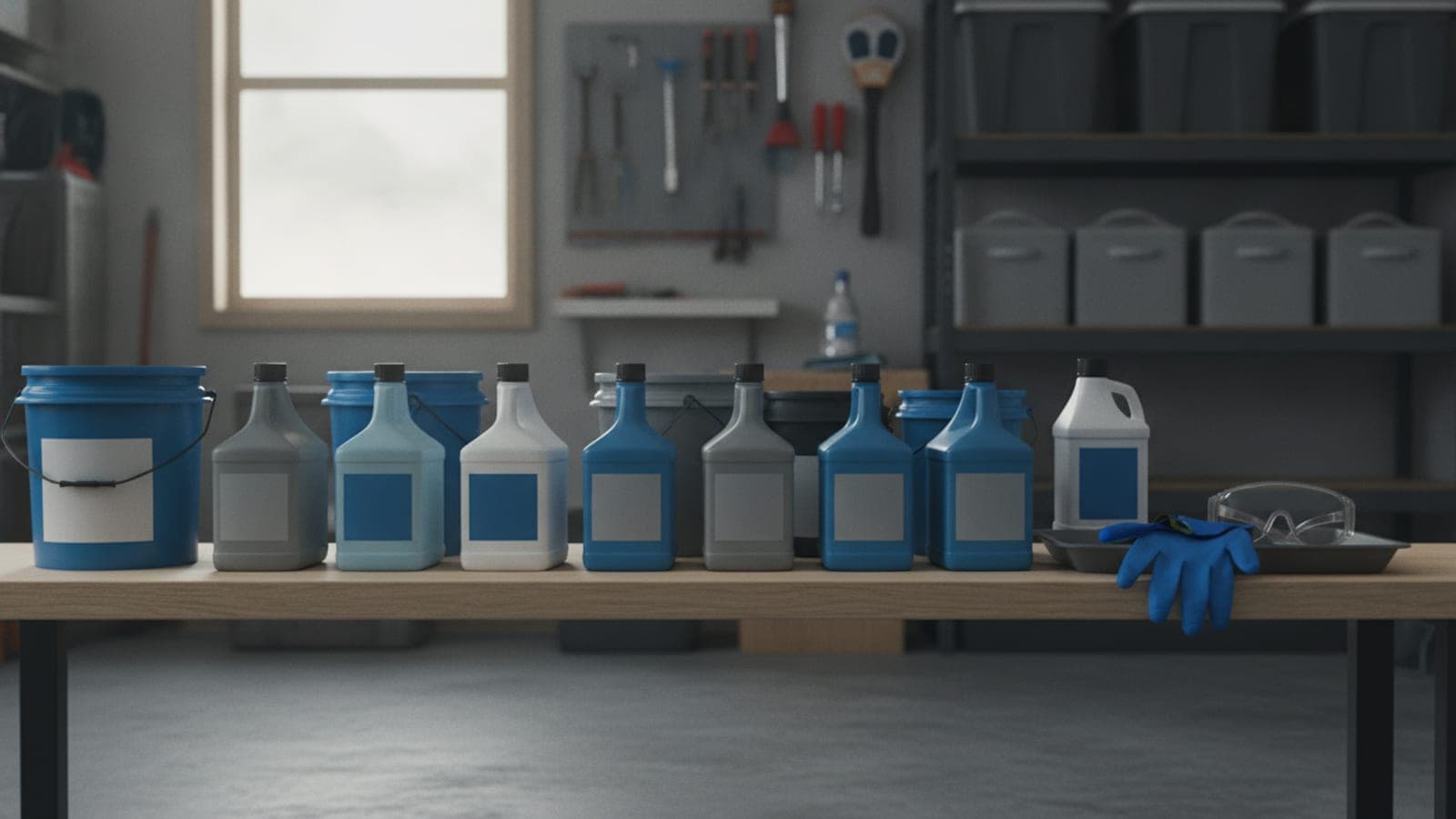
If you added acid to lower pH, check pool chemical safety and keep swimmers out until the product is diluted and the pH reading is acceptable.
What should you keep near the pool?
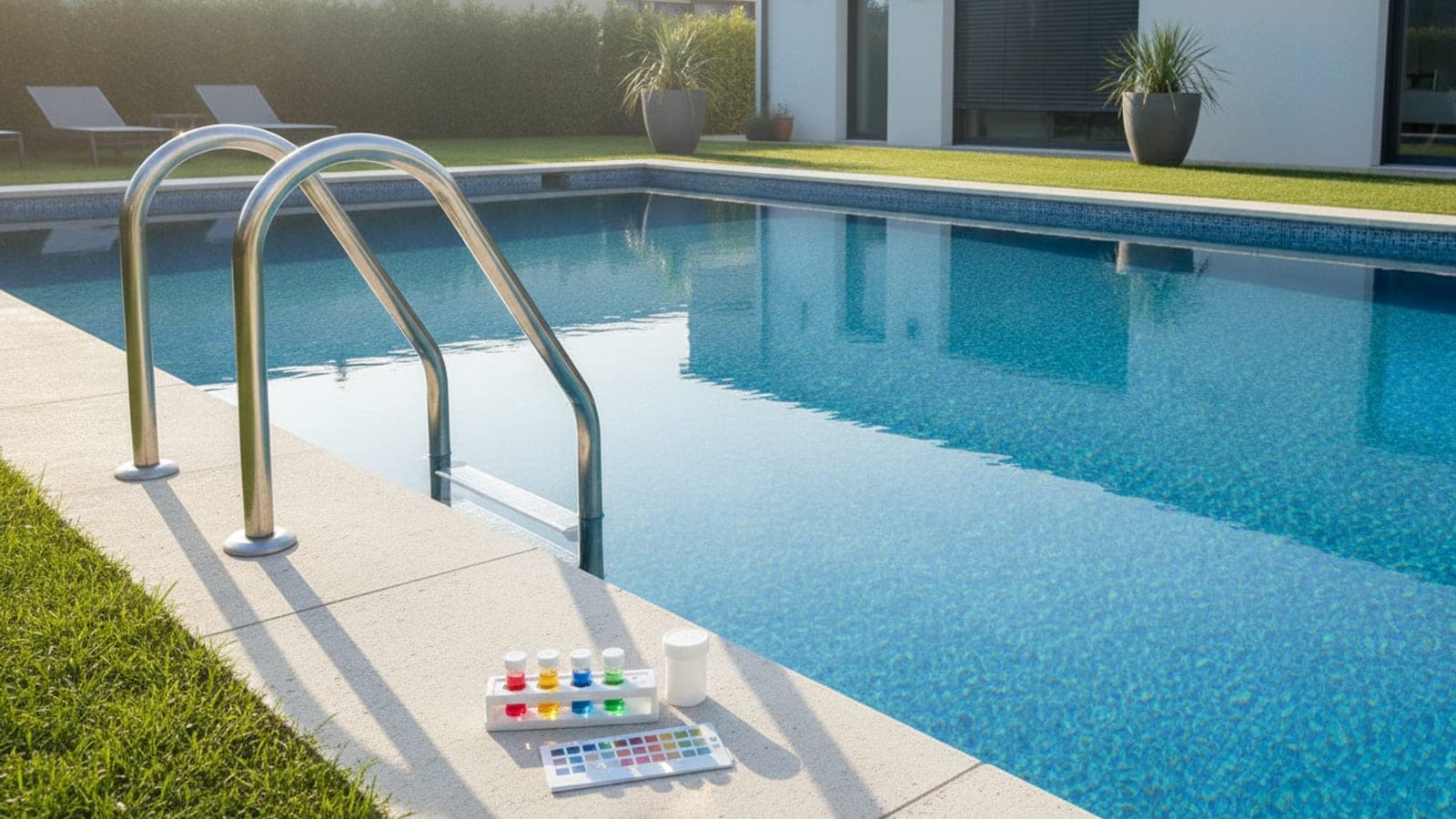
Keep testing gear, safety basics, and simple rules near the pool. A safe swim decision is easier when the tools are not buried behind holiday decorations and an inflatable flamingo with trust issues.
What you need
- Drop-based pool test kit.
- Backup test strips for quick checks.
- Digital thermometer.
- Liquid chlorine or normal sanitizer.
- pH adjusters used according to label directions.
- Pool brush and skimmer net.
- Safety sign or printed pool rules.
- Phone access for emergencies.
Affiliate disclosure: PoolPros may earn a commission when you buy through product links. Testing gear helps you decide, but product labels and local safety rules still matter.
Avoid relying only on smell, color, or “it was fine yesterday.” Pools change quickly after heavy use, storms, heat, leaves, sunscreen, and refills.
What is the quick safe-to-swim checklist?
The quick safe-to-swim checklist is chlorine in range, pH in range, clear water, working circulation, no recent untreated contamination, and no physical hazards. If any one item fails, fix it before swimming.
Use this before people get in:
- Free chlorine meets guidance for your pool and stabilizer situation.
- pH is in the recommended range.
- Water is clear enough to see the bottom.
- Pump and circulation are working.
- Filter pressure and return flow look normal.
- No sharp, broken, loose, or electrical hazards are visible.
- No chemical spills, fumes, or freshly added products still waiting on label instructions.
- No thunder, lightning, or unsafe weather.
- No fecal, vomit, or animal incident in the water.
If everything passes, enjoy the pool. If not, you are not being dramatic by waiting. You are being the person who owns both a test kit and a functioning sense of consequences.
Frequently asked questions
What makes pool water safe to swim in?
Pool water is safer to swim in when sanitizer is in range, pH is in range, the water is clear enough to see the bottom, equipment is operating, and there are no obvious hazards.
Can I swim if chlorine is low?
Do not swim when free chlorine is below the level recommended for your pool type and stabilizer use. Add sanitizer, circulate, and retest before swimming.
Can I swim if pH is high or low?
Avoid swimming when pH is outside the recommended range. Poor pH can irritate eyes and skin and can make chlorine less effective.
Is clear pool water always safe?
No. Clear water can still have low sanitizer or poor chemistry. Test the water before deciding it is safe.
Is cloudy pool water safe to swim in?
Cloudy water is a red flag because it can hide the bottom and often points to sanitizer, filtration, or balance problems. Fix the cause before swimming.
How soon after adding chemicals can people swim?
Follow the product label and retest the water. The safe wait time depends on the chemical, dose, circulation, and current water readings.