PoolGearGuide

Pool Chemical Safety: What Not to Mix in the Garage

By the PoolGearGuide editorial team · Updated 2026-07-03

Share

Pool chemical safety starts with one boring rule that prevents a lot of chaos: keep chemicals dry, separated, labeled, and out of each other’s business.

Key takeaways

  • Never mix pool chemicals together unless the product label specifically instructs it.
  • Keep chlorine products away from acids, moisture, organic material, old residues, and mystery powders.
  • Store chemicals in a cool, dry, ventilated place, separated by type and in original containers.
  • Wear gloves and eye protection, especially with acid, chlorine, shock, and dusty powders.
  • Use the pool volume calculator and dosing calculators so you add less random stuff in the first place.

Table of contents

What is the most important pool chemical safety rule?

The most important rule is simple: do not mix pool chemicals with each other. Pool chemicals are useful in the water, but they can be dangerous when concentrated products meet the wrong neighbor on a shelf.

That includes obvious mixing, like pouring acid into a bucket with chlorine residue. It also includes sneaky mixing, like using a damp scoop, reusing a measuring cup, storing incompatible products in one bin, or letting rainwater leak onto bags and buckets.

The CDC pool chemical safety guidance says to protect stored chemicals from mixing together or with other substances and to store each chemical separately. EPA’s chemical safety alert warns that pool chemical mishandling can lead to fires, toxic vapor releases, and injuries.

That is the serious part. The practical part is this: make your storage area boring. Boring shelves do not make fumes.

Which pool chemicals should not be mixed?

Do not mix chlorine products with acids, ammonia, other chlorine products, old residues, dirt, leaves, organic material, or any mystery chemical. If the label does not clearly say to combine products, do not combine them.

Common danger zones:

Combination or situationWhy it is riskySafer habit
Chlorine + muriatic acidCan release hazardous gasStore far apart and add separately to pool water
Different chlorine products mixed togetherProducts can react violentlyKeep each product in its own original container
Wet chlorine shockMoisture can trigger reactionsStore dry and close containers tightly
Chemical dust in shared scoopResidues can contact incompatible productsUse dedicated, clean, dry tools
Old bucket with unknown residueYou do not know what is insideDo not reuse it for another product
Chemicals near fuel, oil, paint, or fertilizerExtra fire and reaction risksKeep pool chemicals in their own zone

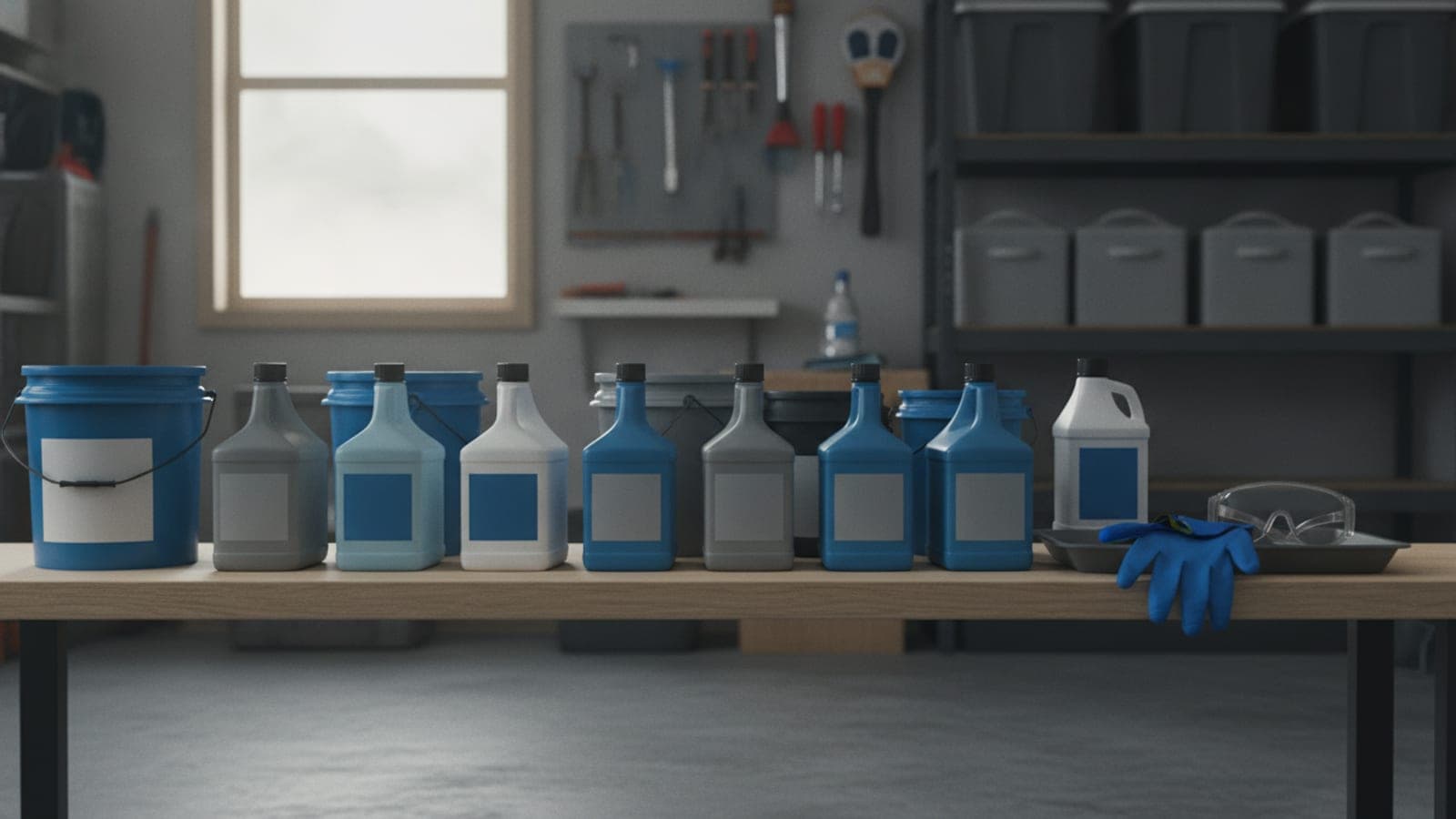
The garage shelf should not be a potluck. Chlorine, acid, algaecide, clarifier, stabilizer, and metal remover all deserve their own labeled space.

If you use tablets, liquid chlorine, cal-hypo shock, dichlor shock, trichlor tabs, dry acid, muriatic acid, soda ash, alkalinity increaser, and stabilizer, that is a lot of chemistry for one corner of the garage. Organization is not fussy. It is the seatbelt.

How should you store pool chemicals?

Store pool chemicals in original containers, tightly closed, dry, separated, ventilated, away from heat, and away from anything incompatible. The label should stay readable because future-you will not remember which white powder was which.

Use this storage checklist:

  • Keep products in original containers.
  • Store dry and off the floor if water can enter the area.
  • Separate chlorine products from acids.
  • Separate liquids from dry products when possible.
  • Do not stack heavy buckets on bags that can tear.
  • Keep lids closed tightly.
  • Keep chemicals away from children and pets.
  • Keep chemicals away from gasoline, paint, fertilizer, tools, and yard debris.
  • Avoid direct sun and high heat when the product label warns against it.

CDC guidance specifically mentions keeping pool chemicals below 95°F/35°C and protected from moisture when that matches manufacturer recommendations. In plain English: a hot, damp, cluttered shed is not a spa day for chlorine.

What about storing chemicals outside?

Outdoor storage can work only if it is dry, shaded, ventilated, secured, and compatible with the product label. A plastic deck box that traps heat and moisture may be worse than a shelf.

If you use an outdoor bin, do not put acid and chlorine in the same sealed space. Also check after storms. Water getting into chemical containers is one of those problems you want to discover from a distance, not by opening the lid and leaning in.

What safety gear should normal pool owners keep?

Normal pool owners should keep chemical-resistant gloves, safety goggles, a dedicated dry measuring tool, and access to clean water for rinsing. You do not need a movie-villain laboratory, but bare hands and flip-flops are not a plan.

Keep this small kit nearby:

  • Chemical-resistant gloves.
  • Splash-resistant safety goggles.
  • Dedicated measuring cups or scoops.
  • Permanent marker for dating products.
  • Clean water source for rinsing skin if exposed.
  • Dry storage shelf or separated bins.
  • Trash bags for non-chemical packaging only.

Do not breathe dust from shock or stabilizer. Do not lean over a bottle of muriatic acid like you are checking soup. Do not pour chemicals in windy conditions if the powder can blow back into your face.

If a product label says to use specific protective equipment, use it. The label is written by people who do not want you to become a cautionary paragraph.

How should you add chemicals to the pool?

Add chemicals one at a time, according to the product label, with the pump running when circulation is required. Test first, calculate the dose, add conservatively, circulate, then retest.

A safer dosing routine looks like this:

  1. Test the water.
  2. Confirm pool volume with the pool volume calculator.
  3. Choose one correction to make first.
  4. Read the product label.
  5. Measure with a clean, dry tool.
  6. Add the chemical the way the label says.
  7. Keep swimmers out until the product label and water test results say the pool is ready.
  8. Retest before adding more.

Do not broadcast different products at the same time. Do not add acid and chlorine back-to-back in the same spot. Give products time and circulation.

For pH changes, use the pool pH calculator or how to lower pH safely. For sanitizer, use the pool chlorine calculator. The calculator does not replace the label, but it reduces the “eh, toss in a little more” energy that causes trouble.

What should you do with old or mystery chemicals?

Do not use old or mystery pool chemicals if the label is missing, the container is damaged, the product is wet, the smell is strange, or you do not know what it is. Treat unknown chemicals as a disposal problem, not a bargain.

Common red flags:

  • Missing label.
  • Torn bag.
  • Rusty or swollen container.
  • Clumps that look damp.
  • Strong fumes.
  • Product stored in a food container.
  • Scoop left inside the bucket.
  • Unknown powder inherited with the house.

Call your local waste authority for disposal instructions. Do not dump mystery chemicals into the pool, storm drain, trash can, or yard.

The pool may be expensive, but your lungs are original equipment. Be annoying about safety.

What are the warning signs something is wrong?

Warning signs include fumes, smoke, heat, bubbling, hissing, discoloration, a container swelling, or chemicals getting wet and reacting. If you see or smell a reaction, back away and keep others away.

Do not stir it. Do not add water unless emergency responders or the label instructs you. Do not carry a reacting bucket through the house. Do not try to “finish the job” because the pool party is in three hours.

Use this decision path:

SituationWhat to do
Minor dry spill of known productFollow label cleanup instructions with protection
Wet or reacting chemicalMove away and seek emergency/local guidance
Strong fumesLeave the area and keep others away
Chemical in eyes or on skinRinse with clean water and follow label/medical guidance
Ingestion or serious exposureCall emergency services or poison control guidance

If you feel throat irritation, coughing, burning eyes, chest tightness, dizziness, or nausea near chemicals, leave the area. You can rebalance the pool later. The pool can wait. It is literally a hole filled with water.

How do calculators make chemical handling safer?

Calculators make chemical handling safer by reducing unnecessary dosing. The fewer times you open, scoop, pour, and correct, the fewer chances you have to make a storage or mixing mistake.

Use calculators as guardrails:

Worked example

A homeowner tests a 12,000-gallon pool and sees low chlorine. They guess and add “a few glugs” of liquid chlorine. Then they test again, decide pH also looks off, and add acid immediately after.

The safer version is slower: test, calculate chlorine dose, add it according to the label, circulate, retest, then handle pH as a separate correction. Less drama. Less chemistry speed dating.

What should you buy for safer chemical storage?

Buy simple safety gear before buying more chemicals. If you are storing and dosing pool products, the support items are part of the system.

What you need

  • Chemical-resistant gloves.
  • Splash-resistant goggles.
  • Dedicated dry measuring cups or scoops.
  • Separate storage bins or shelves for incompatible products.
  • Permanent marker for labeling dates.
  • Drop-based test kit so you dose from real numbers.
  • Small notebook or phone note for chemical additions.

Affiliate disclosure: PoolPros may earn a commission when you buy through product links. Safety gear is not decorative. Use the product label as the final authority.

Skip gimmicks. Buy things that keep products dry, separate, labeled, and easy to handle without touching or breathing them.

What is the safer weekly routine?

The safer weekly routine is to test first, clean what needs cleaning, dose one product at a time, and store everything properly when you are done. Most chemical chaos comes from rushing.

Use this rhythm:

  1. Test chlorine and pH.
  2. Check water clarity and debris.
  3. Empty baskets and inspect flow.
  4. Clean or backwash filters when needed.
  5. Decide whether any chemical is actually needed.
  6. Dose one product according to label directions.
  7. Close containers immediately.
  8. Return each product to its separate storage spot.
  9. Wash hands and rinse tools if appropriate.
  10. Update your notes.

If the water is cloudy, green, or unsafe, slow down. Read pool chemistry basics and is my pool safe to swim in before turning the garage into a potion shop.

Pool ownership is more fun when the chemicals are boring. Make them boring on purpose.

Frequently asked questions

What pool chemicals should never be mixed?

Do not mix chlorine products with acids, ammonia, other chlorine products, old residues, or mystery chemicals. Follow each product label and keep chemicals separate and dry.

Can I store chlorine and muriatic acid together?

No. Store incompatible chemicals apart in separate, dry, ventilated areas according to the label. Chlorine products and acid should not share a sloppy shelf or sealed bin.

Should I add pool chemicals to water or water to chemicals?

Follow the product label. Many pool products are added directly to pool water, and some require pre-dissolving. Never improvise. The label is the recipe, not a suggestion card.

What safety gear do I need for pool chemicals?

At minimum, keep chemical-resistant gloves and eye protection available. Use extra caution with muriatic acid, chlorine products, and any chemical that gives off strong fumes.

What should I do if pool chemicals get wet in storage?

Do not touch, stir, or move reacting chemicals if they are hot, smoking, bubbling, or releasing fumes. Move away, keep others away, and call local emergency guidance if there is any reaction.

Can I use the same measuring cup for all pool chemicals?

No. Use clean, dry, dedicated measuring tools, and do not let residue from one chemical contact another chemical.
The weekly skim

One short email a week: what to test, what to buy, and what to skip. No daily drip. Unsubscribe anytime.

Keep reading