If your pool robot is not picking up dirt, start with the filter basket before you blame the robot. A clogged, torn, wrong, or overloaded filter turns a pool robot into a very confident dirt rearranger.
The next question is what kind of “dirt” you are seeing. Leaves, sand, pollen, dead algae, plaster dust, and cloudy water do not behave the same way. Your robot may be fine. It may just be wearing the wrong filter for the job.
Key takeaways
- Empty and rinse the filter basket before every serious troubleshooting test.
- Standard filters are not always enough for fine dust, pollen, or dead algae.
- If dirt blows back out of the robot, inspect the filter mesh, seals, and basket fit.
- If the pool is cloudy or green, fix the water problem before expecting the robot to save the day.
- A robot cleans surfaces. Your pump, filter, sanitizer, and brushing still have jobs.
Table of contents
- What should you check first if the robot leaves dirt behind?
- Is the filter basket clogged, torn, or seated wrong?
- Are you using the wrong filter for fine dirt?
- Could the impeller or intake be blocked?
- Is it dirt, sand, pollen, or dead algae?
- Can worn brushes or tracks reduce cleaning?
- Should the pump and filter run too?
- When is the pool robot too small for the job?
- What should you buy if pickup is weak?
- What is the no-drama dirt pickup test?
What should you check first if the robot leaves dirt behind?
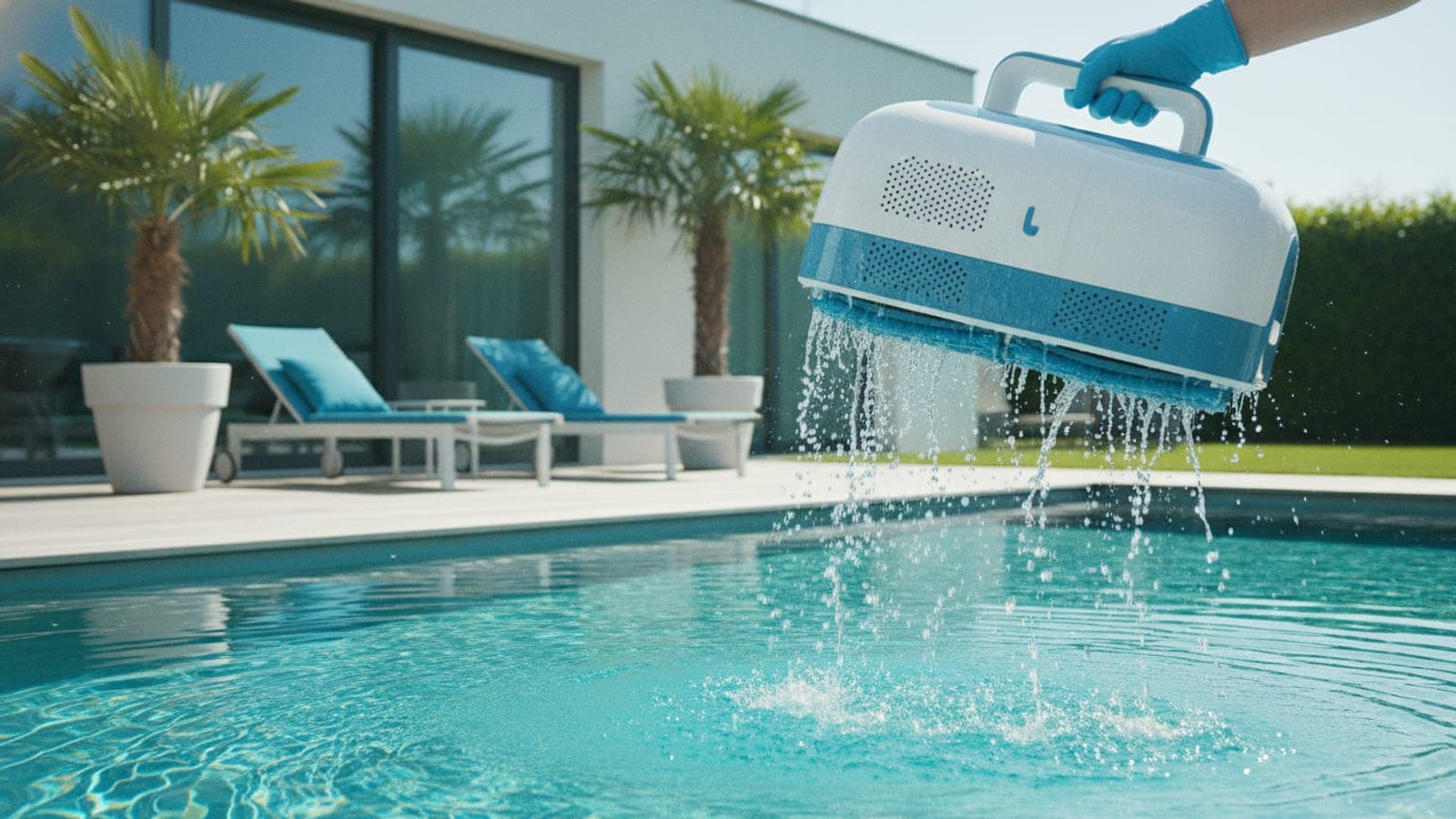
The first check is the filter basket. Remove it, empty it, rinse it thoroughly, inspect it for damage, reinstall it correctly, and run the robot again on a small dirty area you can watch.
That sounds too simple, which is why people skip it. Do not skip it.
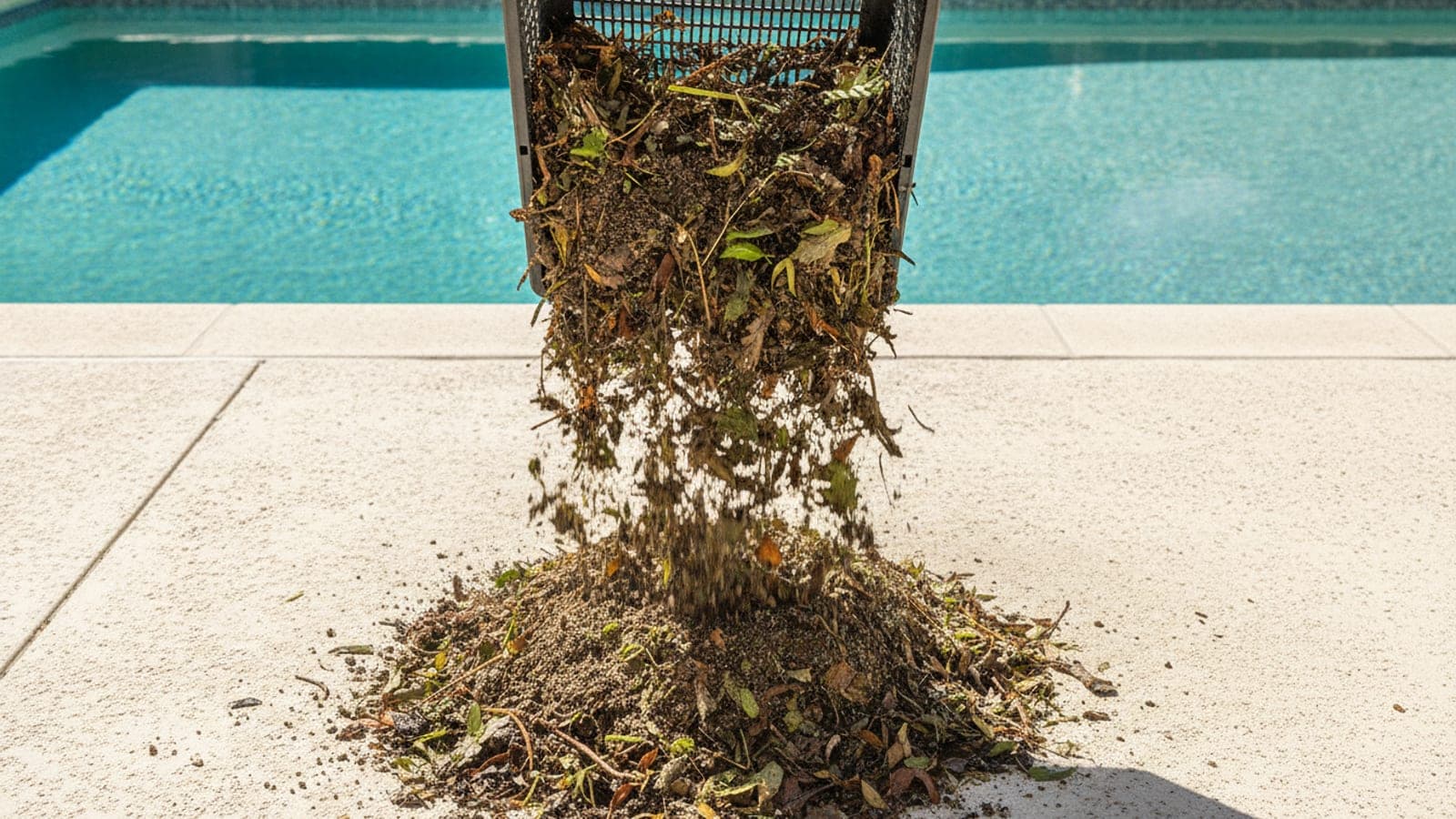
A pool robot depends on water moving through the cleaner and into the filter. If the filter is packed with leaves, fine dust, hair, pollen, or algae sludge, pickup drops fast. The robot may still drive around, but it is no longer collecting much.
Start with this quick triage:
| Symptom | Most likely starting point | First fix |
|---|---|---|
| Dirt stays on floor | Clogged filter or weak brush contact | Clean basket, inspect brushes |
| Dirt puffs out behind robot | Torn filter, poor seal, overloaded basket | Inspect mesh and basket fit |
| Fine dust returns after cleaning | Wrong filter type or suspended particles | Try ultra-fine filters and run pool filter |
| Leaves collect but sand remains | Standard basket too coarse | Use fine or ultra-fine filter panels |
| Robot moves slowly | Impeller, battery, motor, or packed filter | Clean filter and inspect intake |
| Pool stays cloudy | Water/filter issue, not just floor debris | Use cloudy-water diagnosis path |
Watch one cleaning pass. A robot that drives over debris and does nothing has a different problem from a robot that collects debris and spits it back out.
Is the filter basket clogged, torn, or seated wrong?
A filter basket can look “not that bad” and still be bad enough to reduce pickup. Fine debris coats mesh. Hair wraps around corners. Pollen and dead algae make a film that blocks flow.
Check for:
- Torn mesh.
- Warped plastic.
- Cracked basket frame.
- Missing filter panel.
- Basket not clicked fully into place.
- Slimy or oily residue.
- Fine dirt packed into pleats or seams.
- Debris blocking the inlet flap.
If dirt is blowing back into the pool, pay extra attention to basket fit and mesh condition. A small gap can turn the robot into a debris blender.
Deep-cleaning helps. Rinse from the clean side out if your manual allows it. Let the panels dry and look again in bright light. Fine material often shows up better when dry.
Maytronics maintenance guidance recommends cleaning robotic cleaner filters after use. That is not just neat-person behavior. A clean basket keeps water moving and gives the robot a fair chance on the next run.
Are you using the wrong filter for fine dirt?
You may need a different filter if the robot picks up leaves but leaves behind fine dirt, sand-like dust, pollen, or dead algae. Standard baskets are often better for large debris. Fine or ultra-fine filters are usually better for tiny material.
Here is the basic filter logic:
| Debris type | Best first filter choice | Notes |
|---|---|---|
| Leaves and bugs | Standard basket | Less likely to clog instantly |
| Pollen | Fine or ultra-fine filter | Rinse often during heavy pollen |
| Sand-like dust | Ultra-fine filter | May require shorter cycles |
| Dead algae | Ultra-fine filter plus pool filtration | Fix chemistry first |
| Acorns and seed pods | Large-debris basket | Skim first so the robot does not choke |
| Hair and sunscreen gunk | Standard or fine filter | Clean basket more often |
The tradeoff is flow. Ultra-fine filters catch smaller particles, but they can clog faster. When they clog, the robot can lose pickup, wall climbing, and cleaning pattern quality.
If the pool has a lot of fine debris, run shorter cycles. Clean the filter halfway through if needed. One long clogged cycle is usually worse than two shorter clean ones.
Could the impeller or intake be blocked?
A blocked impeller or intake can make the robot act like it is working while pickup gets weak. The robot may still move, but the water flow that carries debris into the basket is reduced.
Turn the unit off and follow the manual before inspecting anything. For corded units, disconnect power first.
Look for:
- Hair wrapped around the impeller.
- Leaves or stems stuck near the intake.
- Pebbles or acorns jammed in a flap.
- Small toys or plastic pieces.
- Mulch fragments.
- Filter pieces or broken basket parts.
Do not ignore tiny blockages. A little hair in the wrong place can do more damage to pickup than a basket half full of leaves.
After clearing the intake and impeller, test the robot on a visible line of debris. If pickup improves, you found the issue. If pickup is still weak and the robot also moves weakly, the problem may be motor, battery, or drive related.
Is it dirt, sand, pollen, or dead algae?
The fix depends on what the robot is trying to pick up. Calling everything “dirt” is how pool owners end up buying three products and still glaring at the water.
Use this quick ID guide:
| What you see | What it might be | What to do |
|---|---|---|
| Brown piles near seams | Dirt, sand, or dust | Brush toward open floor and use fine filter |
| Yellow dust on floor/waterline | Pollen | Fine filter, skimming, frequent rinsing |
| Gray/green powder after shocking | Dead algae | Keep filtering, clean robot basket often |
| Slimy patches on walls | Live algae/biofilm | Fix sanitizer and brush before robot runs |
| White dusty residue | Scale, plaster dust, or product residue | Test water and avoid random chemicals |
| Cloudiness everywhere | Suspended particles | Main filter issue, not just robot pickup |
If the pool is green, use the green pool cleanup guide first. If the water is cloudy, use the cloudy pool diagnosis guide. A robot cannot collect particles that are floating around the whole pool like glitter with a grudge.
CDC guidance on pool water treatment focuses on sanitizer and pH because clear-looking water is not the only goal. For robot troubleshooting, balanced water also makes the cleanup more predictable.
Can worn brushes or tracks reduce cleaning?
Yes. Worn brushes, tracks, wheels, or rollers can reduce scrubbing and pickup. The robot may pass over dirt without disturbing it enough to lift it into the intake.
Look underneath the robot:
- Are brushes flattened, cracked, or missing chunks?
- Are tracks loose or slipping?
- Do wheels turn smoothly?
- Does one side drag?
- Is the robot tilting or floating oddly?
- Are there stones or sticks stuck near the rollers?
Brushes matter most when dirt is stuck to the surface. A robot does not use magic suction from across the pool. It needs contact. If the brush cannot scrub, the intake has less to collect.
This is also where pool surface matters. Fine dirt on a textured plaster pool can behave differently than dirt on smooth vinyl or fiberglass. If debris sits in rough texture, brushing before robot runs may help.
Should the pump and filter run too?
Usually yes, unless your robot manual says otherwise. The pool robot handles floor and wall debris. The pool pump and filter handle circulation and suspended particles.
Think of it this way:
- Robot: surfaces, leaves, settled dirt, debris piles.
- Pump and filter: water movement, suspended dust, small particles.
- Brush: corners, steps, benches, waterline film.
- Chemicals: sanitizer, algae prevention, safe water.
If your robot keeps picking up dirt but the pool still looks hazy, the problem may be filtration time, filter condition, or chemistry. Use the pool pump run time calculator and check whether your filter needs cleaning.
A dirty main filter can make the robot look worse than it is. The robot collects the floor, then the pool filter fails to polish the water, and everybody blames the wet little machine.
When is the pool robot too small for the job?
A pool robot may be too small if it has a tiny basket, short runtime, weak filtering, or is designed for a different pool size or surface. This is common when someone buys the cheapest cleaner and asks it to handle a large pool under trees.
A mismatch looks like this:
- Basket fills before the cycle ends.
- Battery dies before the pool is covered.
- Cord does not reach the full pool.
- Cleaner misses deep end or slopes.
- Fine debris keeps passing through.
- Robot is floor-only but owner expects wall cleaning.
This is not always a defect. Sometimes it is a buying mismatch.
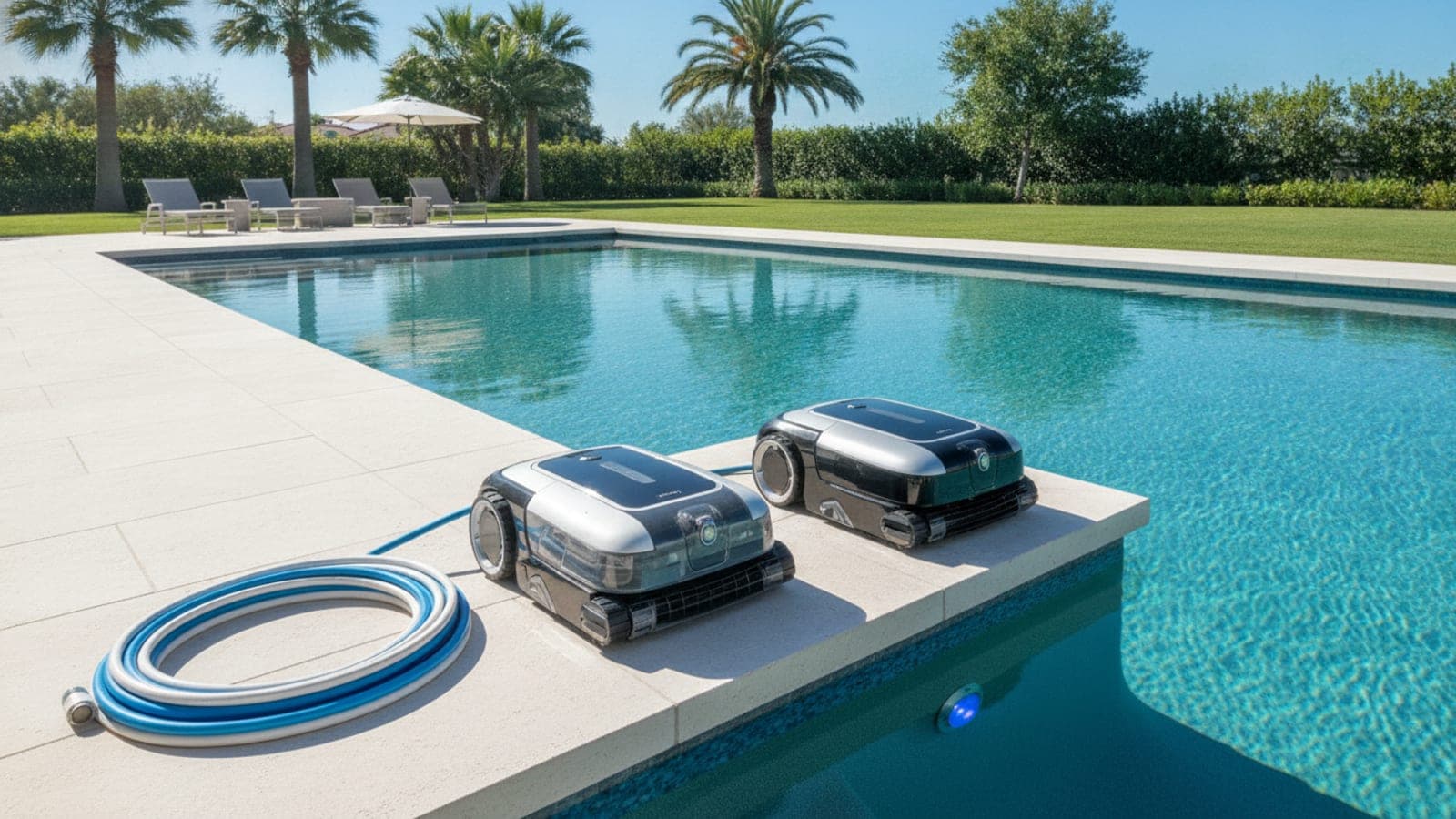
If your pool has leaves, sand, a deep end, textured plaster, or a large footprint, compare models on the robotic pool cleaner page. Look for basket capacity, filter options, pool size rating, wall climbing, waterline cleaning, cord length or battery runtime, and warranty.
The best robot is not always the fanciest one. It is the one sized for your pool’s actual mess.
What should you buy if pickup is weak?
Do not buy chemicals to fix a basket problem, and do not buy a new robot to fix a dirty filter problem. Match the purchase to the evidence.
What you may need
- Replacement filter basket if yours is torn, warped, or leaking debris.
- Ultra-fine filter panels for pollen, dust, dead algae, and fine sediment.
- Standard large-debris basket for leaves, bugs, and seed pods.
- Replacement brushes or tracks if surface contact is weak.
- Pool brush for steps, corners, and textured surfaces.
- Filter cartridge cleaner if your main pool filter is part of the cloudy-water issue.
- A better robotic cleaner only if your current unit is undersized or repair costs no longer make sense.
Place affiliate product cards under this section, not above the troubleshooting. The reader should understand the problem before seeing the cart.
What is the no-drama dirt pickup test?
The no-drama test is simple: clean the basket, mark a small dirty area, run the robot over it, and inspect the basket afterward. That tells you more than watching a full cycle and guessing.
Do this:
- Empty and rinse the filter basket.
- Inspect the mesh and seals.
- Clear the intake and impeller.
- Brush a small patch of dirt into the open floor.
- Run the robot across that patch.
- Watch whether debris enters the robot.
- Stop the cycle and inspect the basket.
- Try a fine filter if standard mesh misses the debris.
- Check pump/filter runtime if the problem is cloudiness.
- Contact support if flow and pickup are still weak.
The takeaway is boring, which makes it useful: most dirt pickup problems are filter, flow, debris type, or pool-condition problems. Fix those first. Then decide whether you need parts, better filters, or a better robot.
Frequently asked questions
Why is my pool robot not picking up dirt?
The usual causes are a clogged filter basket, the wrong filter type for fine debris, debris in the impeller, worn brushes, weak water flow, or dirt that is actually dead algae or suspended cloudiness.
Do I need ultra-fine filters for fine dirt?
Often yes. Standard baskets catch leaves and larger debris better, while ultra-fine filters are usually better for pollen, sand-like dust, and dead algae.
Can a robot pick up dead algae?
It can collect some dead algae, but only after the water problem is fixed. If algae is still growing, the robot will keep cleaning symptoms instead of solving the cause.
Should I run the pool pump while the robot cleans?
Usually yes unless your manual says otherwise. The robot handles surfaces, while the pump and filter remove suspended material from the water.
When should I replace the filter basket?
Replace it if the mesh is torn, warped, clogged after deep cleaning, or letting debris blow back into the pool.