
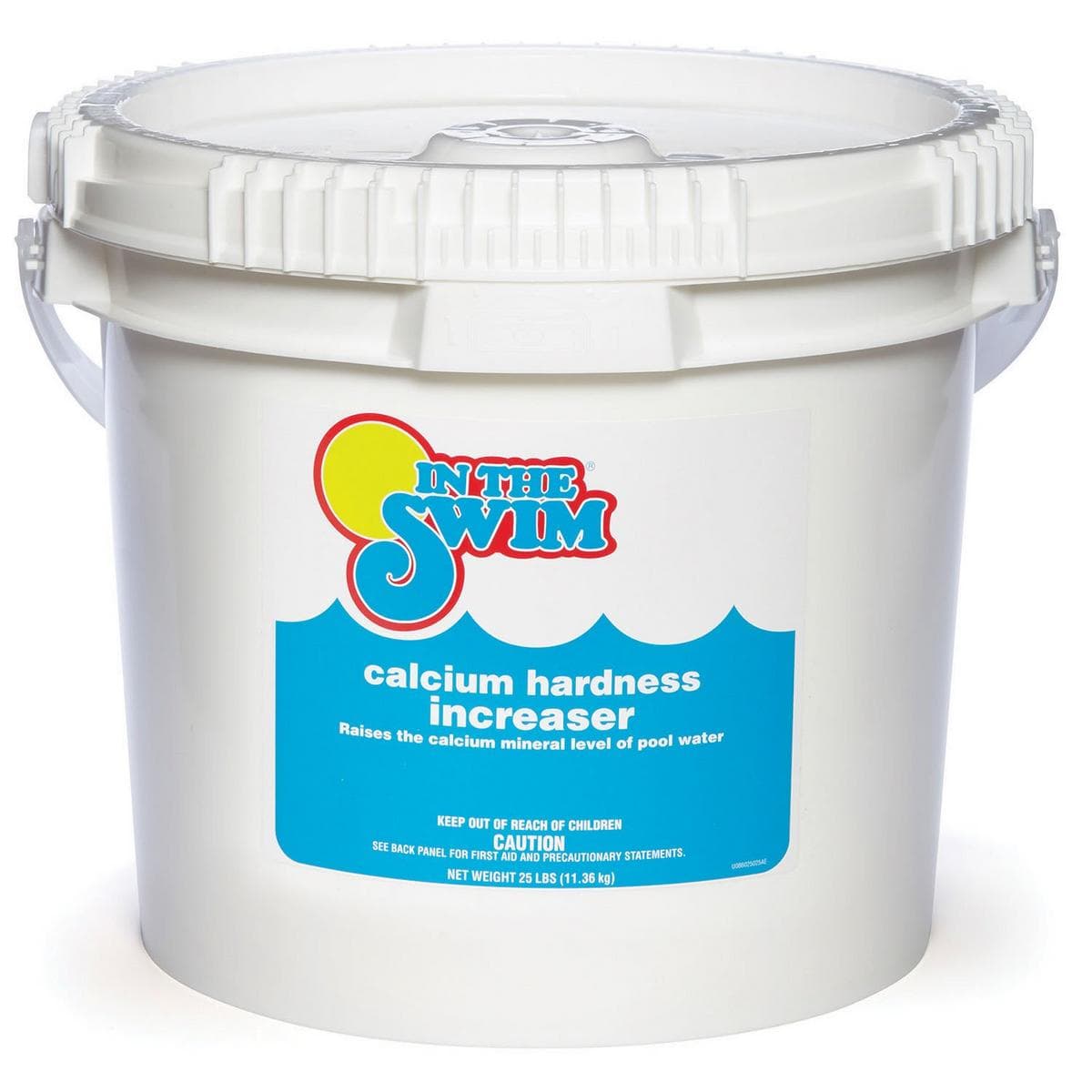
Quick verdict
The fix for soft, aggressive water that etches plaster. Most important on plaster/gunite pools; dose toward target and retest.
Ideal for
- Plaster/gunite pools with low hardness
- Soft fill-water areas
- Preventing etching and corrosion
Not ideal for
- Vinyl/fiberglass pools already in range
- Pools with high calcium (risk of scale)
The full picture
When calcium hardness runs low (below ~200 ppm), water gets aggressive and pulls calcium from wherever it can — etching plaster, corroding metal, and dulling surfaces. In The Swim Calcium Hardness Increaser is fast-acting granular calcium chloride (94–97%) that raises hardness into the ideal 200–400 ppm range to protect your pool's surfaces. It's especially relevant for plaster/gunite pools and anyone with soft fill water. Like other 'increaser' chemicals it only goes up (dilution lowers it), so dose toward target and retest — about 6 lb per 10,000 gallons raises hardness ~50 ppm. Vinyl and fiberglass pools need less attention here, but plaster pools shouldn't skip it.
In The Swim Calcium Hardness Increaser (25 lb) at a glance
- Type
- Calcium hardness increaser
- How often
- As needed to reach 200–400 ppm
- Size / volume
- 25 lb
- Active ingredient
- 94–97% calcium chloride
- Coverage
- ~6 lb per 10,000 gal raises hardness ~50 ppm
- Compatible pools
- All pool types (most important for plaster)
- Safety
- Generates heat when dissolving — add slowly to water, wear gloves/eye protection.
- Storage
- Store cool, dry, and tightly sealed (it absorbs moisture).
Source: Compiled from manufacturer specifications, label directions, industry practice, and aggregated owner feedback. Follow label instructions; specs and prices change — confirm before buying.
This is a research-based review — our analysis draws on manufacturer specifications, manuals, warranty terms, and verified owner feedback rather than our own hands-on testing, and we note where a detail couldn't be confirmed. How we review
The in-depth review
When calcium hardness runs low (below ~200 ppm), water gets aggressive and pulls calcium from wherever it can — etching plaster, corroding metal, and dulling surfaces. This is the fix.
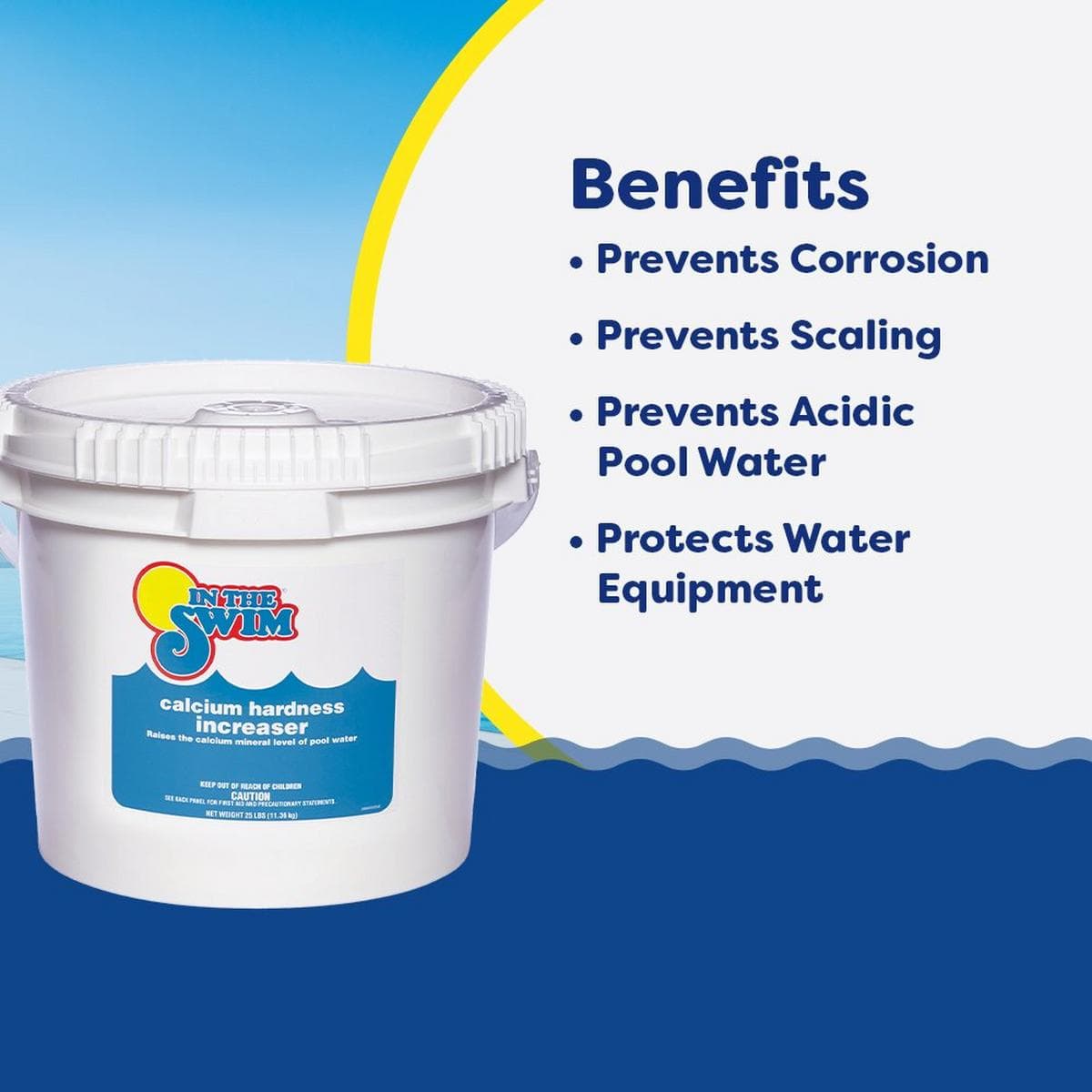
What it is
In The Swim Calcium Hardness Increaser is fast-acting granular calcium chloride (94–97%) that raises hardness into the ideal 200–400 ppm range. About 6 lb per 10,000 gallons raises calcium roughly 50 ppm. Like other increasers it only goes up — dilution is the only way down — so dose toward target and retest.
Who actually needs it
Plaster and gunite pools care most: soft water literally etches the surface. Soft fill-water areas need it periodically as rain and splash-out dilute the pool. Vinyl and fiberglass pools are more forgiving, though very low hardness can still corrode metal parts. Add it slowly to water (it releases heat as it dissolves), and keep the bag sealed since it absorbs moisture.
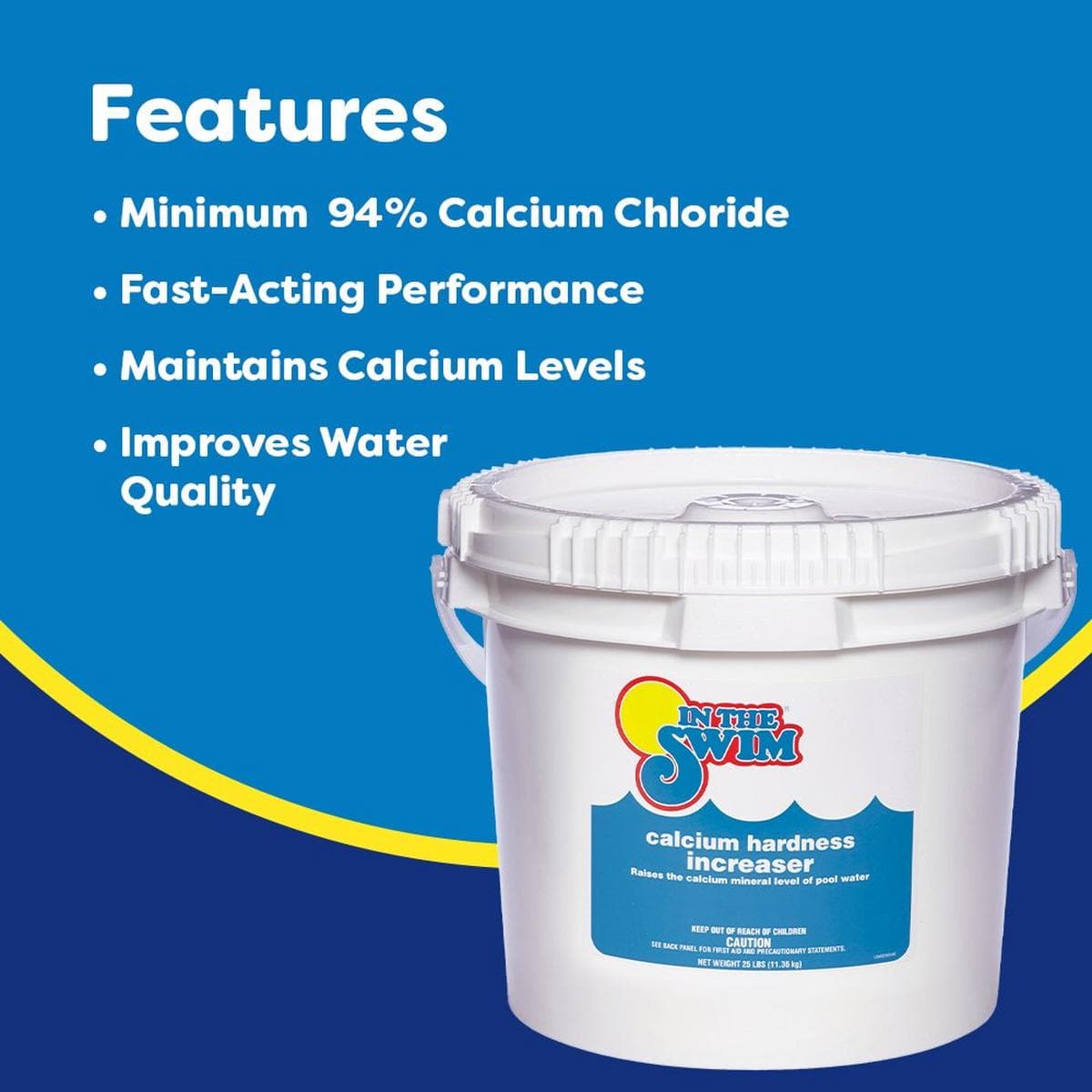
The bottom line
If you have a plaster pool or soft fill water, this is a staple. If your hardness is already 200–400 ppm — or high, risking scale — leave it alone; high calcium comes down only by partial drain-and-refill.
Performance breakdown
Research-based editorial judgments from specs, warranty terms, and verified owner feedback — not lab measurements. How we score
Pros and cons
What works
- Protects plaster and metal from soft water
- Fast-acting granular calcium chloride
- High purity
- Works in all pool types
What doesn't
- Only goes up — dilution to lower
- Heats up when dissolving
- Absorbs moisture — seal tightly
- Overshooting risks scale
Best alternatives to In The Swim Calcium Hardness Increaser (25 lb)
In The Swim
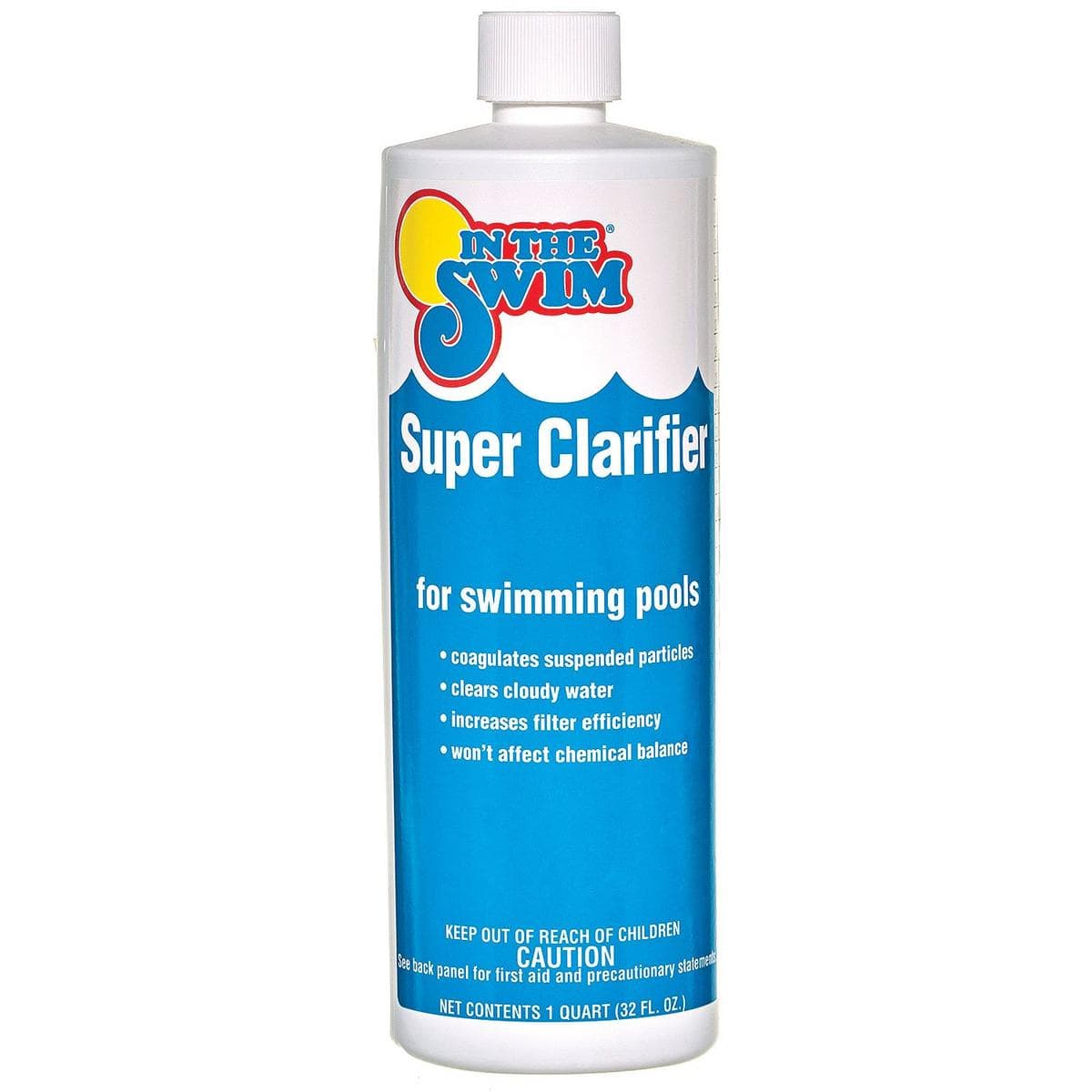
In The Swim Super Clarifier (1 Quart)
Clear cloudy water
A concentrated coagulant that clumps tiny particles so your filter can catch them — the fast fix for dull, cloudy water.
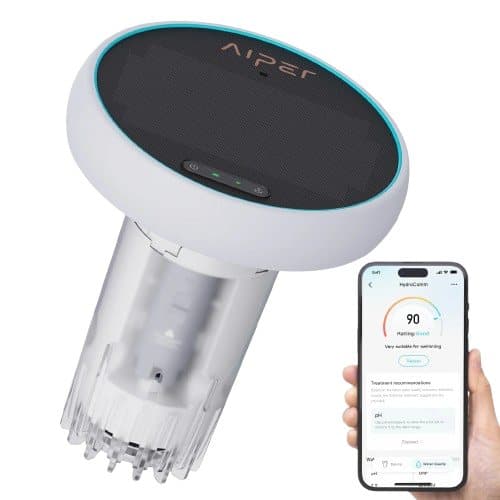
Aiper
Aiper HydroComm 5-in-1 Smart Pool Monitor
Best-value smart monitor
A solar-powered floating monitor that tracks five water metrics and pushes a water-quality score plus dosing tips to the Aiper app.
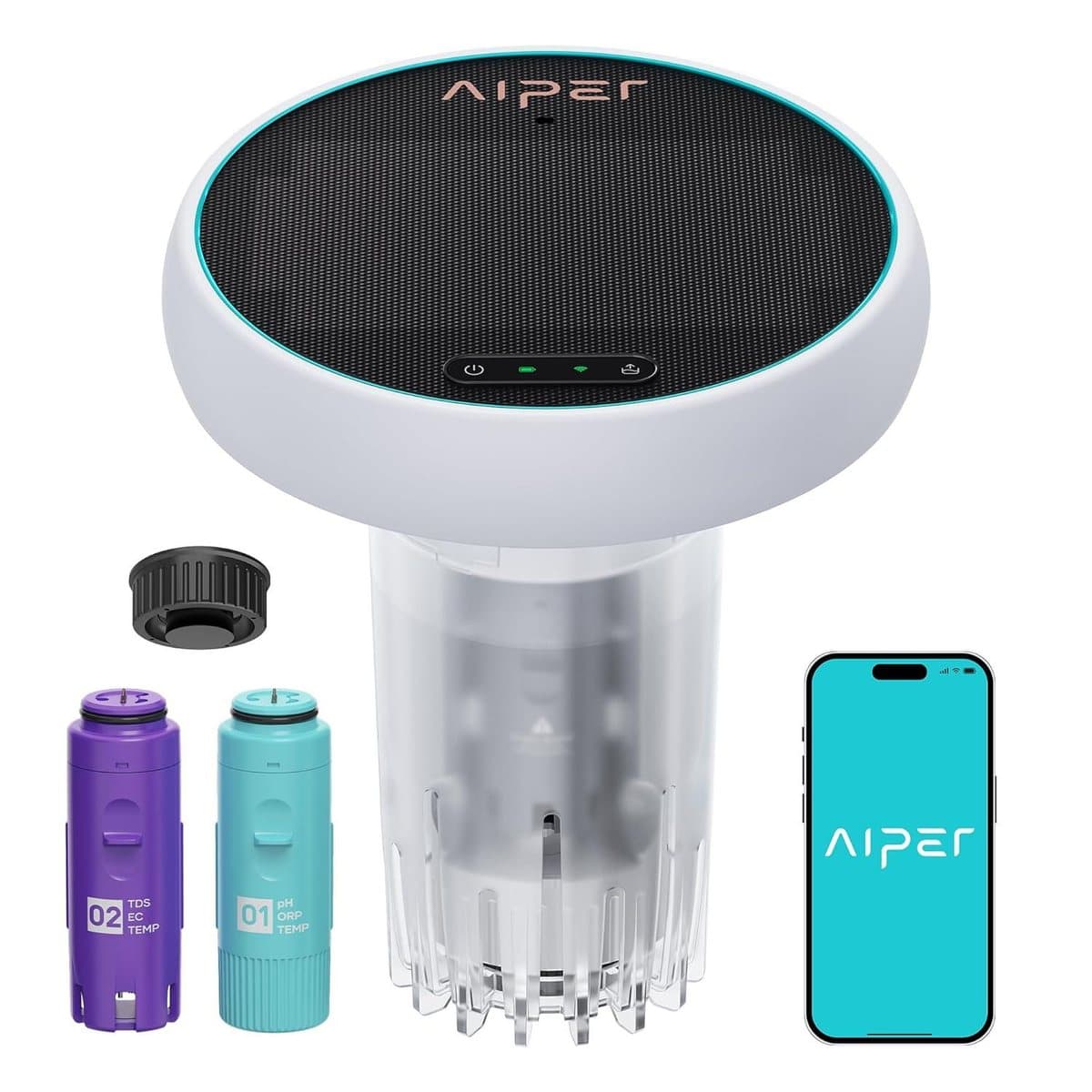
Aiper
Aiper HydroComm Pure Smart Pool Monitor (2026)
Most complete monitor (2026)
Aiper's 2026 top monitor: 5-in-1 water analysis plus underwater robot comms and Wi-Fi app remote control, with automatic hourly readings.
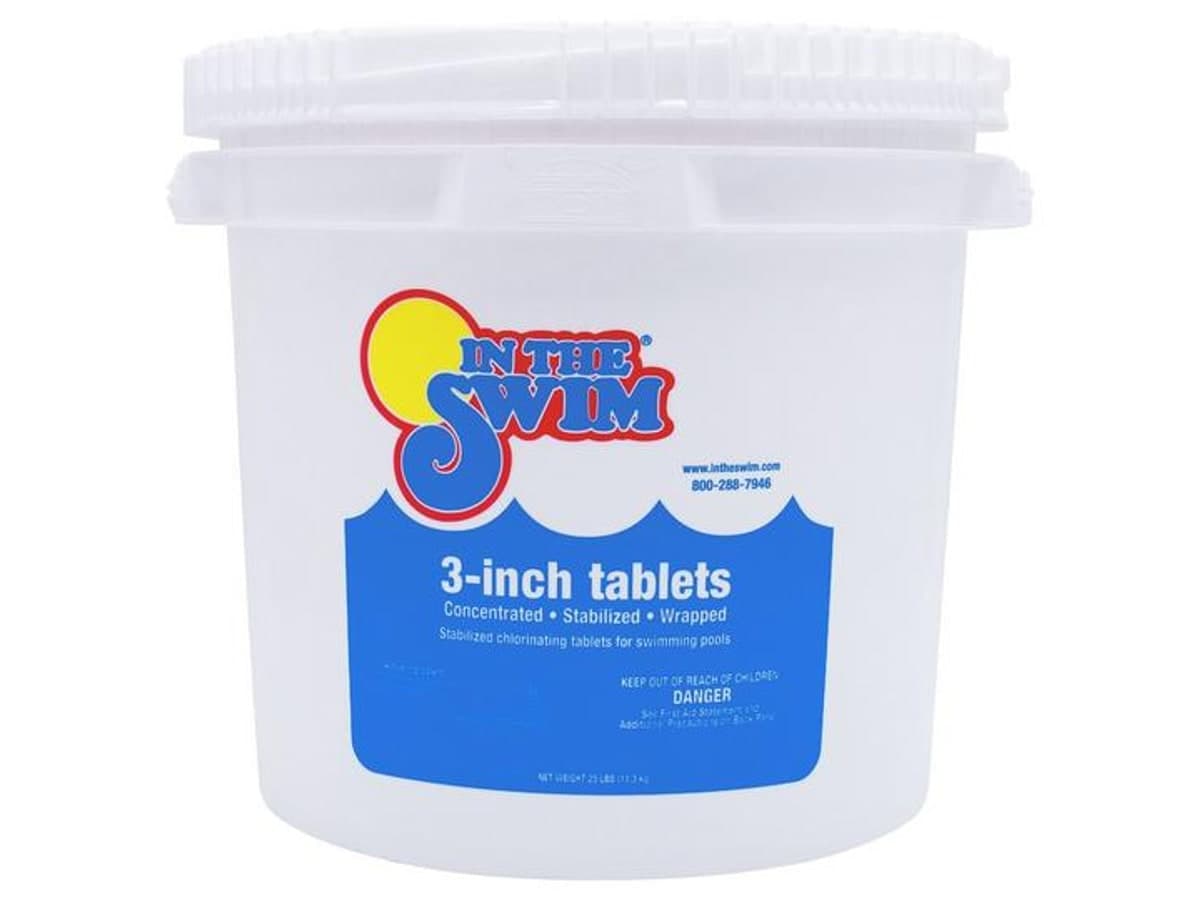
In The Swim
In The Swim 3-Inch Stabilized Chlorine Tablets
Best value chlorine tablets
Individually wrapped trichlor tablets from a specialty retailer that competes hard on per-pound price — the maintenance backbone for most residential pools.
Frequently asked questions
Do vinyl and fiberglass pools need calcium?
Less so than plaster — there’s no plaster for soft water to etch. Very low hardness can still corrode metal components, so keeping some calcium is wise, but plaster/gunite pools are where it matters most.
How much raises my hardness?
About 6 lb per 10,000 gallons raises calcium hardness roughly 50 ppm. Aim for the 200–400 ppm range, dose toward target, and retest — our calculators help with exact amounts.
Why does the bag warn about heat?
Calcium chloride is exothermic — it releases heat as it dissolves. Add it slowly to water (never water to chemical) and it’s harmless; dumping a lot at once can get quite warm.
How do I lower calcium if it’s too high?
You can’t chemically — high calcium is lowered by partial drain-and-refill with softer water. That, plus balancing pH and alkalinity, also helps prevent the scale that high calcium can cause.
What causes low calcium hardness?
Soft fill water is the usual culprit, along with dilution from rain and splash-out. If your tap water is soft, expect to add calcium periodically, especially on a plaster pool.
Will it cloud my water?
It can briefly if over-dosed or added too fast, and cloudiness is worse if pH/alkalinity are high. Add gradually with the pump running and keep the rest of your chemistry balanced.