
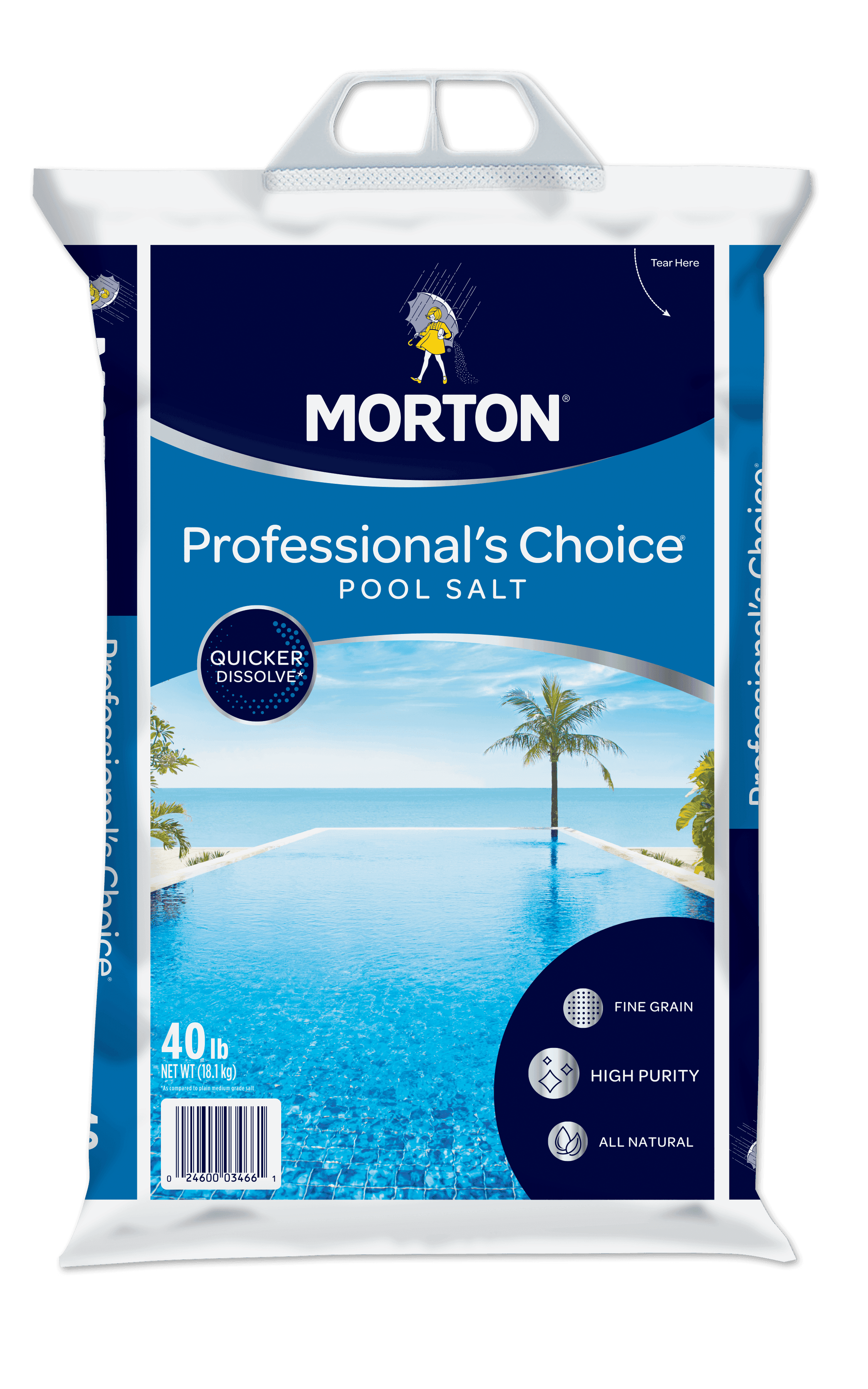
Quick verdict
The clean, high-purity salt your generator needs. Buy pool-specific salt (not softener salt) and top up as levels dip.
Ideal for
- Any pool with a salt chlorine generator
- Topping up after rain/dilution
- New salt-system startups
Not ideal for
- Pools without a salt system
- Use as a substitute for water-softener salt
The full picture
If you run a salt chlorine generator, this is the fuel it lives on: dissolved salt is what the cell converts into chlorine. Morton Pool Salt is high-purity, fast-dissolving sodium chloride made specifically for pool use — no anti-caking additives or iodine that can stain or cloud water. You add it to reach your generator's target (commonly around 3,000–3,400 ppm), then top up occasionally after rain, splash-out, or partial drains, since salt itself isn't consumed by chlorination — it's recycled. It's the #1 pro-recommended pool salt for good reason: consistent, clean, and cheap. Just don't confuse it with water-softener salt, which can contain additives you don't want in a pool.
Morton Pool Salt (40 lb) at a glance
- Type
- Pool salt (for salt chlorine generators)
- How often
- At startup, then top up as levels dip
- Size / volume
- 40 lb bag
- Active ingredient
- ~99.8% sodium chloride (high purity, no additives)
- Coverage
- Add to reach the generator’s target (commonly ~3,000–3,400 ppm)
- Compatible pools
- Salt chlorine generator pools
- Safety
- Non-hazardous; broadcast into pool and brush to dissolve — don’t run generator until dissolved.
- Storage
- Store dry; keep bag sealed to prevent clumping.
Source: Compiled from manufacturer specifications, label directions, industry practice, and aggregated owner feedback. Follow label instructions; specs and prices change — confirm before buying.
This is a research-based review — our analysis draws on manufacturer specifications, manuals, warranty terms, and verified owner feedback rather than our own hands-on testing, and we note where a detail couldn't be confirmed. How we review
The in-depth review
If you run a salt chlorine generator, this is the raw material it lives on: dissolved salt is what the cell converts into chlorine. Morton Pool Salt is the clean, cheap, pro-favorite way to supply it.
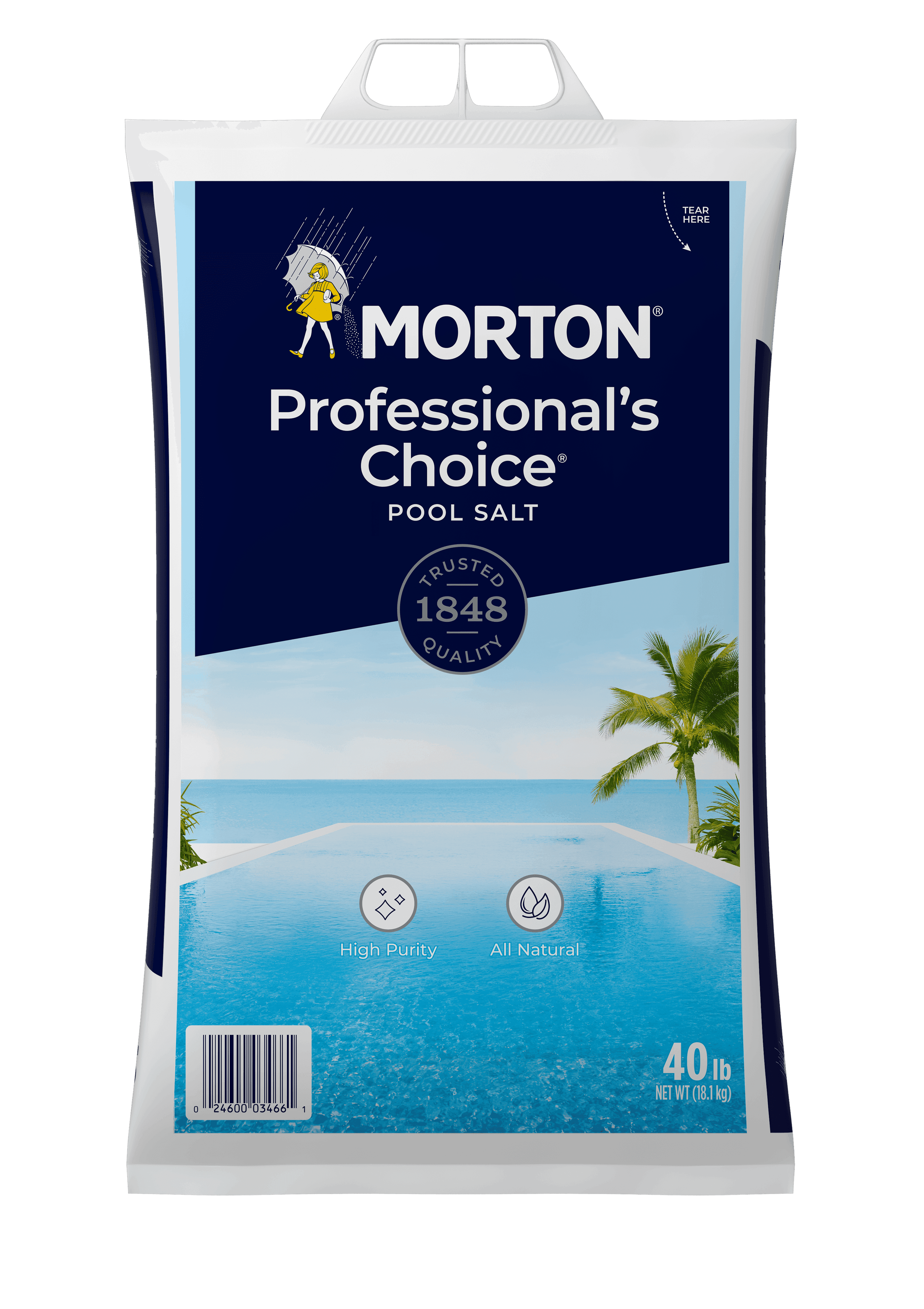
Why pool-specific salt
It's high-purity, fast-dissolving sodium chloride (~99.8%) made specifically for pools — no anti-caking additives or iodine that can stain or cloud water. That purity is the whole point: water-softener salt is cheaper but can contain additives you don't want circulating in your pool, so the small savings isn't worth the risk.
How to use it
Add enough to reach your generator's target — commonly around 3,000–3,400 ppm — then top up occasionally after rain, splash-out, or partial drains. Salt isn't consumed by chlorination; the cell turns it into chlorine, which reverts to salt and repeats, so you only replace what's physically lost. Broadcast it with the pump running, brush to dissolve, and wait a few hours before running the generator.
Who needs it
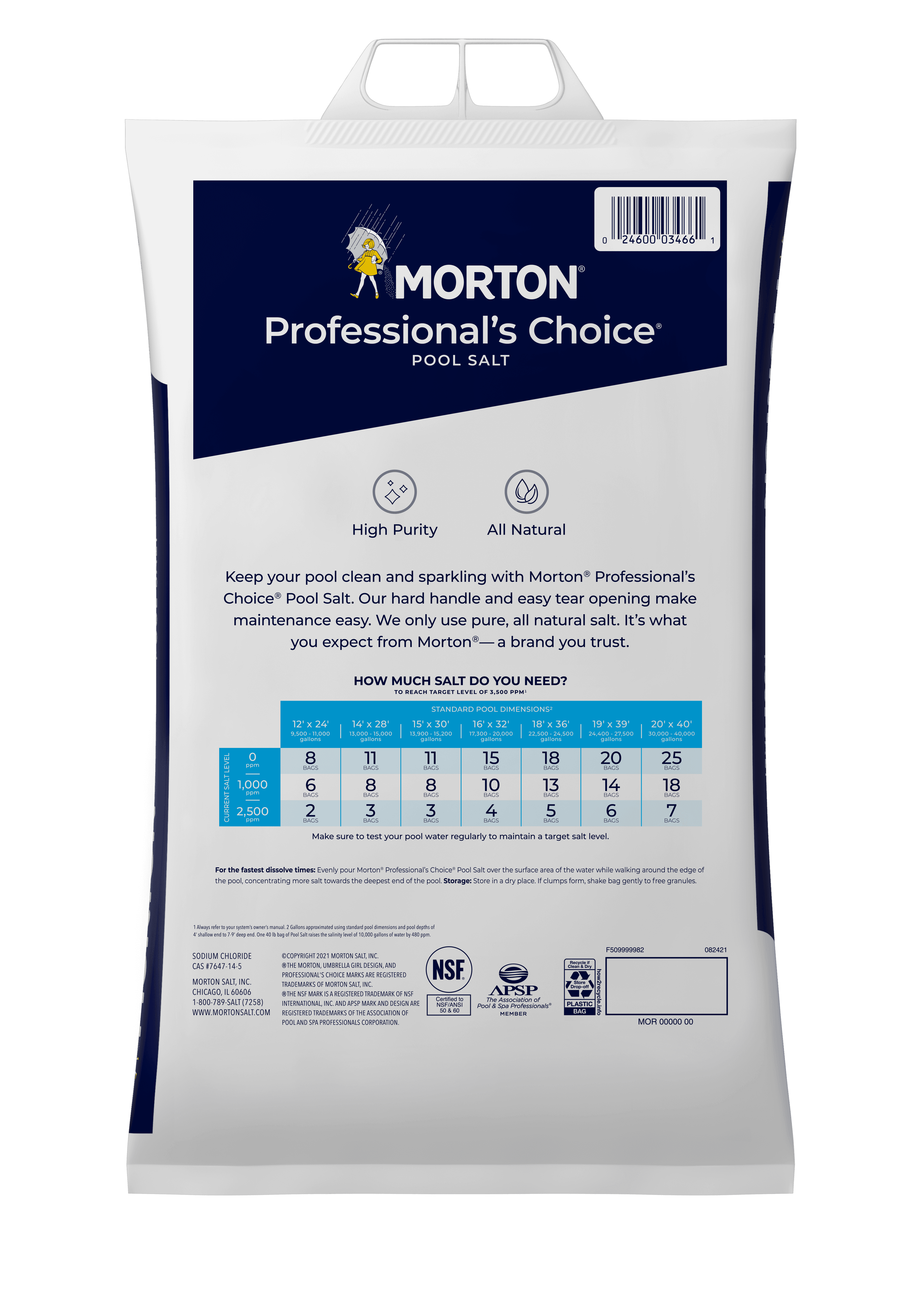
Every salt-generator pool, at startup and for top-ups. If you don't have a salt system, you don't need it — and don't confuse it with softener salt. A typical pool needs several 40 lb bags to start; our salt calculators translate your pool into exact bags.
Performance breakdown
Research-based editorial judgments from specs, warranty terms, and verified owner feedback — not lab measurements. How we score
Pros and cons
What works
- High-purity, fast-dissolving
- No stain-causing additives or iodine
- Cheap per bag
- #1 pro-recommended pool salt
What doesn't
- Only for salt-system pools
- Not for water softeners
- Multiple bags needed for a big pool
- Must dissolve before running the generator
Best alternatives to Morton Pool Salt (40 lb)
In The Swim
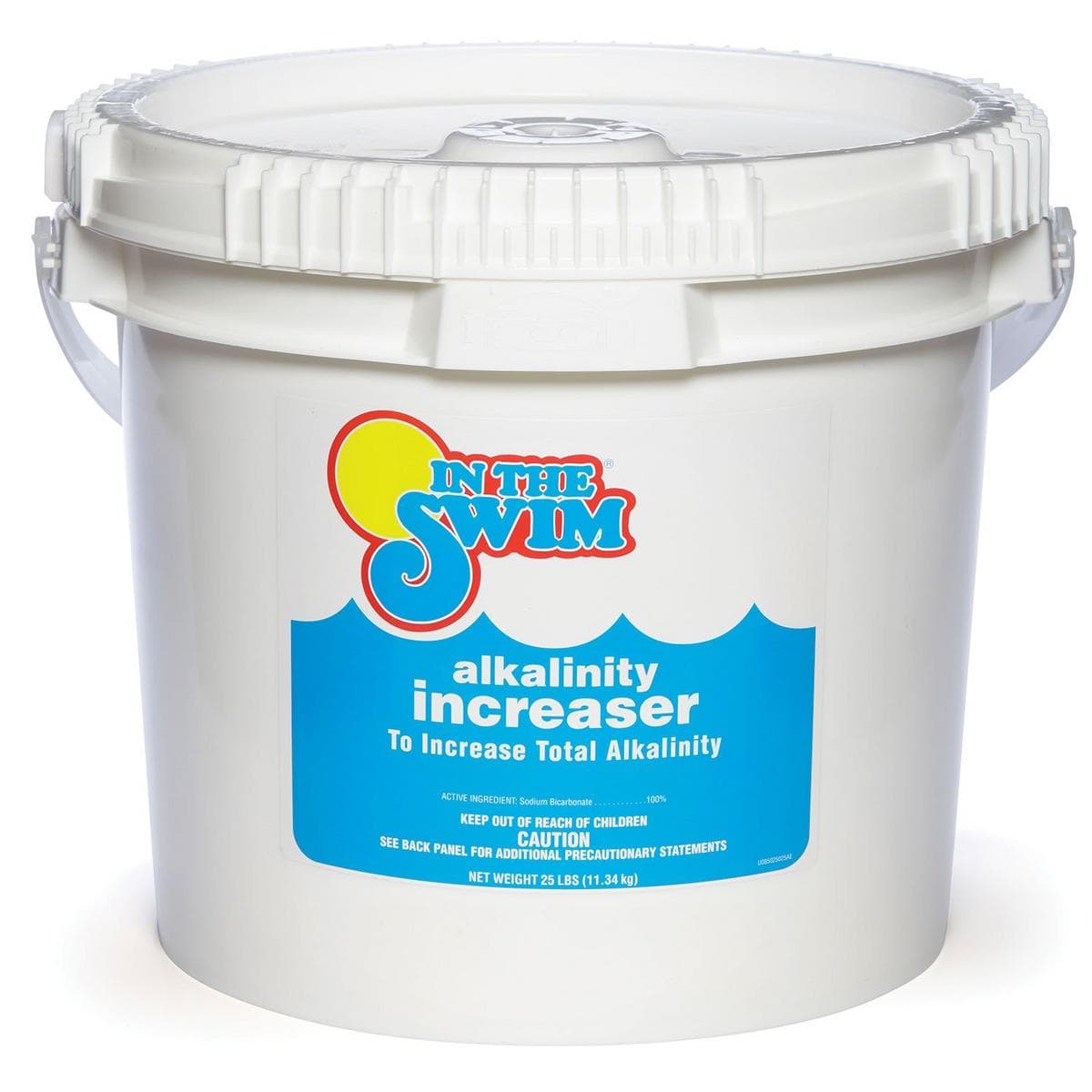
In The Swim Alkalinity Increaser (Sodium Bicarbonate, 25 lb)
Raise alkalinity
Pure sodium bicarbonate to raise total alkalinity — the buffer that keeps your pH from bouncing around.
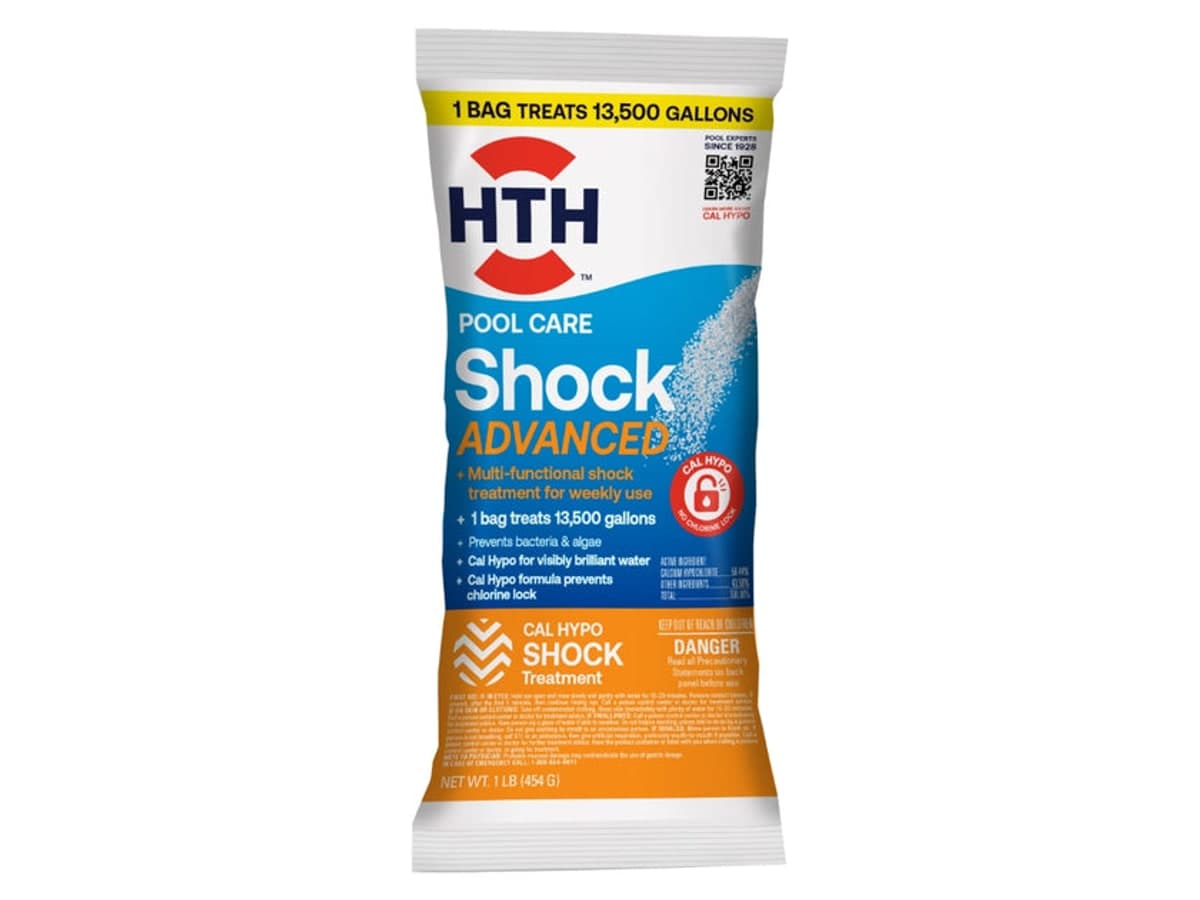
HTH
HTH Super Shock Treatment (Cal-Hypo, 1 lb bags)
Best default shock
Widely available calcium hypochlorite shock that raises chlorine fast without adding cyanuric acid — the right default for most pools.
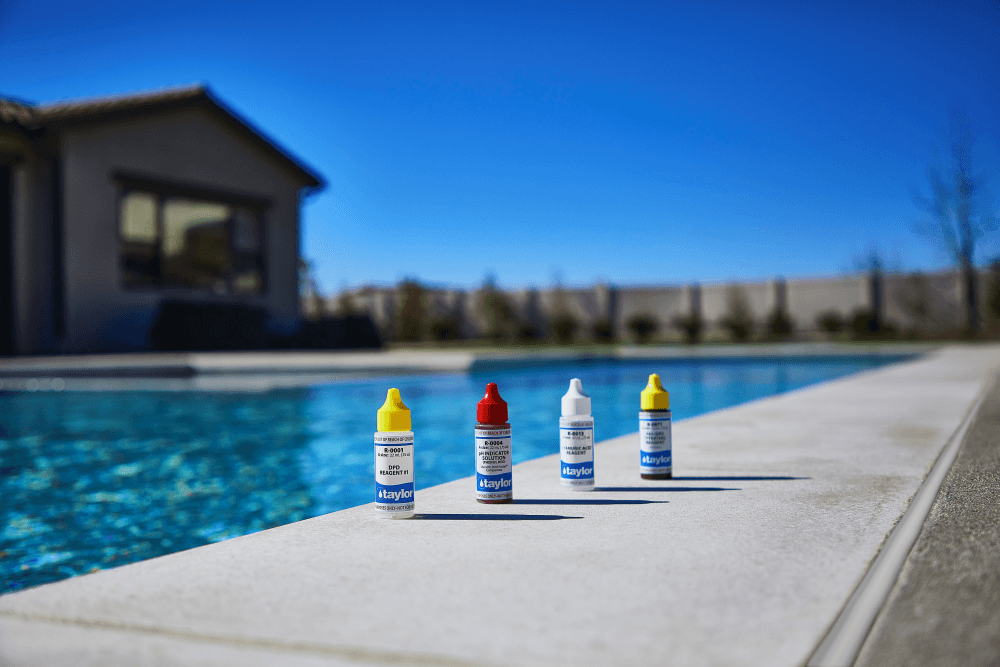
Taylor
Taylor Reagent Refill Set
Best kit refresh
Fresh reagents for your Taylor kit — because expired reagents read wrong, not just weak.
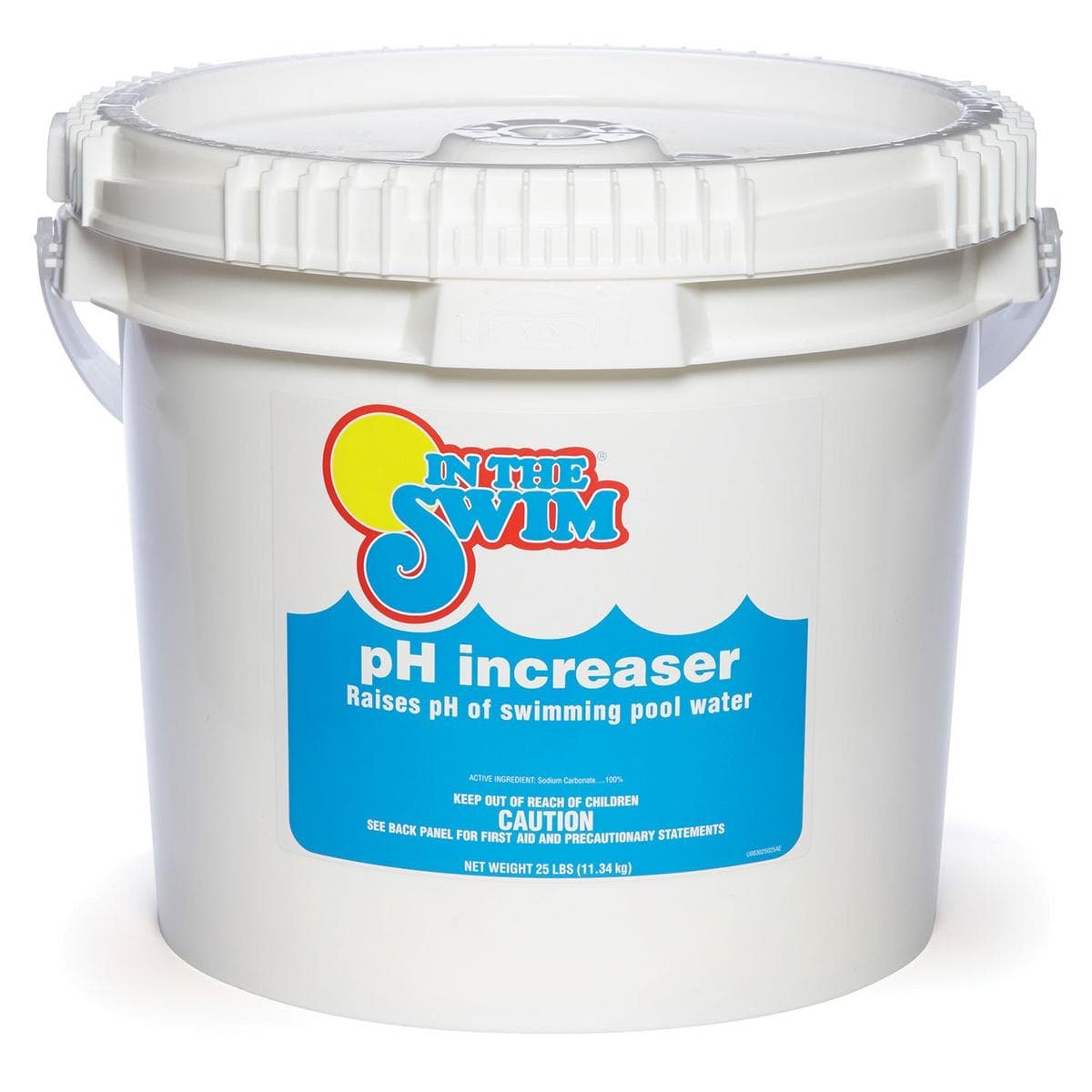
In The Swim
In The Swim pH Increaser (Soda Ash, 25 lb)
Raise pH
Granular soda ash to bring low pH back up — the fix when your water tests acidic and starts eating equipment and comfort.
Frequently asked questions
Can I use water-softener salt instead?
It’s not recommended — softener salt can contain anti-caking agents, iodine, or other additives that stain or cloud pool water. Pool salt is high-purity sodium chloride made specifically for pools; the small savings on softener salt isn’t worth the risk.
How much salt do I need?
Enough to reach your generator’s target (commonly ~3,000–3,400 ppm). A typical residential pool needs several 40 lb bags at startup; our salt calculators translate your pool size and current level into exact bags.
Does salt get used up?
Not by chlorination — the cell converts salt to chlorine, which reverts to salt and repeats. You only lose salt to splash-out, backwashing, rain overflow, and partial drains, so you top up occasionally rather than constantly.
How do I add it?
Broadcast it across the pool with the pump running and brush to help it dissolve. Wait until it’s fully dissolved (a few hours) before running the salt generator, and don’t pour it down the skimmer.
Will a salt pool taste salty?
Barely — target levels around 3,000–3,400 ppm are roughly a tenth as salty as seawater, below most people’s taste threshold. Most owners notice softer-feeling water, not a salty taste.
What if I add too much salt?
The only way to lower salt is to dilute with fresh water (partial drain and refill). That’s why you add toward target and retest rather than dumping in extra bags at once.