PoolGearGuide

How to Lower Alkalinity in a Pool Without Chasing Numbers

By the PoolGearGuide editorial team · Updated 2026-07-03

Share

Alkalinity calculator

Add about 6.8 lbs of baking soda (sodium bicarbonate) to raise TA by 30 ppm. Add in thirds, circulating and retesting between.

Treat this as a starting dose: add less than the full amount when unsure, circulate for a few hours, retest, repeat. Always follow your product's label.

To lower alkalinity in a pool, you usually lower pH and total alkalinity with acid, then use aeration to bring pH back up without raising alkalinity much. It is a two-step dance. Not a fun dance, exactly, but better than dumping chemicals until the water files a complaint.

Key takeaways

What does high alkalinity do to pool water?

High total alkalinity makes pH harder to move and easier to keep high. The water has too much buffer, so pH correction can feel like trying to push a couch across carpet.

That can lead to:

  • pH that stays high after acid additions
  • Cloudy or dull water
  • Scale on tile, heaters, salt cells, and spillways
  • More acid use than expected
  • Reduced comfort if pH drifts out of range
  • A general sense that the pool is being difficult on purpose

High alkalinity is not always an emergency. If the pool is clear, sanitizer is in range, and pH is stable, you may not need to attack the number aggressively. But if pH keeps climbing or scale is showing up, high alkalinity deserves attention.

For the broader picture, this guide should link to pool chemistry basics.

How do you confirm alkalinity is actually too high?

Confirm high alkalinity with a reliable total alkalinity test, then check pH and pool volume before adding anything. Do not treat one test strip from a windy Tuesday as a court verdict.

Use this pre-correction checklist:

CheckWhy it matters
Total alkalinityConfirms the problem
pHShows how much room you have before pH gets too low
Pool volumeControls the acid dose
Calcium hardnessHigh hardness plus high pH can increase scale risk
Salt level, if applicableSalt cells are sensitive to scaling conditions
Fill water alkalinityExplains why the number may keep rising

Many pool-care references use 80–120 ppm as a common total alkalinity range, but the right target depends on your pool and sanitizer. Taylor Technologies notes industry recommendations around that range while also giving broader minimum and maximum context.

If you are not sure about gallons, use the pool volume calculator before using any acid estimate. A little volume error can turn into a lot of pH drama.

Why does lowering alkalinity also lower pH?

Acid lowers total alkalinity and pH at the same time because both are tied to the pool’s carbonate chemistry. That is why there is no clean “lower alkalinity only” button, even though pool owners deserve one.

Here is the practical version:

ActionWhat usually happens
Add acidpH drops and total alkalinity drops
Aerate waterpH rises with little alkalinity increase
Add alkalinity increaserTotal alkalinity rises and pH may rise somewhat
Add soda ashpH rises strongly and alkalinity also rises

The usual high-alkalinity correction is acid plus aeration:

  1. Acid lowers pH and total alkalinity.
  2. Aeration raises pH back toward range.
  3. Total alkalinity stays lower than before.
  4. You retest and repeat if needed.

This is slower than dumping chemicals, but it is much cleaner than bouncing from acid to alkalinity increaser to acid again. That loop is pool chemistry’s version of assembling furniture with the wrong manual.

How do you lower alkalinity step by step?

Lower alkalinity in small rounds. Each round should include testing, measured acid, circulation, aeration if needed, and retesting.

A safe routine:

  1. Test total alkalinity and pH.
  2. Confirm pool volume.
  3. Read the acid product label.
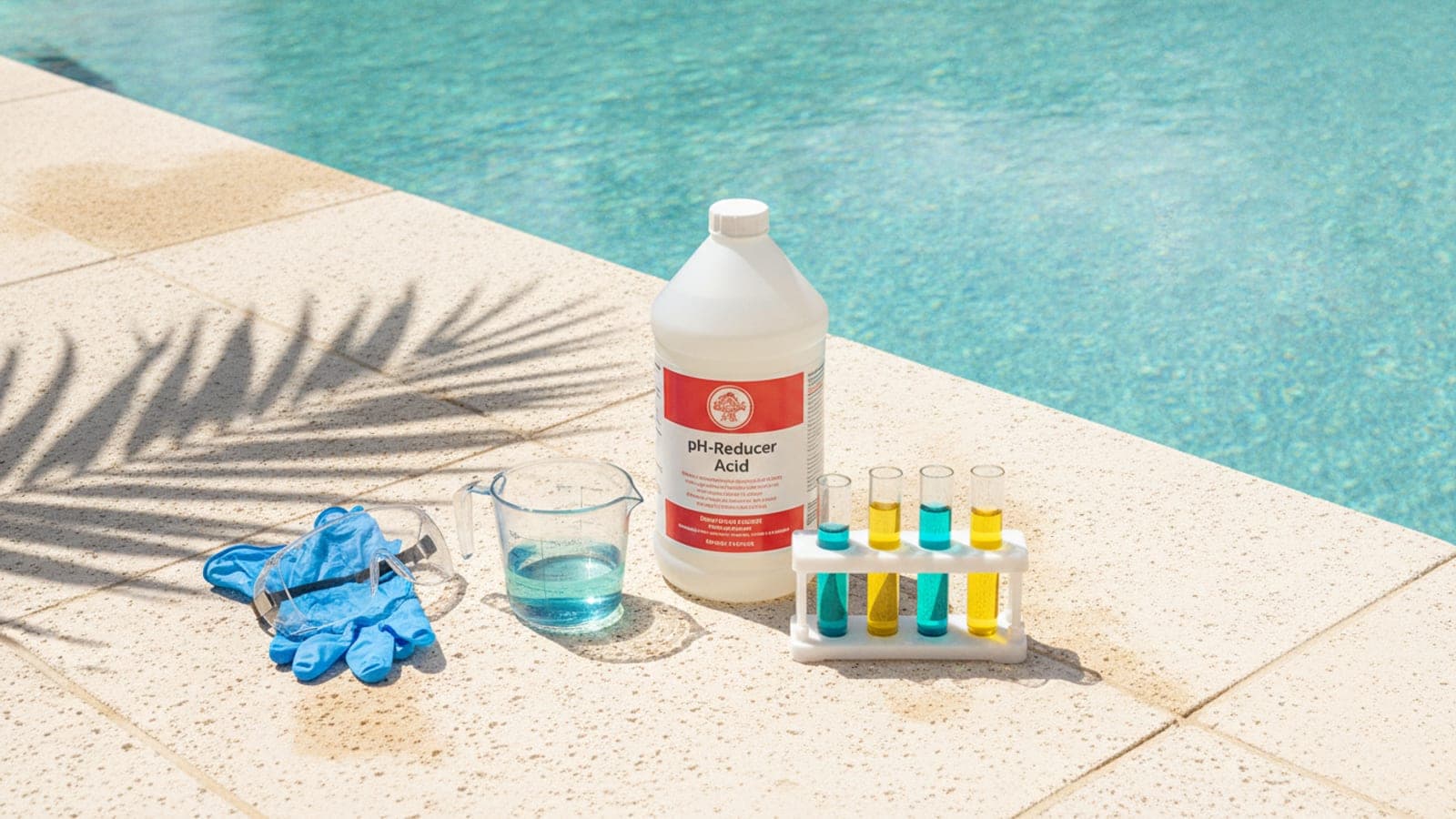
  4. Wear gloves and eye protection.
  5. Add a conservative acid dose with the pump running, following the label.
  6. Let the pool circulate.
  7. Retest pH and total alkalinity.
  8. If pH is low but alkalinity improved, aerate instead of adding pH increaser right away.
  9. Repeat only after the water mixes and test results justify it.

CDC recommends pool pH between 7.0 and 7.8. That matters because acid correction can push pH down if you are too aggressive.

Use the pool acid calculator and pool alkalinity calculator as cautious helpers. Product labels still win.

How does aeration help after adding acid?

Aeration helps raise pH without adding a chemical that raises total alkalinity back up. That is the whole trick.

Ways to aerate a pool include:

  • Pointing return jets upward
  • Running water features
  • Using deck jets or spillovers
  • Running a spa spillway, if designed for it
  • Using a pool aerator attachment
  • Splashing, though this is the least scientific method and the most likely to involve children yelling

Aeration is useful after acid drops pH lower than you want. Instead of adding soda ash, which can raise alkalinity again, you let the water off-gas carbon dioxide and pH climbs back up.

This takes time. It may take hours or longer depending on water movement, surface area, temperature, and chemistry. That is still better than undoing your progress with the wrong product.

Should you use muriatic acid or dry acid?

Muriatic acid and dry acid can both lower pH and alkalinity, but they differ in handling, storage, and label instructions. Choose based on the product label, your comfort level, and what is appropriate for your pool.

ProductProsWatch out for
Muriatic acidCommon, effective, often economicalStrong fumes, splash risk, storage concerns
Dry acidEasier for some owners to handleProduct-specific limits and long-term considerations
Acid blendsMay be marketed as easierStill require label-based dosing and safety gear

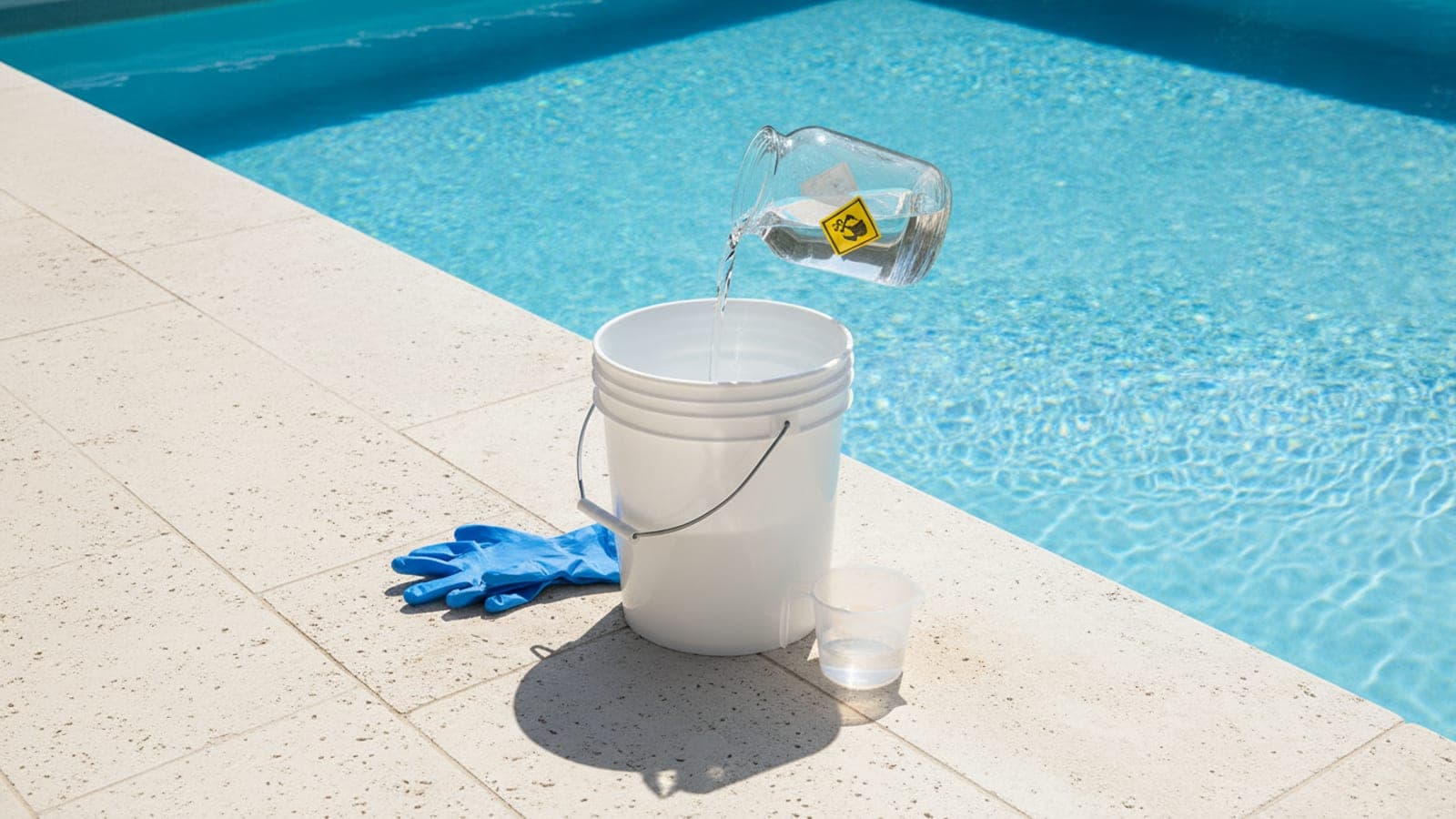
Muriatic acid deserves calm attention. Work outdoors, avoid breathing fumes, keep it away from chlorine products, and never mix pool chemicals. EPA’s pool chemical safety alert focuses on preventing fires, toxic vapor releases, and injuries from poor storage or handling.

Dry acid is not harmless just because it is dry. Read the label and store it away from incompatible chemicals and moisture.

If chemical handling makes you nervous, that is not weakness. That is your brain trying to keep your face attached.

How do you avoid chasing pH and alkalinity?

Avoid chasing numbers by making one correction at a time, waiting for circulation, and retesting before reacting. Most pool chemistry spirals happen because someone treats a half-mixed pool like it has already answered.

Here is a better decision path:

SituationBetter next step
Alkalinity high, pH highUse acid cautiously, circulate, retest
Alkalinity high, pH acceptableConsider waiting unless scale or rising pH is a problem
Alkalinity lower, pH now lowAerate before adding pH increaser
Alkalinity still high after one roundRepeat slowly, not dramatically
Test results are inconsistentReplace old reagents or get a second test

A worked example:

Your pool tests at 150 ppm total alkalinity and pH 8.0. You add acid carefully, circulate, and retest. Now total alkalinity is 125 ppm and pH is 7.2. That is progress. Do not immediately add soda ash just because pH is not your favorite number. Aerate, let pH rise, then retest.

That is how you get out of the chemical pinball machine.

Why does alkalinity keep going high again?

Alkalinity often returns because new water is adding alkalinity back to the pool. The pool may not be ignoring you. It may be getting refilled with high-alkalinity water.

Common causes include:

  • High-alkalinity fill water
  • Frequent topping off from evaporation
  • A leak that requires constant refill
  • Splash-out and refill
  • Overuse of alkalinity-raising products
  • Certain pH-raising products
  • Misreading the test
  • Testing immediately after adding chemicals

Test your fill water. If the hose water has high alkalinity, every refill nudges the pool upward. In dry climates, evaporation removes water but leaves minerals behind, then refill water adds more.

If water level keeps dropping, connect readers to the pool evaporation calculator. Sometimes the chemistry problem is really a water-loss problem wearing a little fake mustache.

What should you buy for lowering alkalinity?

The best products help you test accurately, dose acid safely, and aerate without guessing.

Affiliate disclosure: We may earn a commission if you buy through links on this page. As an Amazon Associate, we earn from qualifying purchases.

Recommended product module:

  • Full drop test kit: Needed for pH and alkalinity decisions.
  • Muriatic acid or dry acid: Use a pool-labeled product and follow the label.
  • Chemical-resistant gloves: Not optional when handling acid.
  • Safety goggles: Your eyes did not sign up for pool ownership drama.
  • Pool brush: Helps circulate and move water around steps and corners.
  • Aerator or adjustable return jets: Useful for raising pH after acid correction.
  • Chemical storage bin: Keeps incompatible products separated and dry.

This product module should link to pool chemical safety, how to lower pH in a pool safely, and the pool pH calculator.

When should you stop and get help?

Stop and get help when the numbers do not make sense, pH falls too low, the pool has visible surface or metal damage, or you are uncomfortable handling acid. A pool pro is cheaper than a bad chemical accident.

Get help if:

  • pH drops below the safe range and will not recover
  • Alkalinity stays very high after careful rounds
  • You see scale on a heater or salt cell
  • The pool surface is new, etched, stained, or unusual
  • You suspect a leak
  • You are using specialty equipment with strict chemistry requirements
  • The product label conflicts with internet advice

The main takeaway: lower alkalinity slowly. Acid plus aeration is the usual path, but patience is the part that keeps the pool from becoming a full-time hobby you did not apply for.

Frequently asked questions

How do I lower alkalinity in a pool?

To lower alkalinity, test total alkalinity and pH, add a labeled acid product carefully, circulate, aerate to bring pH back up if needed, and retest before repeating. Follow the product label every time.

Can I lower alkalinity without lowering pH?

Not directly. Acid lowers both pH and total alkalinity. The usual method is to lower with acid, then use aeration to raise pH without raising alkalinity much.

Why is high alkalinity bad in a pool?

High alkalinity can make pH difficult to lower, contribute to scale, and make water balance feel stubborn. It is not always an emergency, but it can make maintenance harder.

Should I use muriatic acid or dry acid to lower alkalinity?

Both are used for pH and alkalinity adjustments, but they handle differently. Choose a product labeled for pools, read the label, wear protective gear, and avoid mixing chemicals.

How long does it take to lower alkalinity?

It can take several rounds because you should dose cautiously, circulate, aerate if needed, and retest. Trying to fix a big alkalinity problem all at once is how people overshoot.

Why does my alkalinity keep rising?

High-alkalinity fill water, frequent top-offs, certain chemical habits, and water features can all contribute. If it keeps rising, test your fill water too.
The weekly skim

One short email a week: what to test, what to buy, and what to skip. No daily drip. Unsubscribe anytime.

Keep reading