PoolGearGuide

How to Raise Alkalinity in a Pool

By the PoolGearGuide editorial team · Updated 2026-07-03

Share

Alkalinity calculator

Add about 6.8 lbs of baking soda (sodium bicarbonate) to raise TA by 30 ppm. Add in thirds, circulating and retesting between.

Treat this as a starting dose: add less than the full amount when unsure, circulate for a few hours, retest, repeat. Always follow your product's label.

To raise alkalinity in a pool, test total alkalinity first, confirm your pool volume, then add a measured alkalinity increaser in stages. The goal is not to dump in a mystery scoop and hope the water starts behaving. The goal is to rebuild the pool’s pH buffer so the rest of your chemistry stops wobbling around.

Key takeaways

What does alkalinity actually do in pool water?

Total alkalinity helps your pool resist sudden pH swings. Think of it as the water’s shock absorber. Without enough buffer, pH can move around too easily, which makes every chemical correction feel like arguing with a shopping cart that has one bad wheel.

Alkalinity is not the same as pH. pH tells you how acidic or basic the water is right now. Total alkalinity tells you how strongly the water resists changes to pH.

That distinction matters because a pool can have low alkalinity even if pH does not look terrible yet. The pH reading is the moment. Alkalinity is the support system underneath it.

Low alkalinity can contribute to:

  • pH that drops quickly after rain or use
  • pH that changes dramatically after small chemical additions
  • Corrosion risk for metal parts and equipment
  • Etching risk on some pool surfaces
  • Irritating water when sanitizer and pH drift together
  • Extra chemical use because every correction needs another correction

For the plain-English chemistry overview, link this page to pool chemistry basics.

How do you know your pool alkalinity is low?

Your alkalinity is low when a reliable test kit shows total alkalinity below the target range for your pool and sanitizer setup. Do not diagnose low alkalinity from vibes, foam, or the fact that the pool “looks moody.” Test it.

Good clues include:

  • Total alkalinity reading below your target
  • pH that keeps falling
  • pH that moves too easily after small doses
  • Recent heavy rain or large water replacement
  • Acid added recently to lower pH
  • Use of acidic sanitizer products
  • Water that feels hard to balance even after repeated testing

Test strips can help with quick checks, but a drop test kit is better when you are making chemical decisions. Alkalinity is one of those numbers where “close enough” can still send you into a loop.

If the water is cloudy, green, or unsafe to swim in, alkalinity may be only one piece of the story. Start with the full picture: free chlorine, pH, total alkalinity, cyanuric acid, calcium hardness, and water clarity.

What should total alkalinity be?

Many pool-care references use a general total alkalinity target around 80–120 ppm, but your ideal target can depend on the sanitizer, surface, salt system, fill water, and product labels. The number is a range, not a personality test.

Taylor Technologies describes industry recommendations with an ideal total alkalinity range of 80–120 ppm, with broader minimum and maximum context. Some systems or sanitizer types may run better toward one side of the range rather than the exact middle.

Pool situationPractical alkalinity thinking
Most residential poolsOften managed around the common 80–120 ppm range
Saltwater pool with rising pHOften better near the lower/middle end if the system allows it
Trichlor tablet poolMay need different handling because trichlor is acidic
New plaster or high-aeration poolWatch pH rise and adjust patiently
Unclear product labelFollow the label or ask a pool professional

Do not chase a perfect number just because a chart made it look official. A pool that holds pH steady, has proper sanitizer, and stays clear is more important than turning 90 ppm into 100 ppm for sport.

What should you test before adding alkalinity increaser?

Before adding alkalinity increaser, test total alkalinity, pH, free chlorine, cyanuric acid, and pool volume. Pool volume is the boring number that keeps you from turning a simple fix into a chemistry side quest.

Use this quick pre-dose table:

TestWhy it matters before raising alkalinity
Total alkalinityConfirms the correction is actually needed
pHShows whether pH also needs attention after alkalinity changes
Pool volumeControls the dose amount
Free chlorineConfirms sanitizer is not the bigger urgent issue
Cyanuric acidAffects chlorine strength and maintenance decisions
Water clarityCloudy or green water may need broader troubleshooting

If you do not know your pool volume, use the pool volume calculator first. A 12,000-gallon pool and an 18,000-gallon pool can look similar from a patio chair, especially after one iced tea too many.

Then use the pool alkalinity calculator to estimate a cautious starting dose. The calculator should support the product label, not replace it.

What product raises alkalinity in a pool?

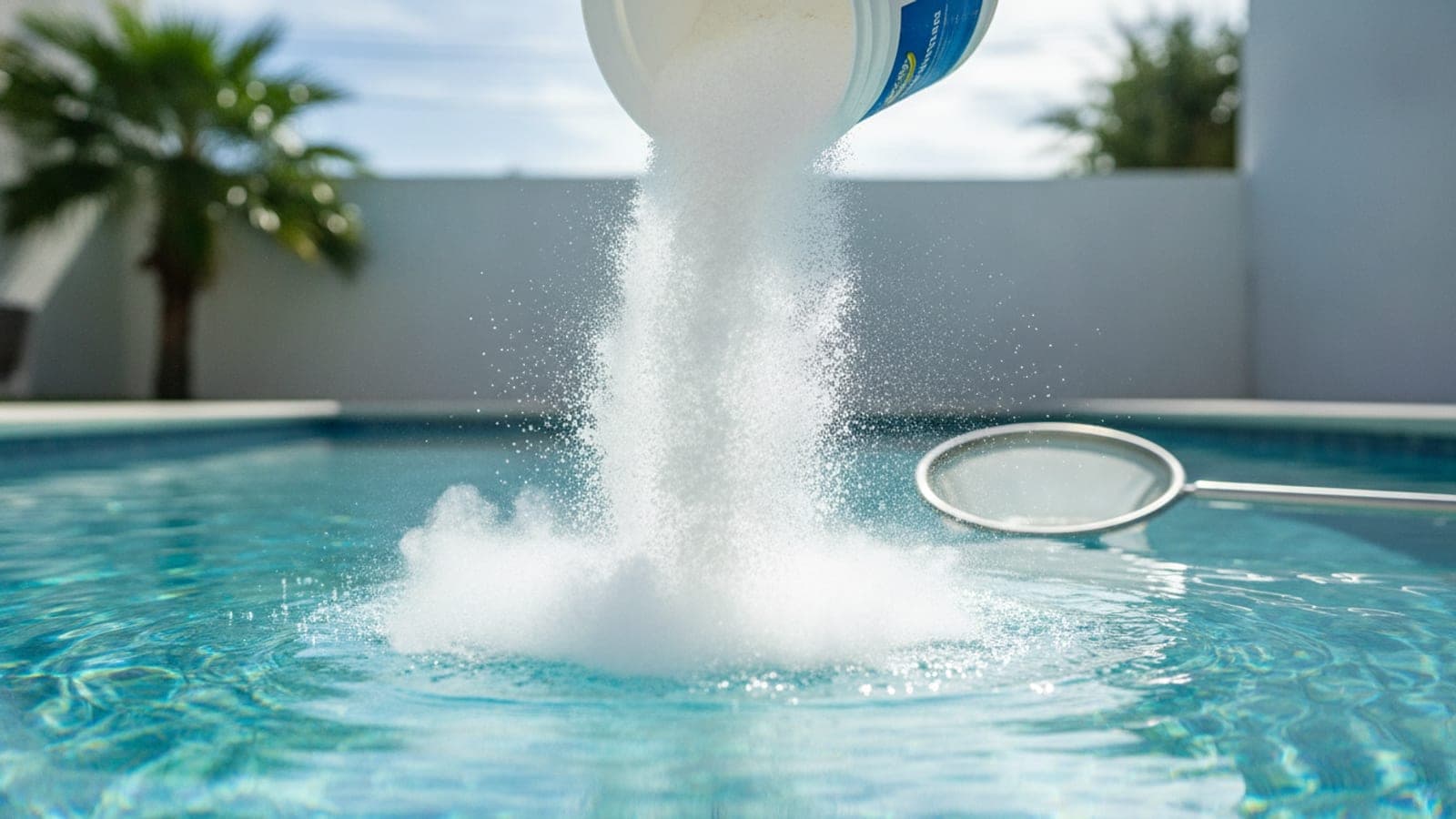
The common product for raising total alkalinity is sodium bicarbonate, often sold as pool alkalinity increaser. It raises total alkalinity more strongly than pH, which is why it is usually the first tool for low alkalinity.

Here is the practical comparison:

ProductMain useBest fitWatch out for
Alkalinity increaserRaises total alkalinityLow TA with unstable pHDose by label and volume
Sodium bicarbonateSame general active ingredient in many increasersStraightforward TA correctionPurity and dosing clarity matter
Soda ashRaises pH stronglyLow pH with acceptable TA in some casesCan push pH too high
Borax productsSometimes used for pH adjustmentMore specialized chemistry routinesNot a simple TA fix

If your only issue is low total alkalinity, alkalinity increaser is the cleaner tool. If pH is also very low, the right answer may depend on both numbers. That is where the pool pH calculator helps you avoid turning one problem into two.

Use products labeled for pool use when possible. Kitchen baking soda might be chemically similar, but a pool-labeled product gives you dosing directions, storage guidance, and fewer assumptions.

How do you raise alkalinity step by step?

Raise alkalinity slowly, circulate the pool, and retest before adding more. This is not a “more is more” situation. Pool water remembers your enthusiasm.

A safe routine:

  1. Test total alkalinity and pH.
  2. Confirm pool volume.
  3. Read the alkalinity increaser label.
  4. Use a conservative dose, especially if the pool is close to range.
  5. Add the product according to the label.
  6. Run the pump to circulate.
  7. Brush any product that settles.
  8. Wait for the water to mix.
  9. Retest total alkalinity and pH.
  10. Repeat only if needed.

Do not add alkalinity increaser and acid at the same time. That is just making the products argue in the water while your wallet watches.

Also avoid adding products directly to the skimmer unless the product label specifically says to do that. Some chemicals can create equipment or safety problems when they concentrate in plumbing.

How much alkalinity increaser should you add?

The right amount depends on pool volume, current alkalinity, target alkalinity, and the specific product strength. Use your product label and a calculator together, then start conservatively.

Here is a simple scenario:

DetailExample
Pool volume15,000 gallons
Current total alkalinity60 ppm
Target total alkalinity90 ppm
Needed change30 ppm
Best approachDose in stages, circulate, retest

The dose should not be guessed from the size of the bag or the confidence of the person at the barbecue. Use the label.

If your calculator says you need a large correction, split it into smaller rounds. That gives the pool time to mix and gives you a chance to stop before overshooting.

This also protects against volume errors. If the pool is actually 13,000 gallons instead of 15,000, a full dose can land higher than planned.

What if pH rises too?

pH may rise a little after raising alkalinity, but that does not mean you did it wrong. Retest after the water circulates, then decide whether pH needs its own adjustment.

A practical order:

  1. Fix clearly low total alkalinity.
  2. Circulate and retest.
  3. Check pH.
  4. Adjust pH only if it remains outside the target range.
  5. Retest again before swimming.

CDC recommends keeping pool pH between 7.0 and 7.8. That is a public-health range, not a dare to sit exactly at 7.0 or 7.8. Many homeowners aim closer to the middle for comfort and consistency, but your product labels and pool type matter.

If pH ends up high after a large alkalinity correction, use the pool acid calculator carefully and in stages. Acid can lower pH and total alkalinity, so do not undo your whole correction with one dramatic pour.

What should you buy for raising alkalinity?

Buy the tools that help you test accurately, dose carefully, and store chemicals safely. The most useful purchases are not fancy. They just prevent nonsense.

Affiliate disclosure: We may earn a commission if you buy through links on this page. As an Amazon Associate, we earn from qualifying purchases.

Recommended product module:

  • Full drop test kit: Better for real chemical decisions than strips alone.
  • Alkalinity increaser: Pool-labeled sodium bicarbonate product with clear dosing directions.
  • Measuring scoop or cup: Do not borrow the kitchen one unless you enjoy awkward conversations.
  • Pool brush: Helps move any settled product.
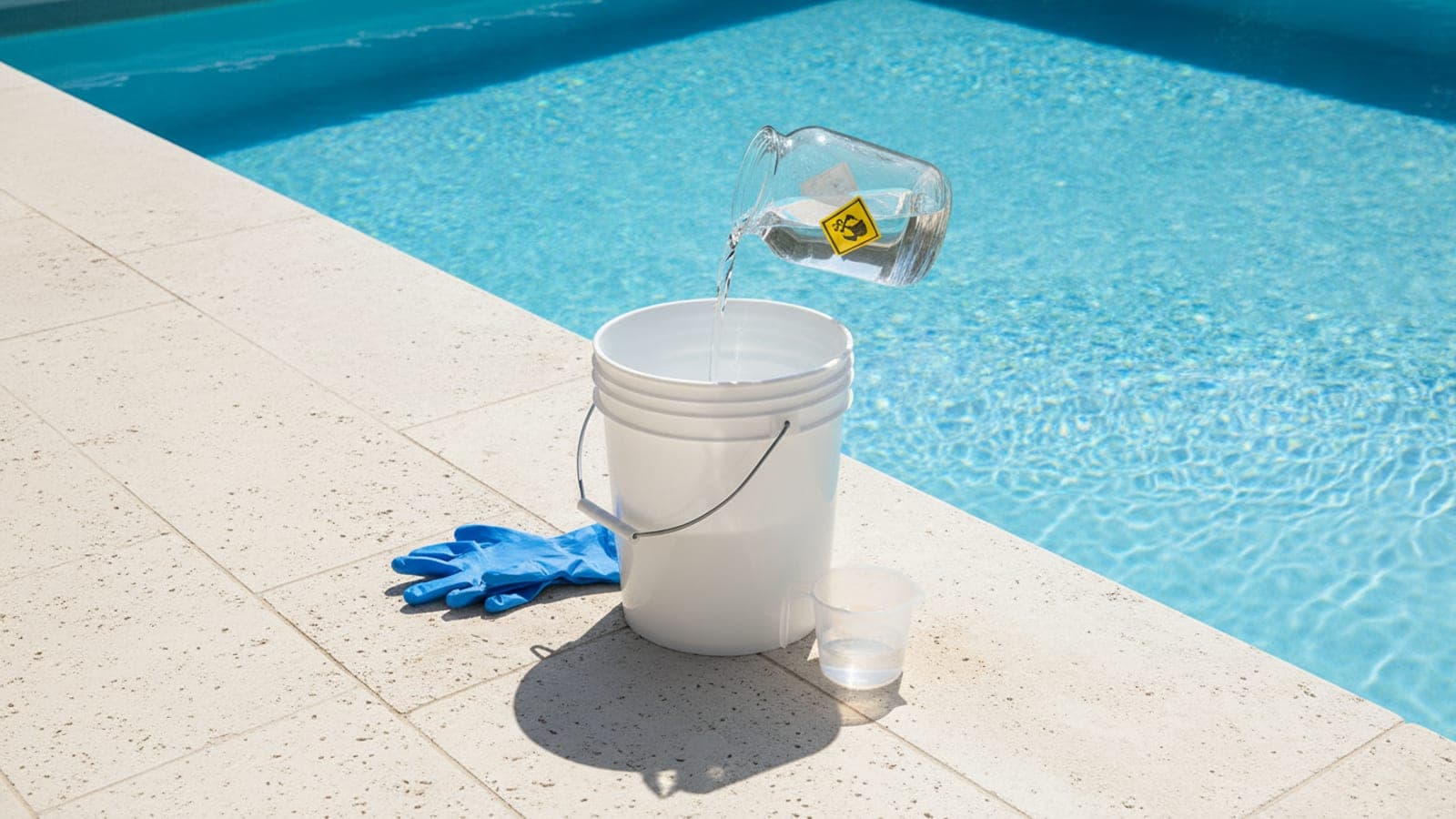
  • Chemical-resistant gloves: Sensible for handling pool chemicals.
  • Safety goggles: Cheap compared with explaining acid/base splashes to urgent care.
  • Dry storage bin: Keeps pool chemicals organized and away from moisture.

This page should also link to pool chemical safety. EPA warns that pool chemical mishandling can cause fires, toxic vapor releases, and injuries, so storage and separation are not optional details.

When is low alkalinity part of a bigger problem?

Low alkalinity is part of a bigger problem when it keeps returning after careful correction. A one-time low reading is common. A repeated low reading is a clue.

Look for:

  • Heavy rain and overflow
  • Large refill after draining or backwashing
  • Low-alkalinity fill water
  • Repeated acid dosing
  • Acidic sanitizer use
  • Splash-out and refill cycles
  • Test kit age or testing errors
  • Leaks that cause constant water replacement

If the water level is dropping, connect this guide to the pool evaporation calculator. A leak can quietly replace balanced water with fresh fill water, and then you keep “fixing” chemistry that is being diluted every day.

If pH is also unstable, send readers to what is the ideal pool pH and the pool pH calculator.

The takeaway: raise alkalinity carefully, but do not stop thinking after the number improves. If the same problem keeps coming back, the water is giving you a receipt.

Frequently asked questions

How do I raise alkalinity in a pool?

Test total alkalinity, confirm pool volume, then add an alkalinity increaser such as sodium bicarbonate according to the product label. Circulate the water, retest, and adjust again only if needed.

What raises pool alkalinity without raising pH too much?

Sodium bicarbonate is the common product used to raise total alkalinity. It can move pH somewhat, but it usually affects alkalinity more than pH when used carefully.

Can I use baking soda to raise pool alkalinity?

Many alkalinity increaser products are sodium bicarbonate, which is also baking soda. Use a pool-labeled product or carefully follow the product label so you know dose strength and purity.

What happens if pool alkalinity is too low?

Low alkalinity makes pH easier to swing up and down. That can lead to uncomfortable water, sanitizer problems, corrosion risk, and a pool that behaves like it had too much coffee.

Should I fix alkalinity or pH first?

If alkalinity is clearly low, fix alkalinity first, then retest pH. Alkalinity acts like the buffer for pH, so chasing pH before fixing the buffer can waste chemicals.

How soon can I retest after adding alkalinity increaser?

Follow the product label. A practical routine is to circulate thoroughly, brush any settled product, wait for the water to mix, then retest before adding more.
The weekly skim

One short email a week: what to test, what to buy, and what to skip. No daily drip. Unsubscribe anytime.

Keep reading