Alkalinity calculator
Add about 6.8 lbs of baking soda (sodium bicarbonate) to raise TA by 30 ppm. Add in thirds, circulating and retesting between.
Treat this as a starting dose: add less than the full amount when unsure, circulate for a few hours, retest, repeat. Always follow your product's label.
To raise pH in a pool, first test pH and total alkalinity, then confirm your pool volume before adding anything. Low pH is usually fixed with a labeled pH increaser such as soda ash, but the trick is not turning one low number into three weird ones.
Key takeaways
-
Low pH can irritate swimmers and may increase corrosion risk for metal parts and equipment.
-
Do not raise pH until you also check total alkalinity, because low alkalinity makes pH unstable.
-
Soda ash raises pH and can also raise alkalinity, so small doses and retesting matter.
-
Baking soda is mainly an alkalinity increaser, not a precise pH tool.
-
Aeration can raise pH without adding chemicals, but it works slowly and is not the answer for every pool.
When should you raise pH in a pool?
Raise pH when testing shows the pool is below the recommended range or trending downward. CDC recommends pool pH between 7.0 and 7.8, and many homeowners try to keep normal backyard pools closer to the middle of that range.
Low pH is not something to ignore because the water can become uncomfortable and harsh. It can also make corrosion risk more likely for metals, heaters, ladders, handrails, lights, and some surface materials.
Common signs of low pH include:
- Eye or skin irritation
- pH below the desired range on a reliable test
- Low total alkalinity
- Metal staining concerns
- Corrosion concerns around ladders or fixtures
- pH that drops again soon after correction
The word “reliable” is doing work here. If one test strip says disaster and the pool looks fine, test again with a better kit before adding anything. Pool chemicals are not seasoning. You do not sprinkle until it feels right.
For context, read what is the ideal pool pH before making bigger adjustments.
What should you test before raising pH?
Before raising pH, test pH, free chlorine, total alkalinity, and pool volume. Those numbers tell you whether low pH is the actual issue or just the easiest number to blame.
Start with these checks:
| Reading | Why it matters before raising pH |
|---|---|
| pH | Confirms whether the pool is actually low |
| Total alkalinity | Shows whether pH has enough buffer to stay stable |
| Free chlorine | Confirms the water is being sanitized |
| Cyanuric acid | Helps explain outdoor chlorine behavior |
| Pool volume | Controls how much product to add |
Pool volume is the one people love to skip. Do not. A 10,000-gallon pool and a 25,000-gallon pool do not want the same chemical dose, even if both are giving you the same judgmental pH color.
Use the pool volume calculator before dosing. Then use the pool pH calculator for a starting estimate, not a dare.
What raises pool pH?
Pool pH can be raised with pH increaser products, soda ash, some borax-based approaches, and aeration. Each option changes the water a little differently.
The right choice depends on total alkalinity.
If pH is low and alkalinity is also low, you may need to raise alkalinity first or choose a correction that accounts for both. If pH is low but alkalinity is already high, you need to be more careful because some products can push alkalinity even higher.
| Method | What it tends to do | Best use |
|---|---|---|
| Soda ash / pH increaser | Raises pH and can raise alkalinity | Low pH with low or acceptable alkalinity |
| Baking soda | Mainly raises alkalinity | Low alkalinity, not precise pH correction |
| Borax | Raises pH with less alkalinity effect than soda ash | Selected cases, label-aware users |
| Aeration | Raises pH without adding a chemical | Slow correction when alkalinity is already high |
Do not treat this table as a product label. Use it as a decision map. Actual doses depend on your pool volume, product strength, and current readings.
Should you use soda ash, borax, baking soda, or aeration?
Use soda ash when you need a direct pH increase and alkalinity is not already too high. Use baking soda when alkalinity is the real problem. Use aeration when you need pH to rise but do not want to add more alkalinity.
Here is the plain-English version.
Soda ash
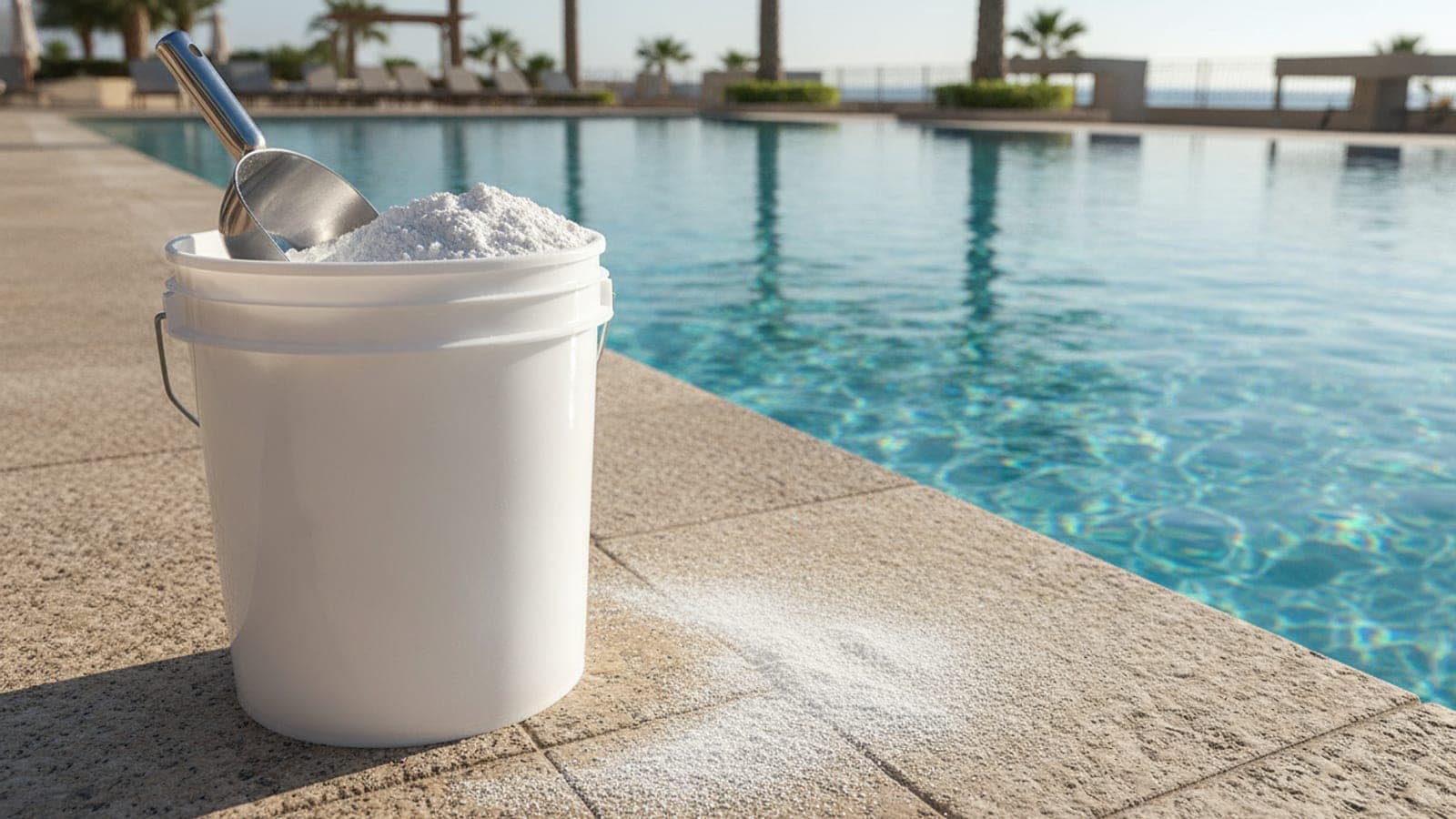
Soda ash is the classic pH increaser. It works, but it can also raise total alkalinity. That is helpful if alkalinity is low. It is annoying if alkalinity is already high.
Baking soda
Baking soda is mostly an alkalinity tool. It may nudge pH, but if your goal is specifically pH movement, baking soda can be the slow scenic route through a neighborhood you did not need to visit.
Borax
Borax is sometimes used to raise pH with less alkalinity impact, but it is not a casual “throw it in” move. It can affect borates and overall water chemistry. If your site includes this as an option, make the article clear: read labels, understand the tradeoff, and do not mix advice from five forums into one pool.
Aeration
Aeration can raise pH without adding chemicals. Waterfalls, spillovers, returns pointed upward, bubblers, fountains, and air compressors can all add aeration. It is slower, but useful when alkalinity is already high and pH needs to come up.
How do you raise pH step by step?
Raise pH by testing, calculating, dosing small, circulating, and retesting. The best pool owners are not the ones who add chemicals fastest. They are the ones who stop before the pool starts doing math back at them.
A safe, simple process:
- Test pH with a reliable kit.
- Test total alkalinity.
- Confirm pool gallons.
- Choose the right method based on alkalinity.
- Use the product label and calculator estimate.
- Add a partial dose if you are unsure.
- Run the pump to circulate.
- Retest after the product has mixed.
- Repeat only if the reading confirms it.
Worked example: your 18,000-gallon pool tests at pH 6.9 and total alkalinity is low. This is not just a pH problem. Use the alkalinity calculator first, then use the pH calculator after the water has circulated and retested. You may find that correcting alkalinity pulls pH closer to where it belongs.
Another example: your 12,000-gallon pool tests at pH 7.1, but alkalinity is already high. A full soda ash dose may push alkalinity in the wrong direction. A slower aeration approach or a smaller correction may be the calmer move.
How do you avoid wrecking alkalinity?
Avoid wrecking alkalinity by testing it before you raise pH and choosing a method that fits the alkalinity reading. pH and alkalinity are cousins. They show up together, argue loudly, and make holidays complicated.
Use this decision table:
| pH | Alkalinity | Better first move |
|---|---|---|
| Low | Low | Raise alkalinity carefully, then retest pH |
| Low | Normal | Use pH increaser in small steps |
| Low | High | Consider aeration or conservative correction |
| Normal | Low | Do not raise pH just because alkalinity is low |
| High | High | This is not a raise-pH problem |
The trap is adding soda ash every time pH is low without looking at alkalinity. That can work once, then make the next week harder. If total alkalinity climbs too high, pH may drift up later and you end up using acid to undo what you just did.
Send readers to the pool alkalinity calculator whenever the pH result looks connected to buffer problems.
What if pH keeps dropping again?
If pH keeps dropping, the pool has a pattern, not a one-time reading. Check alkalinity, rain, fill water, sanitizer type, acidic products, and recent chemical additions.
Common causes of recurring low pH include:
- Low total alkalinity
- Acidic sanitizer or chemical routines
- Heavy rain or acidic fill water
- Overuse of acid from previous high-pH corrections
- Chemical additions made too close together
- Testing with old reagents or poor strips
Keep a simple log for one or two weeks:
| Date | pH | Alkalinity | Chlorine | What changed? |
|---|---|---|---|---|
| Monday | 7.1 | Low | In range | Heavy rain |
| Wednesday | 7.0 | Low | Low | Added chlorine |
| Saturday | 7.2 | Better | In range | Adjusted alkalinity |
A log turns “this pool hates me” into a pattern you can actually fix.
What should you buy for low pH fixes?
The best low-pH shopping list is short. Buy tools that help you test and dose, not random bottles that promise to make the pool behave like a spa commercial.
Recommended product cards:
- Full drop test kit
- pH increaser or soda ash
- Alkalinity increaser
- Digital pH meter for frequent checks
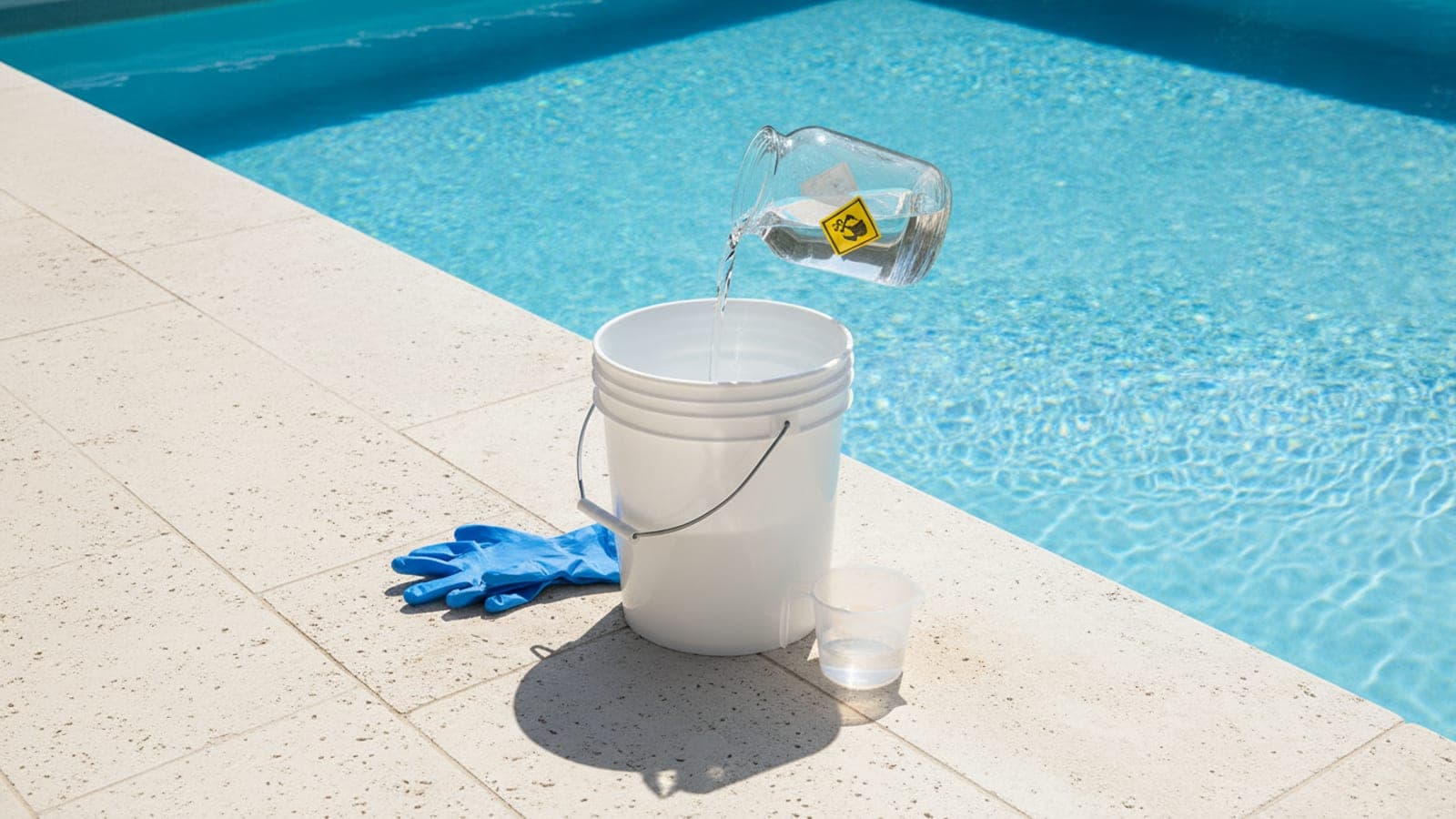
- Chemical-resistant gloves
- Safety goggles
- Clean measuring scoop used only for pool chemicals
- Pool brush to help distribute products after circulation begins
Disclosure: We may earn a commission if you buy through product links on this page. As an Amazon Associate, we earn from qualifying purchases.
Do not put affiliate products before the testing explanation. The best product recommendation is the one that fits the reader's actual readings.
When should you stop adding chemicals and troubleshoot?
Stop adding pH increaser when the pool is cloudy, green, scaling, staining, or changing too quickly after every correction. At that point, low pH may be part of a larger water-balance problem.
Move into troubleshooting if:
- pH changes dramatically in a day
- Alkalinity is far outside range
- Water is cloudy or green
- Chlorine will not hold
- Metal stains are appearing
- The pool was recently filled or resurfaced
- You added multiple chemicals without retesting
Use the pool chemistry basics guide as the hub, then branch out to pH, alkalinity, chlorine, and CYA pages. This makes the site useful instead of just searchable.
External sources to verify before publishing
- CDC — Home Pool and Hot Tub Water Treatment and Testing: https://www.cdc.gov/healthy-swimming/about/home-pool-and-hot-tub-water-treatment-and-testing.html
- EPA — Safe Storage and Handling of Swimming Pool Chemicals: https://www.epa.gov/rmp/chemical-safety-alert-safe-storage-and-handling-swimming-pool-chemicals
- NPIC — Pool and Spa Chemicals Fact Sheet: https://npic.orst.edu/factsheets/pool-chemicals.html
Frequently asked questions
How do I raise pH in a pool?
Test pH and total alkalinity, confirm pool volume, then add a labeled pH increaser such as soda ash in small doses. Circulate the water and retest before adding more.
What raises pH without raising alkalinity too much?
Aeration can raise pH without adding chemicals, but it is slower. Borax is sometimes used to raise pH with less alkalinity impact than soda ash, but you should follow product labels and understand the other chemistry it affects.
Will baking soda raise pool pH?
Baking soda mainly raises total alkalinity. It can nudge pH upward, but it is usually not the best tool when pH is low and alkalinity is already acceptable.
Can I swim right after raising pH?
Follow the product label. In general, circulate the water, retest pH and sanitizer, and do not swim until the water is clear and readings are in the safe range.
Why does my pool pH keep dropping?
Low alkalinity, acidic chemical use, rain, fill water, heavy organic load, and some sanitizer routines can pull pH down. Track the trend instead of correcting one test result over and over.