A pool cover is worth it when it solves a specific problem you actually have: losing water, losing heat, catching leaves, protecting the pool in winter, or making the heater work less like it has a grudge.
Key takeaways
- A pool cover is most valuable when evaporation, heat loss, debris, or winter closing are costing you time or money.
- A cover only saves anything when you use it. The best cover is the one you can put on and take off without inventing new swear words.
- Solar covers help reduce evaporation and heat loss during swim season; winter covers and safety covers solve different problems.
- Use the pool evaporation calculator before assuming your water loss is a leak.
- If you heat the pool, a cover usually deserves serious consideration because heat loss is often the expensive part.
Table of contents
- When is a pool cover worth it?
- What problem are you trying to solve?
- How much water can a pool cover save?
- Does a pool cover help with heating costs?
- Which type of pool cover makes sense?
- What does the annoying math look like?
- When is a pool cover not worth it?
- What should you buy with a pool cover?
- How do you keep a cover from becoming a chore?
- What should you do next?
When is a pool cover worth it?
A pool cover is worth it when it gets used often enough to reduce evaporation, heat loss, debris, or seasonal cleanup. It is not worth much if it lives folded behind the shed like an abandoned trampoline.
Start with the problem, not the product. A pool owner in Arizona fighting evaporation has a different need than a pool owner in Ohio closing for winter. A screened Florida pool with a heat pump has different math than an uncovered backyard under three oak trees.
The clearest wins usually come from four situations:
- You add water often and the pool evaporation calculator suggests normal evaporation is a big factor.
- You heat the pool and lose temperature overnight.
- You have leaves, pollen, seeds, or dust landing in the water every day.
- You close the pool for winter and need a real barrier against debris.
The cover is not magic. It is a lid. A useful lid, but still a lid.
What problem are you trying to solve?
The right cover depends on the job. Buying a winter cover to solve summer evaporation is like wearing a parka to mow the lawn.
| Problem | Best cover type to consider | Why it helps |
|---|---|---|
| Evaporation | Solar cover or automatic cover | Reduces direct water loss from the surface |
| Heat loss | Solar cover, automatic cover, insulated cover | Keeps more heat in the pool overnight |
| Leaves and debris | Leaf net, mesh cover, solid cover | Keeps bulk debris out before it sinks |
| Winter closing | Winter cover or safety cover | Protects the pool during off-season months |
| Child/pet safety | Properly rated safety cover | Designed for safety when installed correctly |
| Convenience | Automatic cover | More likely to be used daily because it is easy |
Do not treat all covers as the same thing. A cheap solar blanket can be great for evaporation and heat retention, but it is not a safety cover. A mesh winter cover can block leaves but still lets water pass through. A solid winter cover blocks more, but needs water management on top.
The buyer mistake is asking, “What is the best pool cover?” The better question is, “What am I tired of dealing with?”
How much water can a pool cover save?
A pool cover can save a lot of water because evaporation happens from the surface. The exact amount depends on pool surface area, wind, humidity, water temperature, air temperature, and how often the cover is on.
The U.S. Department of Energy says pool covers minimize evaporation and calls covering a pool when not in use the single most effective way to reduce pool heating costs. That matters because evaporation and heat loss are connected: when water leaves the pool, it takes heat with it.
Use this simple test before buying anything fancy:
- Mark your water level with tape on the skimmer faceplate.
- Run the pool normally for 24 hours.
- Do the same with a bucket of pool water sitting on a pool step.
- Compare water loss in the pool vs. the bucket.
- If the pool drops much more than the bucket, investigate a leak.
That bucket test is not a laboratory. It is the backyard version of “please do not buy a cover to fix a plumbing leak.” If water loss looks normal, run the pool evaporation calculator and decide whether a cover is worth the hassle.
Does a pool cover help with heating costs?
A pool cover can help heating costs because it reduces heat loss, especially overnight and during windy conditions. This matters most for heated pools, heat pumps, shoulder-season swimming, and pools in areas with cool nights.
Pool heaters fight three things:
- Cold air pulling heat away.
- Wind increasing evaporation.
- Warm pool water losing heat overnight.
A cover slows that down. If you use a pool heater size calculator, you will notice that heating is not just about gallons. Surface area, desired temperature rise, wind, and cover use all matter.
Here is the plain-English version:
| Pool situation | Cover value |
|---|---|
| Unheated pool, warm climate, little evaporation | Maybe useful, but not urgent |
| Heated pool used at night | Usually worth serious consideration |
| Heat pump in cool evenings | Very useful because heat pumps work harder in cooler air |
| Gas heater for occasional weekends | Useful if you want to hold heat between swims |
| Indoor pool | Can reduce evaporation and humidity load |
A heater without a cover can feel like running the air conditioner with a window open. Technically possible. Emotionally expensive.
Which type of pool cover makes sense?
The best pool cover is the type that matches your pool shape, climate, budget, and patience level. Convenience matters because a cover that is not used is just a tarp with ambition.
Solar pool covers
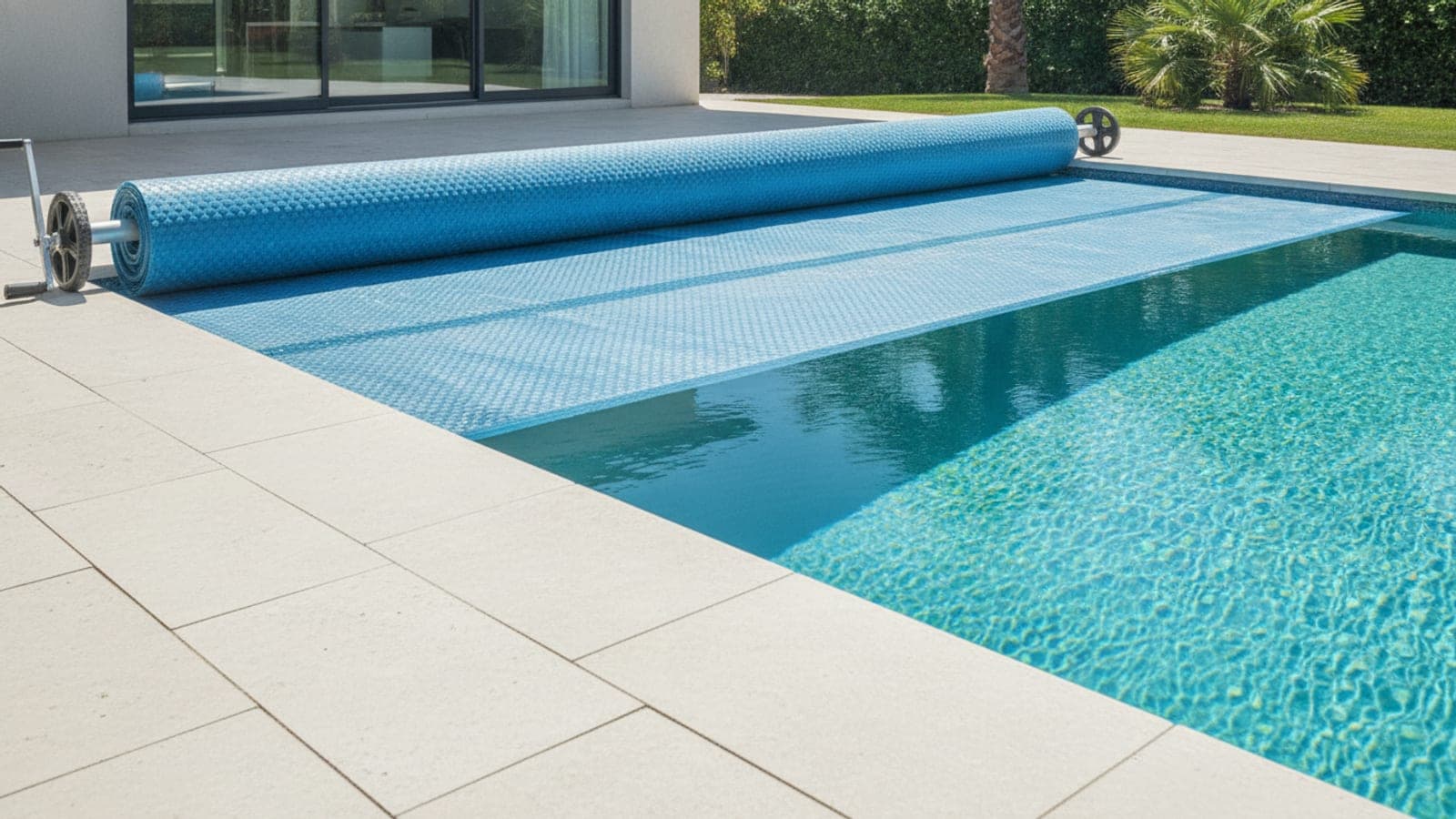
Solar covers are usually bubble-style blankets used during swim season. They can reduce evaporation and help hold heat, especially when used overnight.
They are a good fit when:
- You want a lower-cost cover.
- You have a pool shape that is easy to cover.
- You can use a reel or handle the cover without hating your life.
- Your goal is water and heat retention, not safety.
Winter covers
Winter covers protect closed pools from debris during the off-season. They can be mesh or solid, and the right choice depends on climate, debris, and how you close the pool.
They are a good fit when:
- You close the pool for months.
- Leaves are a serious issue.
- You want spring opening to be less swamp-adjacent.
- You are using the pool closing checklist.
Safety covers
Safety covers are designed and installed to support safety when used correctly. They are different from basic solar covers and basic winter covers.
They are a good fit when:
- You need a secure off-season cover.
- Kids, pets, or wildlife access is a concern.
- You want something cleaner and more durable than a budget tarp setup.
- You are willing to pay more for proper fit and installation.
Automatic covers
Automatic covers are expensive, but they solve the biggest cover problem: actually using the thing. Pressing a button beats wrestling a wet blanket in the afternoon heat.
They are a good fit when:
- You use the pool often.
- You heat the pool.
- Convenience is the difference between using and ignoring the cover.
- Your pool design supports installation.
What does the annoying math look like?
The annoying math starts with what the cover saves: water, heat, chemicals, cleaning time, and seasonal cleanup. Then subtract the cost, replacement cycle, storage hassle, and how often you will use it.
Use this decision table:
| Question | If yes | If no |
|---|---|---|
| Do you heat the pool? | Cover value goes up | Cover may still help water/debris |
| Do you add water every week? | Check evaporation and leaks | Water savings may be minor |
| Do leaves drive you insane? | Cover or leaf net may help | Skip debris-heavy options |
| Is the cover easy to use? | Savings are more likely | It may become garage decoration |
| Do you close for winter? | Winter/safety cover matters | Swim-season cover may be enough |
Worked example
Say you have a 16-by-32-foot pool, a heat pump, and cool nights. The pool loses heat overnight, so you run the heater longer before weekend swims. A solar cover plus reel might reduce heat loss enough to shorten heater run time and reduce evaporation.
That does not mean every owner gets the same savings. Your electricity rate, cover quality, wind exposure, and swim schedule matter. The point is that heated pools usually give covers more chances to earn their keep.
For an unheated pool under a screen enclosure with low debris and low water loss, the same cover may be more annoyance than solution.
When is a pool cover not worth it?
A pool cover is not worth it when it does not match the problem, is too difficult to use, or creates more maintenance than it saves. The most common failure is buying a cover without a plan for handling it.
Skip or delay the purchase when:
- You have not confirmed whether water loss is evaporation or a leak.
- You hate removing and replacing covers and will not buy a reel.
- The pool shape makes a basic cover awkward.
- Your main issue is bad chemistry, not water loss or debris.
- You need safety but are looking at a non-safety cover.
A cover will not fix low chlorine, high stabilizer, bad pH, clogged filters, or poor circulation. If the water is already cloudy, start with how to clear cloudy pool water before shopping.
What should you buy with a pool cover?
Buy the accessories that make the cover easier and safer to use. The cover itself is only half the system.
What you need
- Solar pool cover sized to your pool shape.
- Pool cover reel for larger pools.
- Winter cover or safety cover if you close the pool.
- Leaf net if leaves are the main problem.
- Water bags, clips, anchors, or hardware matched to the cover type.
- Cover pump for solid winter covers that collect rainwater.
- Test kit, because covered water still needs chemistry.
Affiliate disclosure: PoolPros may earn a commission when you buy through product links. Product fit, safety rating, and manufacturer instructions matter more than our button looking nice.
Do not buy random hardware. A safety cover needs proper anchors and fit. An above-ground cover needs the right cable, winch, clips, or wall system. A solar blanket needs a way to come off without becoming a wet burrito.
How do you keep a cover from becoming a chore?
A pool cover stays useful when it is easy to handle, clean, store, and put back on. If using it feels like a punishment, you will stop using it.
Make the setup realistic:
- Buy a reel for large solar covers.
- Cut solar covers carefully to fit the water surface.
- Keep a storage spot close to the pool.
- Rinse debris before rolling if needed.
- Do not drag covers across rough concrete.
- Remove standing water from solid winter covers.
- Label hardware before winter closing if you are new to it.
For above-ground pools, make sure the cover system works with your top rail and wind exposure. For inground pools, pay attention to deck shape, ladder placement, steps, and raised features. The weird corner is where good intentions go to snag.
What should you do next?
First, decide whether you are trying to save water, hold heat, block debris, close for winter, or improve safety. Then choose the cover type that solves that problem with the least daily annoyance.
Use this order:
- Check water loss with the pool evaporation calculator.
- If you heat the pool, run the pool heater size calculator with cover assumptions.
- If you close seasonally, read how to close a pool for winter.
- Pick the cover type by job, not by price alone.
- Buy the reel, pump, or hardware that makes you actually use it.
The best pool cover is not the fanciest one. It is the one that solves a real problem and does not make you mutter at your backyard every evening.
Frequently asked questions
Is a pool cover worth it for every pool?
No. A pool cover is most worth it when evaporation, heat loss, leaves, or winter closing costs are real problems. It is less useful if the cover is too annoying to use consistently.
Do pool covers really save water?
Yes, covers reduce evaporation when they are actually on the pool. The exact savings depend on weather, wind, pool surface area, sun exposure, and how often the cover is used.
Will a solar pool cover heat my pool?
A solar cover can help hold heat and may warm water in sunny conditions, but it is not the same as a gas heater or heat pump. Think of it as heat retention first, heating second.
What type of pool cover should I buy first?
For swim-season water and heat loss, start with a solar blanket and reel if the pool shape allows it. For winter debris and protection, use a properly sized winter cover or safety cover.
Is a pool cover reel worth it?
Usually yes for larger pools. A cover that is hard to remove becomes a rolled-up guilt carpet in the corner. A reel makes regular use more realistic.
Can a pool cover replace maintenance?
No. A cover reduces debris, evaporation, and heat loss, but you still need sanitizer, circulation, brushing, filter care, and water testing.