PoolGearGuide

Pool Alkalinity Too High? Stop Chasing pH First

By the PoolGearGuide editorial team · Updated 2026-07-03

Share

Alkalinity calculator

Add about 6.8 lbs of baking soda (sodium bicarbonate) to raise TA by 30 ppm. Add in thirds, circulating and retesting between.

Treat this as a starting dose: add less than the full amount when unsure, circulate for a few hours, retest, repeat. Always follow your product's label.

Pool total alkalinity too high usually means your water has too much buffering power, so pH does not want to move when you adjust it. The fix is not to keep throwing random acid at the pool. Lower pH carefully, aerate to bring pH back up, retest, and repeat until total alkalinity lands in a sensible range.

Total alkalinity is the pool's pH shock absorber. That sounds useful, and it is. But too much shock absorber turns into a giant couch cushion on top of your pH. You push the number down, it pops back up, and now your pool shelf is covered in half-used chemical bottles with very dramatic labels.

Key takeaways

  • High total alkalinity makes pH harder to control because the water is over-buffered.
  • Many pools do better when total alkalinity is roughly in the 80–120 ppm neighborhood, but your surface, sanitizer, and product labels matter.
  • The usual correction is acid plus aeration, not one giant chemical ambush.
  • High alkalinity can contribute to scale and cloudy water, especially when pH or calcium hardness is also high.
  • Do not chase alkalinity while ignoring sanitizer, pH, circulation, and filter condition.

Table of contents

What does high pool total alkalinity mean?

High pool total alkalinity means the water has more acid-buffering capacity than you want. In plain English, it resists pH movement, so your pH can stay high or rebound after you lower it.

Total alkalinity is not the same as pH. pH tells you how acidic or basic the water is right now. Total alkalinity tells you how strongly the water resists changes to pH.

Think of pH as the steering wheel and alkalinity as the road. If the road is smooth, small steering changes work. If the road is made of wet concrete, you can turn the wheel all you want and still feel stuck.

High alkalinity often shows up with one or more of these symptoms:

  • pH rises again after you lower it.
  • Acid additions seem weak or temporary.
  • The pool gets cloudy even after normal filtration.
  • Scale appears around the waterline, spillover, tile, heater, or salt cell.
  • You keep adjusting pH more often than usual.

A single test does not tell the whole story, though. Before you fix alkalinity, test pH, free chlorine, stabilizer, and calcium hardness too. Pool chemistry likes to travel in a pack.

Why does high alkalinity make pH so annoying?

High alkalinity makes pH annoying because the water has too much buffer. You can lower pH with acid, but the water keeps trying to push pH back toward where it was.

This is why people get stuck in the classic loop:

  1. pH is high.
  2. Add acid.
  3. pH drops.
  4. A few days later, pH is high again.
  5. Add more acid.
  6. Mutter something unkind at the test kit.

The problem may not be that you used too little acid. The problem may be that total alkalinity is still too high, so pH keeps climbing back.

High pH matters because CDC guidance for home pools recommends pH between 7.0 and 7.8. That range supports swimmer comfort and helps disinfectant work the way it should. If pH is drifting above that range again and again, alkalinity is one of the first numbers to check.

The important move is to stop treating every high pH reading like a separate little fire. If alkalinity is high, fix the pattern.

What number should you aim for?

Many residential pools land well when total alkalinity is around 80–120 ppm, but the best target depends on your pool surface, sanitizer, fill water, pH behavior, and product instructions. The goal is stable water, not winning a chemistry spelling bee.

Taylor Technologies describes common industry guidance with an ideal total alkalinity range of 80–120 ppm, while also noting broader minimum and maximum context. That is a useful starting point, not a magic law written on a pool noodle.

Use this table as a practical guide:

Total alkalinity readingWhat it usually meansWhat to do next
Under 60 ppmpH may swing too easilyConfirm test, then raise slowly if needed
60–80 ppmOften workable for some poolsWatch pH behavior and surface needs
80–120 ppmCommon target zoneMaintain and retest regularly
120–150 ppmMildly high for many poolsAdjust if pH keeps rising or scale appears
150+ ppmMore likely to cause pH control problemsLower in stages and watch pH closely

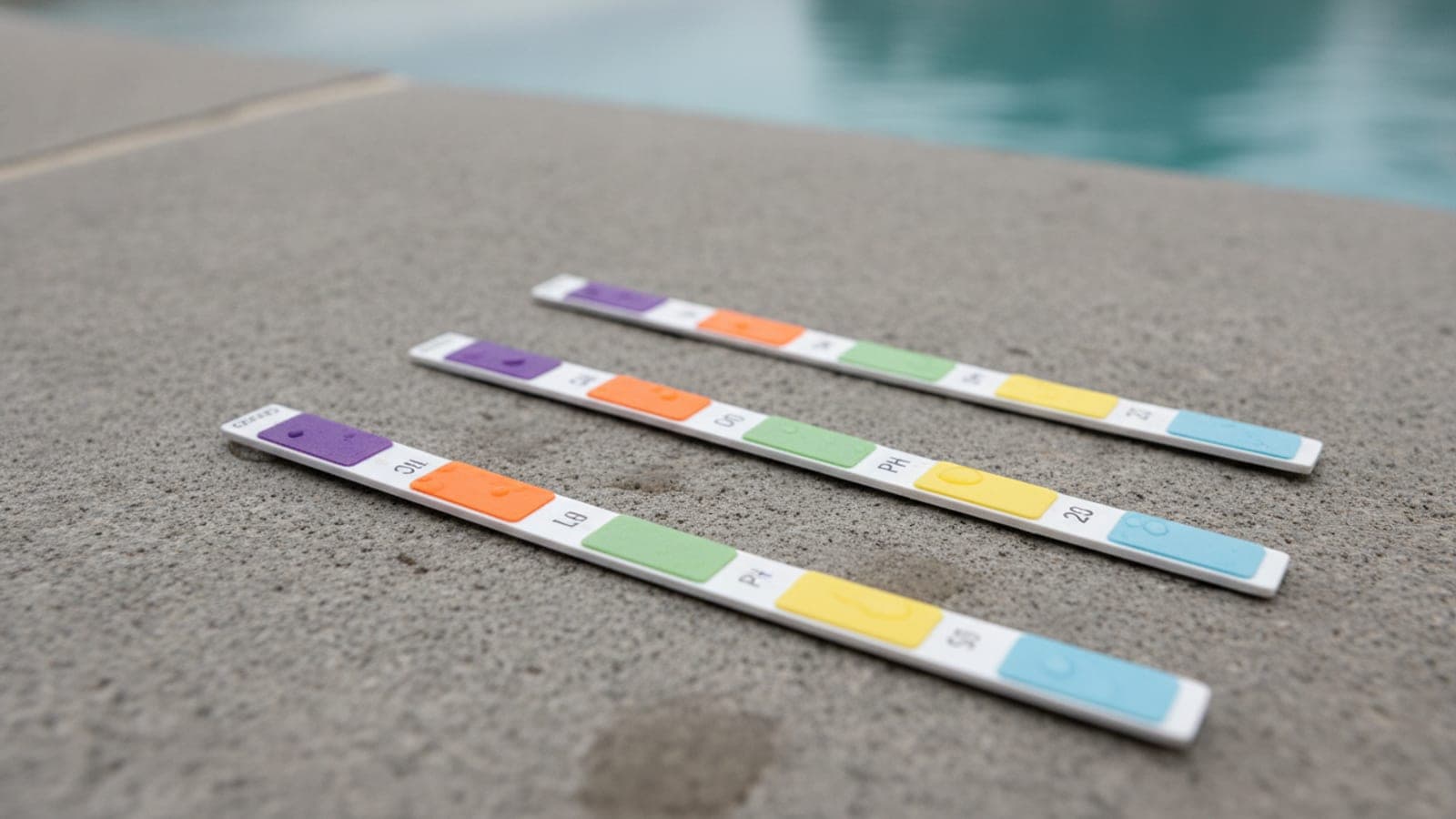
Do not lower alkalinity just because a strip color looks slightly off. Test again with a better kit if the result seems strange. Test strips are convenient, but a liquid drop kit is usually better when you are about to add acid.

How do you lower high alkalinity safely?

The safest practical method is to lower pH with acid, aerate the water to raise pH back up, and repeat as needed. This gradually lowers total alkalinity without leaving the pool stuck at a low pH.

Here is the clean version:

  1. Test pH and total alkalinity with a reliable kit.
  2. Confirm pool volume with the pool volume calculator.
  3. Use the pool acid calculator or product label to estimate a conservative dose.
  4. Add acid according to the label, with pump running.
  5. Let water circulate.
  6. Retest pH and alkalinity.
  7. Aerate to raise pH without adding alkalinity.
  8. Repeat only if alkalinity is still high and pH behavior still needs correction.

The boring phrase here is “in stages.” Stages are your friend. Stages keep your pool from turning into a science fair volcano with deck jets.

Use the pool alkalinity calculator to plan the direction and dose, but always defer to the chemical label and your actual test results.

Should you use muriatic acid or dry acid?

Both muriatic acid and dry acid can lower pH and total alkalinity, but they are not identical. The right choice depends on your comfort level, storage setup, equipment, surface, and product instructions.

OptionWhy people use itWhat to watch
Muriatic acidCommon, effective, often cost-efficientStrong fumes, careful handling, storage safety
Dry acidEasier to measure and store for some ownersProduct-specific dosing, added byproducts depending on chemistry
Acid substitute productsSometimes marketed as gentlerRead labels carefully and verify dosage

Do not mix acids with chlorine products. Do not pre-mix random chemicals in a bucket unless the label specifically says to do so. EPA and CDC pool chemical safety guidance exists because bad chemical handling can cause fires, toxic vapors, and injuries.

Buy safety gear before you need it. Gloves and goggles are less exciting than a new robot cleaner, but they are much cheaper than explaining to urgent care that you were “just doing a quick pool thing.”

Why does aeration matter?

Aeration matters because it raises pH without adding much total alkalinity. That is the little trick that makes high-alkalinity correction less frustrating.

After acid lowers both pH and alkalinity, you need pH to come back into a comfortable range. If you add soda ash or another pH-raising chemical, you may also push alkalinity back up. That can undo part of the work.

Aeration can come from:

  • Pointing return jets upward.
  • Running a spa spillover.
  • Using deck jets or fountains.
  • Turning on water features.
  • Running an air compressor setup only if you know what you are doing.

The idea is not to create a water park for squirrels. The idea is to disturb the surface enough to drive pH upward naturally.

A worked example:

A 15,000-gallon pool tests at pH 8.0 and total alkalinity 160 ppm. The owner adds a conservative acid dose, circulates, and retests. pH drops to 7.2 and alkalinity drops to 135 ppm. Instead of adding soda ash, they aerate overnight. pH rises to 7.6. Alkalinity is still lower than before. Now they can decide whether another small cycle is worth it.

That is controlled. Controlled beats dramatic.

What if the pool is cloudy too?

If the pool is cloudy and total alkalinity is high, do not assume alkalinity is the only cause. Cloudy water can come from high pH, low sanitizer, algae, dirty filters, calcium scale, fine debris, or poor circulation.

Use this quick diagnosis table:

Cloudy-water cluePossible issueNext article/tool
pH high and alkalinity highOver-buffered water, scale riskPool pH calculator
Chlorine lowSanitizer cannot keep upPool chlorine calculator
Green tintAlgae starting or activeClean a green pool
Filter pressure weirdDirty or restricted filterFilter cartridge cleaner guide
Water clears, then clouds againCirculation or chemistry patternCloudy pool diagnosis

If sanitizer is low, handle that too. Water can have perfect-looking alkalinity and still be unsafe to swim in.

What should you buy for this fix?

You do not need a garage shelf that looks like a pool-store clearance rack. For high alkalinity, the useful kit is pretty simple.

What you need

  • A reliable liquid drop test kit.
  • Acid that matches your comfort level and pool needs.
  • Chemical-resistant gloves.
  • Safety goggles.
  • A dedicated measuring container if the label allows measuring that way.
  • A pool brush.
  • A way to aerate, if your pool does not already have returns or water features that can help.

Affiliate module placeholder: show test kits first, then acid/safety gear, then optional aeration accessories. Do not lead with expensive equipment unless the article context calls for it.

Before placing product cards, include this disclosure near the module:

We may earn a commission if you buy through links on this page. We recommend products by use case, not because a bottle has the loudest label.

What mistakes make high alkalinity worse?

The biggest mistake is adding chemicals before you know the pool volume and current test numbers. The second biggest mistake is trying to fix everything in one afternoon because company is coming over and the pool is “mostly blue.”

Avoid these:

  • Adding acid without testing pH first.
  • Using old strips and trusting one weird color block.
  • Adding soda ash too soon after lowering pH.
  • Ignoring high fill-water alkalinity.
  • Letting water features run all day, then wondering why pH climbs.
  • Treating scale, cloudy water, and high pH as unrelated problems.
  • Mixing pool chemicals together.
  • Storing acid and chlorine products near each other.

High fill-water alkalinity is a sneaky one. If your hose water starts high, every refill after splash-out, backwashing, leaks, or evaporation makeup can push the pool back toward the same problem.

That does not mean you are cursed. It means you should test fill water once and stop blaming the pool like it has an attitude.

What is the simple high-alkalinity plan?

The simple plan is to confirm the reading, lower pH carefully, aerate, retest, and repeat only if the water still needs it. The goal is stable pH and comfortable water, not the lowest alkalinity number you can brag about at a barbecue.

Use this plan:

  1. Test pH, total alkalinity, free chlorine, CYA, and calcium hardness.
  2. Confirm your pool volume.
  3. If pH is high, use a conservative acid dose.
  4. Circulate and retest.
  5. Aerate if pH needs to rise without adding alkalinity.
  6. Repeat in small steps.
  7. Clean filters and brush if cloudy water or scale is part of the problem.
  8. Stop adjusting once pH behaves and alkalinity is in a workable range.

High total alkalinity is fixable. The trick is not being more aggressive. The trick is being less random.

Frequently asked questions

What happens if pool total alkalinity is too high?

High total alkalinity can make pH harder to adjust, increase the chance of cloudy water or scale, and make acid additions feel like they barely work.

How do you lower high alkalinity in a pool?

Lower pH carefully with acid according to the label or calculator, then aerate the pool to bring pH back up without raising alkalinity much. Repeat in small steps.

Can I swim with high alkalinity?

High alkalinity alone is not the only swim-safety number. Check pH and sanitizer first. CDC recommends pH 7.0 to 7.8 and proper disinfectant levels before swimming.

Does high alkalinity cause cloudy pool water?

It can contribute, especially when pH is also high and calcium is present. Cloudy water can also come from poor filtration, low sanitizer, algae, or fine debris.

Should I lower alkalinity all at once?

No. Lower it in stages. Big acid swings are harder to control and create more chances for low pH, surface irritation, or equipment concerns.
The weekly skim

One short email a week: what to test, what to buy, and what to skip. No daily drip. Unsubscribe anytime.

Keep reading