PoolGearGuide

Pool Alkalinity Too Low? Fix the Buffer Before pH Gets Weird

By the PoolGearGuide editorial team · Updated 2026-07-03

Share

Alkalinity calculator

Add about 6.8 lbs of baking soda (sodium bicarbonate) to raise TA by 30 ppm. Add in thirds, circulating and retesting between.

Treat this as a starting dose: add less than the full amount when unsure, circulate for a few hours, retest, repeat. Always follow your product's label.

Pool total alkalinity too low means your water does not have enough buffering power, so pH can swing around like a shopping cart with one bad wheel. Raise alkalinity in small measured doses, circulate, retest, and only then fine-tune pH.

Low alkalinity feels harmless at first because the water may still look clear. Then pH starts acting dramatic. One rainstorm, one acid dose, one heavy swim day, and the number moves more than you expected. That is the sign that the buffer needs help.

Key takeaways

  • Low total alkalinity makes pH less stable and harder to manage.
  • Many pools use roughly 80–120 ppm total alkalinity as a practical target, but your surface, sanitizer, and product instructions matter.
  • Sodium bicarbonate is commonly used to raise alkalinity, but it should still be dosed in stages.
  • Fix low alkalinity before obsessing over tiny pH adjustments.
  • Clear water is not automatically balanced water, so test before swimmers jump in.

Table of contents

What does low pool total alkalinity mean?

Low pool total alkalinity means the water has weak pH buffering. Your pH can move too easily, which can make the pool harder to keep comfortable, sanitized, and predictable.

Total alkalinity is not glamorous. Nobody invites friends over to admire a stable buffer. But it quietly keeps pH from acting like a toddler who missed a nap.

When alkalinity is low, you may see:

  • pH dropping faster than usual.
  • pH bouncing after small chemical additions.
  • More frequent pH corrections.
  • Eye or skin irritation when other numbers are also off.
  • Corrosion concerns if pH drops too low.
  • Trouble getting a stable reading after rain or refilling.

Low alkalinity does not mean your pool is ruined. It means the water needs a measured nudge before you start fine-tuning everything else.

Why does low alkalinity make pH jump around?

Low alkalinity makes pH jump around because there is not enough buffer to resist change. Acidic inputs, rainwater, certain sanitizers, and chemical adjustments can move pH more than expected.

Here is the useful version:

  • pH is the current acid/base reading.
  • Total alkalinity is the water's ability to resist pH change.

If alkalinity is low, pH does not have much support. You can adjust pH today and find it in a different mood tomorrow.

CDC recommends pH between 7.0 and 7.8 for home pools. That is a broad enough range for normal pool ownership, but low alkalinity can make staying inside that range harder than it needs to be.

This is why a pH-only strategy can fail. If the buffer is weak, the pH number is not the root problem. It is the symptom waving at you from the shallow end.

What alkalinity range should you aim for?

A common practical target for total alkalinity is around 80–120 ppm, though some pools run better near the lower or upper part of that range depending on surface, sanitizer type, fill water, and pH behavior. Taylor Technologies lists 80–120 ppm as an industry ideal range, which is a helpful starting point.

Use this table to decide what your reading means:

Total alkalinityWhat it often meansAction
Under 60 ppmLow buffer, pH may swingRaise in measured steps
60–80 ppmBorderline for many poolsWatch pH behavior
80–120 ppmCommon target rangeMaintain and retest
120–150 ppmSlightly high for some poolsAdjust only if pH is hard to control
150+ ppmHigh buffer, scale/pH issues more likelyLower carefully if needed

The best number is the one that keeps pH stable and the pool comfortable without constant chemical fiddling. If your pH behaves beautifully at 80 ppm, you do not get extra homeowner points for forcing alkalinity to 120.

How do you raise pool alkalinity?

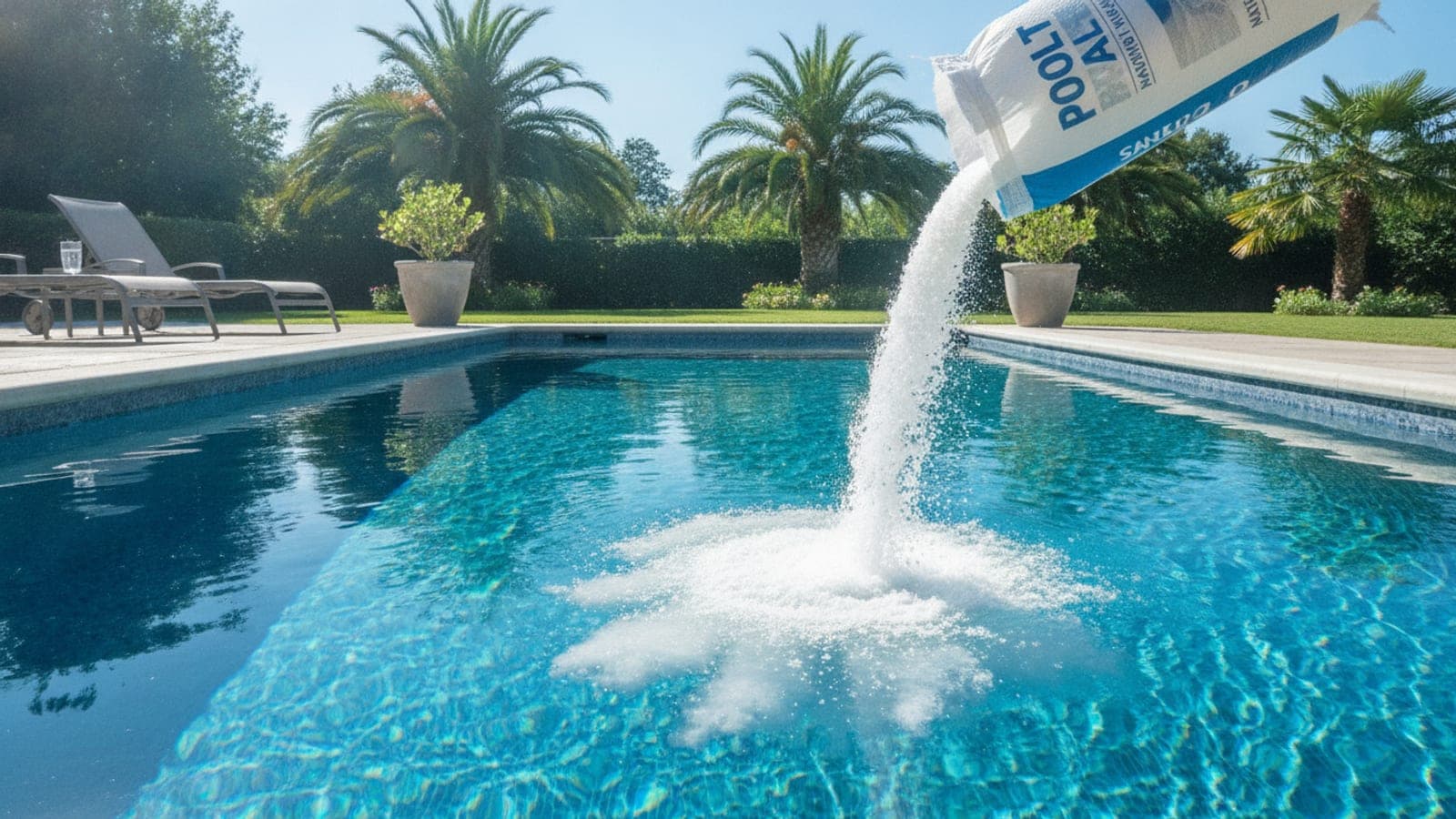
Raise pool alkalinity by adding an alkalinity increaser or sodium bicarbonate according to your pool volume, current reading, target reading, and product label. Add it in stages, circulate, and retest before adding more.

A clean process looks like this:

  1. Test total alkalinity and pH.
  2. Confirm your pool volume with the pool volume calculator.
  3. Choose a modest target increase.
  4. Use the pool alkalinity calculator to estimate the dose.
  5. Read the product label.
  6. Add the product as directed.
  7. Brush if granules settle.
  8. Circulate the pool.
  9. Retest before adding more.

Do not dump in the entire container because the pool store printout looked disappointed. Small steps are easier to correct than one huge overshoot.

Does baking soda raise alkalinity?

Yes, sodium bicarbonate, commonly known as baking soda, raises total alkalinity. Many pool alkalinity increasers are based on sodium bicarbonate, though pool-labeled products should still be used according to their own directions.

The important point is not the name on the bag. The important point is dosing.

If you add too little, nothing much happens. If you add too much, you can turn a low-alkalinity problem into a high-alkalinity problem and start the whole acid/aeration dance from the other article. That dance has enough participants already.

A worked example:

A 12,000-gallon pool tests at 50 ppm total alkalinity and pH 7.2. The owner wants to move toward 80 ppm, but instead of trying to correct the full 30 ppm at once, they dose for a smaller increase, circulate, and retest the next day. The pool lands at 70 ppm. pH is now steadier. They can decide whether another small adjustment is worth it.

That approach is less dramatic, which is exactly the point.

Should you fix pH or alkalinity first?

If total alkalinity is very low, fix alkalinity first, then fine-tune pH after the water circulates and stabilizes. If pH is dangerously low or outside product-label safety directions, treat that as urgent and use the label as your guide.

For normal backyard pool situations, this order usually makes sense:

  1. Test pH and total alkalinity.
  2. If alkalinity is low, raise it gradually.
  3. Circulate and retest.
  4. Adjust pH after alkalinity is closer to a stable range.
  5. Confirm sanitizer before swimming.

The reason is simple. A pH adjustment can be temporary if alkalinity is too low. Fixing the buffer first gives pH something to lean on.

For swimmer safety, do not stop at pH and alkalinity. CDC guidance also includes disinfectant levels, with chlorine recommendations that change when cyanuric acid is used.

Use is my pool safe to swim in if you need the quick “can people get in yet” version.

What causes alkalinity to get low?

Low alkalinity usually comes from water replacement, acidic products, rain, source water, or repeated chemical corrections. Sometimes it is not one big event. It is three small things adding up while you were busy pretending the filter basket was not full.

Common causes include:

  • Heavy rain or overflow.
  • Draining and refilling.
  • Splash-out followed by low-alkalinity fill water.
  • Repeated acid additions.
  • Certain sanitizer routines.
  • Over-correction after high alkalinity.
  • Testing error.

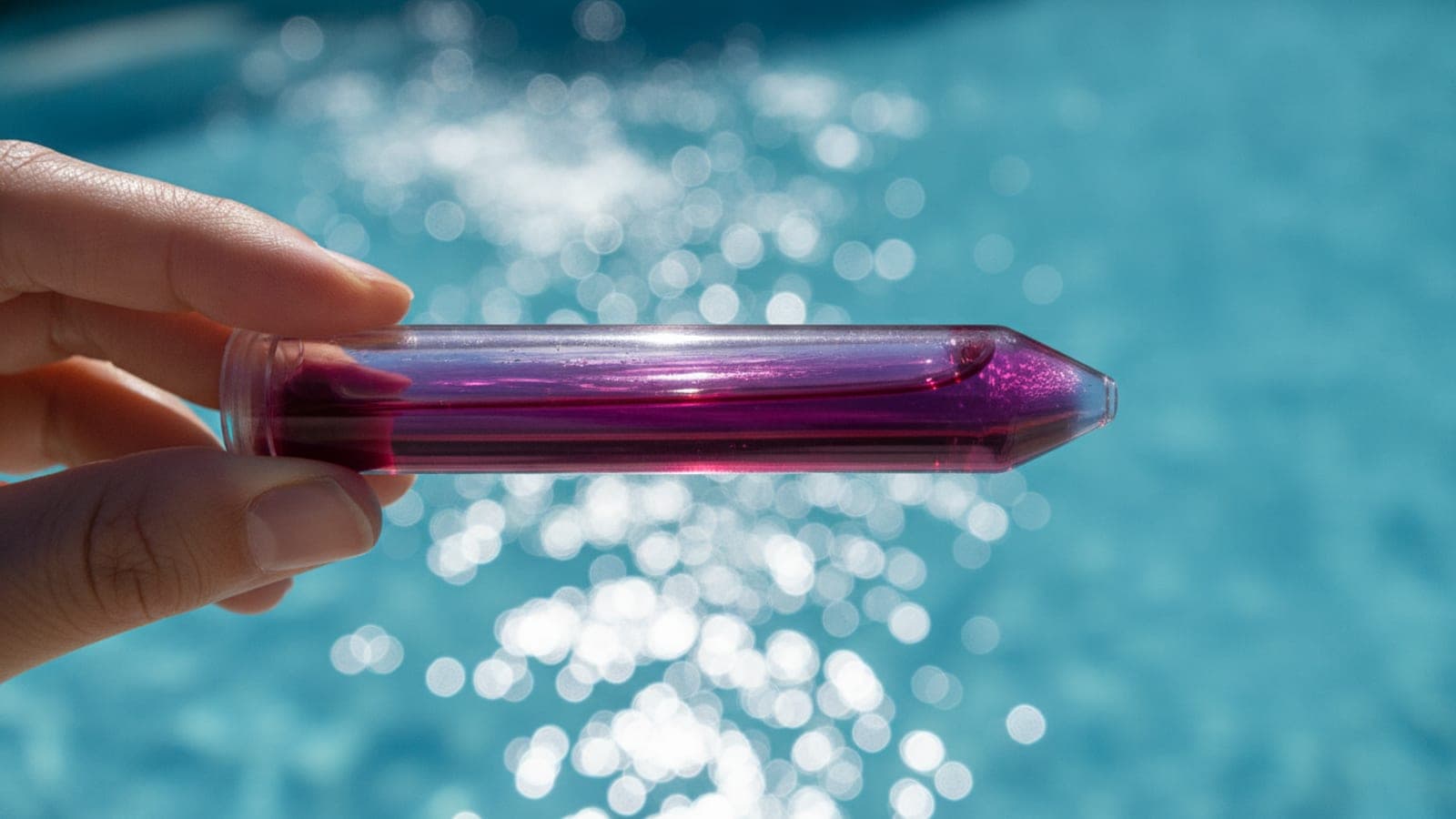
Testing error deserves its own mention. If the reading is surprising, test again. Rinse the test vial, use fresh reagents, and follow the instructions closely. If your test kit has lived in a hot shed for two summers, it may be less trustworthy than your neighbor's “I just eyeball it” advice, and that is not a high bar.

What should you buy for low alkalinity?

The basic shopping list is short. You need a good test, a measured increaser, and enough patience to not overcorrect.

What you need

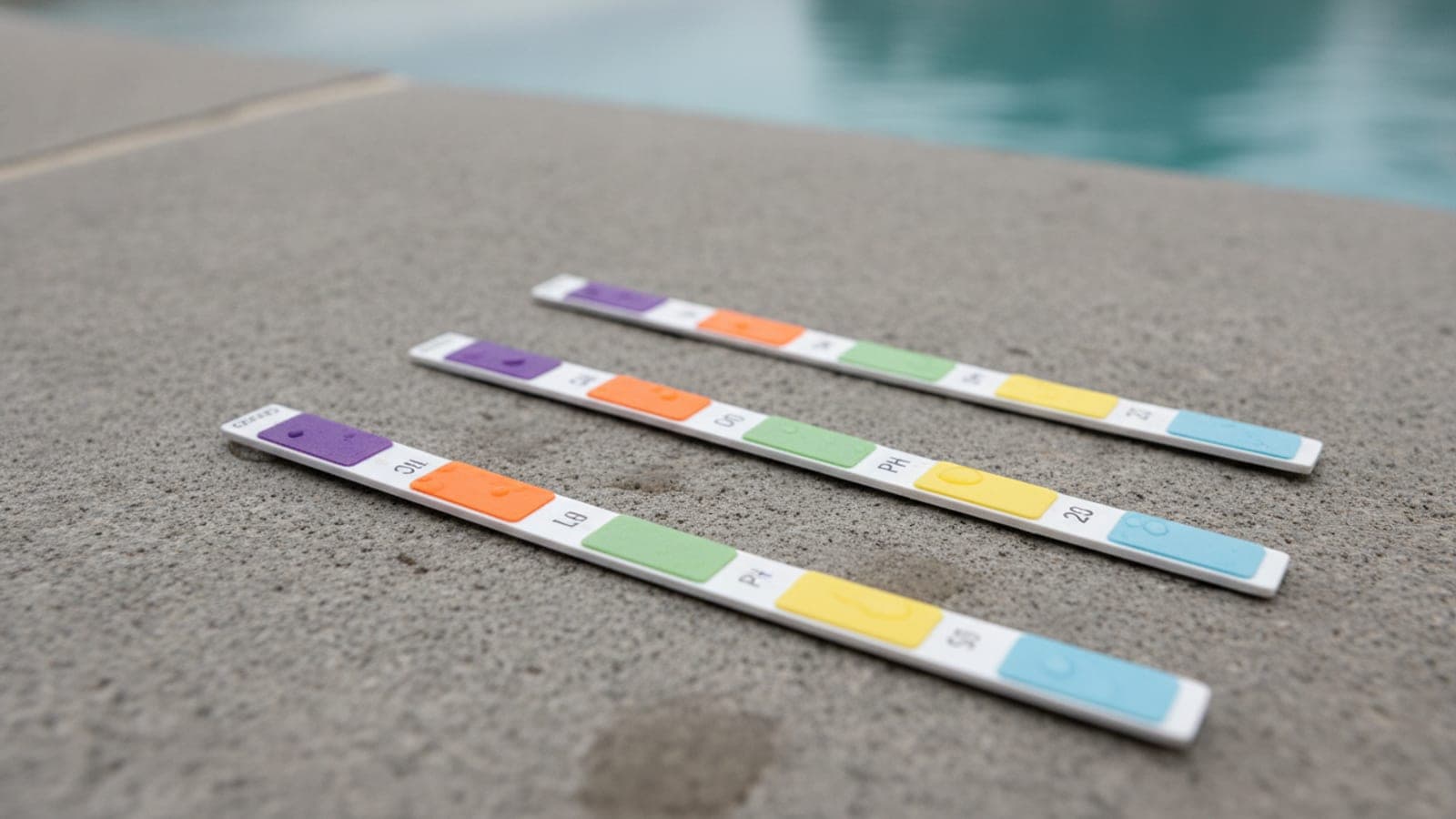
  • Liquid drop test kit for pH and total alkalinity.
  • Alkalinity increaser or sodium bicarbonate product.
  • Measuring scoop or container recommended by the label.
  • Pool brush for settled product.
  • Pool log or app to track readings.

Affiliate module placeholder: show liquid test kits first, then alkalinity increaser, then basic measuring and brushing tools. Do not push clarifier, shock, or fancy gadgets on a low-alkalinity page unless the article context calls for them.

Disclosure near product cards:

We may earn a commission if you buy through links on this page. The boring test kit usually matters more than the flashy bottle.

What mistakes should you avoid?

The biggest mistake is treating low alkalinity like an emergency when the water is otherwise stable. The second biggest mistake is ignoring it completely until pH starts doing gymnastics.

Avoid these:

  • Raising alkalinity without knowing pool volume.
  • Adding a full bag because “more buffer sounds better.”
  • Fixing pH again and again while alkalinity is still low.
  • Testing right after adding product and assuming the pool is done.
  • Letting granules sit on the surface or floor if the label says to brush or circulate.
  • Storing pool chemicals where they can get wet or mix together.

EPA and CDC chemical-safety guidance is not decoration. Keep products dry, separate, and labeled. Do not combine chemicals. Do not use mystery scoops from old buckets.

What if low alkalinity keeps coming back?

If low alkalinity keeps coming back, look beyond the bag of increaser. Recurring low alkalinity usually means something is changing the water, not that the pool is personally rejecting stability.

Start with these checks:

Repeat problemWhat to checkWhy it matters
Alkalinity drops after stormsRain and overflowNew water can dilute the buffer
Alkalinity drops after refillingFill water testYour source water may start low
pH and alkalinity both drift downAcid additions or acidic productsThe routine may be pushing both numbers down
Readings change wildlyTest method or old reagentsThe problem may be the measurement
Pool needs constant correctionLeaks or frequent water replacementNew water keeps resetting chemistry

Test your fill water once. It takes a few minutes and can explain a lot. If your hose water has low alkalinity, every refill after splash-out, backwashing, vacuuming to waste, or leaks can drag the pool back down.

Also check the pattern after acid use. If you often lower pH aggressively, you may be pulling alkalinity down with it. The fix may be smaller pH corrections, better aeration strategy, or checking why pH was rising in the first place.

A simple pool log helps here. Write down the date, pH, total alkalinity, chlorine, CYA, rainfall, and what you added. After three or four entries, the pool usually starts confessing.

What is the simple low-alkalinity plan?

The simple plan is to test, raise alkalinity in stages, circulate, retest, then adjust pH. That is it. No dramatic pool-store cart. No chemistry panic.

Use this plan:

  1. Test pH, total alkalinity, sanitizer, and CYA.
  2. Confirm gallons.
  3. Dose alkalinity increaser conservatively.
  4. Circulate the pool.
  5. Brush if product settles.
  6. Retest after the water has mixed.
  7. Fine-tune pH only after alkalinity is closer to target.
  8. Keep a quick log so you know whether the problem is recurring.

Low alkalinity is not complicated once you stop asking pH to do the buffer's job. Give the water some stability first. Then the rest of the numbers get a lot less needy.

Frequently asked questions

What happens if pool total alkalinity is too low?

Low total alkalinity can make pH swing more easily, which can make water harder to balance and less comfortable for swimmers.

How do you raise low alkalinity in a pool?

Use an alkalinity increaser or sodium bicarbonate according to the product label and your pool volume. Add it in stages, circulate, and retest before adding more.

Does baking soda raise pool alkalinity?

Yes, sodium bicarbonate is commonly used to raise total alkalinity. It can affect pH too, so dose gradually and retest.

Can low alkalinity make pH drop?

Low alkalinity can make pH less stable, so pH may move more easily after rain, acid additions, sanitizer use, or swimmer load.

Should I raise pH or alkalinity first?

If total alkalinity is very low, correct alkalinity first in small steps, then fine-tune pH after the water circulates and stabilizes.
The weekly skim

One short email a week: what to test, what to buy, and what to skip. No daily drip. Unsubscribe anytime.

Keep reading