Saltwater pool maintenance is mostly about testing, keeping salt in the right range for your specific system, managing pH drift, and cleaning the salt cell before it gets crusty enough to need its own zip code. A saltwater pool is not chlorine-free. It just makes chlorine in a different way.
Key takeaways
-
A saltwater pool uses a salt chlorine generator to produce chlorine from dissolved salt.
-
You still need to test chlorine, pH, salt, alkalinity, cyanuric acid, and other water balance numbers.
-
Salt targets vary by manufacturer, so use your actual system manual instead of one generic number.
-
pH often drifts upward in saltwater pools, which makes the pH calculator and acid calculator important.
-
Salt cells need inspection and cleaning, but only as directed by the manufacturer.
What is a saltwater pool, really?
A saltwater pool is a chlorine pool with a salt chlorine generator. Salt is dissolved in the water, then the generator uses that salt to produce chlorine for sanitation.
That means the pool is not chemical-free. It is not magic water. It is not a spa vacation in liquid form. You still need chlorine. You still need pH control. You still need circulation, brushing, filtration, and testing.
The difference is how chlorine gets into the pool. In a traditional chlorine pool, you add chlorine products manually or through a feeder. In a saltwater pool, the salt cell produces chlorine while the pump runs and flow is present.
| Pool type | How chlorine gets added | What the owner still manages |
|---|---|---|
| Traditional chlorine pool | Liquid, tablets, granular products, or feeders | Chlorine, pH, alkalinity, CYA, filtration |
| Saltwater pool | Salt chlorine generator makes chlorine | Chlorine, pH, salt, alkalinity, CYA, cell condition |
| Mineral/add-on systems | Usually still need sanitizer | Confirm sanitizer level and product directions |
For new owners, the mental shift is simple: the salt system helps with routine chlorine production. It does not replace water care.
What should you test every week?
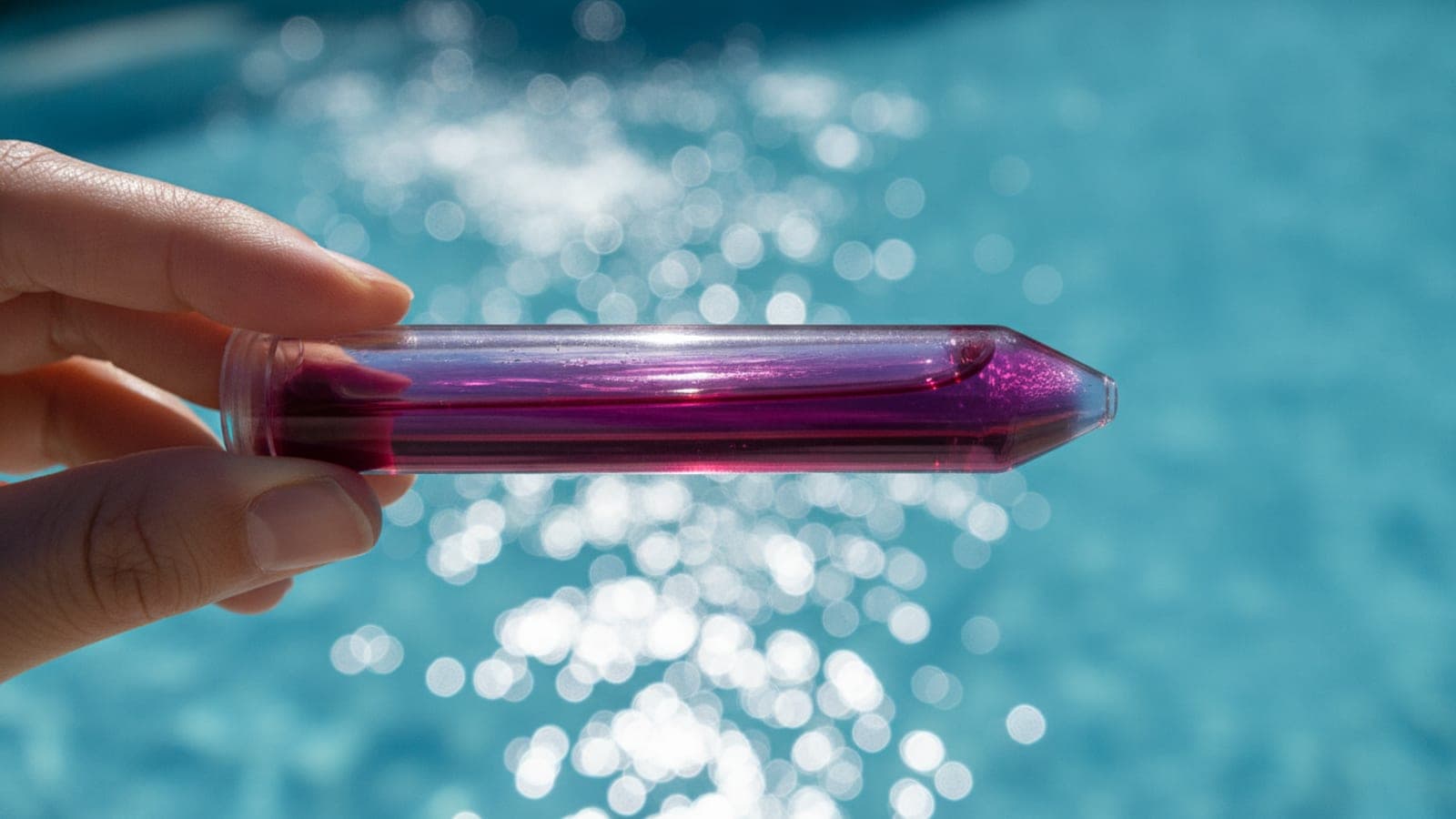
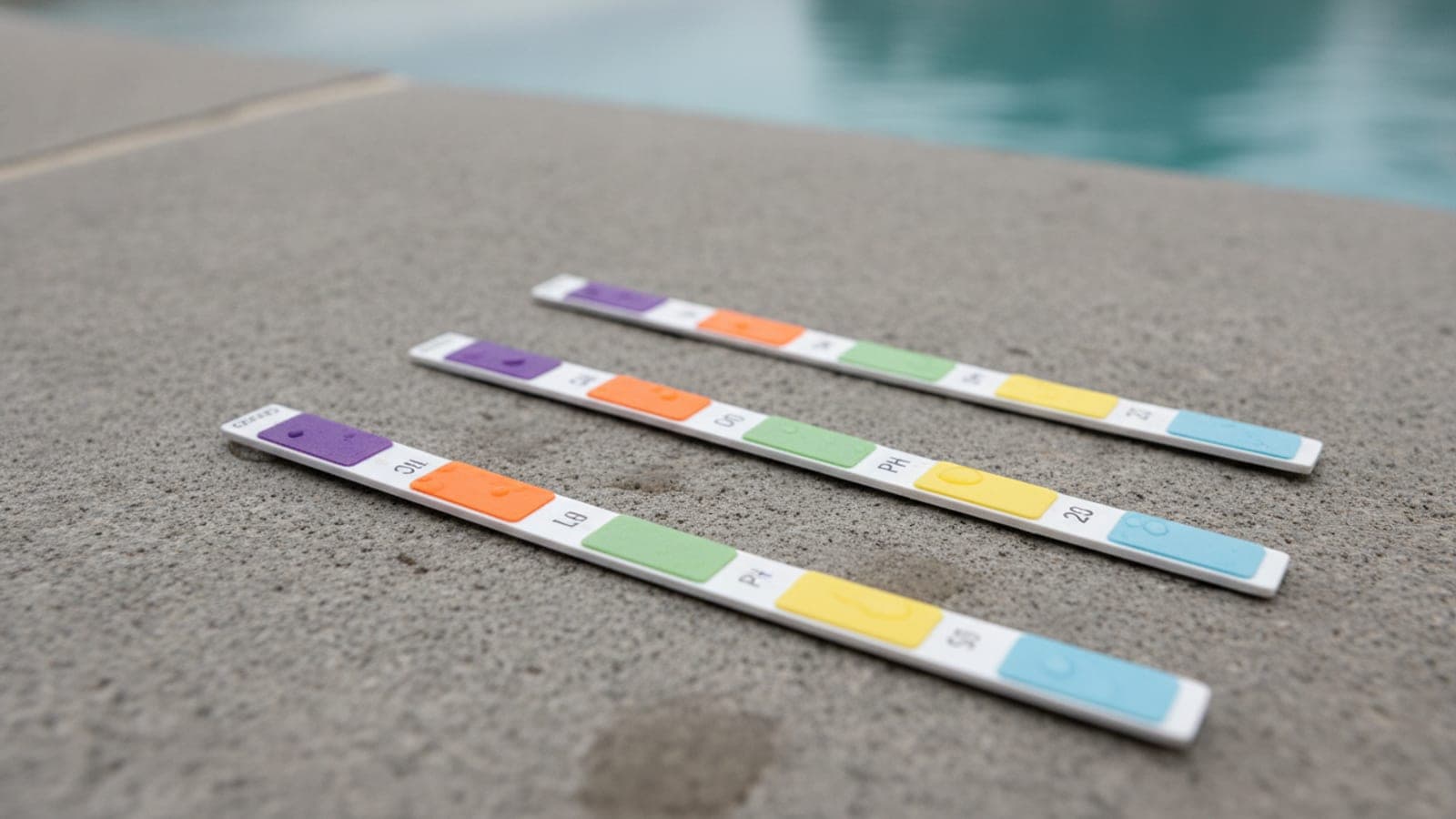
At minimum, saltwater pool owners should test free chlorine and pH frequently, then check salt, alkalinity, cyanuric acid, and other balance numbers on a routine schedule. Testing is the dashboard. Without it, the pool is just making suggestions in greenish-blue.
CDC’s home pool testing guidance recommends pH 7.0–7.8 and minimum free chlorine levels, including higher minimum free chlorine guidance when cyanuric acid or stabilized chlorine is used. That guidance is a useful baseline for safe swimming conditions, but you should still follow product labels, local requirements, and your pool professional’s advice.
Use this beginner testing rhythm:
| Test | Beginner rhythm | Why it matters |
|---|---|---|
| Free chlorine | Often, especially during heat or heavy use | Confirms the salt system is keeping up |
| pH | Often | Salt pools commonly drift upward |
| Salt | Weekly at first, then as needed | Keeps generator in operating range |
| Total alkalinity | Weekly until stable | Helps explain pH movement |
| Cyanuric acid | Monthly or after water replacement | Protects chlorine from sunlight when used correctly |
| Calcium hardness | Monthly or seasonal | Helps protect surfaces and equipment |
Link readers to pool chemistry basics without the lab coat so they can understand the numbers without feeling like they accidentally enrolled in night school.
What salt level should your pool target?
Your target salt level depends on the salt chlorine generator, not a generic internet answer. Many systems operate around the low-thousands ppm range, but the exact target and warning levels vary by brand and model.
Hayward’s salt guidance says the ideal salt level is between 2,700 and 3,400 ppm, with 3,200 ppm being optimal for its referenced salt chlorinator guidance. Pentair’s IntelliChlor Plus and LT product page says 3,600 ppm is the ideal salt level for that series. Those are both real manufacturer numbers, and they are not identical.
That is the point. Use your manual.
| Source/system example | Published target language | What the owner should do |
|---|---|---|
| Hayward salt guidance | 2,700–3,400 ppm, 3,200 ppm optimal | Use for applicable Hayward systems only |
| Pentair IntelliChlor Plus/LT | 3,600 ppm ideal | Use for applicable Pentair systems only |
| Other salt systems | Varies by model | Check the manual or control panel guidance |
Helpful source links:
The calculator should ask for current salt, target salt, and pool gallons. If the user does not know gallons, send them to the pool volume calculator first.
How do you add salt without overdoing it?
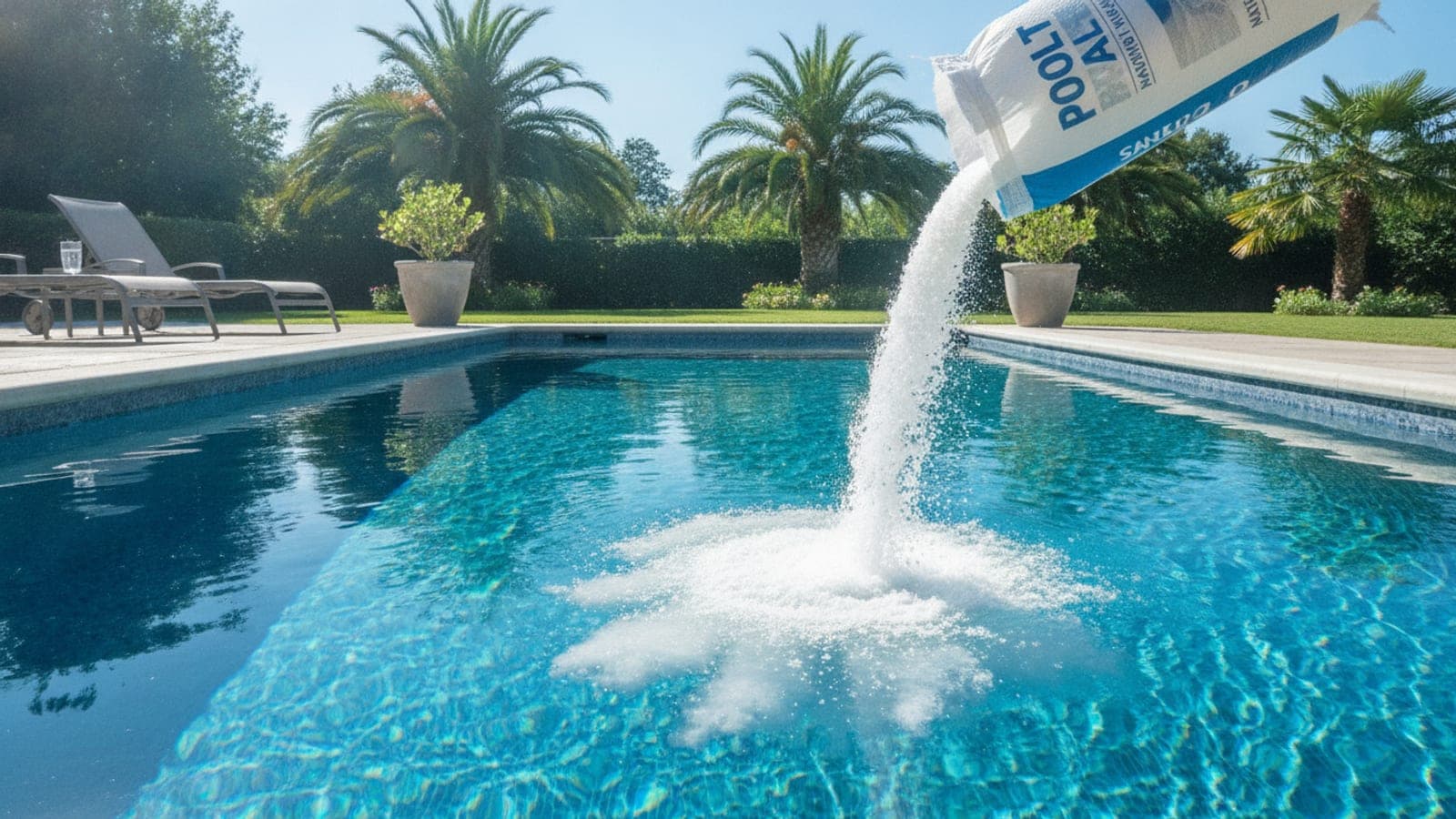
Add salt gradually, circulate the pool, let it dissolve, and retest before adding more. There is no chemical undo button for too much salt.
The basic formula behind many salt calculators is tied to pool volume and desired ppm increase. But the practical habit matters more than showing off the math. Add less than the maximum estimate when you are close to target, especially if the pool volume is uncertain.
Example:
A homeowner has a 15,000-gallon pool. Their salt system target is 3,200 ppm, and the tested salt level is 2,800 ppm. The calculator estimates the amount needed to raise the pool by 400 ppm. Instead of adding every pound at once, they add most of the dose, brush any salt from the floor, circulate, wait, and retest.
That is slower than the “dump and pray” method. It is also how you avoid a salt level that is too high after a rain, refill, or bad volume estimate.
Use the pool salt calculator as the main internal link here.
Why does pH rise in saltwater pools?
Saltwater pools often see pH drift upward because of aeration, generator operation, spillovers, water features, and total alkalinity. High pH is one of the most common “I thought salt pools were easier” surprises.
Salt pools can be easier in some ways, but they do not give pH a vacation. If pH keeps rising, do not only keep adding acid forever. Look at the pattern.
| Symptom | Likely contributor | Next step |
|---|---|---|
| pH rises every week | Normal drift, aeration, or alkalinity | Test alkalinity and use pH calculator |
| pH rises faster with waterfall on | Aeration | Adjust feature schedule if needed |
| pH high and alkalinity high | Buffering issue | Use alkalinity calculator |
| pH high with scale on cell | Water balance and cell scale | Inspect cell and check calcium/pH |
| Chlorine low and pH high | Generator may not be keeping up | Check output, runtime, salt, and CYA |
Use the pool pH calculator and pool acid calculator instead of guessing. Acid is useful. Random acid is a personality problem.
How do you maintain the salt cell?
Maintain the salt cell by inspecting it regularly, keeping water balanced, cleaning it only as directed, and replacing it when it reaches the end of its useful life. The cell is the part making chlorine, so do not ignore it until the pool looks like soup.
The cell can develop scale, especially when pH, calcium hardness, or water balance is off. Some systems reverse polarity or have cleaning reminders, but that does not mean the cell is maintenance-free.
A beginner cell routine:
- Turn off power according to the manual before removing anything.
- Inspect the cell for scale or debris.
- Clean only as the manufacturer directs.
- Do not scrape plates with metal tools.
- Reinstall carefully.
- Check for leaks.
- Confirm flow and output after restart.
- Log the cleaning date.
Do not over-clean the cell with harsh acid habits. Cell cleaning should follow the manual, not a backyard rumor from someone named Gary who also stores chlorine next to the lawn mower gas.
What should you buy for saltwater pool maintenance?
The most useful saltwater pool supplies are pool-grade salt, a salt test method, a full water test kit, a brush, cell-cleaning supplies if your manual calls for them, and basic chemical safety gear.
What you need
- Pool-grade salt: Use a product suitable for pools and your system guidance.
- Salt test kit or meter: Do not rely only on the control panel if readings seem strange.
- Full pool test kit: Salt is only one number.
- pH-lowering product: Many salt pools need pH attention.
- Pool brush: Salt, scale, and algae do not remove themselves out of respect.
- Cell cleaning supplies: Only if the manual calls for them.
- Chemical-resistant gloves and goggles: Especially when handling acid or cleaning products.
EPA’s pool chemical safety alert is worth linking near the safety gear module: EPA safe storage and handling of swimming pool chemicals.
What problems should beginners watch for?
The most common saltwater pool problems are low chlorine, high pH, incorrect salt readings, cell scale, poor circulation, and assuming the system can fix algae without help. Most of these are caught early with testing.
Use this diagnosis path:
| Problem | Common cause | First check |
|---|---|---|
| Low chlorine | Low output, short runtime, low salt, low CYA, dirty cell | Free chlorine, salt, CYA, cell status |
| High pH | Aeration, alkalinity, normal drift | pH and total alkalinity |
| Low salt warning | Dilution, splash-out, test error | Independent salt test |
| High salt warning | Overdosing or water replacement math | Retest, then consider partial drain if truly high |
| Cloudy water | Low chlorine, filtration, pH, debris | Chlorine, pH, filter, brushing |
| White scale on cell | Water balance issue | pH, calcium, alkalinity, cell inspection |
If chlorine is low, link to the pool chlorine calculator. If the water is cloudy, link to how to clear cloudy pool water. The salt system is part of the solution, not the whole pool brain.
What should your weekly routine look like?
A good saltwater pool routine is simple: test, adjust, skim, brush, check the system, and log anything unusual. The routine should be boring in the best possible way.
Here is a practical starter routine:
| Task | Frequency | Why it matters |
|---|---|---|
| Test free chlorine and pH | Often, especially in swim season | Confirms water is safe and balanced |
| Empty skimmer and pump baskets | Weekly or as needed | Keeps flow moving |
| Brush walls, steps, and low-flow spots | Weekly | Prevents film and algae footholds |
| Check salt reading | Weekly at first | Catches dilution or overcorrection |
| Inspect cell status | Weekly glance, periodic deeper check | Prevents low-output surprises |
| Test alkalinity and CYA | Routine schedule | Explains pH and chlorine behavior |
| Clean filter | As pressure and manual indicate | Keeps circulation and clarity normal |
End with this stance: saltwater pools are easier when you treat them like a system, not a gadget. Test the water, keep salt in the right range for your model, manage pH, inspect the cell, and let the calculators handle the boring math.
Frequently asked questions
Is a saltwater pool chlorine-free?
No. A saltwater pool uses a salt chlorine generator to make chlorine from dissolved salt. You still test and manage chlorine, pH, stabilizer, and other water balance numbers.
How often should I test a saltwater pool?
Test chlorine and pH often, especially during heat, rain, or heavy swimming. Salt, alkalinity, stabilizer, and calcium hardness can be checked on a slower schedule depending on the pool and product guidance.
What salt level should a saltwater pool have?
It depends on the salt system. Hayward says 2,700–3,400 ppm with 3,200 ppm optimal for its salt chlorinator guidance, while some Pentair IntelliChlor guidance lists 3,600 ppm as ideal. Always check your specific manual.
Why is pH high in my saltwater pool?
Saltwater pools often have pH drift from aeration and chlorine generator operation. Test pH and alkalinity, then use a pH or acid calculator instead of guessing.
Do I still need shock in a saltwater pool?
Sometimes. A salt system can handle routine chlorine production, but heavy use, algae, contamination, or low chlorine may require a separate correction based on testing and product labels.