Calcium hardness is the chemistry number people ignore until it bites — too high scales your surfaces and equipment, too low lets the water eat them. The right range protects both your pool and your wallet. Here's what to do at each extreme. Follow product labels; this is research-based guidance.
What calcium hardness does
Calcium hardness (CH) measures dissolved calcium in the water, and it matters because water "wants" a certain amount of it. Too little, and the water becomes aggressive, pulling calcium from plaster, grout, and concrete and corroding metal — literally dissolving your pool to get what it needs. Too much, and calcium falls out of solution as scale, clouding the water and crusting on surfaces, tile, and equipment. The target for most pools is roughly 200–400 ppm; keeping CH in that band keeps the water neither hungry nor oversaturated.
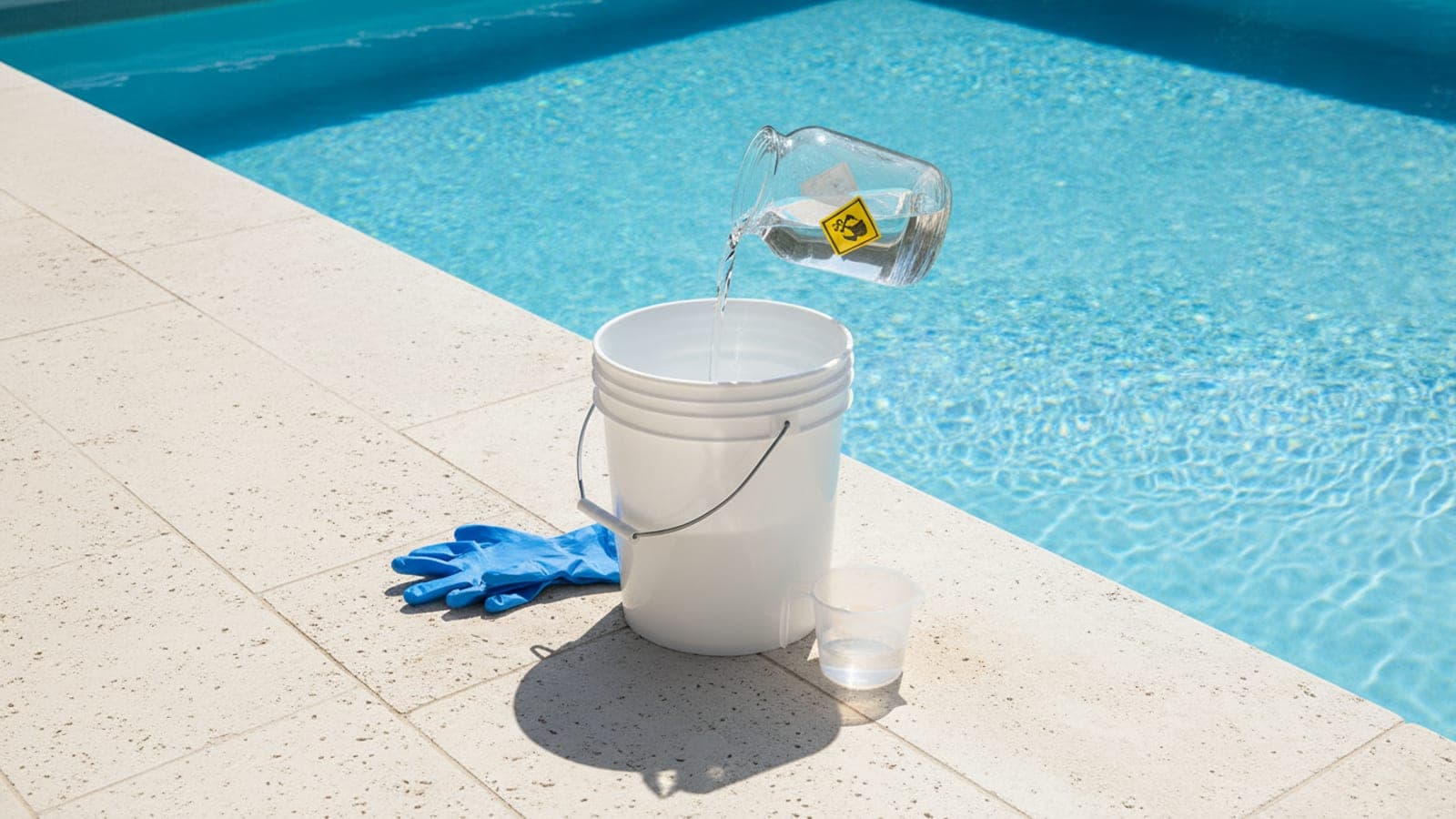
Important note: this is general guidance. Follow product labels for dosing and handling, never mix pool chemicals, and check your pool surface manufacturer's recommended range.
When it's too high
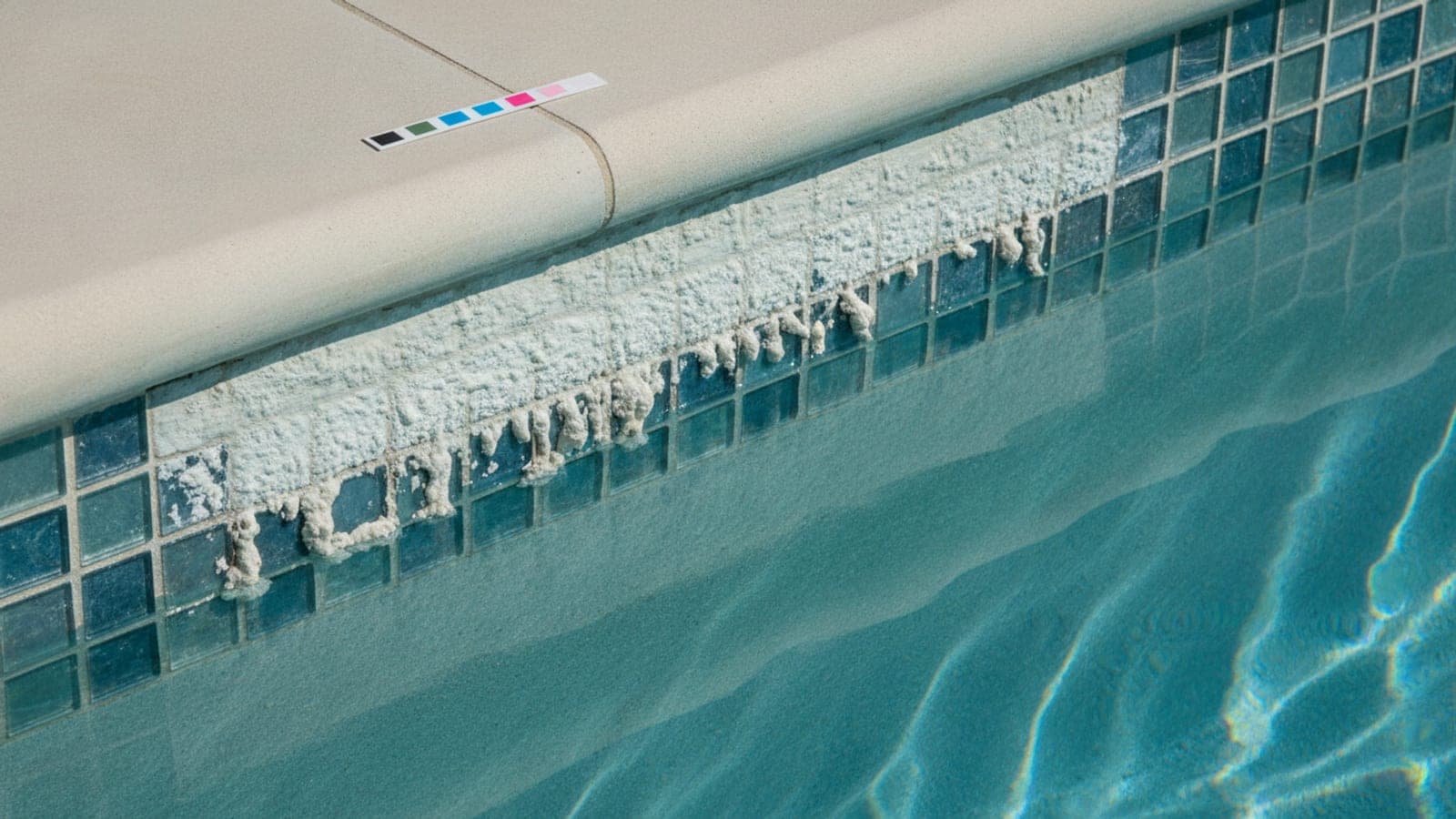
High CH means scaling risk. The signs are cloudy water that won't clear with filtration, white crusty scale on tile and fittings, and rough deposits on surfaces — especially if pH and alkalinity are also high. Because you can't easily remove calcium chemically, the practical fix is dilution: partially drain and refill with lower-calcium water to bring CH down. Keeping pH and alkalinity from also running high reduces how readily the calcium scales out. A sequestrant can temporarily hold calcium in solution as a stopgap, but dilution is the real cure.
When it's too low
Low CH means corrosive, hungry water. On a plaster or concrete pool especially, water low in calcium etches and pits the surface and attacks metal equipment to satisfy its appetite for calcium. The fix is straightforward: add a calcium hardness increaser (calcium chloride) per the label to bring CH up into range. Vinyl and fiberglass pools tolerate lower CH better than plaster since they have no calcium surface to protect, but very low CH is still worth correcting to avoid corroding metal parts.
Test, adjust, and don't overshoot
Handle CH like the rest of your chemistry: test first, confirm your volume, and dose toward the target. The catch with CH is that raising it is easy but lowering it requires draining, so err on the side of under-adding an increaser — you can always add more, but you can't easily take it out. Retest after circulating. CH moves slowly and doesn't need weekly attention like pH; check it periodically and when you add a lot of fresh water, since fill water sets your starting point.
Keep it stable
Prevention is mostly about your water source and balance. Know your fill water's calcium level, since hard fill water pushes CH up over time as water evaporates and you top off, while soft fill water keeps it low. Keep pH and alkalinity balanced so calcium stays in solution rather than scaling out. Get CH into range once and it largely stays put, quietly protecting your surfaces and equipment from both scale and corrosion.
Frequently asked questions
What is calcium hardness in a pool?
Calcium hardness measures how much dissolved calcium is in your water. It matters because water wants a certain amount: too little and the water becomes corrosive, pulling calcium out of plaster, grout, and metal; too much and calcium drops out as scale and cloudiness. It's the balance number people forget until damage or haze shows up.
What is the ideal calcium hardness range?
For most pools, roughly 200-400 ppm is the target, with plaster and gunite pools generally happiest in the 250-400 range because the surface itself contains calcium. Vinyl and fiberglass pools tolerate the lower end better since they have no plaster to protect. Always check your surface maker's guidance.
How do I raise calcium hardness?
Add a calcium hardness increaser (calcium chloride) per the product label, sized to your pool volume and how far you need to raise it. Pre-dissolve or add it slowly with the pump running, then retest after it circulates. Raising hardness is straightforward; lowering it is the hard part.
How do I lower calcium hardness?
There's no easy chemical that removes calcium, so the main tool is dilution — partially drain and refill with lower-hardness water. If your fill water is also hard, you may need a pre-filter or softened water. Keeping the rest of your water balanced and using a sequestrant helps manage scale in the meantime.
Does calcium hardness matter for vinyl or fiberglass pools?
Yes, but less than for plaster. Vinyl and fiberglass have no plaster surface for corrosive water to attack, so very low hardness is less damaging — but low hardness can still be hard on metal parts, heaters, and equipment, and high hardness still scales. Aim for balanced water regardless of surface.