Pool chlorine too high means you should keep everyone out, confirm the reading, stop feeding the pool more sanitizer, and retest before anyone swims. The fix is usually patience, sunlight, and circulation. The mistake is panicking and adding another chemical because the pool already looks like a science project with a mortgage.
Key takeaways
-
Do not let anyone swim until free chlorine and pH are back in an acceptable range.
-
Confirm the reading with a reliable test kit before treating the pool like an emergency.
-
Sunlight, circulation, and time can lower a mildly high chlorine level in an uncovered outdoor pool.
-
Chlorine neutralizer can help in some cases, but it is easy to overdose and should be used carefully.
-
If chlorine keeps testing high, look for the cause: tablets, feeders, recent shock, wrong pool volume, or bad testing.
How high is too high for pool chlorine?
Pool chlorine is too high when your test result is above the safe operating range for your pool, product label, or local guidance. The CDC gives minimum disinfectant guidance for pools, but your chemical label and local rules matter for upper limits, especially when you have just shocked the water.
For a home pool, do not treat chlorine like a vibes-based number. You need to know what you tested: free chlorine, combined chlorine, or total chlorine.
- Free chlorine is the sanitizer available to work.
- Combined chlorine is chlorine that has reacted with contaminants.
- Total chlorine is free chlorine plus combined chlorine.
If you only have a strip that says “chlorine” and the color block looks like it joined a marching band, upgrade the test before making big decisions. A FAS-DPD drop test kit is usually better for high readings because it can measure higher free chlorine levels more clearly than many basic color-match kits.
| Reading situation | What it usually means | Smart first move |
|---|---|---|
| Slightly above normal after dosing | Recent chlorine addition has not settled | Circulate, uncover, and retest |
| High after shocking | Expected for a while, depending on dose | Keep swimmers out and wait |
| High with tablets still dissolving | The pool is still being fed chlorine | Remove/turn down the feeder safely |
| High reading seems impossible | Testing error or old reagents may be involved | Retest with a better kit |
| High chlorine plus bad smell | Could be combined chlorine or contamination | Test free and combined chlorine separately |
The main point: do not swim based on water clarity. Clear water can still have an unsafe chemical reading.
What should you check before fixing high chlorine?
Before you add anything, check free chlorine, pH, pool volume, recent chemical additions, and whether a feeder or floater is still adding chlorine. You cannot fix a number well if you do not know why it happened.
Run through this short checklist:
- Test free chlorine with a reliable kit.
- Test pH, because sanitizer and comfort decisions depend on it.
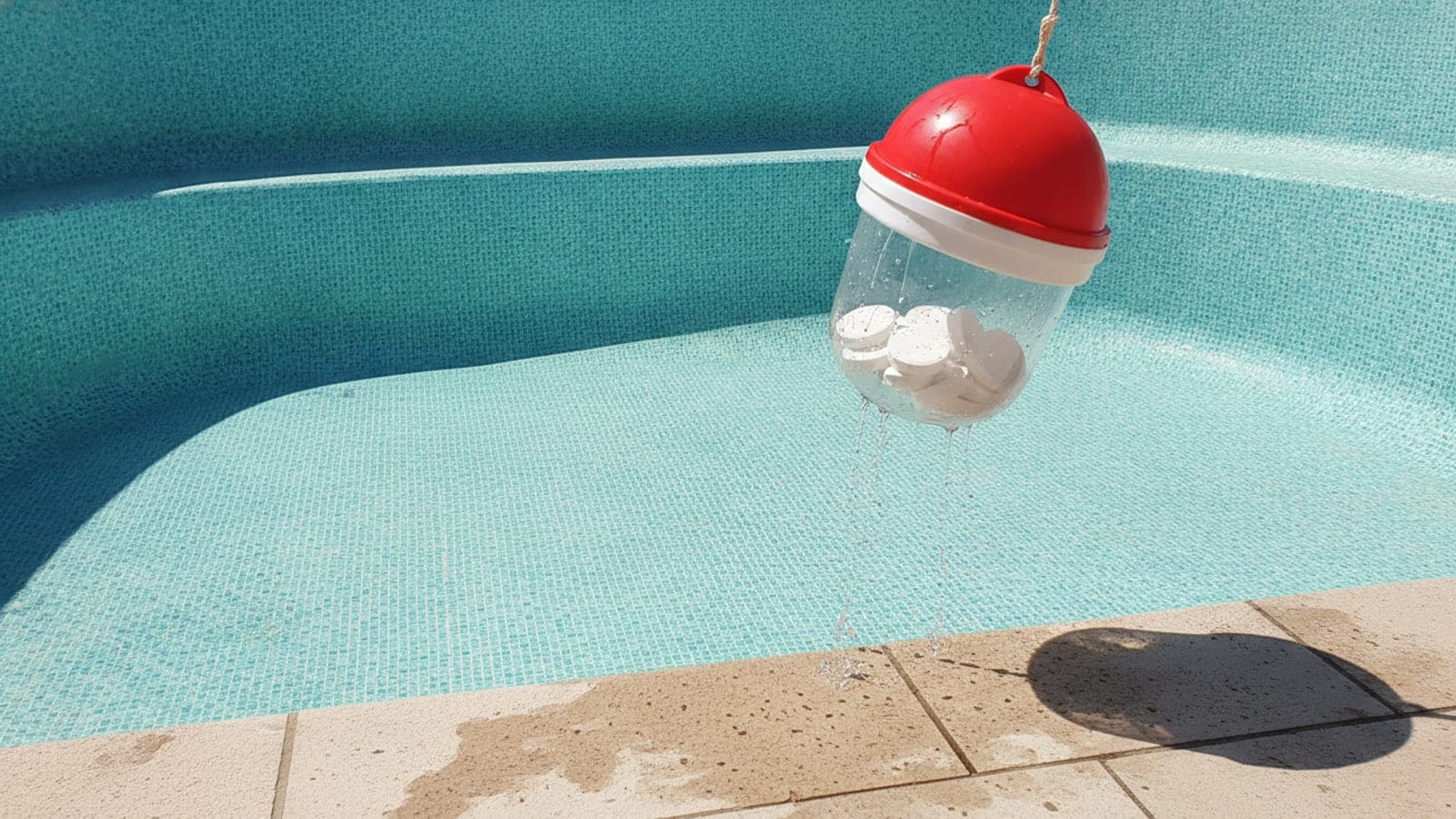
- Check whether tablets are still in a floater, skimmer, or inline feeder.
- Confirm whether you added liquid chlorine, cal-hypo, dichlor, or trichlor recently.
- Confirm pool gallons with the pool volume calculator.
- Look at the product label for the chemical you used.
- Keep the pool uncovered if sunlight can help reduce the level.
If your test kit is old, the reagents are faded, or strips have been living in a hot garage since the last presidential administration, replace them. Bad testing leads to bad dosing, and bad dosing leads to standing beside the pool mumbling at a purple strip.
Why did your chlorine get too high?
High chlorine usually comes from too much product, wrong pool volume, overlapping chlorine sources, or a feeder that kept working after the pool was already treated. The pool did not get dramatic on its own.
Common causes include:
- You shocked the pool and forgot tablets were still dissolving.
- You used gallons from memory instead of actual pool volume.
- A chlorinator or salt system output was set too high.
- The pool was covered, so sunlight did not burn off chlorine as fast.
- You added more because a strip looked low before the water mixed.
- The pool was smaller than the chemical dose assumed.
- Stabilized chlorine products kept adding sanitizer over time.
- The test result was wrong because of old strips or user error.
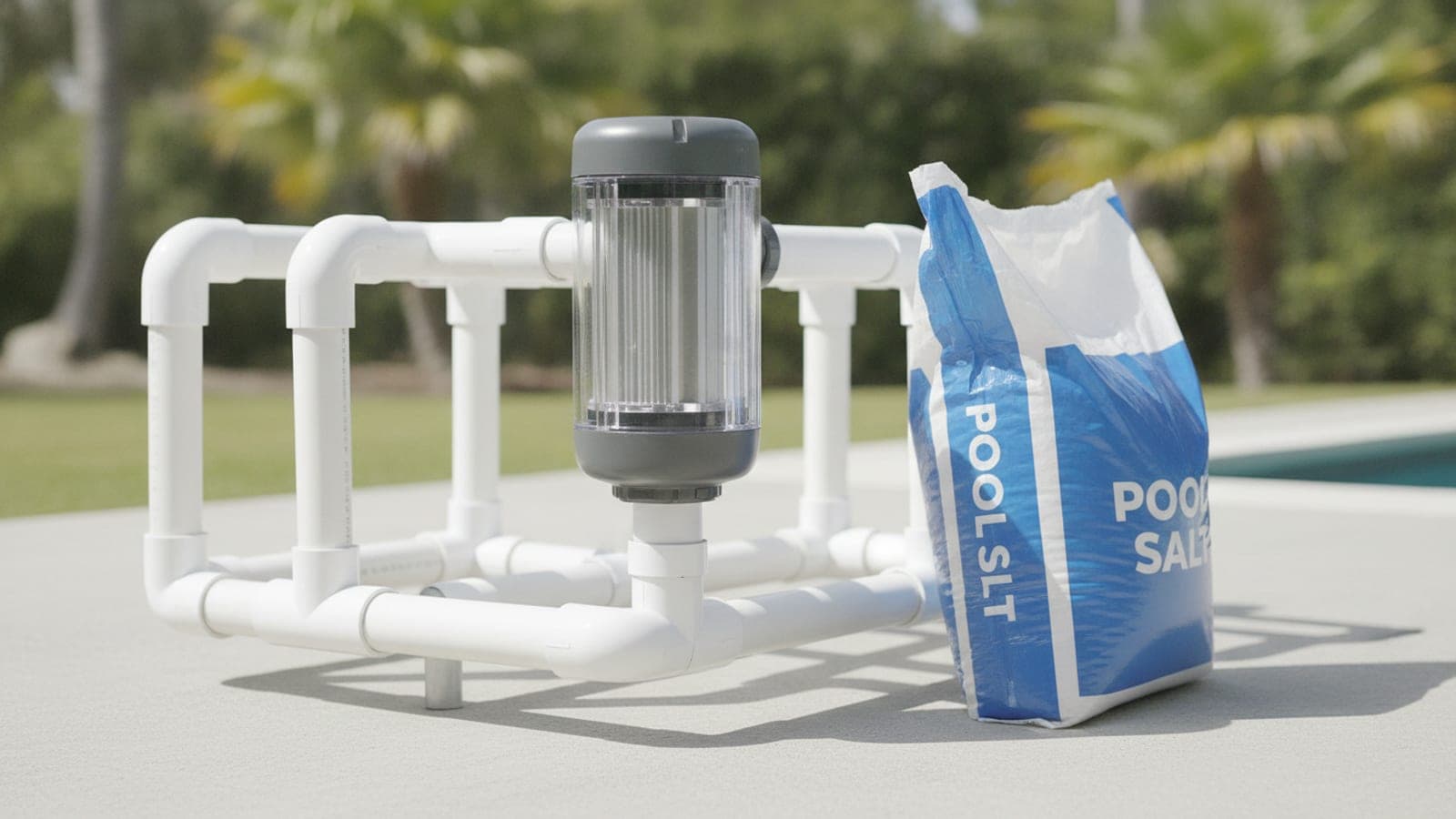
A saltwater pool can also creep high if the generator percentage or run time is too aggressive for the season. That is not a salt problem. It is a production problem. Use your pool pump run time calculator and salt system manual together instead of letting the cell run like it is training for a triathlon.
How do you lower chlorine without making things worse?
The safest first fix for mildly high chlorine is to stop adding chlorine, circulate the pool, uncover it, and let time and sunlight bring the level down. Do not add random chemicals just because doing nothing feels emotionally unsatisfying.
Try this order:
- Keep swimmers out. This is step one, not step four.
- Stop the chlorine source. Remove floating tablets if safe, turn down the chlorinator, or lower salt cell output.
- Uncover the pool. Sunlight helps break down chlorine in outdoor pools.
- Run the pump. Circulation helps mix the water and gives you a better reading.
- Brush if you recently shocked. Do not let undissolved product sit on the surface.
- Retest after circulation. Do not dose based on a stale sample.
- Use a neutralizer only when needed. Follow the label exactly.
A simple example
Say a 15,000-gallon pool was shocked in the evening, and the next morning free chlorine is still high. The water is clear, but the reading is outside the swim range on the test kit. The better move is to leave the cover off, keep the pump running, keep swimmers out, and retest later.
The worse move is to pour in a neutralizer, overshoot to zero chlorine, then wake up to cloudy water and a new problem wearing sunglasses.
If you need to know how much water you are treating, use the pool volume calculator before touching the dose.
When should you use chlorine neutralizer?
Use chlorine neutralizer only when the chlorine level is too high to wait out reasonably, and only after you confirm the reading with a reliable test. It is a tool, not a “make pool normal” button.
Neutralizers can work quickly, but they can also take chlorine too low. Then you have a different problem: water with too little sanitizer. That is why the label matters. Dose for your actual gallons, add in stages if the label allows, circulate, and retest.
| Situation | Neutralizer usually makes sense? | Why |
|---|---|---|
| Slightly high after normal dosing | Usually no | Time and sun may solve it |
| High after shock, no swimming planned | Usually no | Waiting avoids overcorrection |
| Very high and pool must reopen soon | Maybe | Confirm test and follow label |
| Unknown reading from old strips | No | Fix the testing first |
| High chlorine plus unsafe chemical handling | Call a pro | Do not freestyle with chemicals |
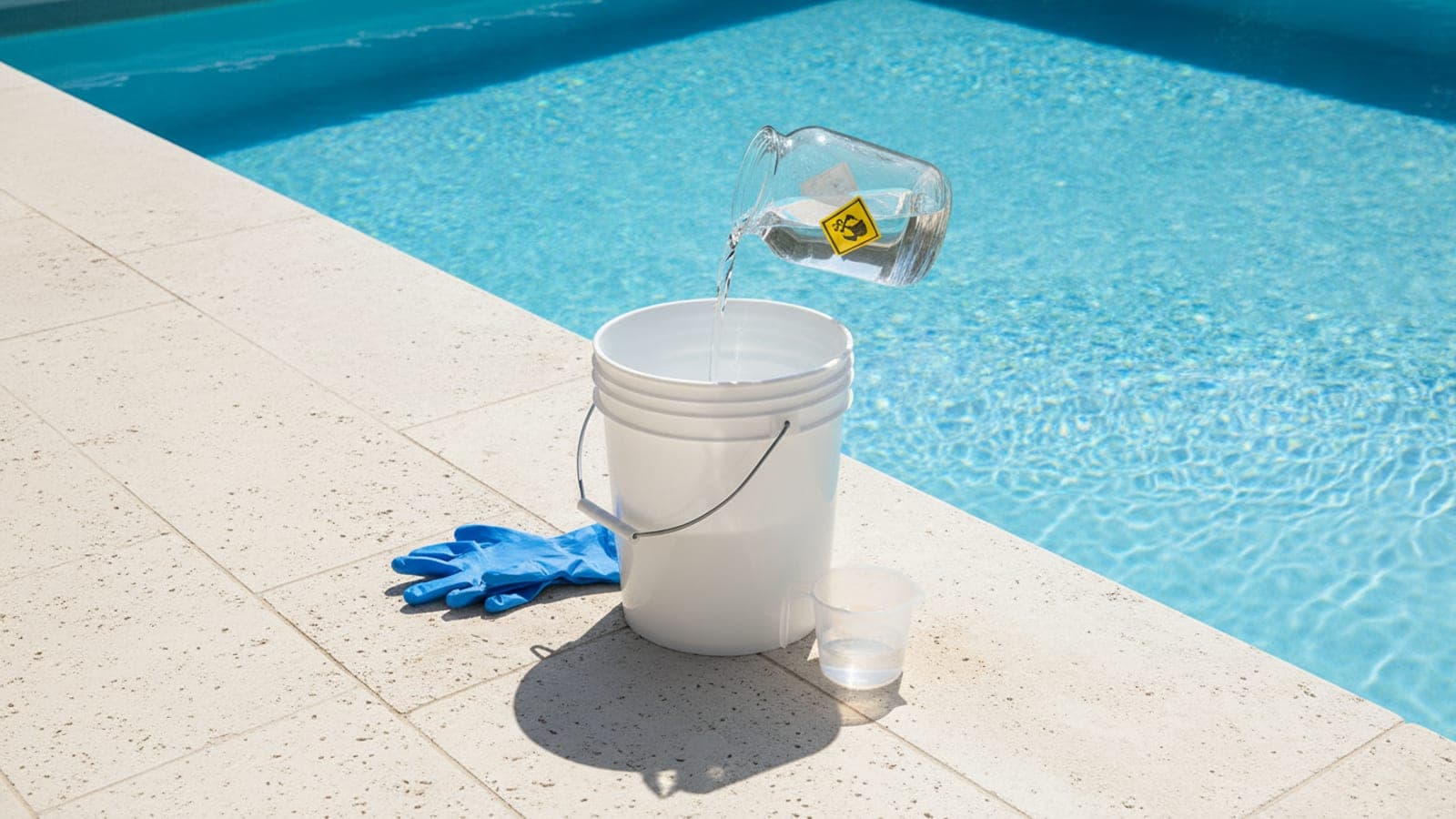
Do not mix neutralizer directly with other chemicals. Do not pre-mix chemicals in a bucket unless the label specifically tells you to. CDC and EPA chemical-safety guidance both put heavy emphasis on separation, storage, ventilation, dry conditions, and following labels.
What if chlorine is high after shocking the pool?
High chlorine after shocking can be normal because shock is a large sanitizer dose. The question is not “why is it high?” The question is “has it dropped to a safe level yet?”
After shocking:
- Keep the pump running.
- Brush the pool.
- Keep swimmers out.
- Leave the pool uncovered if weather allows.
- Retest free chlorine and pH before swimming.
- Follow the shock product label for wait time and reentry guidance.
If you shocked because of algae, do not declare victory because chlorine is high. Look at the whole situation: water color, clarity, filter pressure, debris, and whether free chlorine holds after the cleanup. For the full algae process, link to how to clean a green pool.
What if the pool is clear but chlorine is high?
Clear water is nice, but it is not a permission slip. If chlorine is high, wait until the test numbers are back in range before swimming.
This is where pool owners get tricked. A pool can be clear because it has plenty of sanitizer. That does not mean it feels good on skin, eyes, swimsuits, or equipment. Also, high chlorine can make some tests less reliable, so a weird pH reading beside a very high chlorine reading deserves a careful retest.
If you are trying to decide whether the water is swim-ready, build a simple “swim check” into the site:
- Free chlorine in acceptable range
- pH in acceptable range
- Water clear enough to see the floor/drain
- No active chemical addition happening
- Pump has circulated after the last treatment
- No strong chemical odor or visible residue
That checklist can internally link to what is the ideal pool pH and the pool chlorine calculator.
What should you buy for fixing high chlorine?
The best purchase is usually a better test kit, not another bottle of correction juice. You cannot manage chlorine well if your test method cannot read the level accurately.
What you need
- A FAS-DPD chlorine test kit for higher free chlorine readings
- Replacement reagents if your kit is old
- Chemical-resistant gloves
- Safety goggles
- A pool brush
- Chlorine neutralizer for confirmed high readings where waiting is not practical
- A simple logbook or app for recording doses and test results
Affiliate module placeholder: Add product cards for a FAS-DPD kit, digital pool test kit, replacement reagents, gloves, goggles, and a chlorine neutralizer. Put the disclosure directly above the module and label neutralizer as “use only as directed.”
Do not make neutralizer the hero product. Make testing the hero product. That is better advice, and it builds more trust.
How do you prevent high chlorine next time?
Prevent high chlorine by testing first, dosing for actual pool volume, and avoiding overlapping chlorine sources. Most high-chlorine mistakes are boring. Boring mistakes are good because they are fixable.
Use this routine:
- Test before dosing.
- Confirm gallons before adding product.
- Remove or adjust tablet feeders when shocking.
- Do not shock and crank up the salt cell at the same time.
- Record what you added and when.
- Retest after the water circulates.
- Keep chemicals dry, separate, and labeled.
- Read the product label every time, even if the bottle looks familiar.
If the pool keeps swinging from high chlorine to low chlorine, you may not have a chlorine problem. You may have a testing, volume, CYA, algae, or equipment problem. The next logical reads are pool chlorine too low, pool stabilizer too high, and pool chemistry basics.
The calm version of pool care is simple: test, dose, circulate, retest. The chaotic version is “add stuff until the water obeys.” Choose the calm version. Your pool and your wallet will both be less dramatic.
Frequently asked questions
What should I do if pool chlorine is too high?
Keep swimmers out, confirm the reading with a reliable test kit, stop adding chlorine, let sunlight and circulation work, and retest before swimming. If the level is extremely high or not dropping, follow the product label or ask a pool professional before using a neutralizer.
Can I swim if chlorine is a little high?
Do not guess. Wait until free chlorine and pH are back inside the safe range recommended by your product label, local guidance, or pool professional. Clear water does not automatically mean swim-ready water.
Does sunlight lower chlorine?
Yes, uncovered outdoor pools usually lose chlorine from sunlight and normal use. That can help a mildly high reading come down, but you still need to retest before swimming.
Should I use chlorine neutralizer?
A neutralizer can lower chlorine, but it is easy to overdo. It is usually a last step for very high readings, not the first move for a mildly high pool. Follow the exact product label.
Can high chlorine make pH testing wrong?
Very high sanitizer levels can interfere with some test methods. If the reading looks odd, use a better kit, fresh reagents, or retest after chlorine has dropped.
Why did my chlorine get too high?
Common causes include adding shock and tablets at the same time, using the wrong pool volume, leaving a chlorinator too high, dosing after a bad test result, or forgetting that stabilized tablets keep dissolving.