PoolGearGuide

Pool Chlorine Too Low? Fix the Cause, Not Just the Number

By the PoolGearGuide editorial team · Updated 2026-07-03

Share

Pool chlorine too low means your water may not have enough sanitizer to control germs, algae, and organic junk. The fix is to add chlorine, yes, but the better fix is to learn why the level dropped so you are not feeding the pool every day like it is a tiny blue monster.

Key takeaways

How low is too low for pool chlorine?

Pool chlorine is too low when free chlorine is below the safe operating range for your pool, product label, or local guidance. The CDC recommends minimum free chlorine levels for pools, and it gives different guidance when cyanuric acid is used, which is why you need to know more than one number.

In plain English: chlorine is the sanitizer. It is not optional decoration.

If your free chlorine is low, treat the water before swimming. If your free chlorine is zero or nearly zero, treat it as a warning light. Something used it up, blocked it from lasting, or stopped the pool from producing it.

Do not confuse low chlorine with combined chlorine. Free chlorine is the useful sanitizer. Combined chlorine is used-up chlorine attached to contaminants. Total chlorine alone does not tell the full story.

Test resultWhat it suggestsWhat to do first
Free chlorine slightly lowNormal use, sun, or recent dilutionDose, circulate, retest
Free chlorine zeroActive demand or no feedInspect, dose, retest quickly
Total chlorine high but free chlorine lowCombined chlorine may be presentTest combined chlorine and evaluate water
Low chlorine with green waterAlgae likely involvedFollow green pool cleanup process
Low chlorine with high CYAChlorine may be underpowered for conditionsStop guessing and test CYA carefully

For the dosing side, connect this article to the pool chlorine calculator. For the “what is this number doing?” side, link to pool chemistry basics.

What should you test before adding chlorine?

Before adding chlorine, test free chlorine, pH, cyanuric acid, and pool volume. If you skip those, you might add the right chemical for the wrong problem.

Test these first:

  • Free chlorine: the sanitizer currently available.
  • Combined chlorine: useful if the water smells strong or feels off.
  • pH: chlorine and swimmer comfort both depend on pH.
  • CYA/stabilizer: affects how chlorine behaves in outdoor pools.
  • Pool volume: determines the actual dose.
  • Water clarity: tells you whether this is routine dosing or cleanup.

If you do not know gallons, use the pool volume calculator. A 10,000-gallon pool and a 25,000-gallon pool do not want the same dose. One of them will be underfed. The other one may wake up too spicy.

Fresh reagents matter. Test strips left in heat and humidity can become tiny rectangles of betrayal. If the result does not match the pool’s behavior, retest with a better kit.

Why does pool chlorine keep dropping?

Chlorine keeps dropping when the pool has more chlorine demand than chlorine supply. Demand can come from sunlight, algae, leaves, sweat, sunscreen, rain, animals, or anything else that makes your pool less like water and more like soup.

Common causes:

  • Heavy sun on an outdoor pool
  • Low cyanuric acid in a chlorine pool
  • Algae starting before the water turns green
  • Leaves, pollen, bugs, or fine debris
  • Heavy swimmer load
  • Rain and splash-out dilution
  • pH outside the useful range
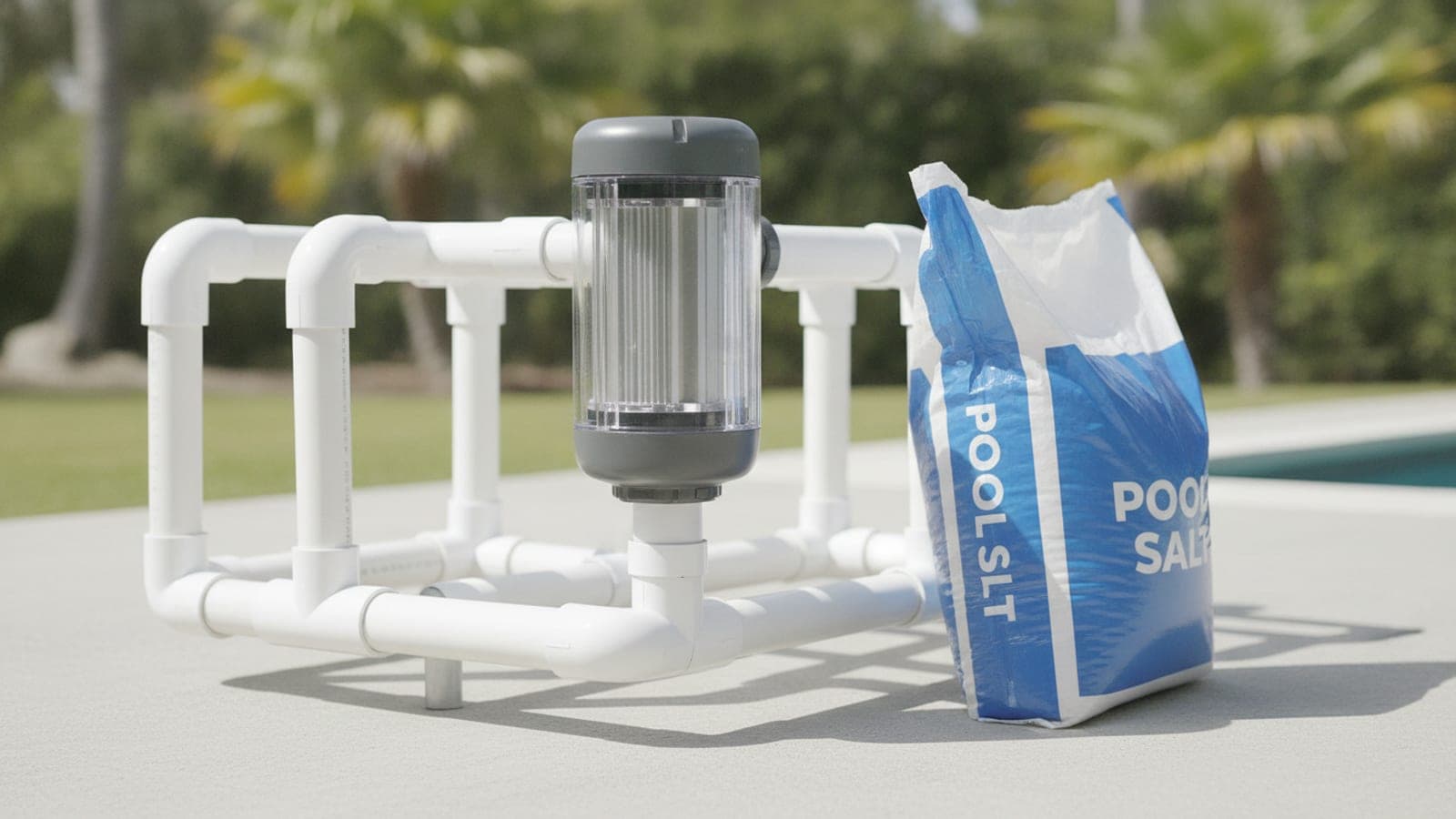
  • Salt cell output set too low
  • Empty tablet feeder or stuck chlorinator
  • Dirty filter slowing cleanup
  • Wrong pool volume used for dosing

A pool can look okay and still be burning through chlorine. Early algae does not always arrive wearing a green costume. Sometimes it starts as extra chlorine demand, slippery walls, or cloudy water.

A simple diagnosis path

Ask these questions in order:

  1. Did the pool get heavy sun or rain?
  2. Did a lot of people swim recently?
  3. Are leaves or pollen sitting in the water?
  4. Is the filter pressure rising?
  5. Is CYA low, normal, or high?
  6. Is the salt cell/feeder actually working?
  7. Does chlorine hold after circulation?

If chlorine drops fast even after a correct dose, head toward how to clean a green pool before the pool turns into a pond with a coping edge.

Which chlorine product should you use?

The best chlorine product depends on what else your water needs. Chlorine products are not all the same. Some add sanitizer only. Some add sanitizer plus stabilizer. Some add sanitizer plus calcium.

Product typeAdds chlorineAdds CYAAdds calciumBest used when
Liquid chlorineYesNoNoYou need chlorine without raising CYA
Trichlor tabletsYesYesNoFeeder use when CYA is not already high
Dichlor shock/granulesYesYesNoSpecific labeled uses; watch CYA
Cal-hypo shockYesNoYesYou need chlorine and calcium is acceptable
Salt chlorine generatorYes, by producing chlorineNoNoSalt system is sized and working properly

This is why “add tablets” is not always the answer. Tablets can be useful, but if stabilizer is already high, more stabilized chlorine can make the long-term problem worse.

Use the CYA calculator before adding stabilizer products, and read pool stabilizer too high if you suspect CYA has crept up.

How much chlorine should you add?

Add chlorine based on your current free chlorine, target free chlorine, product strength, and pool volume. Do not dose from memory unless your memory also knows the exact gallons, product percentage, and latest test result. Mine does not. Yours probably does not either.

Use this process:

  1. Test free chlorine.
  2. Choose your target based on the pool setup and product guidance.
  3. Confirm pool volume.
  4. Select the exact product you are using.
  5. Use the pool chlorine calculator.
  6. Add the product according to the label.
  7. Circulate thoroughly.
  8. Retest before swimming.

Worked example

A pool owner tests free chlorine and gets a low reading after a weekend party. The water is still clear, pH is acceptable, and CYA is not high. Instead of shocking blindly, they calculate a normal chlorine dose for their actual gallons, add it with the pump running, brush the pool, and retest later.

That is a normal correction.

If the same pool drops back to nearly zero by the next morning, that is not normal correction anymore. That is a clue.

What if chlorine drops to zero overnight?

If chlorine drops to zero overnight, something in the water is probably consuming it quickly, or the pool never got the dose you think it got. Treat that as a diagnosis problem, not just a shopping problem.

Check:

  • Was the dose measured correctly?
  • Was the product old or weakened?
  • Was the pump running long enough?
  • Is there visible algae?
  • Are the walls slippery?
  • Is there hidden debris behind ladders or steps?
  • Is CYA extremely low or extremely high?
  • Is the filter dirty or bypassing debris?

This is where brushing matters. Chlorine cannot do all the work from a comfortable distance. Brush the walls, steps, corners, and shady spots. Clean baskets. Backwash or clean the filter if needed. Remove leaves and pollen.

If the pool is already green, use the pool shock calculator and the green pool guide together. Low chlorine plus algae is not fixed with a single polite tablet.

What if the pool is clear but chlorine is low?

A clear pool with low chlorine is still not automatically safe to swim in. Clear means you can see through it. It does not mean the sanitizer level is correct.

This is especially common after:

  • A hot sunny day
  • A party
  • Rain
  • The cover being off for days
  • A salt system set too low
  • A tablet feeder running empty
  • Several days of “I’ll test tomorrow”

If water is clear and chlorine is only a little low, a normal calculated dose may be enough. If free chlorine is zero, or if the pool cannot hold chlorine, slow down and diagnose.

For a broader check, link this to is my pool safe to swim in when that page exists.

What should you buy for low chlorine problems?

The useful purchases depend on the cause. Do not build a shopping cart that is just five kinds of chlorine and hope one looks responsible.

What you need

  • A reliable chlorine test kit, preferably one that can measure free chlorine clearly
  • Liquid chlorine for raising chlorine without adding CYA
  • Chlorine tablets only when stabilizer strategy makes sense
  • A CYA test kit or full water test kit
  • A pool brush
  • Skimmer socks for pollen/fine debris seasons
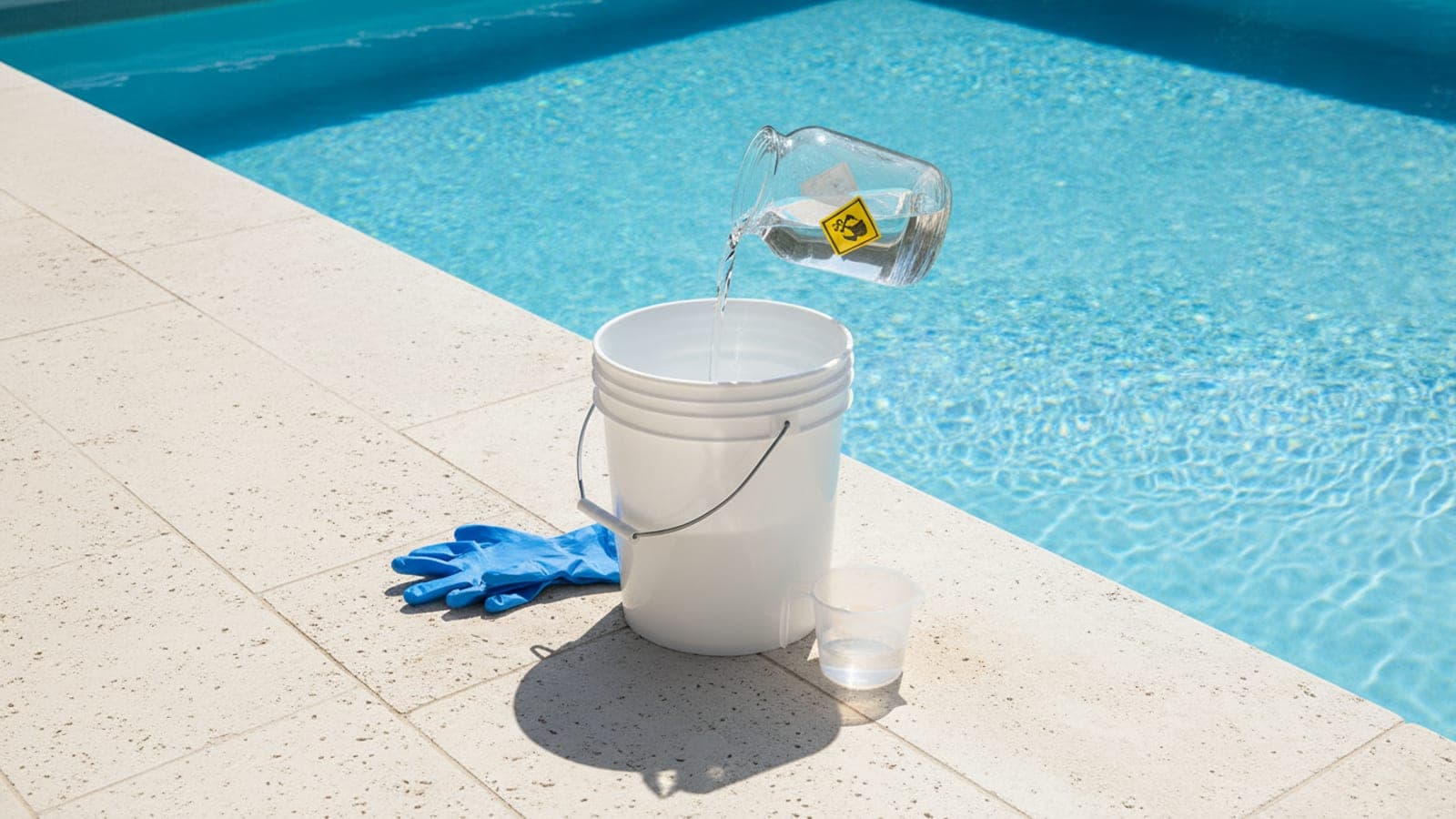
  • Gloves and goggles for chemical handling
  • Replacement filter cartridges or filter cleaner if circulation is struggling

Affiliate module placeholder: Add cards for a FAS-DPD test kit, liquid chlorine, tablets, CYA test kit, brush, skimmer socks, gloves, and goggles. Put a clear affiliate disclosure above the module.

The best product here is not always the strongest chlorine. It is the product that fixes the actual reason chlorine is low.

How do you keep chlorine from dropping again?

Keep chlorine from dropping by building a routine around testing, debris removal, correct stabilizer, and steady sanitizer feed. Pool care gets easier when the pool stops swinging between “fine” and “why is it swamp-adjacent?”

Use this routine:

  • Test free chlorine and pH regularly.
  • Test CYA after water replacement, heavy tablet use, or recurring chlorine loss.
  • Brush shady areas and steps before algae gets comfortable.
  • Empty skimmer and pump baskets.
  • Keep the filter clean.
  • Adjust tablet feeder, chlorinator, or salt cell output for the season.
  • Dose based on gallons, not vibes.
  • Log what you add and when.

If chlorine goes too high after correction, use pool chlorine too high. If low chlorine keeps returning with cloudy or green water, go to how to clear cloudy pool water or how to clean a green pool.

Low chlorine is usually fixable. The trick is not to keep adding more. The trick is to make the pool tell you why it keeps asking.

Frequently asked questions

What should I do if pool chlorine is too low?

Keep swimming on hold if sanitizer is below the safe range, test pH and CYA, confirm pool volume, add the correct chlorine product according to the label, circulate, and retest. If chlorine disappears quickly, look for algae, debris, sunlight, or stabilizer problems.

Why does my pool chlorine keep dropping?

Common causes include sunlight, low stabilizer, algae, heavy swimmer load, organic debris, rain dilution, a salt cell set too low, or a feeder that is empty or clogged.

Can I swim if chlorine is low but the water is clear?

Do not rely on clear water alone. Chlorine is the sanitizer. If it is below the safe operating range, retest and correct the water before swimming.

Should I shock the pool when chlorine is low?

Sometimes, but not always. If the pool is clear and only slightly low, a normal chlorine dose may be enough. If chlorine drops to zero, algae is visible, or the pool cannot hold chlorine, shocking may be part of the cleanup.

Does low CYA make chlorine disappear?

Low cyanuric acid can let sunlight burn off chlorine faster in outdoor pools. Too much CYA creates a different problem, so test before adding stabilizer.

What is the best chlorine product for low chlorine?

It depends on the pool and the cause. Liquid chlorine adds sanitizer without adding CYA. Trichlor and dichlor add chlorine plus stabilizer. Cal-hypo adds chlorine and calcium. Read the label and match the product to the problem.
The weekly skim

One short email a week: what to test, what to buy, and what to skip. No daily drip. Unsubscribe anytime.

Keep reading