Beyond the build, a pool has a real monthly running cost — and knowing roughly what it is helps you budget and spot where to save. Here's what makes up the monthly number. Use our cost calculators to estimate your specific figure.
The main monthly costs
A pool's monthly running cost comes from a few recurring buckets. Electricity to run the pump (and heater, if you have one) is usually the largest — a pump running many hours a day adds up, and heating adds substantially more. Chemicals to keep the water balanced and sanitized are next. Then water to replace evaporation and splash-out, and a share of periodic costs like replacement parts, filters, and repairs. Add optional pool service on top if you use it.
What drives it up or down
Your monthly cost swings with a few big levers. Pool size matters — more water means more energy, chemicals, and top-off. Whether you heat the pool is huge; heating can dominate the bill in cool weather. Your pump type matters a lot: a single-speed pump running full power all day costs far more than a variable-speed pump on an efficient low speed. And climate drives evaporation and chemical loss. Two pools can have very different monthly costs based on these factors.
Where to save
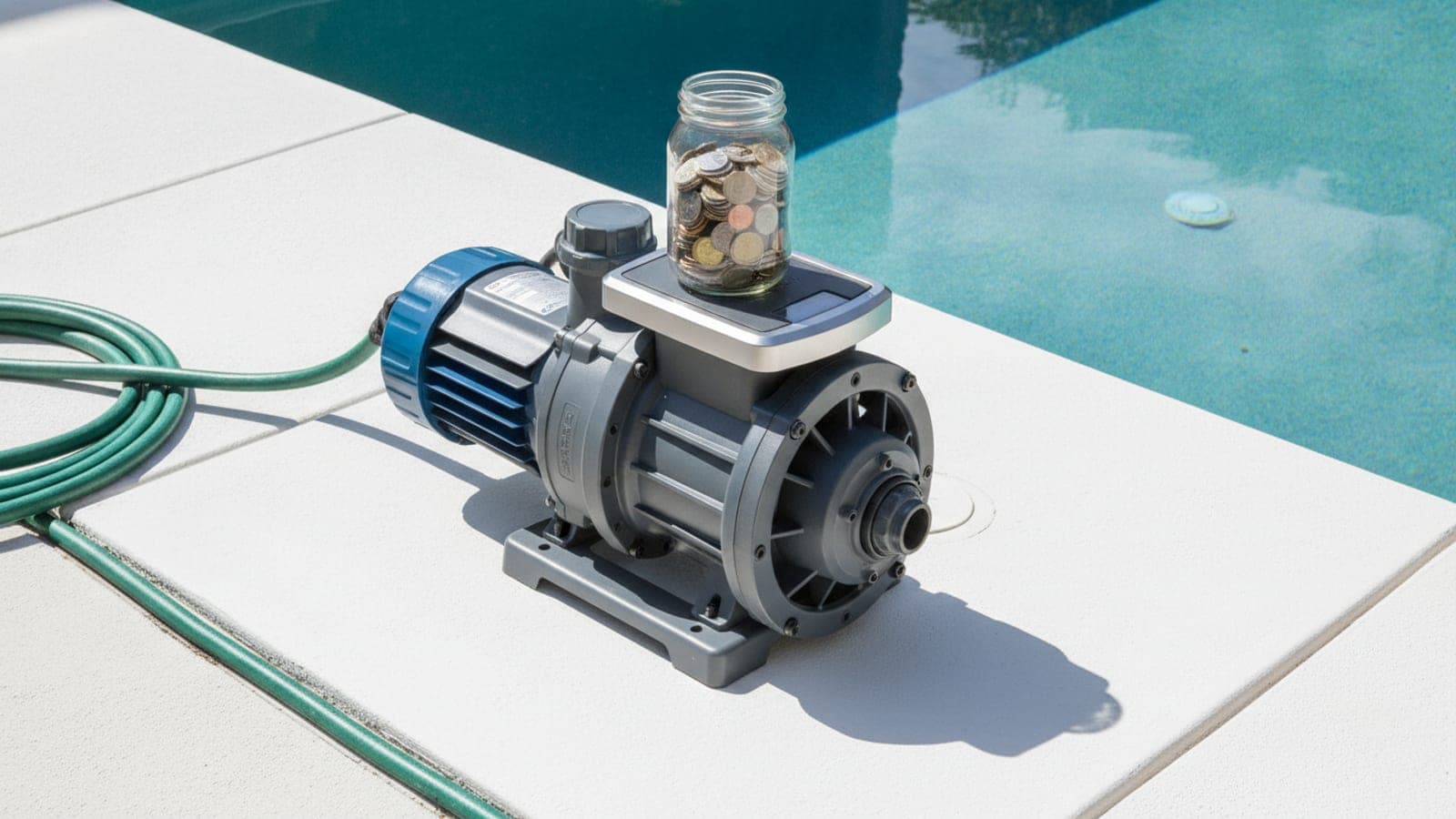
The good news is the biggest costs are the most controllable. A variable-speed pump run on low speed cuts the largest line item dramatically. A cover slashes evaporation and heating cost — the single most effective saver for a heated pool. Right-sizing pump run time (enough to stay clear, not more) and keeping chemistry steady to avoid wasteful blooms both help. Small efficiency choices compound into real monthly savings.
Estimate your own
Every pool is different, so use your actual numbers. Our pump run-time, chemical cost, and evaporation calculators, plus your local electricity and water rates, let you build a realistic monthly figure rather than a rough guess. Knowing the number lets you budget confidently and target the biggest levers — usually the pump and, if applicable, the heater and a cover — to bring it down.
Frequently asked questions
How much does it cost to run a pool per month?
It varies too much by region, rates, and climate to give one honest number, but the monthly cost is the sum of five things: pump electricity, chemicals, water top-off, heating (if you heat), and a share of occasional repairs. For most in-ground pools the pump and heating are the two biggest and most controllable line items.
What is the biggest running cost of a pool?
Electricity to run the pump is usually the biggest ongoing cost for an unheated pool, and heating is the biggest for a heated one. Both are also the most controllable: a variable-speed pump and a right-sized run time cut pump cost dramatically, and a cover slashes heat loss and evaporation.
Does a variable-speed pump really save money?
Yes, and it's usually the single biggest lever. Running a pump on low speed for longer moves the same water using far less electricity than a single-speed pump on high, because power use rises steeply with speed. Pair it with a run time matched to your pool rather than running it blindly around the clock.
How much do pool chemicals cost per month?
Chemicals are usually a smaller, steadier line item than electricity or heating for a balanced pool, rising during algae season or heavy use. Keeping water balanced actually lowers chemical cost, because chasing a swung pH or a bloom burns far more product than steady maintenance does.
How can I lower my monthly pool costs?
In order of impact for most pools: run a variable-speed pump on low for a right-sized time, use a cover to cut evaporation and heat loss, keep water balanced so you're not buying chemicals to fix swings, and let a robotic cleaner handle vacuuming instead of a pump-driven cleaner. Heating is the biggest variable if you heat at all.