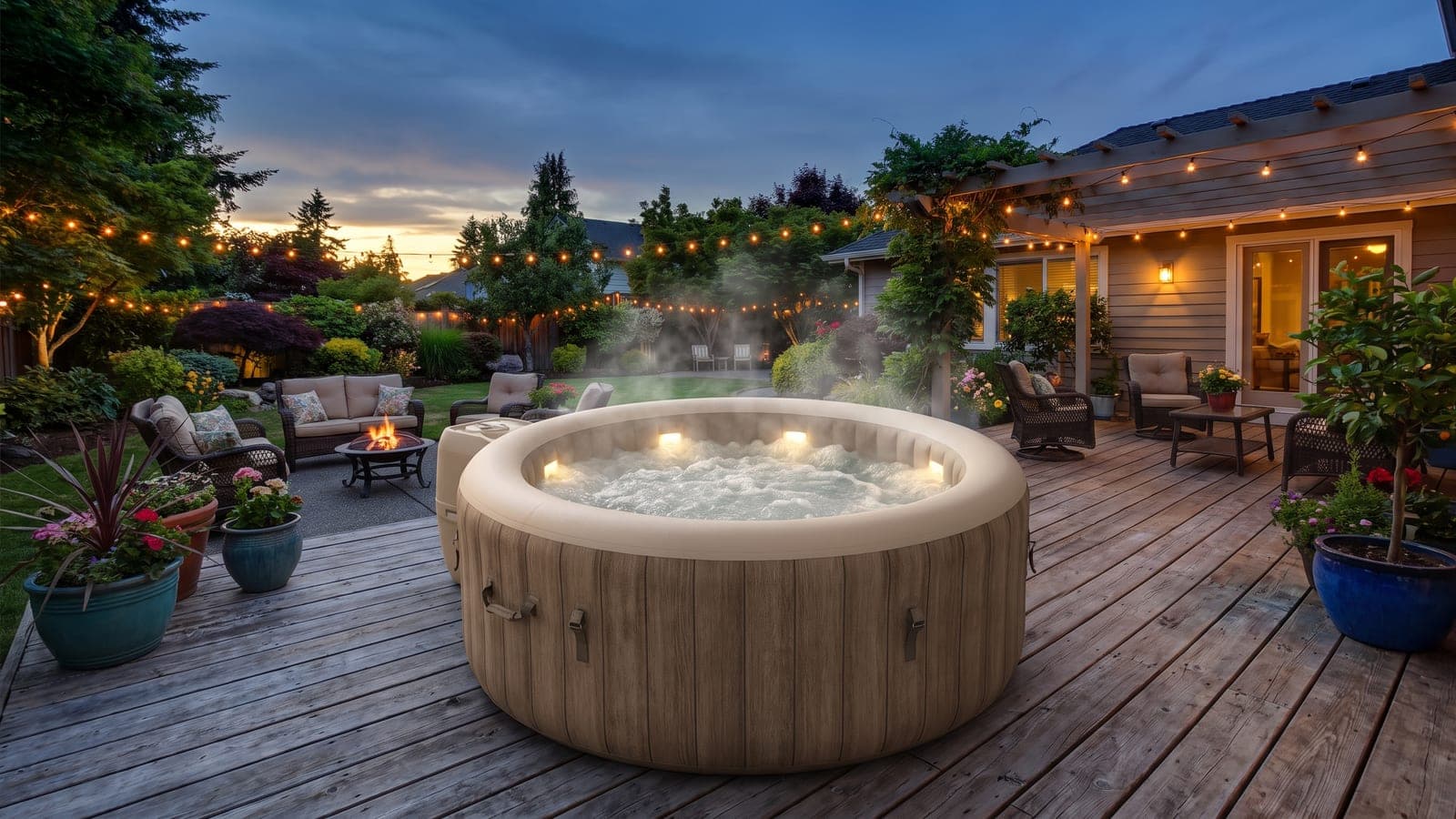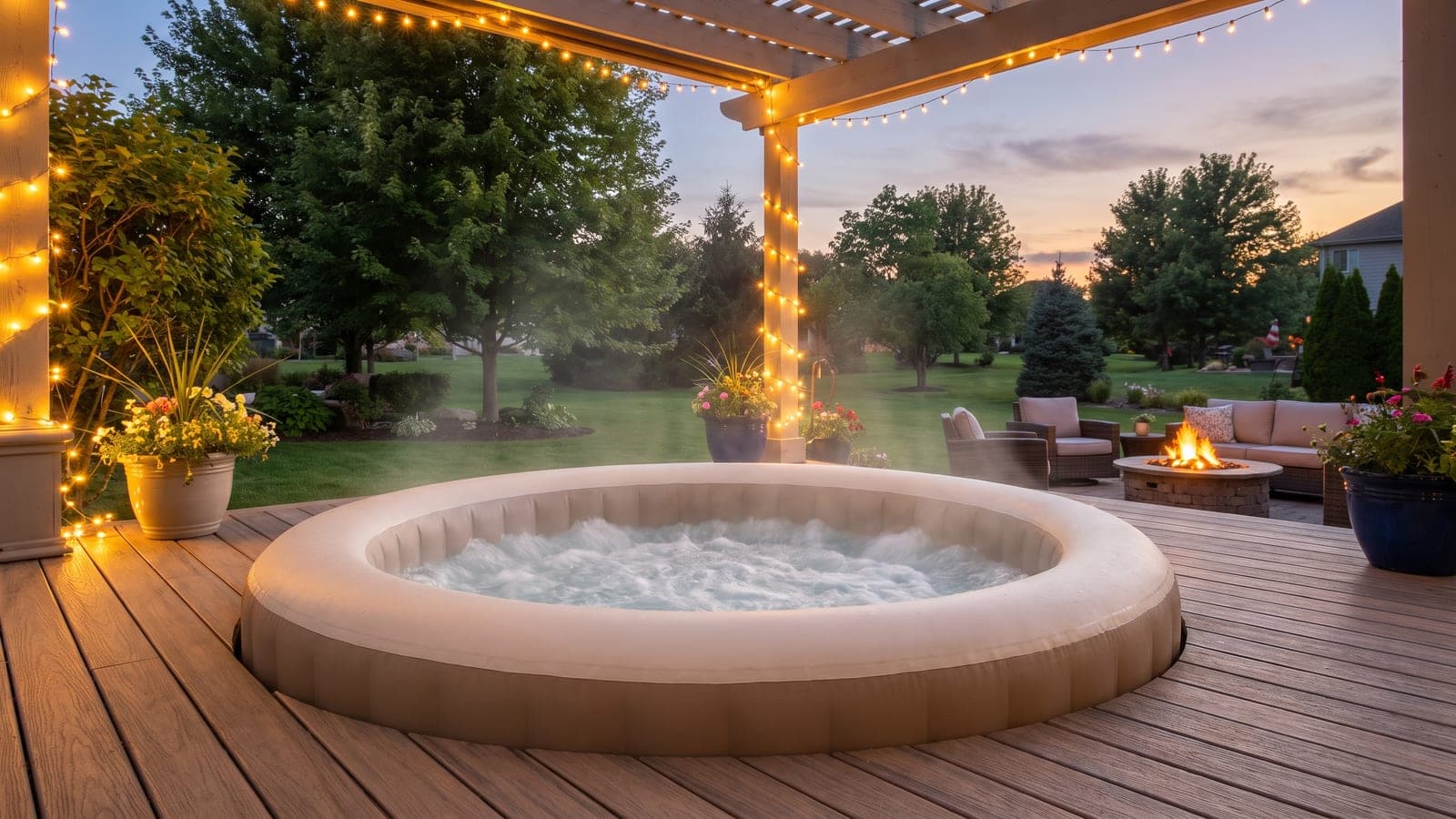
The inflatable hot tub most people should buy for year-round use is the Intex PureSpa Plus 6-Person Inflatable Hot Tub (170 Jets), because it pairs a strong heater and hard-water treatment with enough room for a real group. If you soak solo or as a couple, the smaller Coleman SaluSpa Miami AirJet Inflatable Hot Tub (2–4 Person) heats faster and costs less to run. Everything below assumes you add a base mat and a thermal cover, which is what actually makes an inflatable tub practical in cold weather.
An inflatable hot tub is a portable spa with vinyl walls that inflate rigid, a drop-in heater and filter unit, and a bubble or jet system. They are not built like a hard-shell spa, so heat loss is the main challenge in winter. The picks here all hold 104°F, the standard hot tub ceiling, but the ones that survive year-round best are the ones you insulate and shelter.
| Pick | Best for | Watch out for |
|---|---|---|
| Intex PureSpa Plus 6-Person (170 Jets) | Best overall | Slower reheat for a big volume |
| Coleman SaluSpa Miami AirJet (2–4) | Best for cold-climate value | Tight for more than two |
| Coleman SaluSpa Atlantis AirJet (App Control) | Best for convenience | App and Wi-Fi can be finicky |
| Intex PureSpa Greywood Deluxe 6-Person | Best for big groups | Needs a strong, level base |
| Coleman Palm Springs EnergySense Smart AirJet Plus | Best for energy savings | Premium price up front |
| Bestway SaluSpa Hawaii HydroJet Pro (4–6) | Best for a jet-massage feel | Jets add pump noise |
Which inflatable hot tub should most people get?
Match the tub to how you actually soak, not to the biggest number on the box. Two people who want a quick after-work soak want a small tub that reheats fast and sips less power. A family or a group that entertains wants volume and jets, and should accept the tradeoff of slower reheating and a higher winter bill.
For year-round use specifically, insulation matters more than the model. A base mat under the tub stops the ground from stealing heat, and a thermal blanket under the lid cuts evaporation loss. Budget for both no matter which pick you choose. You can compare full specs across models on our inflatable hot tubs page.
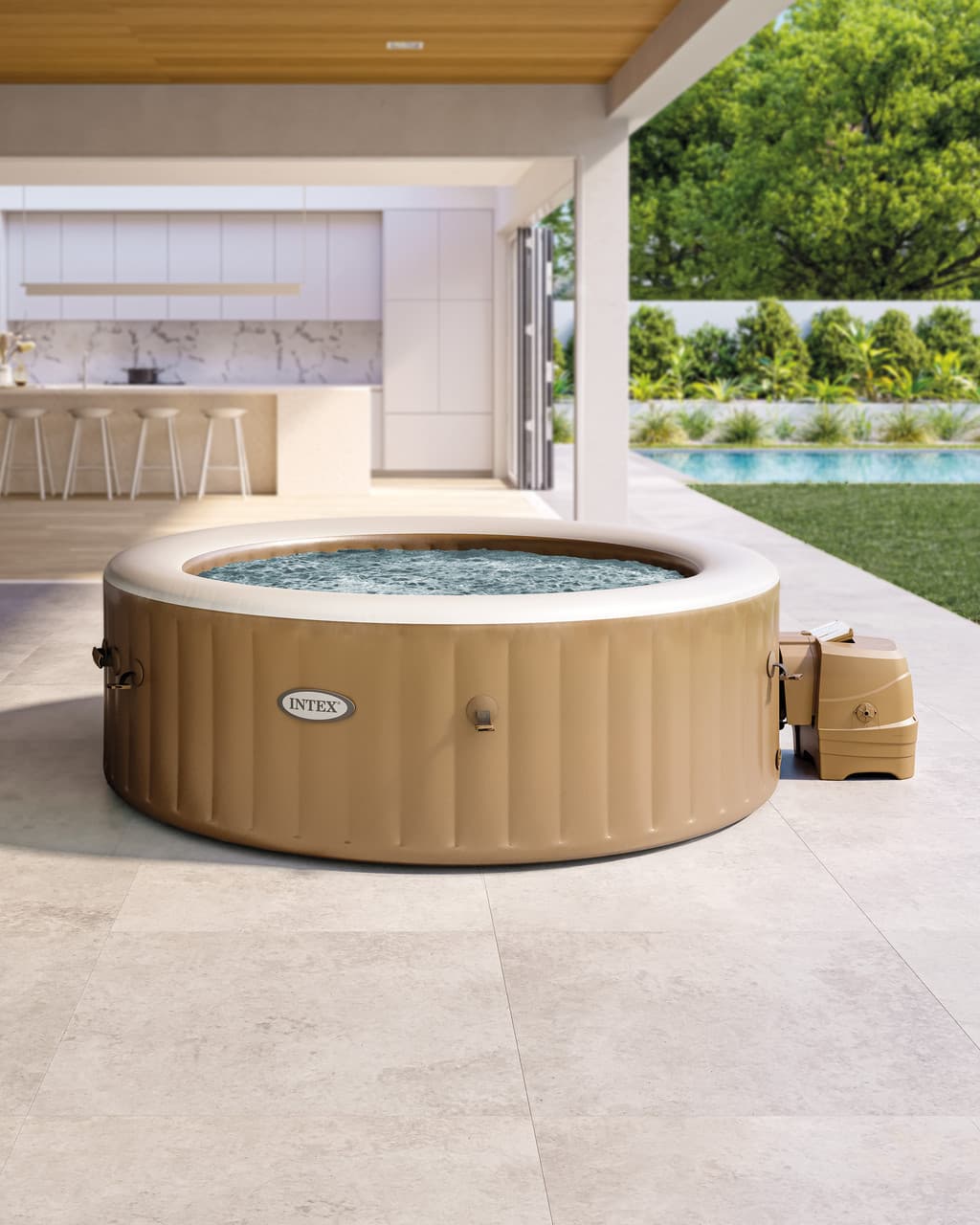
Best overall: Intex PureSpa Plus 6-Person Inflatable Hot Tub (170 Jets)
Mid-range
This one fits the most people well because it balances capacity, jet count, and a hard-water treatment system that helps in mineral-heavy areas. Six seats means four adults soak in real comfort, and the higher jet count gives a livelier massage than bubble-only tubs. Owner reports generally praise the build for the price, with the usual note that reheating a large volume takes a while.
The tradeoff is energy and patience. A bigger tub holds more water to keep hot, so in winter the heater cycles more and reheat after a soak is slower. Pair it with a base mat and thermal cover, keep it out of the wind, and it holds up through cold months better than most.
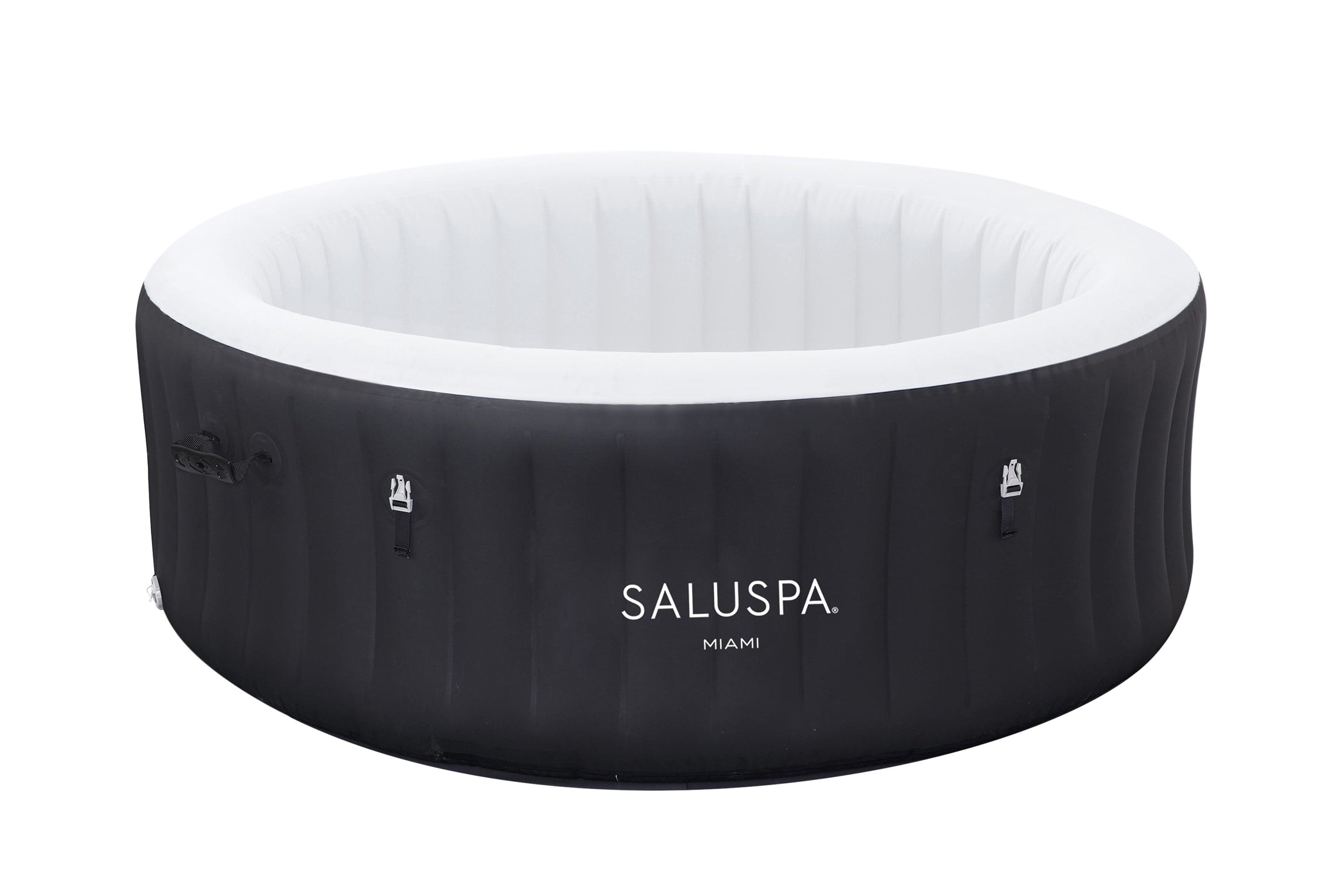
Best for cold-climate value: Coleman SaluSpa Miami AirJet Inflatable Hot Tub (2–4 Person)
Budget
If you soak solo or as a couple, less water is the feature. A smaller tub reheats faster and costs less to hold at temperature, which is exactly what you want when it is freezing out. This makes the Miami a sensible year-round pick for people who do not need to seat a crowd.
The obvious tradeoff is space. Two adults are comfortable, a third is cozy, and four is a squeeze. If you regularly host more than two, size up rather than fight a tub that is too small for the room.
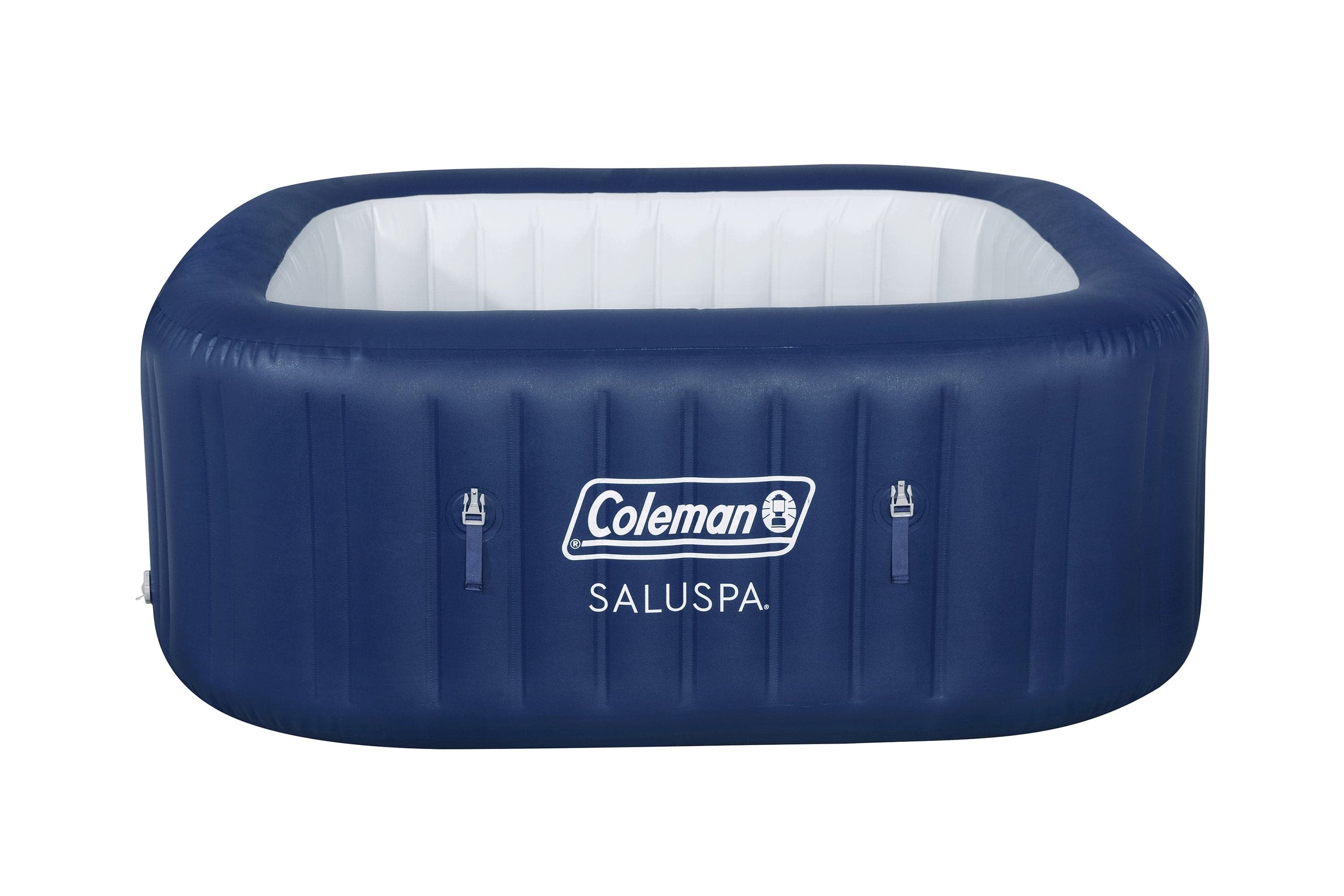
Best for convenience: Coleman SaluSpa Atlantis AirJet Inflatable Hot Tub (4–6 Person, App Control)
Premium
App control earns its keep in winter, when preheating from your phone before you head outside means the tub is ready when you are. That is genuinely useful in cold weather, where reheating from cold takes real time. The 4 to 6 person size suits a family without going oversized.
The catch is that app and Wi-Fi features are only as good as the connection and the software. Some owners report pairing hiccups or app quirks, so treat the app as a convenience, not a guarantee. The physical control panel still runs everything if the app sulks.
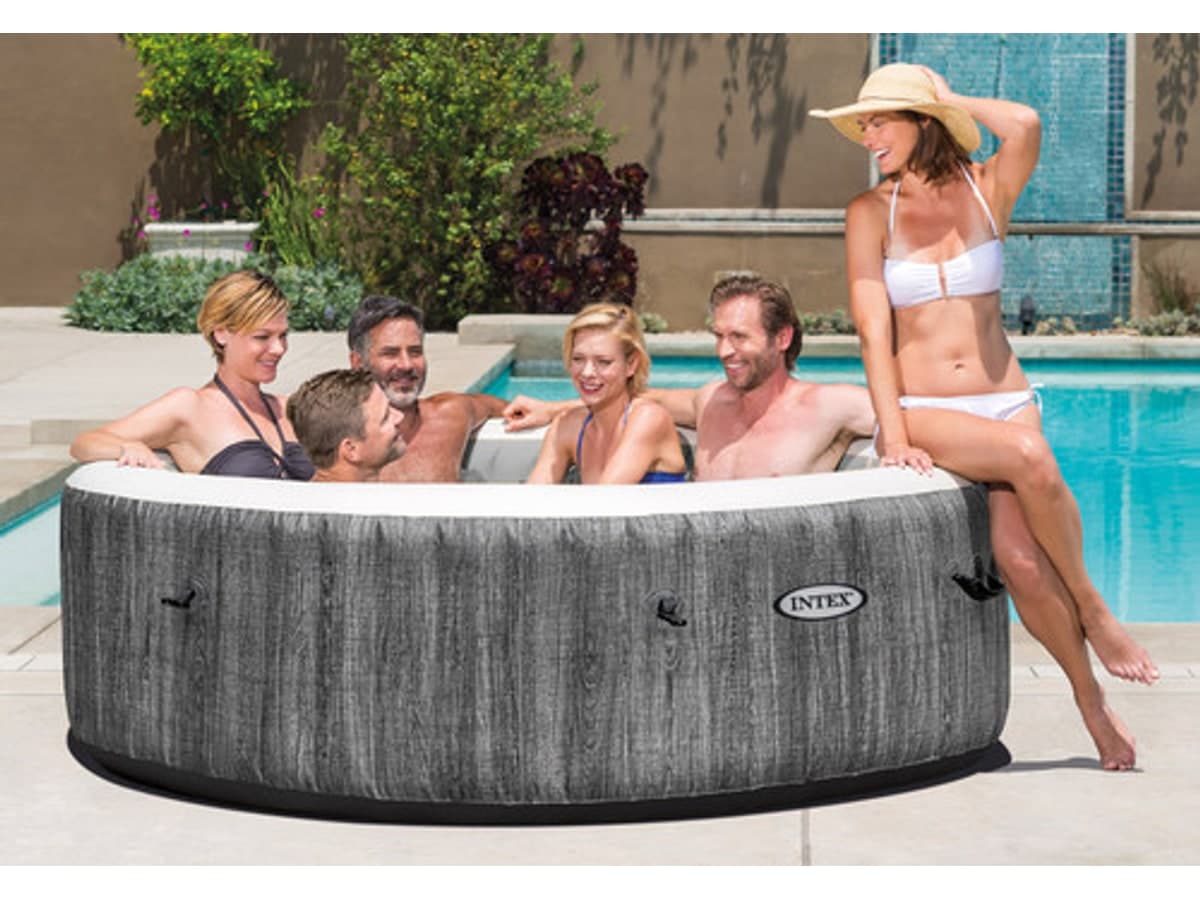
Best for big groups: Intex PureSpa Greywood Deluxe 6-Person Inflatable Hot Tub
Mid-range
When the point is fitting a group, capacity wins, and this model is built around seating six. The larger footprint gives everyone more elbow room than a 4-person tub pretending to seat six. It is the pick for households that entertain or have a full family piling in.
The cost of that space is setup and running. A large filled tub is heavy, so it needs a strong, dead-level base, and the bigger water volume means slower heating and a higher winter energy draw. Put it on a solid deck or pad, insulate underneath, and plan your reheats.
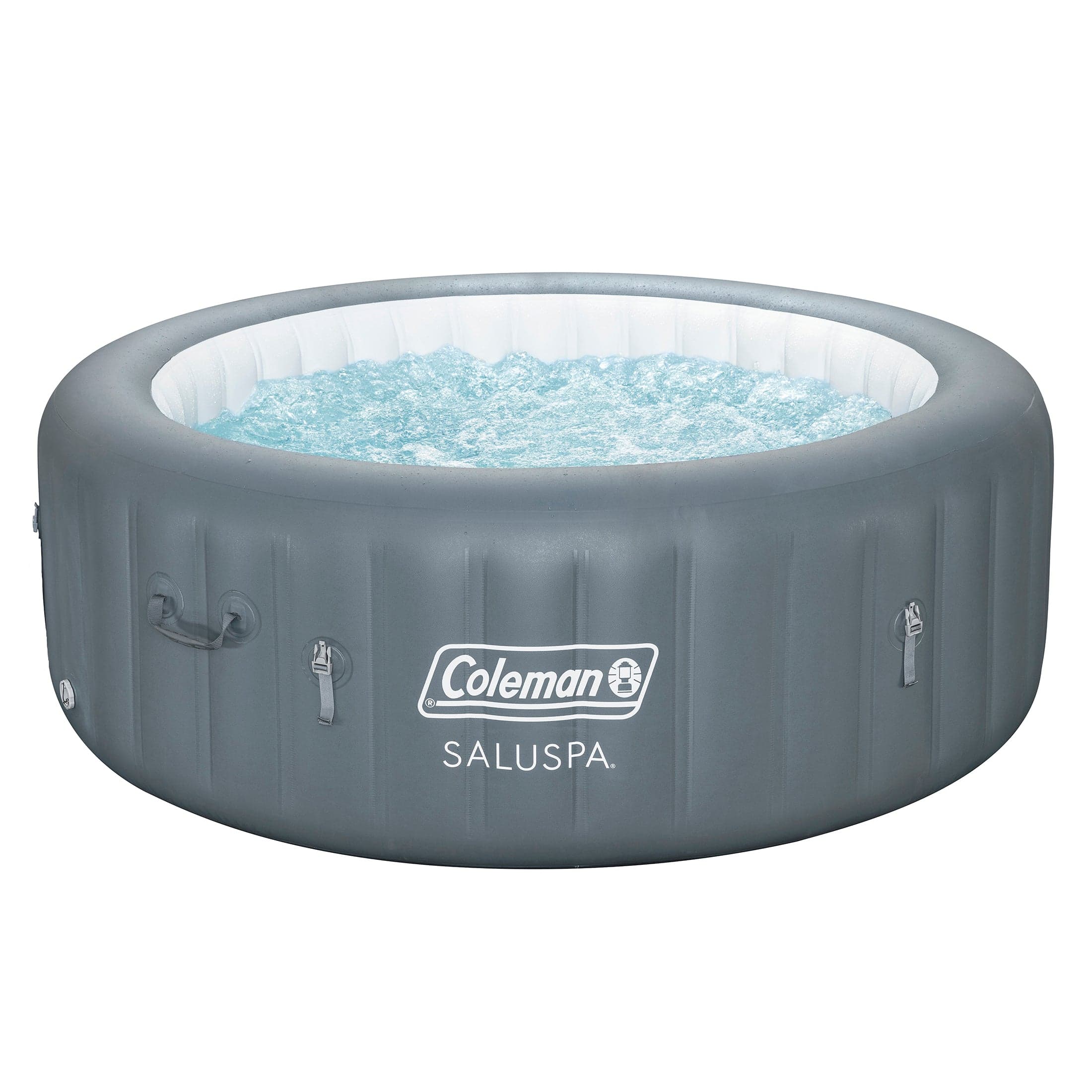
Best for energy savings: Coleman Palm Springs EnergySense Smart AirJet Plus Hot Tub (4–6 Person)
Premium
The EnergySense name points at the feature that matters most for year-round use: reducing heat loss. Any model that leans into insulation and smarter heating is worth a look if you plan to run it through winter, because heat retention is where inflatable tubs usually struggle. For a 4 to 6 person household, this is a reasonable energy-minded choice.
The tradeoff tends to be a higher price up front for the energy-focused features. Whether that pays back depends on your electric rate and how cold your winters get, so run the math on your own bill. Even with a claimed efficiency edge, add the base mat and thermal cover, because they help every tub.
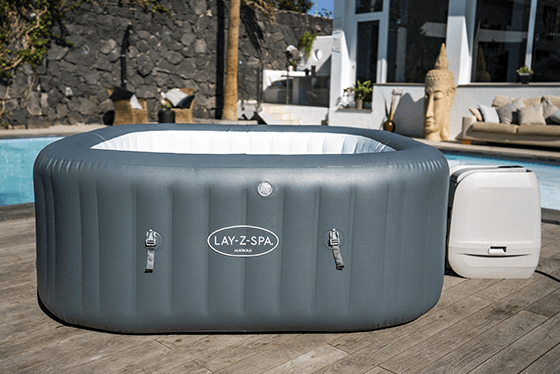
Best for a jet-massage feel: Bestway SaluSpa Hawaii HydroJet Pro Inflatable Hot Tub (4–6 Person)
Premium
If the point of your soak is a stronger massage, a HydroJet-style system aims water jets at your back rather than just bubbling air. Owners who want more of a spa feel than a bubble bath tend to like this. The 4 to 6 person size covers most households.
The tradeoff is noise and complexity. More jets means more pump work, which some owners find louder, and any added system is one more thing to maintain. If a quiet, simple bubble soak is your goal, a plainer AirJet model like the Coleman SaluSpa AirJet Inflatable Hot Tub (4–6 Person) may suit you better.
What to check before you buy for year-round use
Start with the base. A filled tub is heavy, so it needs a flat, load-rated surface and an insulating mat underneath to block ground heat loss. On a wood deck, confirm it can hold the filled weight before you commit.
Then plan for cold. A thermal blanket under the lid, a spot sheltered from wind, and never letting a running tub freeze are the three habits that keep an inflatable spa alive through winter. In a hard freeze, keep it running and above 40°F or drain and store it, because frozen water can crack the pump.
Finally, plan the water care. Hot water burns through sanitizer, so you will test more often than a pool. The CDC's hot tub water treatment guidance explains why keeping chlorine and pH in range matters for germ control. If kids will use it, review the CPSC's drowning prevention toolkit and never leave children unattended near the water.
How do I keep the water clean without the chemistry stress?
Test two to three times a week, more with heavy use, and keep a box of spa test strips by the tub so it stays a habit. Free chlorine or bromine plus balanced pH does most of the work. Our pool chemistry basics guide translates the numbers into plain English if the strips look like a puzzle.
If you would rather ease into maintenance, the hot tub maintenance for beginners guide walks through a simple weekly routine. And if your tub has a saltwater system, read the saltwater maintenance guide first, because salt spas still need testing even though they make their own sanitizer.
Frequently asked questions
Can an inflatable hot tub really run through winter?
Yes, most name-brand units will hold 104°F in the cold, but the heater has to work harder and your energy bill climbs. Below about 40°F you want an insulating base mat, a thermal blanket under the lid, and ideally a spot out of the wind. In hard freezes, never let a running tub drop below 40°F or drain it fully, because freezing water can crack the pump and liner.
How much does it cost to run one in cold weather?
It depends on your local electric rate, how cold it gets, and whether the tub is insulated, so treat any single number with suspicion. Owners in cold climates often report meaningfully higher bills in winter than summer because the heater cycles more to fight heat loss. Adding a base mat and a thermal cover is the cheapest way to hold that cost down.
How many people actually fit in a 4 to 6 person tub?
Comfortably, plan on one or two fewer than the label. A '6 person' tub seats six shoulder to shoulder with knees tangled, so four adults is the realistic soak number. If you regularly host, size up rather than crowding a smaller tub.
Chlorine or saltwater for an inflatable spa?
Both work, and it depends on the tub and your patience. Chlorine granules or bromine are simplest and work with any unit, while some models offer a built-in saltwater system that makes its own sanitizer from added salt. Saltwater is gentler on skin but still needs testing and occasional dosing, so read our saltwater guide before you commit.
How often do I test and treat the water?
Test at least two to three times a week, and more if the tub gets heavy use, since hot water burns through sanitizer fast. The CDC recommends keeping free chlorine and pH in range to control germs in hot tubs. A cheap box of spa test strips and a consistent habit prevent most cloudy-water headaches.