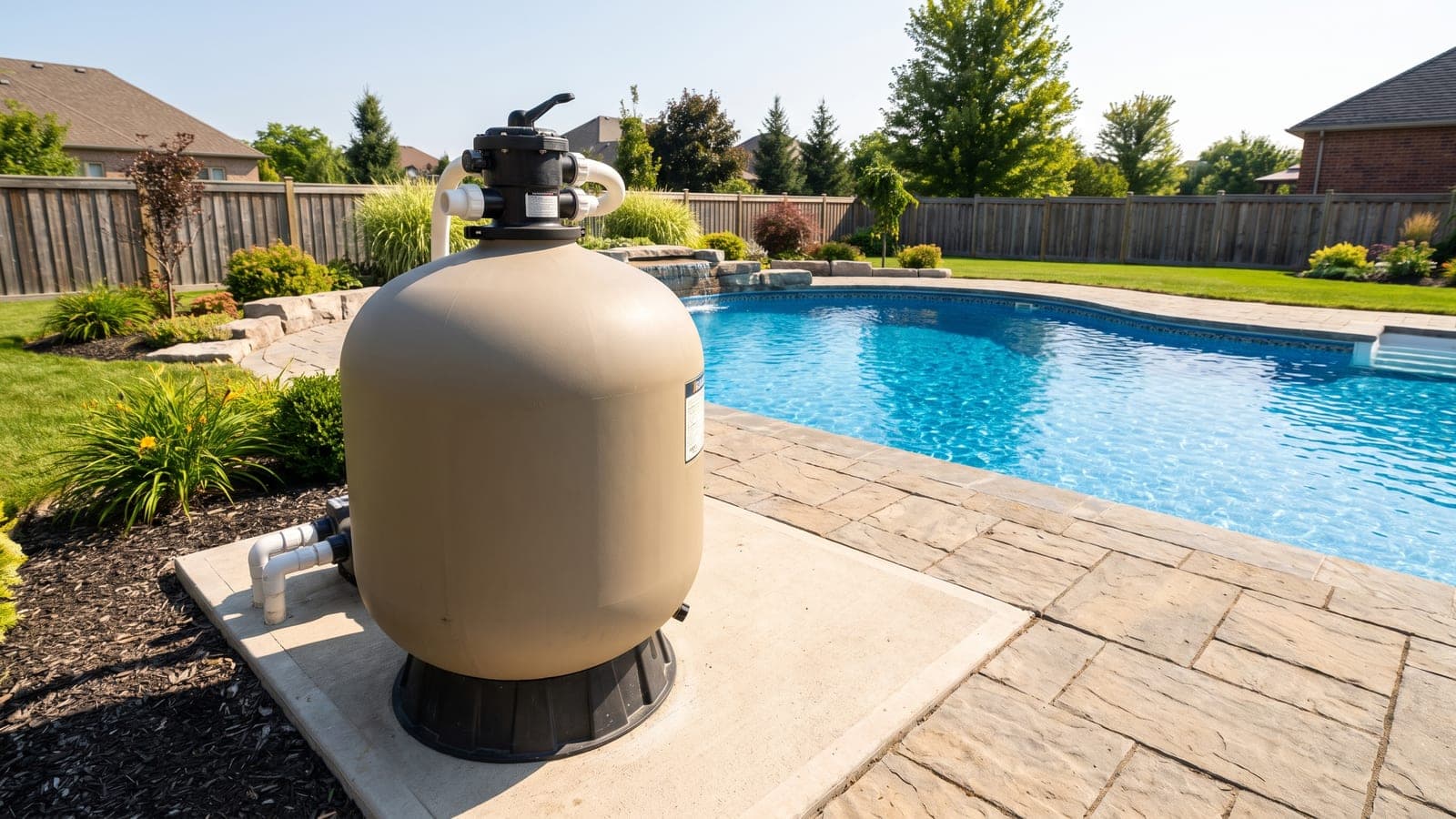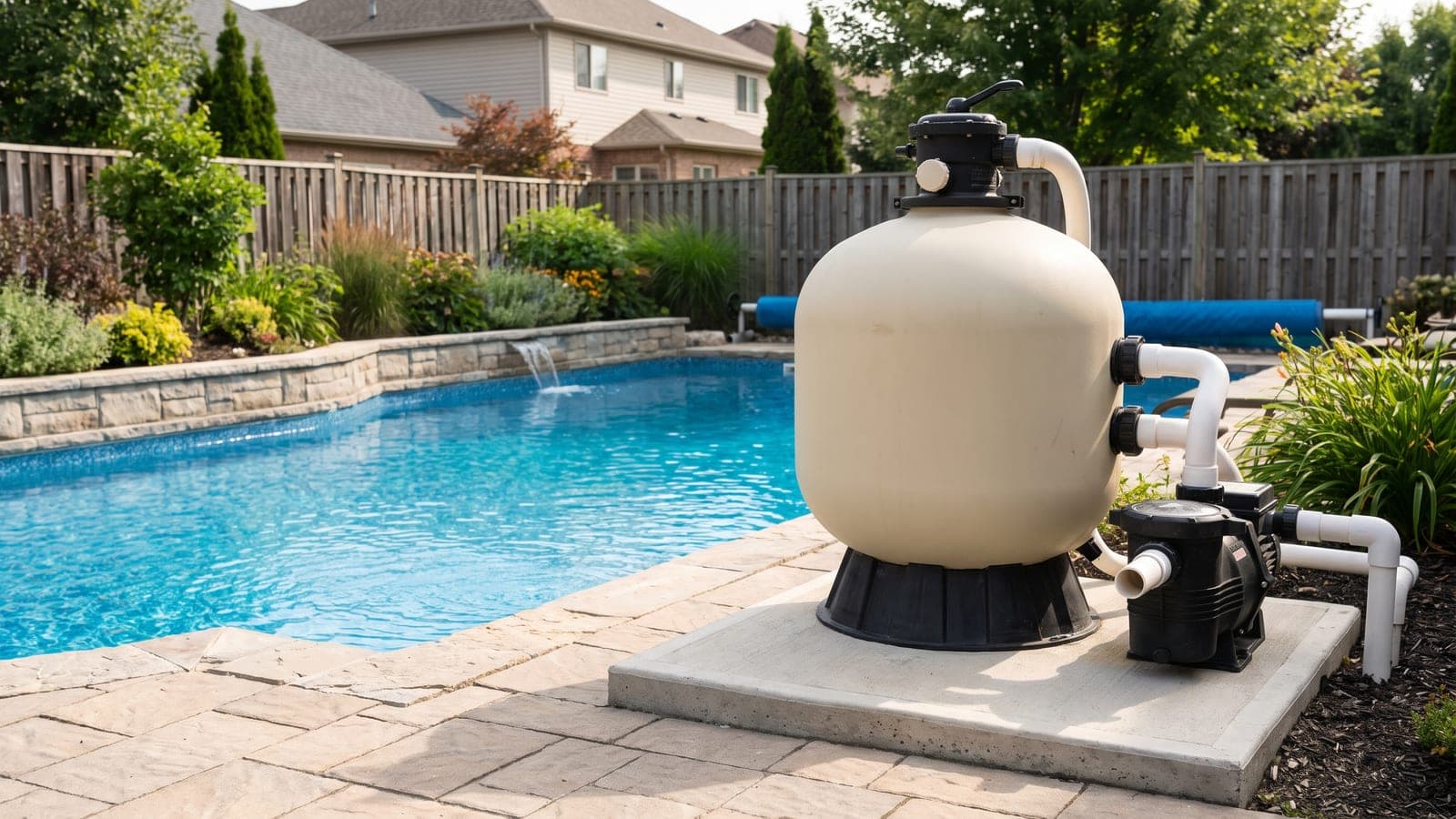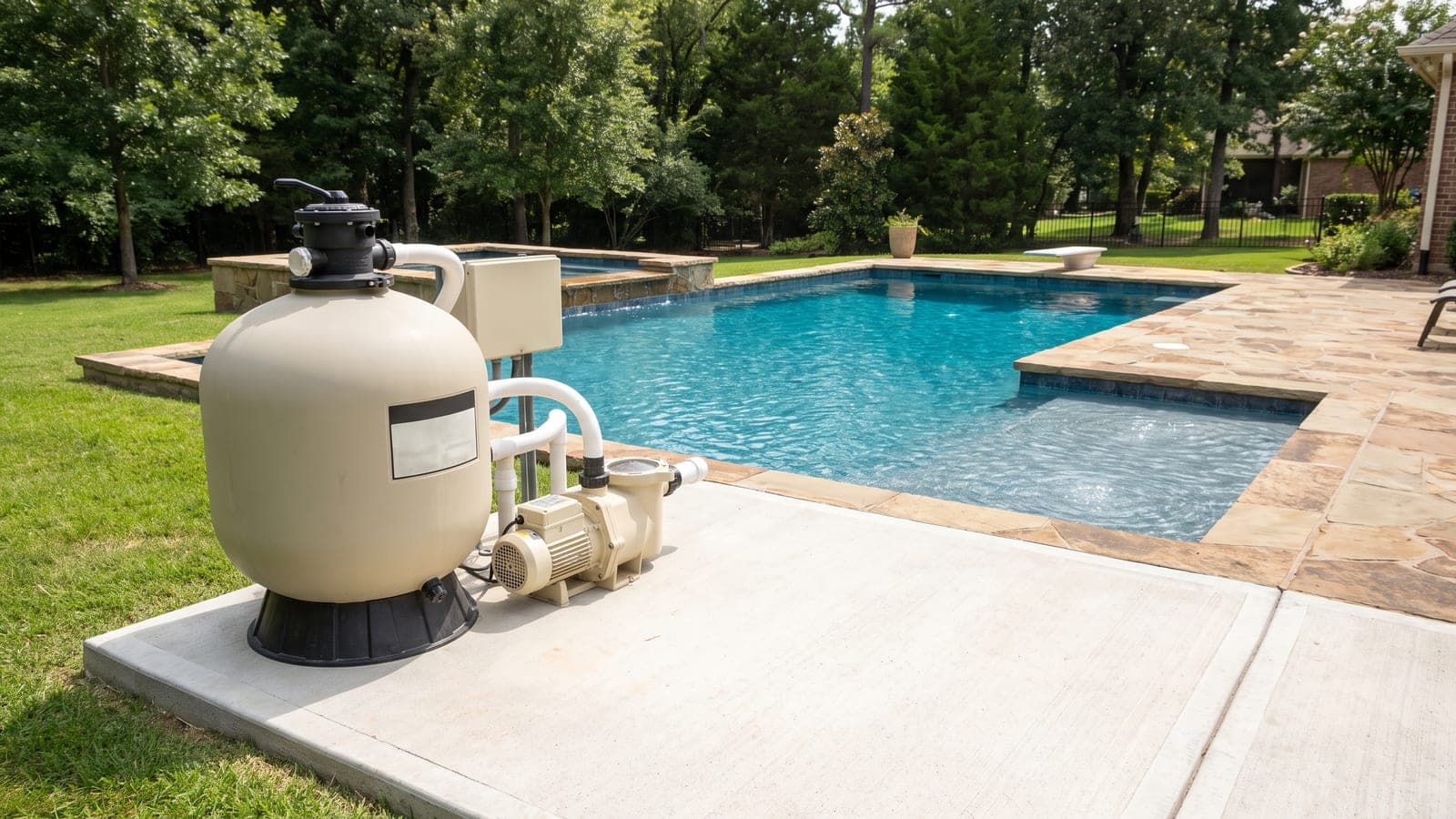
The sand filter most in-ground pool owners should get is the Hayward Pro Series S244T Sand Filter (24 in), because its 24 inch tank handles the flow of a typical residential pump without choking. If your pool is on the larger side or runs a stronger pump, step up to a tank sized for that flow instead. A sand filter is the tank of media your water passes through to trap dirt, and it is the simplest filter type to live with.
Sand filtration catches particles down to about 20 to 40 microns, which is coarser than cartridge or D.E. filters but plenty for clear, swimmable water when your chemistry is balanced. The tradeoff is backwashing, where you reverse the flow to flush trapped dirt out the waste line, which uses water. Here are the picks worth comparing.
| Pick | Best for | Watch out for |
|---|---|---|
| Hayward Pro Series S244T (24 in) | Most in-ground pools | Needs a matched pump |
| Pentair Tagelus TA60D | Larger pools, long runs | Bigger footprint |
| Pentair Sand Dollar SD60 (22 in) | Value and easy service | Coarser than D.E. |
| Pentair Sand Dollar SD40 | Small pools, tight budgets | Above-ground rated |
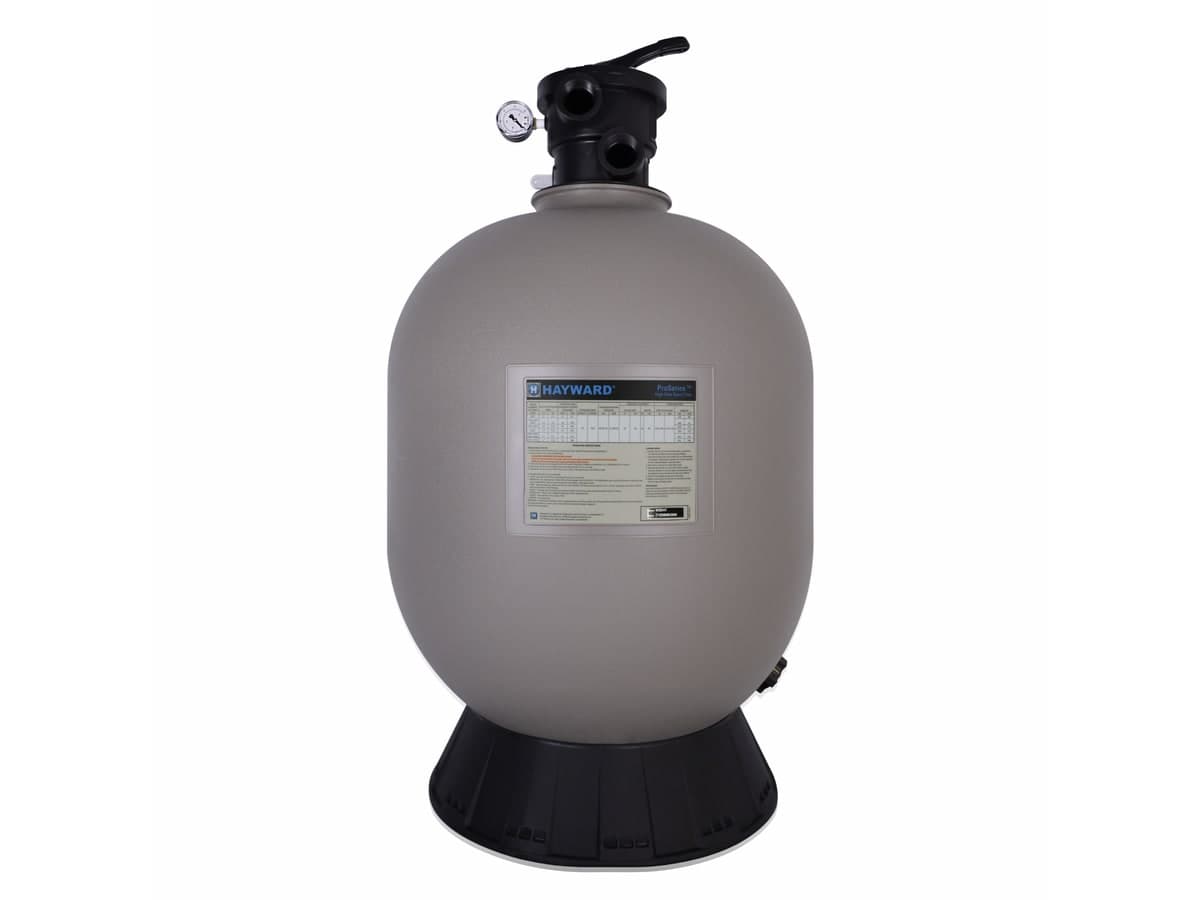
Best overall: Hayward Pro Series S244T Sand Filter (24 in)
Mid-range
The 24 inch tank on the Hayward Pro Series S244T Sand Filter (24 in) is a common sweet spot for in-ground pools in the roughly 15,000 to 30,000 gallon range. Owners like the corrosion-resistant tank and the seven-position multiport valve, which handles filter, backwash, rinse, and winterize settings from one lever. It pairs cleanly with mid-size single or variable-speed pumps.
The catch is that a sand filter only performs as well as the pump feeding it. Push too much flow and water races through the sand without cleaning; too little and turnover suffers. Check your pump's flow rating against the filter listing, and confirm the sand weight in the manual before you fill it.
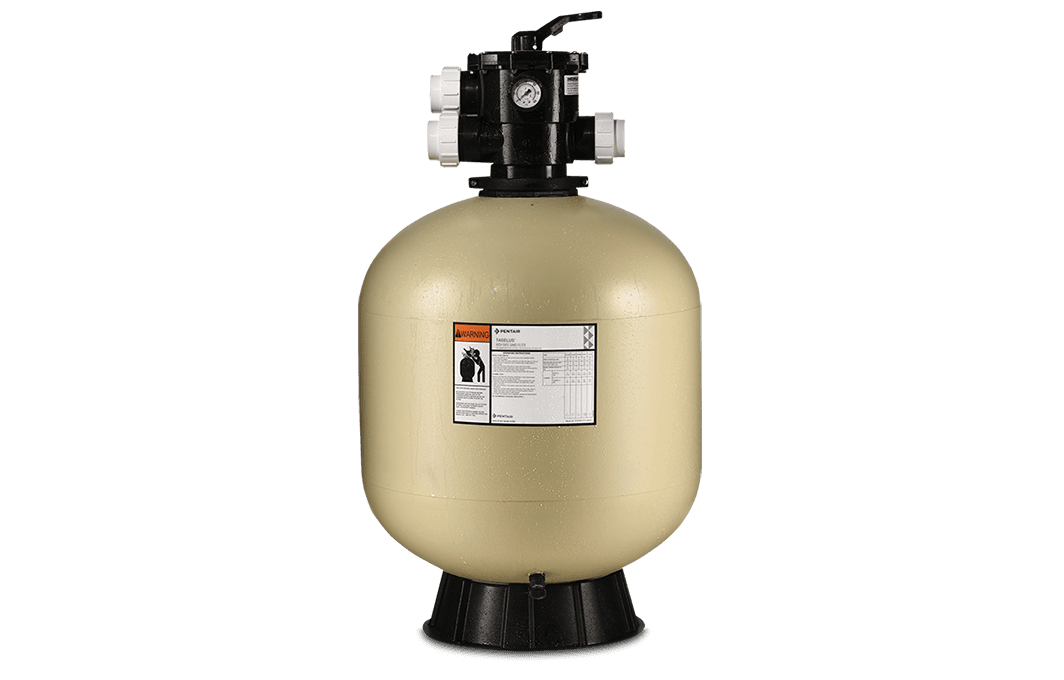
Best for larger pools: Pentair Tagelus TA60D Sand Filter
Mid-range
If your pool runs bigger or your pump moves a lot of water, the Pentair Tagelus TA60D Sand Filter gives you more tank and more media to work with. The larger internal volume means longer stretches between backwashes and steadier pressure across a full swim day. It suits pools that push past what a 24 inch tank comfortably covers.
The tradeoff is footprint and sand quantity. A bigger tank needs more room on the pad and more bags of media to fill, so it costs more up front and weighs more once loaded. Confirm you have the space and the plumbing clearance before ordering.
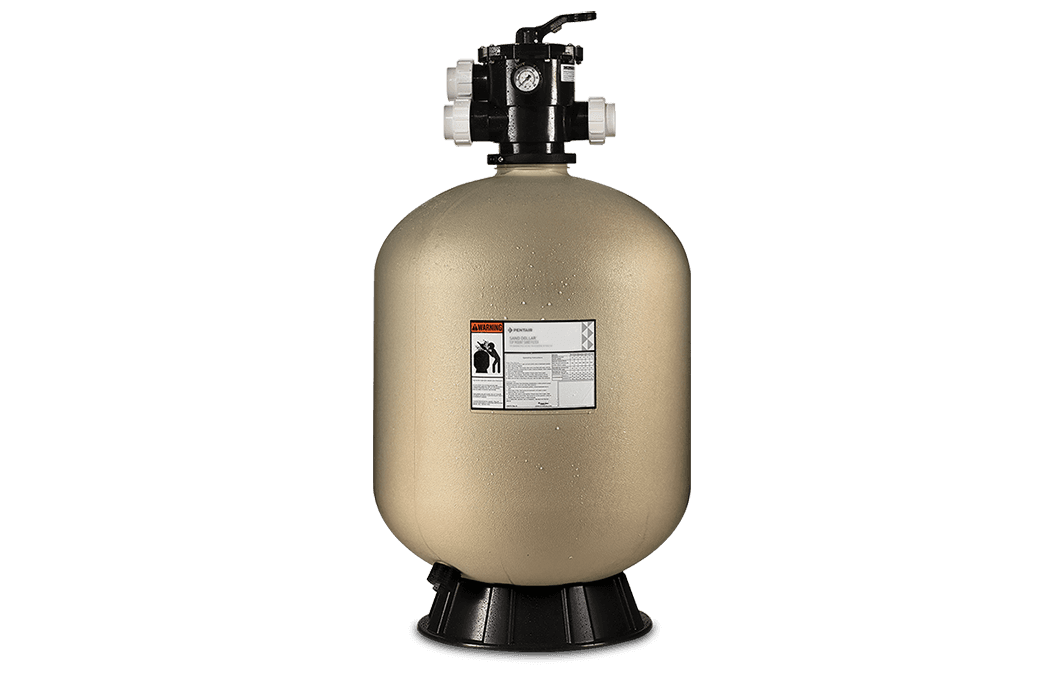
Best value: Pentair Sand Dollar SD60 Sand Filter (22 in)
Mid-range
The Pentair Sand Dollar SD60 Sand Filter (22 in) is a strong middle-ground pick for owners who want a proven tank without the top-of-line price. The 22 inch size fits many small to mid-size in-ground pools, and the one-piece tank design resists leaks over the years. Owner reports point to easy valve service and reliable long-term use.
Being a sand filter, it filters coarser than a D.E. tank, so if you fight very fine dust or algae dust after a bloom, expect a couple of extra passes to polish the water. Balanced chemistry does most of that work, so keep your levels in range. Our pool chemistry guide covers the basics without the lab coat.
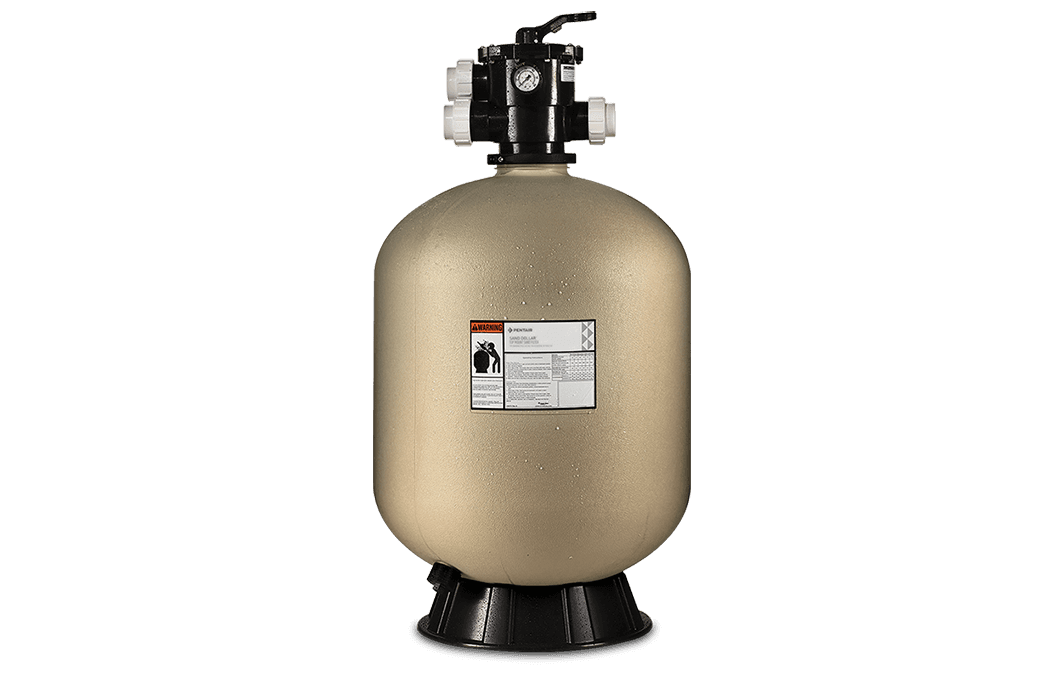
Best for small or budget pools: Pentair Sand Dollar SD40 Above-Ground Sand Filter
Mid-range
For a smaller in-ground pool or a tight budget, the Pentair Sand Dollar SD40 Above-Ground Sand Filter is a compact, lower-cost entry point. It is rated for above-ground use but works on modest in-ground setups with a matched pump and correct flow. The smaller tank keeps the price and the sand fill down.
The limit is capacity. A smaller tank means shorter runs between backwashes and less headroom if your pool gets heavy use or a lot of debris. If your pool is on the larger end, treat this as a starter and plan to size up later rather than overworking a small tank.
How to pick the right sand filter for your pool
Start with two numbers: your pool's gallons and your pump's flow rate in gallons per minute. The filter's flow rating should comfortably exceed what your pump delivers, so the tank is not maxed out every time it runs. The U.S. Department of Energy notes that matching pump and filter sizing, and running the pump on lower speeds, cuts energy use without hurting circulation (energy.gov).
Sand type matters too. Most tanks use #20 silica sand, but some accept glass media or zeolite for slightly finer filtration, so check your manual for what your tank is rated to hold. Whatever you choose, filtration is only half the job. The CDC points out that proper filtration plus balanced disinfectant and pH is what actually keeps pool water safe to swim in (cdc.gov).
If you are still weighing sand against cartridge or D.E., or you want to see specs side by side, browse our full pool filters lineup. Running a salt pool changes nothing about filter choice, but the saltwater maintenance guide covers the parts that do differ. And if a spa is part of your setup, the hot tub maintenance guide keeps that water honest without the chemical panic.
The bottom line
For most in-ground pools, the Hayward Pro Series S244T Sand Filter (24 in) is the safe default: right-sized tank, simple multiport valve, and a track record owners trust. Go bigger with the Pentair Tagelus TA60D Sand Filter if your pool or pump demands it, save with the Pentair Sand Dollar SD60 Sand Filter (22 in), or start small with the Pentair Sand Dollar SD40 Above-Ground Sand Filter. Match the filter to your pump and gallons first, and any of these will keep your water clear.
Frequently asked questions
What size sand filter do I need for my in-ground pool?
Match the filter's flow rating to your pump, then size up so the tank is not working at its ceiling. Most in-ground pools do well with a 22 to 24 inch tank, but check your pool's gallons and your pump's flow before buying, since an undersized filter clogs fast and a big pump can push water through too quickly to clean it well.
How often do I backwash a sand filter?
Backwash when the pressure gauge reads about 8 to 10 psi above the clean starting pressure, not on a fixed calendar. That usually lands every few weeks in swim season, more after heavy use or a storm. Chasing the gauge rather than a habit saves water and keeps filtration steady.
How long does the sand inside last?
Filter sand typically lasts around 3 to 7 years before the grains wear smooth and stop trapping fine dirt. If the water stays cloudy after balanced chemistry and a good backwash, worn sand is a common culprit. Your filter manual lists the exact sand weight the tank needs.
Sand, cartridge, or D.E. filter, which is best?
It depends on your priorities. Sand is the simplest and cheapest to live with but filters to a coarser level, cartridge catches finer dirt with no backwashing, and D.E. filters the finest but needs the most upkeep. For a low-fuss in-ground pool, sand is the common default.
Can I use a sand filter on a saltwater pool?
Yes, sand filters work fine with salt systems, since the salt cell and the filter do different jobs. Just make sure the tank and valve materials are rated for pool use, which the major brands are. For more on running a salt pool, see our saltwater maintenance guide.