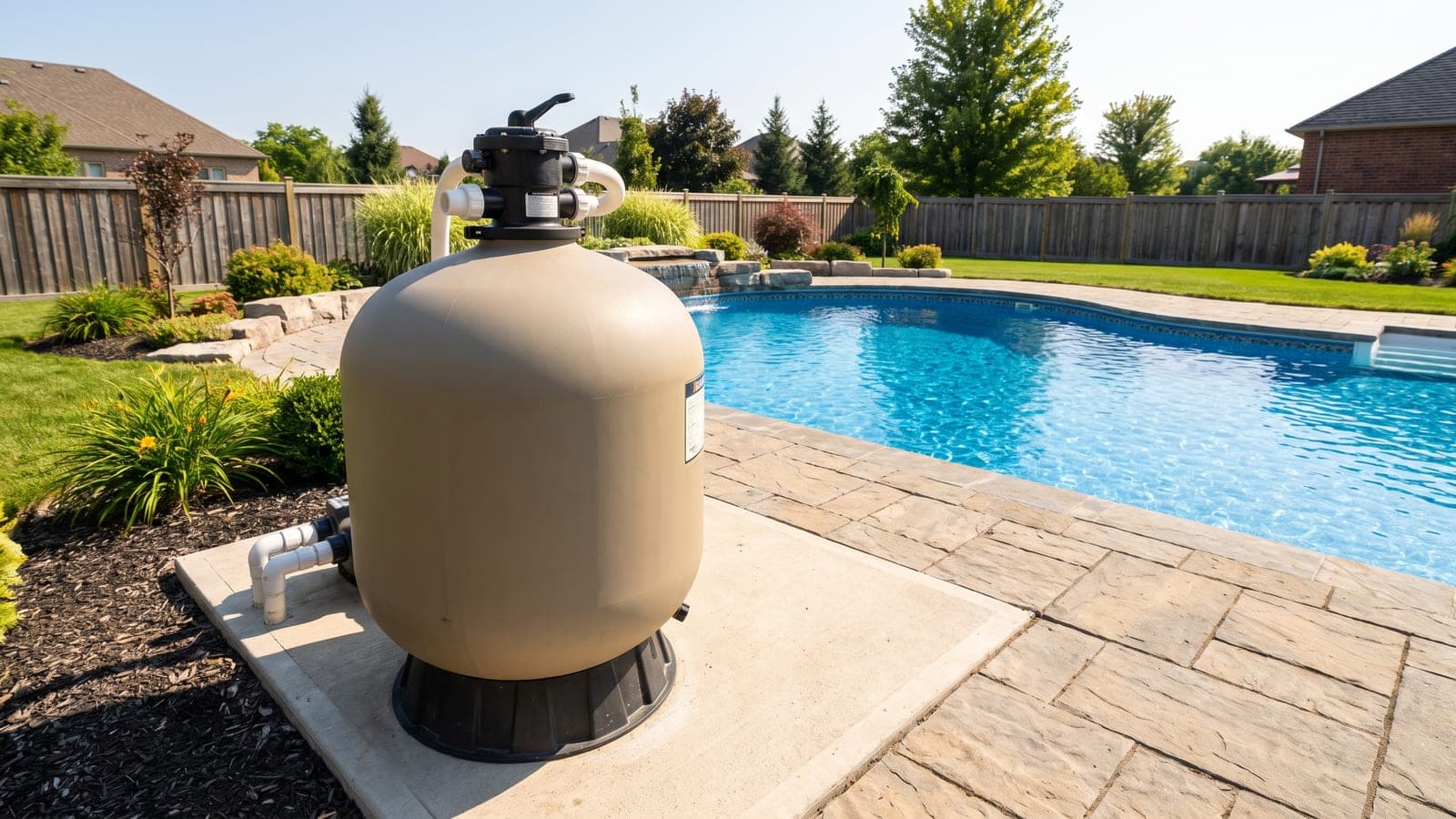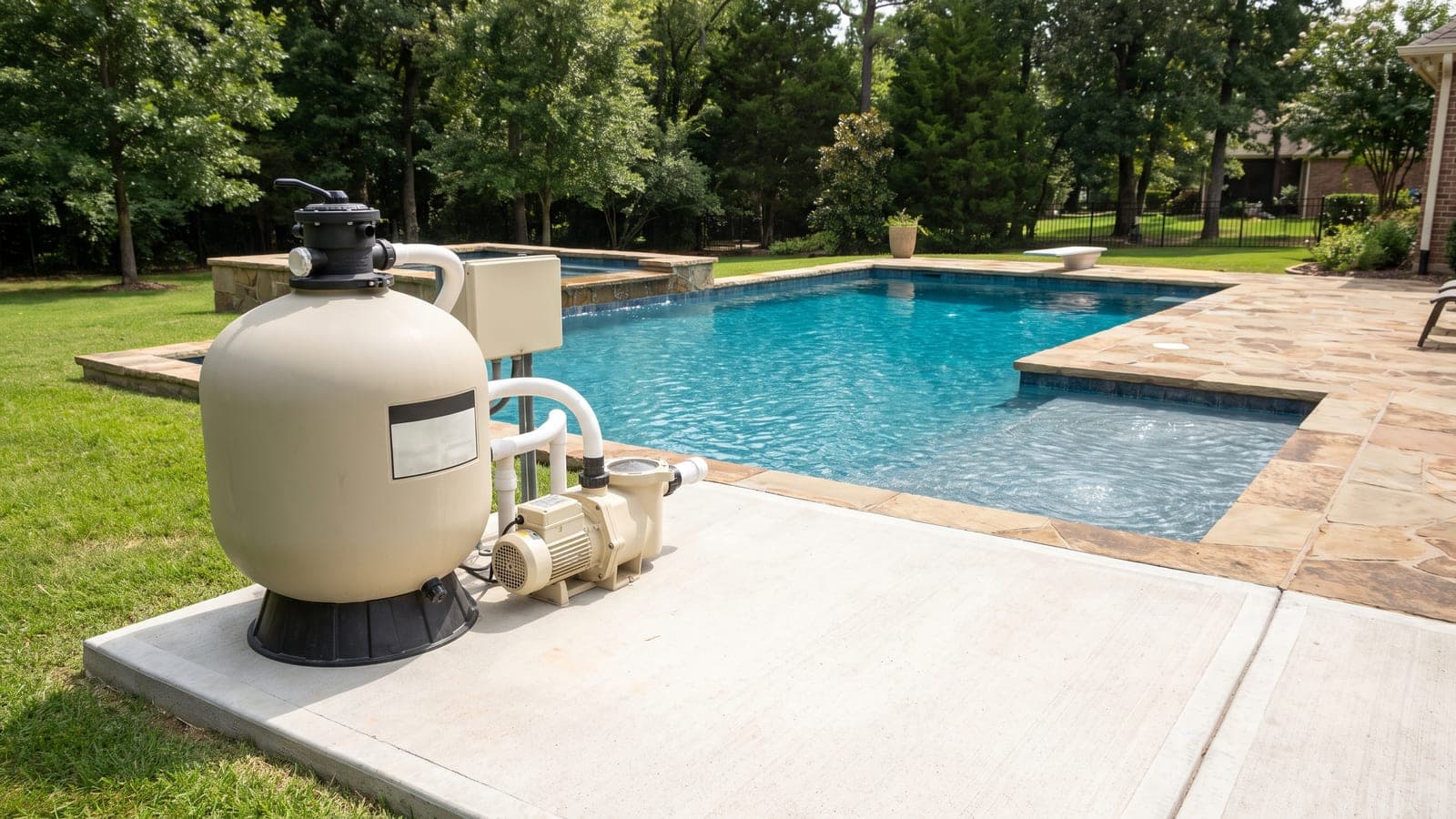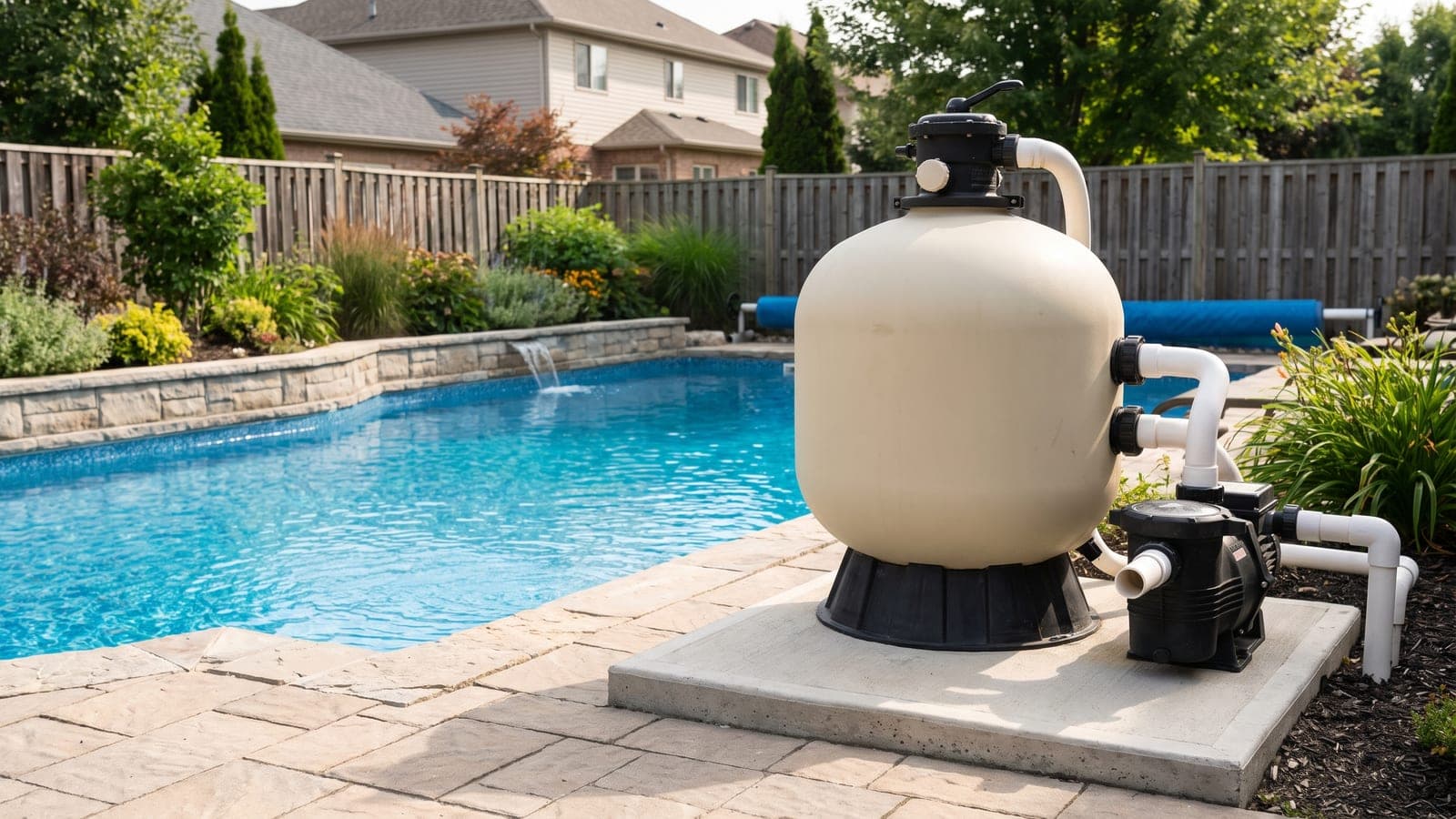
For most backyard pools, a cartridge filter is the easiest to live with: clear water, no backwashing, and simple hose-off cleaning. Sand filters are the budget-friendly workhorse if you do not mind backwashing, and DE (diatomaceous earth, a fine powder media) filters give the finest filtration for owners who want polished water and accept more upkeep. The best choice comes down to your pool volume, your pump's flow, and how hands-on you want to be.
A pool filter's job is to trap debris and fine particles so your sanitizer can do its job on the rest. The CDC notes that filtration and disinfection work together to keep water safe, so a well-matched filter is part of healthy swimming, not just clarity. Below are the picks, grouped by the situation they fit best.
| Pick | Best for | Watch out for |
|---|---|---|
| Hayward SwimClear C3030 Cartridge Filter (325 sq ft) | Large in-ground pools | High upfront cost, needs space |
| Hayward Star-Clear Plus C900 Cartridge Filter (90 sq ft) | Most mid-size pools | Cartridge replacement over time |
| Pentair Sand Dollar SD40 Above-Ground Sand Filter | Above-ground and budget setups | Coarser filtration, backwashing |
| Hayward ProGrid DE4820 D.E. Filter (48 sq ft) | Finest water clarity | Most maintenance, DE handling |
| Intex Krystal Clear C2500 Cartridge Filter Pump | Small soft-side pools | Frequent cartridge swaps |
| Pentair Clean & Clear CC150 Cartridge Filter (150 sq ft) | Low-maintenance mid-large pools | Larger footprint |
Best overall: Hayward Star-Clear Plus C900 Cartridge Filter (90 sq ft)
Mid-range
This is the pick for the largest group of owners: someone with a typical mid-size in-ground or larger above-ground pool who wants clear water without the backwashing routine. At 90 square feet of cartridge area, it covers a lot of common pool volumes, and cleaning is a hose-off in the yard rather than sending water to waste. Owner reports generally praise how little day-to-day thought it needs.
The tradeoff is that cartridges do not filter quite as fine as DE and eventually wear out and need replacing, usually after a few seasons depending on use and water chemistry. You also want to confirm the flow rating meets your pump before buying, since a mismatched pump can push water through too fast. Check the manual for the flow number that fits your setup.
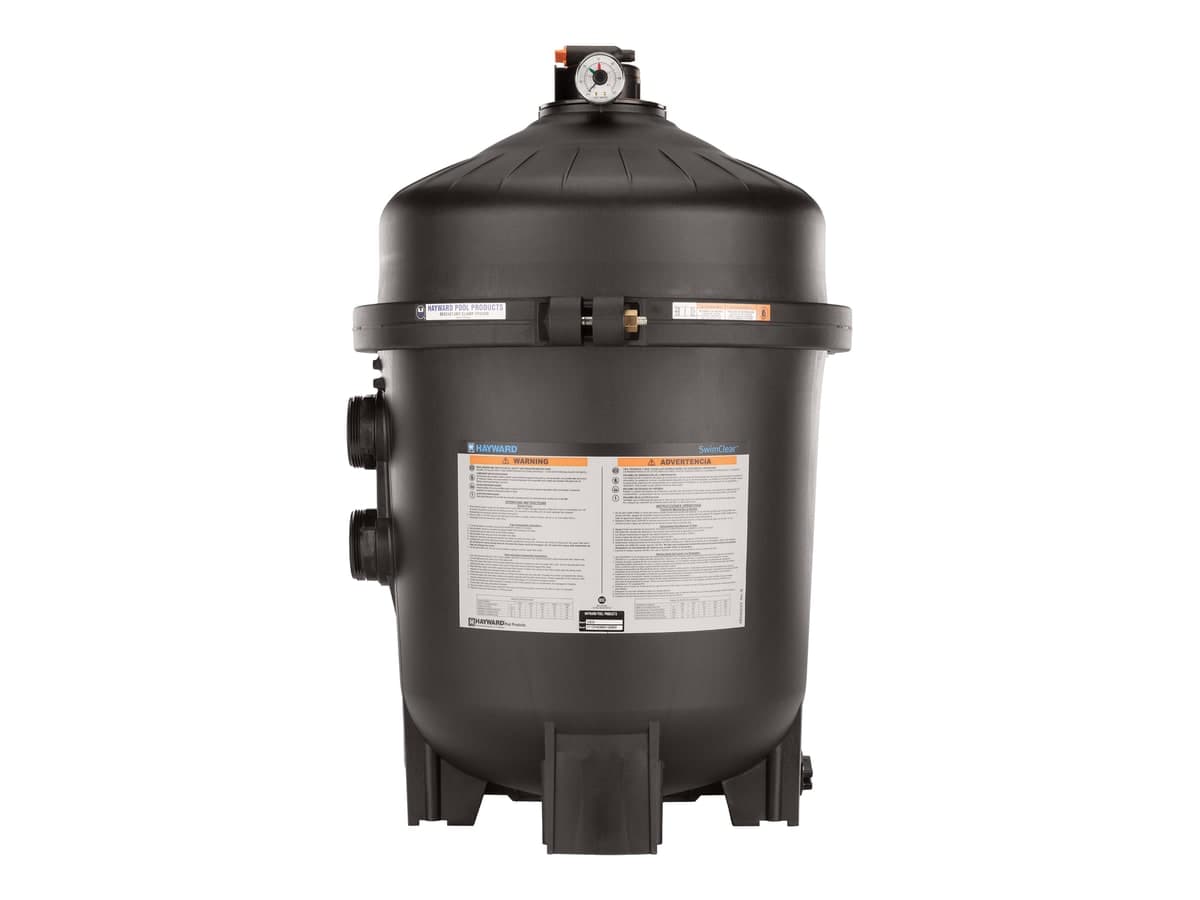
Best for large pools: Hayward SwimClear C3030 Cartridge Filter (325 sq ft)
Premium
If you have a big in-ground pool, a high bather load, or you simply hate cleaning the filter often, the 325 square foot cartridge area here is the draw. More surface area means it traps more before pressure climbs, so you get long stretches between cleanings. That makes it a strong match for larger family pools that run a lot in summer.
The catch is size and price. This is a tall, wide tank that needs real estate on the pad and a bigger upfront spend than a small sand or cartridge unit. For a modest pool it is overkill, but for a large one the longer cleaning intervals earn their keep. Confirm the plumbing clearance around your equipment pad before ordering.
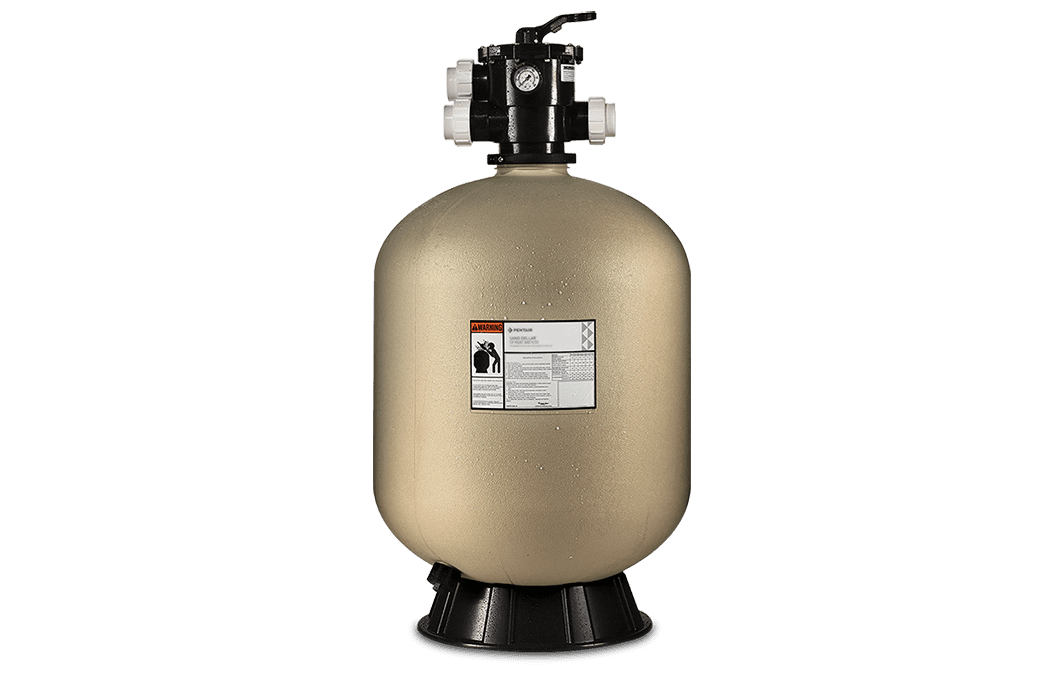
Best on a budget: Pentair Sand Dollar SD40 Above-Ground Sand Filter
Mid-range
Sand is the classic budget choice, and this above-ground unit is built for owners who want simple, forgiving filtration at a lower price. Sand filters are hard to hurt, the media lasts years before replacement, and cleaning is a backwash valve turn rather than pulling a cartridge. For an above-ground pool where cost matters most, it is an easy recommendation.
The compromise is filtration fineness and water use. Sand traps larger particles than cartridge or DE, so water can look slightly less polished, and backwashing sends pool water (and the chemicals in it) down the drain. If your area has water restrictions or you want glass-clear water, weigh that against the lower price. Pair it with steady water chemistry, covered in our pool chemistry basics guide.
Best for the clearest water: Hayward ProGrid DE4820 D.E. Filter (48 sq ft)
Hayward
W3DE4820
Premium
DE filters catch the finest particles of the three types, which is why owners chasing sparkling, polished water gravitate to them. The diatomaceous earth powder coats internal grids and screens out particles smaller than sand or most cartridges can. If clarity is your top priority, this is the technology to look at.
The tradeoff is maintenance and handling. You backwash, then add fresh DE powder through the skimmer to recharge the grids, and DE powder needs careful handling per the label and local disposal rules. It is the most hands-on of the three, so it suits owners who do not mind a bit more ritual for the best-looking water. Follow your manual's DE charge amount closely.
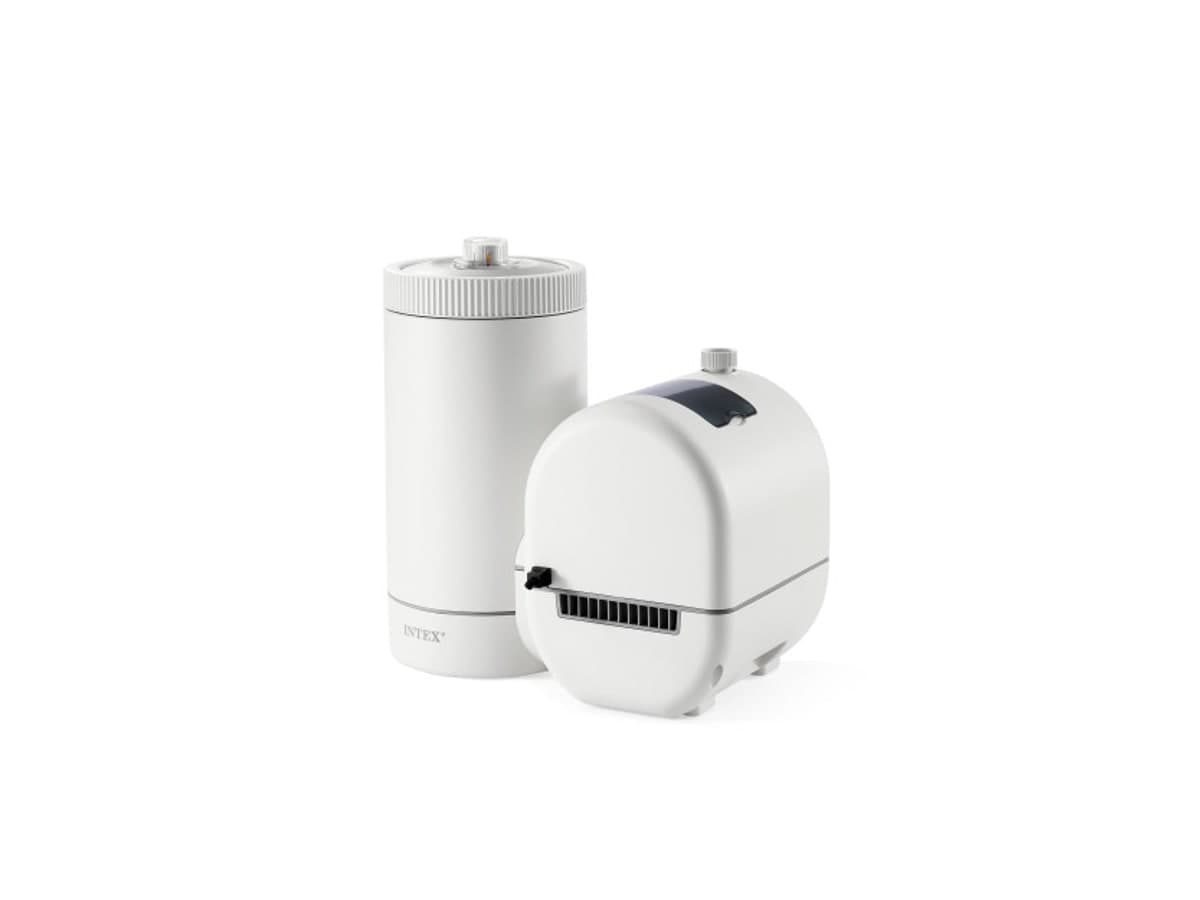
Best for small pools: Intex Krystal Clear C2500 Cartridge Filter Pump
Budget
For small soft-side and above-ground pools, this all-in-one pump-and-cartridge unit keeps things simple and affordable. It is right-sized for smaller volumes, sets up without permanent plumbing, and the cartridge pops out for a quick rinse. For a seasonal or starter pool, that simplicity is the whole point.
The tradeoff is capacity. Small cartridges fill up faster, so you rinse or replace more often, and it is not meant to handle a large in-ground pool. Match it to the volume Intex lists for the unit, and do not expect it to carry a pool bigger than its rating. For a similar small-water mindset, our hot tub maintenance guide covers keeping compact water clear.
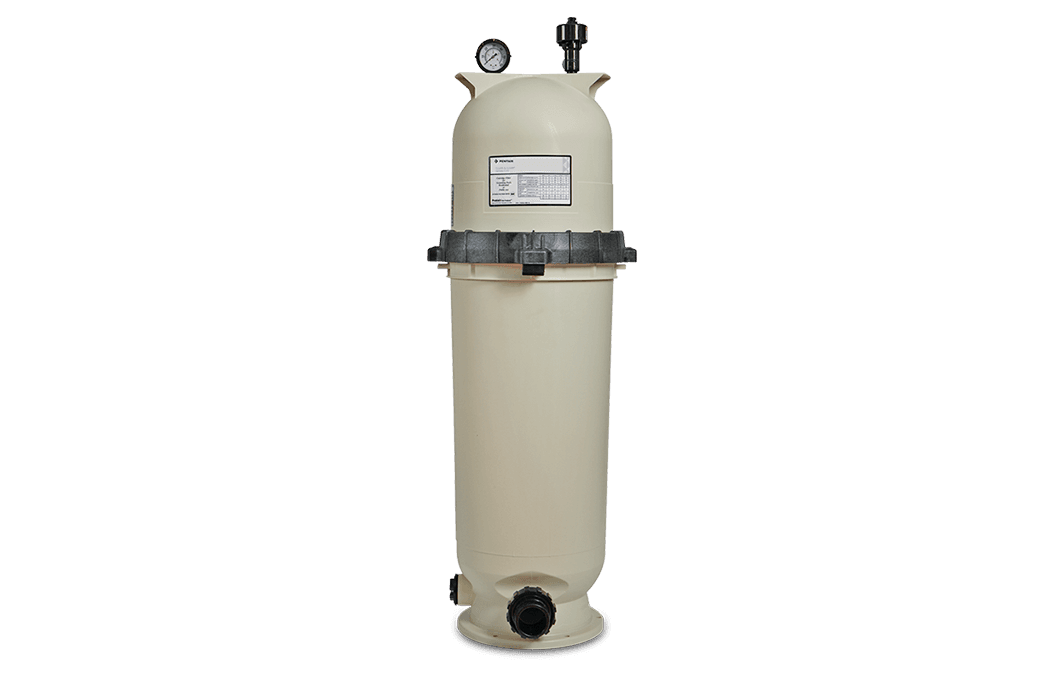
Best low-maintenance mid-size: Pentair Clean & Clear CC150 Cartridge Filter (150 sq ft)
Mid-range
This one sits between the everyday overall pick and the big-pool cartridge, aimed at mid-to-large pools where the owner wants long gaps between cleanings without jumping to the largest tank. At 150 square feet, it holds a lot of debris before pressure rises, so you are not fussing with it every couple of weeks. It is a comfortable middle choice for many in-ground pools.
The tradeoff is footprint and cost versus a small sand unit: it is a larger tank and a bigger spend, though still no backwashing. As always, verify the flow rating lines up with your pump so water passes through at the right speed. A right-matched pump and filter also runs more efficiently, which the Department of Energy notes is a real factor in pool operating costs.
How to choose between sand, cartridge, and DE
Start with your pump. The filter's flow rating should meet or exceed your pump's flow, and when in doubt, size the filter a little larger, since a bigger filter runs longer between cleanings and eases strain on the media. Getting this match wrong is the most common filter mistake, and it quietly hurts water clarity.
Then weigh your maintenance appetite. Sand is cheapest and most forgiving but filters coarsest and needs backwashing. Cartridge skips backwashing and filters finer, at the cost of eventual cartridge replacement. DE filters finest but asks the most of you. Whichever you pick, keep your chemistry steady (the saltwater maintenance guide helps if you run a salt cell), because a filter is only half the clarity equation. You can compare current models on our pool filters page.
Frequently asked questions
Which filter type is best for most backyard pools?
For most in-ground residential pools, a cartridge filter hits the sweet spot of clear water, no backwashing, and simple upkeep. Sand is the cheapest and most forgiving if you do not mind backwashing, and DE gives the finest filtration if you accept more maintenance. The right pick depends on your pool volume and how hands-on you want to be.
How often should I clean or backwash my filter?
It depends on the type and how heavily the pool is used, but a common trigger is a pressure gauge reading 8 to 10 psi above the clean starting pressure. Sand filters get backwashed, cartridges get hosed off (and periodically soaked), and DE filters get backwashed then recharged with fresh powder. Always follow the pressure and cleaning intervals in your unit's manual.
Do I really need to match filter size to my pump?
Yes, and getting this wrong is the most common sizing mistake. The filter's flow rating should meet or exceed your pump's flow so water is not forced through too fast, which hurts filtration and shortens media life. When in doubt, size the filter a bit larger than you think you need, since a bigger filter runs longer between cleanings.
Is a bigger filter always better?
Bigger usually means longer runs between cleaning and less strain on the media, which is generally a good thing. The tradeoffs are higher upfront cost and more physical space needed next to the pump pad. For small above-ground pools, a right-sized unit is plenty, and oversizing just wastes money.
Can I switch from sand to cartridge or DE later?
Usually yes, since most residential filters connect with standard plumbing unions, but you are buying a whole new filter tank, not just swapping media. Check that the new filter's flow rating matches your pump and that you have the space and plumbing clearance. If you are unhappy with water clarity or backwashing chores, a change can be worth it, but price it out first.