PoolGearGuide

Above-Ground Pool in a Small Yard: What Size Fits?

By the PoolGearGuide editorial team · Updated 2026-07-03

Share

An above ground pool in a small yard should fit the yard after you subtract space for the ladder, pump, cover, walking path, and boring little realities like “can you still open the gate.” The pool that technically fits on paper is not always the pool you want to live with all summer.

If your yard is small, the right answer is usually not “go huge.” It is “choose the biggest pool that still leaves the setup safe, level, reachable, and maintainable.” A pool wedged into a corner like a water-filled sofa will make every chore more annoying.

Key takeaways:

  • A small-yard pool needs clearance for people, the ladder, pump/filter, cover, skimmer, and emergency access.
  • Rectangular pools often fit narrow yards better, while round pools can feel easier for floating and family use.
  • The site must be flat, solid, and level; do not use a pool to hide a bad yard-prep job.
  • Bigger pools need more water, more chemicals, stronger circulation, and more cover storage.
  • Before buying, measure the usable setup area, not just the fence-to-fence yard size.

Table of contents

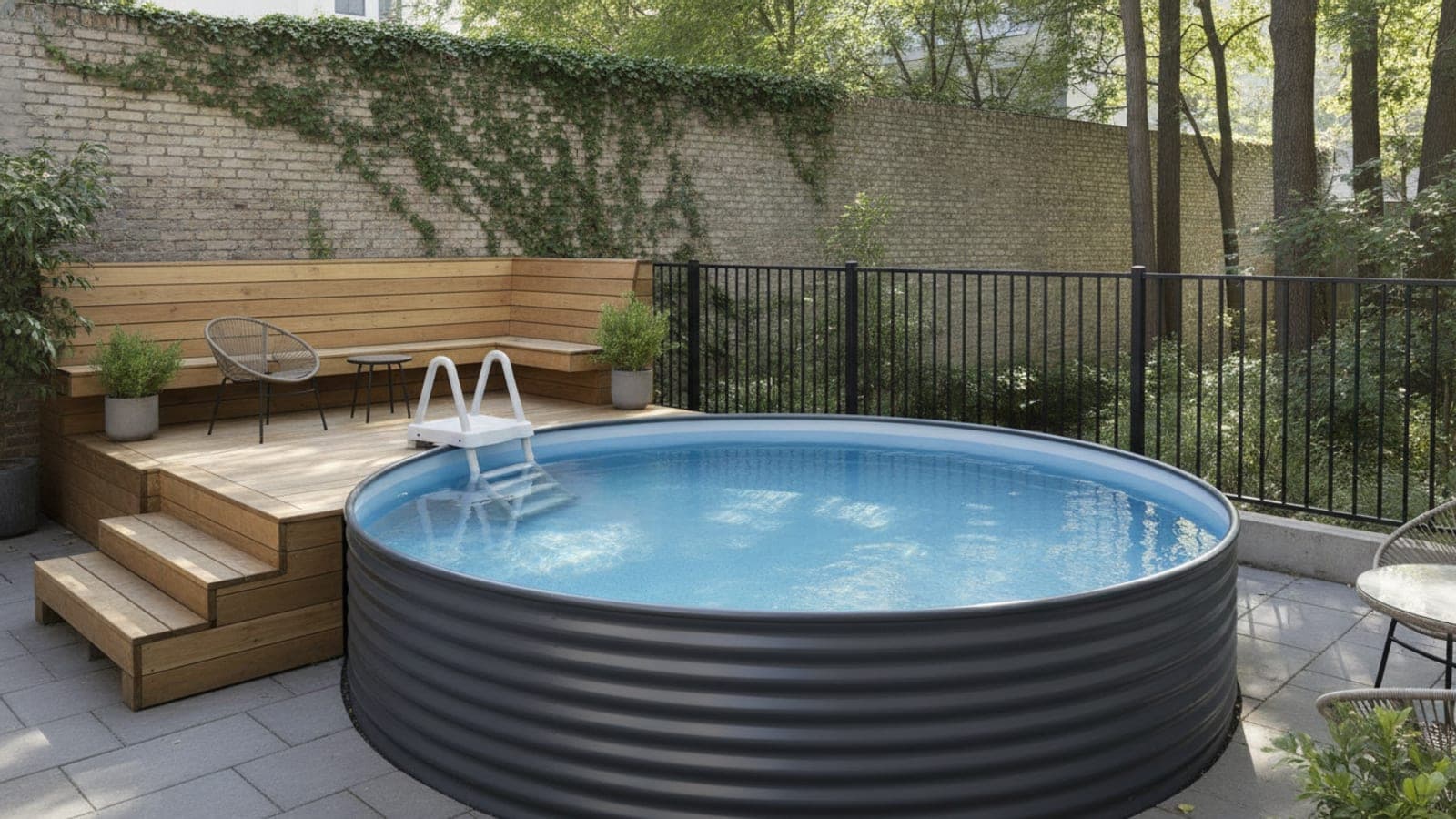
![Small backyard with an above-ground pool layout marked for ladder pump and walking space]([ADD IMAGE URL])

What size above-ground pool fits a small yard?

A small-yard above-ground pool should be sized around the space you can safely use, not the largest diameter your yard can physically swallow. Start with the open, level area where the pool could actually sit, then subtract space for access and maintenance.

For many compact yards, that means looking at smaller rectangular pools, compact round pools, or oval pools only if the long side has real breathing room. The exact size depends on your yard shape, the pool wall height, local rules, and how many people will actually use it.

Here is the question I would ask first: are you trying to cool off, let kids splash, swim short laps, or host half the neighborhood? Those are different pools.

GoalBetter fitWhy it works
Kids splashingSmall round or rectangleLower cost, less water, easier supervision
Adults cooling offMedium round or rectangleMore shoulder room without taking the whole yard
Narrow side yardRectangular frame poolUses length better than a circle
Floating and relaxingRound poolFeels open in the middle and is simple to cover
Big gatheringsLarger oval or roundNeeds more clearance, pump capacity, and yard planning

The sneaky problem is that pool listings show the pool dimensions, not the life-around-the-pool dimensions. A 12-foot pool is not a 12-foot project. It is the pool plus ladder, pump hoses, cover movement, filter access, storage, and a place to stand without doing pool yoga.

How do you measure the real usable space?

Measure the rectangle of flat, open ground where the pool could sit, then remove anything you cannot use safely. Fences, tree roots, slopes, utility boxes, patios, low branches, doors, drainage paths, and narrow gates all matter.

A simple measuring process works better than eyeballing it:

  1. Measure the full open area.
  2. Mark the pool footprint with string, cones, or a garden hose.
  3. Mark the ladder location.
  4. Mark pump/filter placement.
  5. Walk around the mock layout with a skimmer pole.
  6. Pretend you are removing a wet cover.
  7. Pretend a kid dropped goggles behind the pool.

If step six or seven feels ridiculous, the pool is probably too tight.

Use the pool volume calculator after you pick a candidate size. Gallons affect how much chlorine, salt, shock, and circulation the pool needs. A small jump in dimensions can mean a much bigger jump in water.

Is a round or rectangular pool better in a tight yard?

Rectangular pools usually win in narrow yards because they follow the shape of fences and patios better. Round pools usually win when you want simple floating space and easier visual supervision.

Neither shape is automatically better. The better shape is the one that fits your yard without pinching the maintenance area.

ShapeBest forTradeoff
RoundFloating, kids, simple setupWastes space in narrow yards
RectangularNarrow yards, lap-ish movement, patiosCorners can collect debris
OvalMore swim length than roundOften needs more setup planning
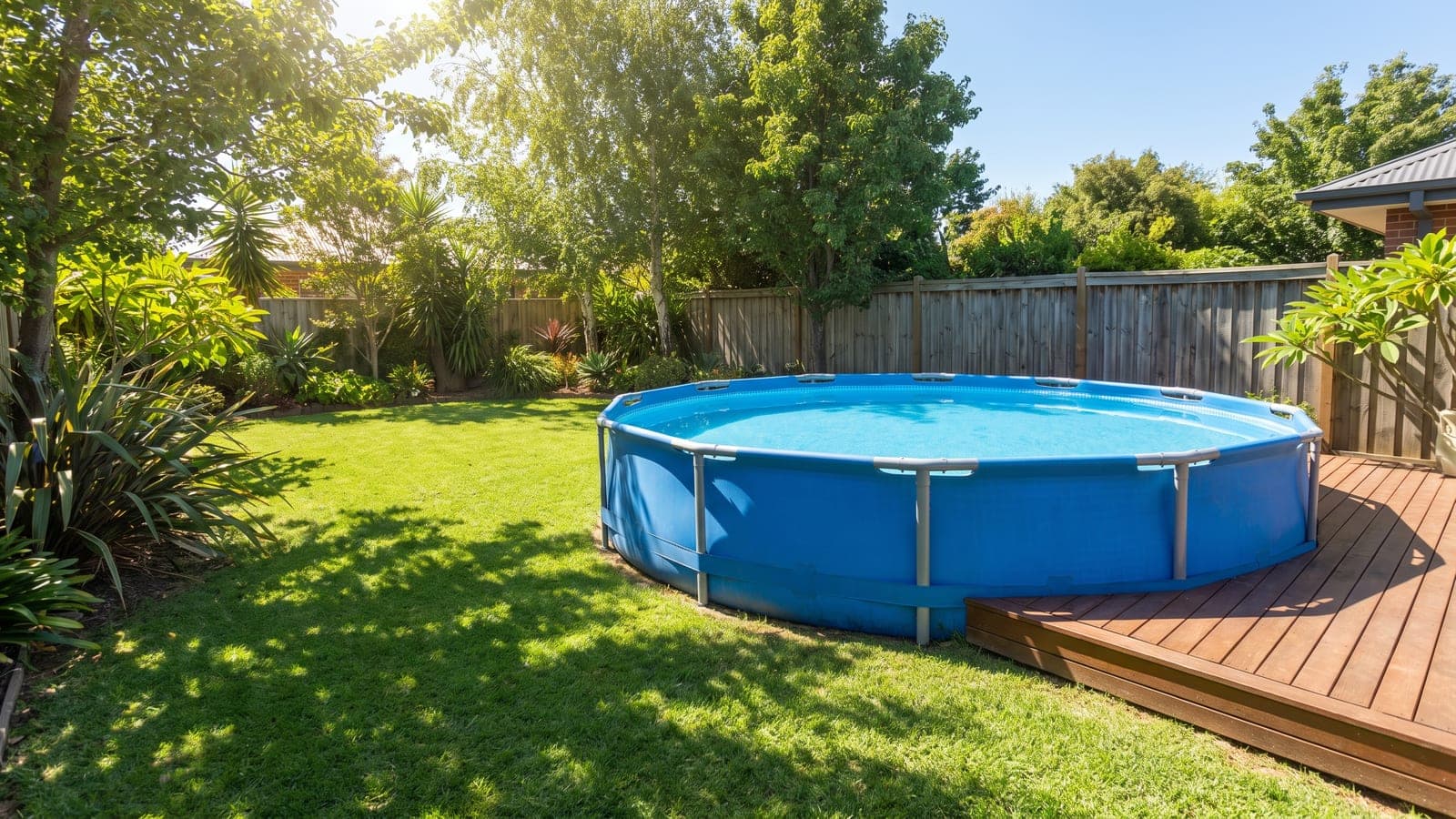
Inflatable ringTemporary cooling offLess durable and more sensitive to level ground
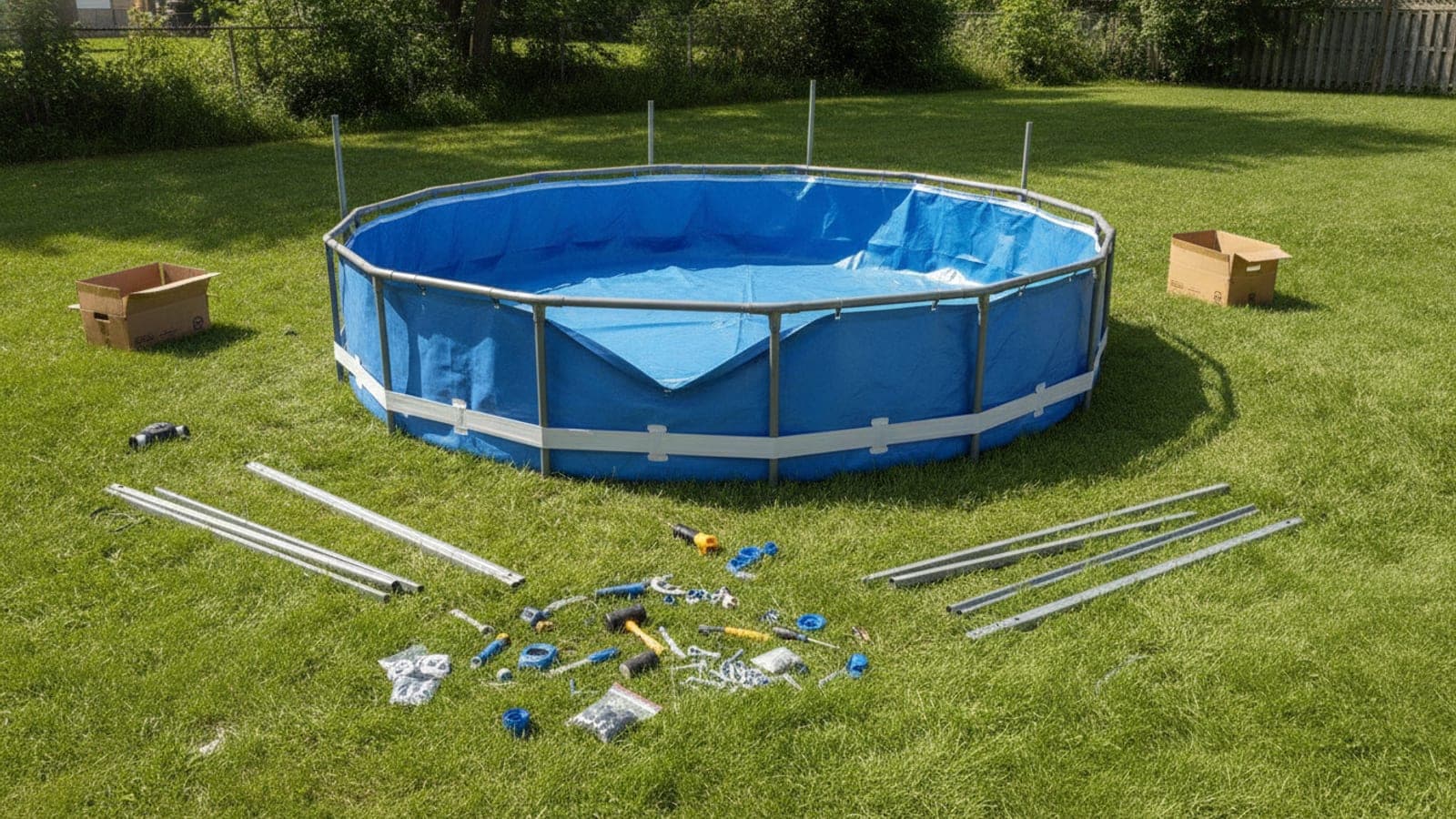
Steel frameMore stable seasonal setupHeavier and more involved to assemble

If your yard is shaped like a hallway with mulch, a rectangle is probably your friend. If your yard is square-ish, round may feel less cramped.

What clearance should you leave around the pool?

Leave enough clearance to enter safely, service the equipment, brush walls, pull a cover, and respond quickly if something goes wrong. Local codes and manufacturer instructions can be stricter than your personal comfort level, so check both before you buy.

The Consumer Product Safety Commission has residential pool barrier guidelines that focus on reducing child access to pools. Those guidelines are not a substitute for local code, but they are a useful reminder that pool placement is partly a safety decision, not just a layout decision.

Clearance matters most around:

  • The ladder: people need to climb without stepping into a shrub or fence.
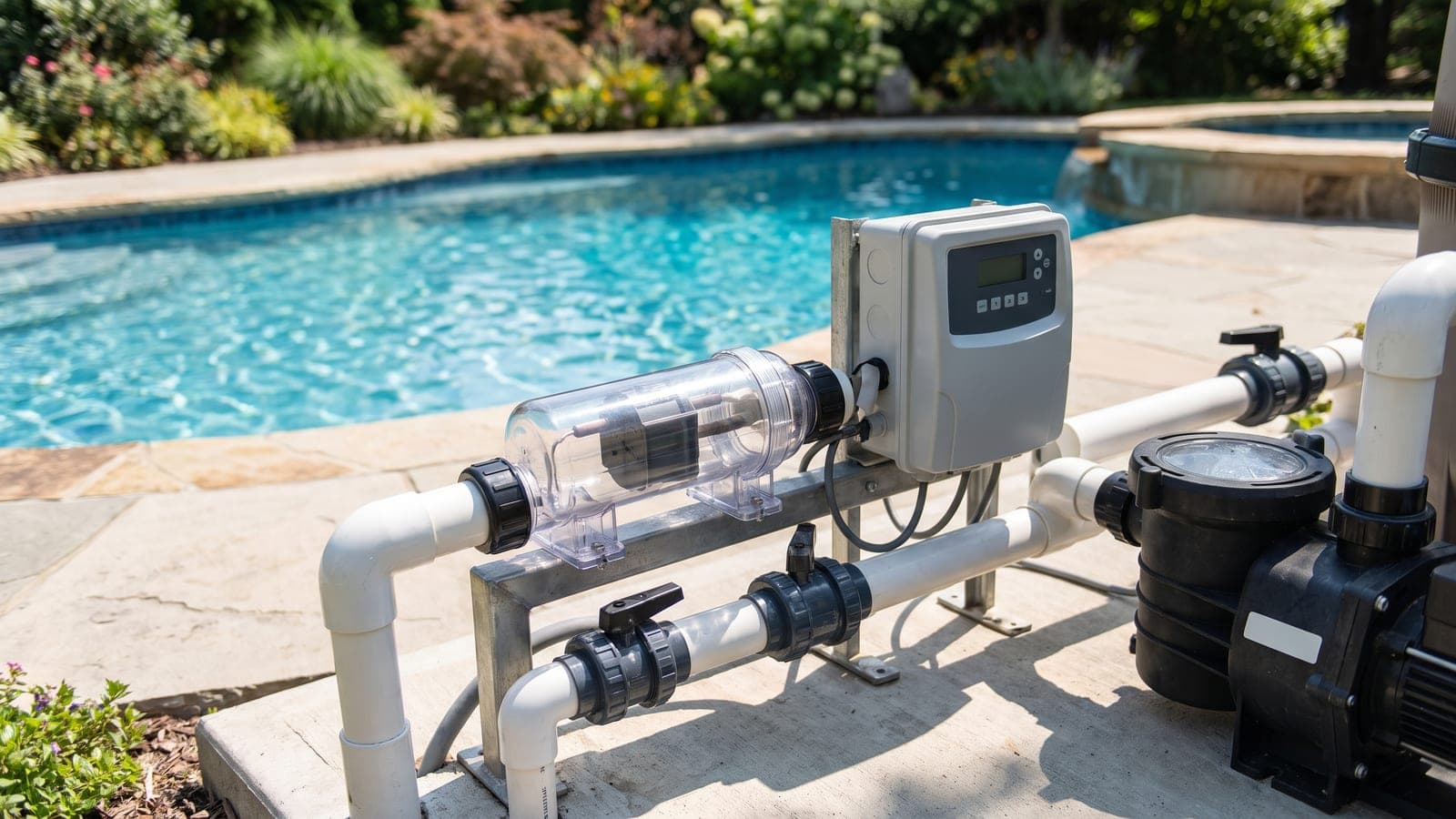
  • The pump and filter: you need room to open, rinse, disconnect, and service.
  • The cover: covers need space to pull, fold, dry, and store.
  • The skimming side: you need enough room to use a pole without jousting the house.
  • The emergency path: adults need fast access to the water from more than one awkward angle.

For more planning, pair this page with the above-ground pool cost calculator. A small pool still needs the boring extras.

What yard problems make a small pool a bad idea?

The biggest red flags are slope, soft ground, poor drainage, and surfaces the manufacturer warns against. A pool full of water is heavy. A slightly bad setup can become a very wet lesson.

Bestway’s pool assembly guidance says the setup surface should be flat, solid, and level, and warns against using sand as leveling material because it can shift. It also warns against unstable or unsuitable surfaces such as mud, soft ground, gravel, asphalt, decks, or platforms unless the product and structure are made for it.

Watch for these problems:

  • A yard that slopes more than you want to admit.
  • A low spot that holds rainwater.
  • Tree roots under the intended pool area.
  • A gate too narrow for the box or equipment.
  • Power that would require sketchy extension-cord behavior.
  • A spot where the pump would sit in puddles.
  • A place where children could climb from a deck, fence, chair, or storage box into the pool.

If the only place the pool fits is also the worst place in the yard, pick a smaller pool or fix the site first.

How does pool size change maintenance?

A larger pool gives you more room, but it also gives you more water to test, filter, treat, cover, and clean. In a small yard, that maintenance burden can feel bigger because there is less room to work.

A bigger pool usually means:

  • More gallons to calculate with the pool volume calculator.
  • More sanitizer demand after parties, heat, and rain.
  • Longer pump run time.
  • Larger covers that are more annoying to handle.
  • More brushing and vacuuming.
  • More storage space for winter or off-season gear.

That does not mean you should buy the tiniest pool. It means you should avoid buying a pool that turns every Saturday into “where did I put the hose adapter.”

What should you buy with the pool?

The pool kit is usually not the whole pool. Small-yard owners should budget for the items that make the pool usable and less chaotic.

What you need module:

  • Above-ground pool kit sized for your yard.
  • Ground cloth or pool pad.
  • Safe ladder or entry system.
  • Proper cover.
  • Test kit or reliable strips.
  • Skimmer net and brush.
  • Starter chemicals based on your water type.
  • Hose, adapters, and storage bin.
  • Optional small robotic cleaner or rechargeable vacuum.

Affiliate placement idea: show “Small-yard starter setup” with product cards for a compact pool kit, ground pad, ladder, cover, test kit, and basic cleaning set. Keep the disclosure above the cards.

What is a realistic small-yard example?

Imagine a homeowner with a narrow yard that has a usable flat area of about 18 feet by 24 feet after avoiding the fence gate, AC unit, and tree roots. A 15-foot round pool might fit, but it could leave awkward corners and a tight ladder area. A smaller rectangular frame pool may leave more usable walking space and make cover handling easier.

The better decision is not always the pool with more water. It is the pool that lets you:

  • Enter safely.
  • Reach the equipment.
  • Pull the cover without wrestling the fence.
  • Store tools nearby.
  • Keep the yard usable.

That is the boring answer. Boring answers are how liners survive.

![Tape measure and hose marking an above-ground pool footprint in a small yard]([ADD IMAGE URL])

What should you do before ordering?

Before ordering, mock up the pool footprint in the yard and run through the first week of ownership in your head. If you cannot picture where the pump, ladder, cover, test kit, and cleaning pole go, the cart is not ready yet.

Use this quick checklist:

  • Measure the usable flat area.
  • Check local rules, HOA rules, permits, and barrier requirements.
  • Read the pool manual before buying.
  • Confirm the surface is allowed.
  • Confirm the filter/pump matches the pool size.
  • Use the pool volume calculator.
  • Estimate startup gear with the above-ground pool cost calculator.
  • Pick a pool you can maintain, not just admire in a product photo.

A good small-yard pool should feel like a summer upgrade, not a backyard appliance jammed into a corner.

What is the no-regrets small-yard choice?

The no-regrets small-yard choice is the pool that leaves you enough room to use the yard after the novelty wears off. That usually means choosing a little less water and a little better support gear.

Before you buy, score each pool option from 1 to 5 on these questions:

QuestionWhy it matters
Can I walk around it safely?Tight access makes every chore worse
Can I reach the pump easily?Filters and hoses need regular attention
Can I cover it alone?Covers that are too awkward get ignored
Can I store the tools nearby?Faraway tools become skipped tools
Can I supervise clearly?Sightlines matter in a small yard
Can I still use the rest of the yard?The pool should not eat the entire property

If a smaller pool scores better, take the smaller pool. It is not a downgrade. It is a pool you are more likely to keep clean, cover properly, and enjoy without muttering at the fence.

Frequently asked questions

What is the best above-ground pool size for a small yard?

The best size is usually the biggest pool that still leaves safe walking space, equipment access, and room for a ladder, cover, and maintenance tools.

Can I put an above-ground pool on a patio?

Only if the surface is approved for the loaded weight and the manufacturer allows it. Many soft-sided pool manuals warn against decks, platforms, gravel, asphalt, or unstable surfaces.

How much space should I leave around an above-ground pool?

Leave enough room to walk, remove the cover, reach the pump, and use the ladder safely. More space is better than squeezing the pool against fences or walls.

Is a round or rectangular above-ground pool better for a small yard?

Rectangular pools usually fit narrow spaces better, while round pools can be easier to circulate and often feel roomier for casual floating.

Should I buy the largest pool that fits?

Not automatically. The pool also needs enough filter capacity, a safe ladder setup, room for service, and space for normal yard use.
The weekly skim

One short email a week: what to test, what to buy, and what to skip. No daily drip. Unsubscribe anytime.

Keep reading