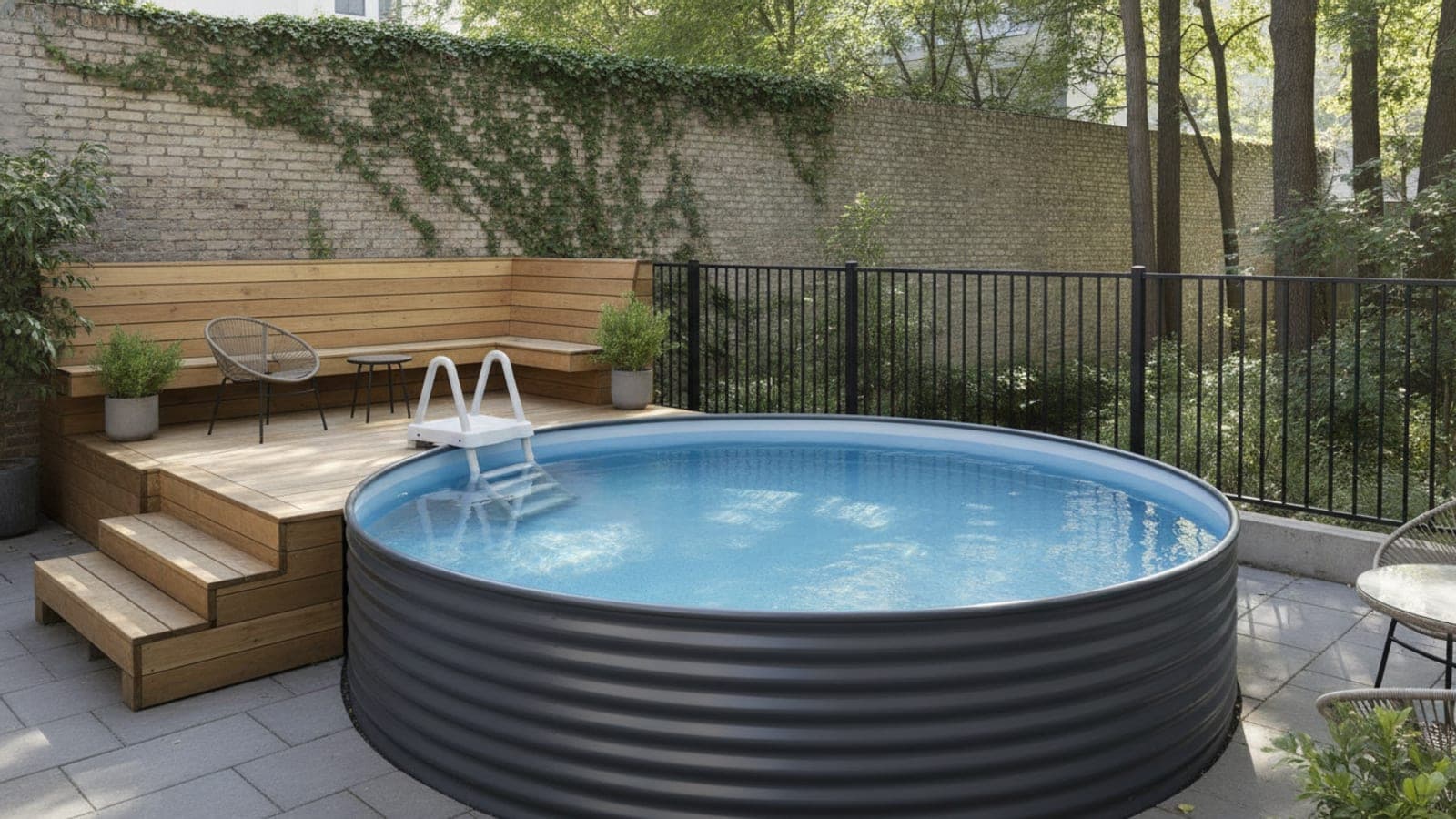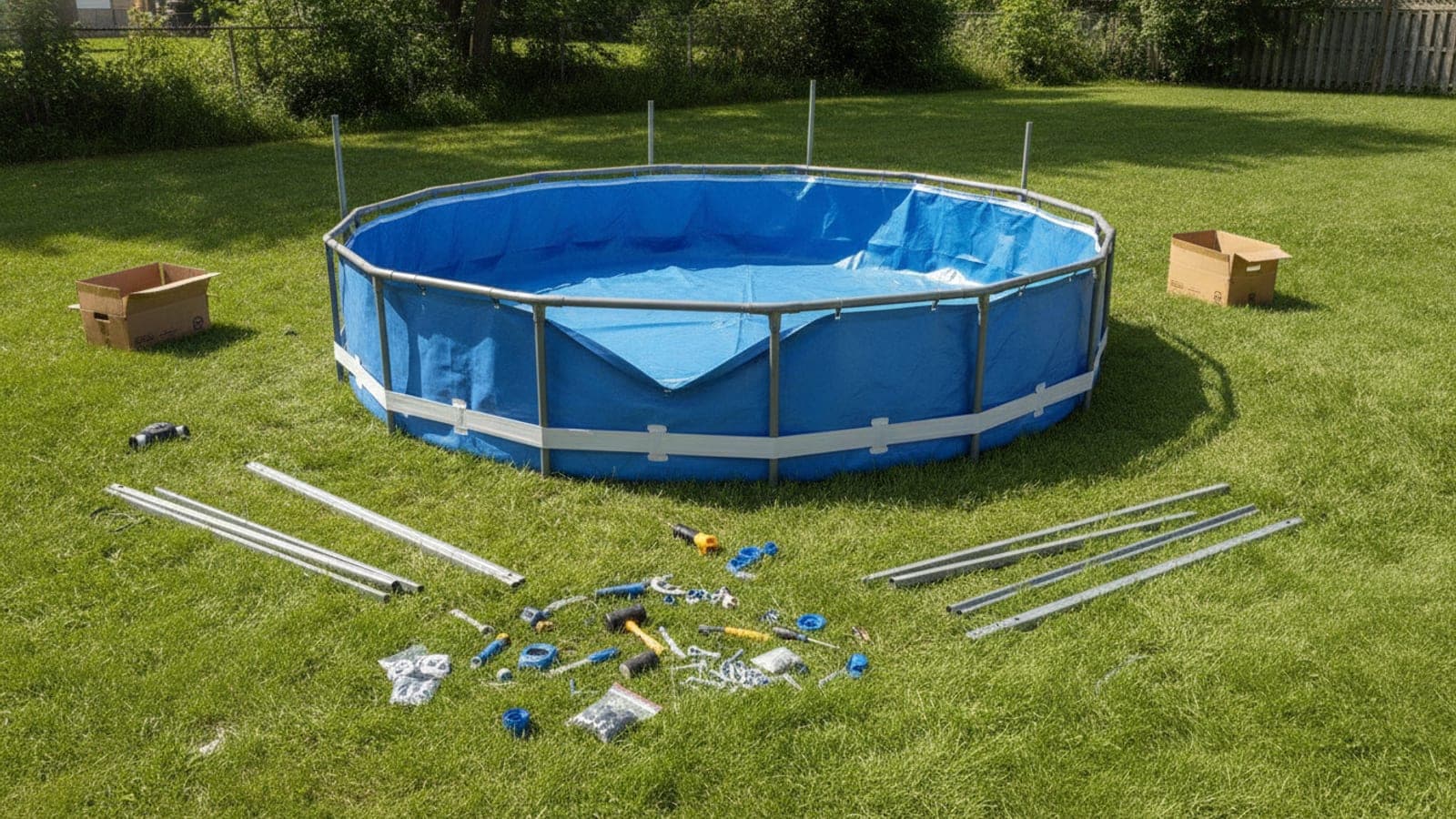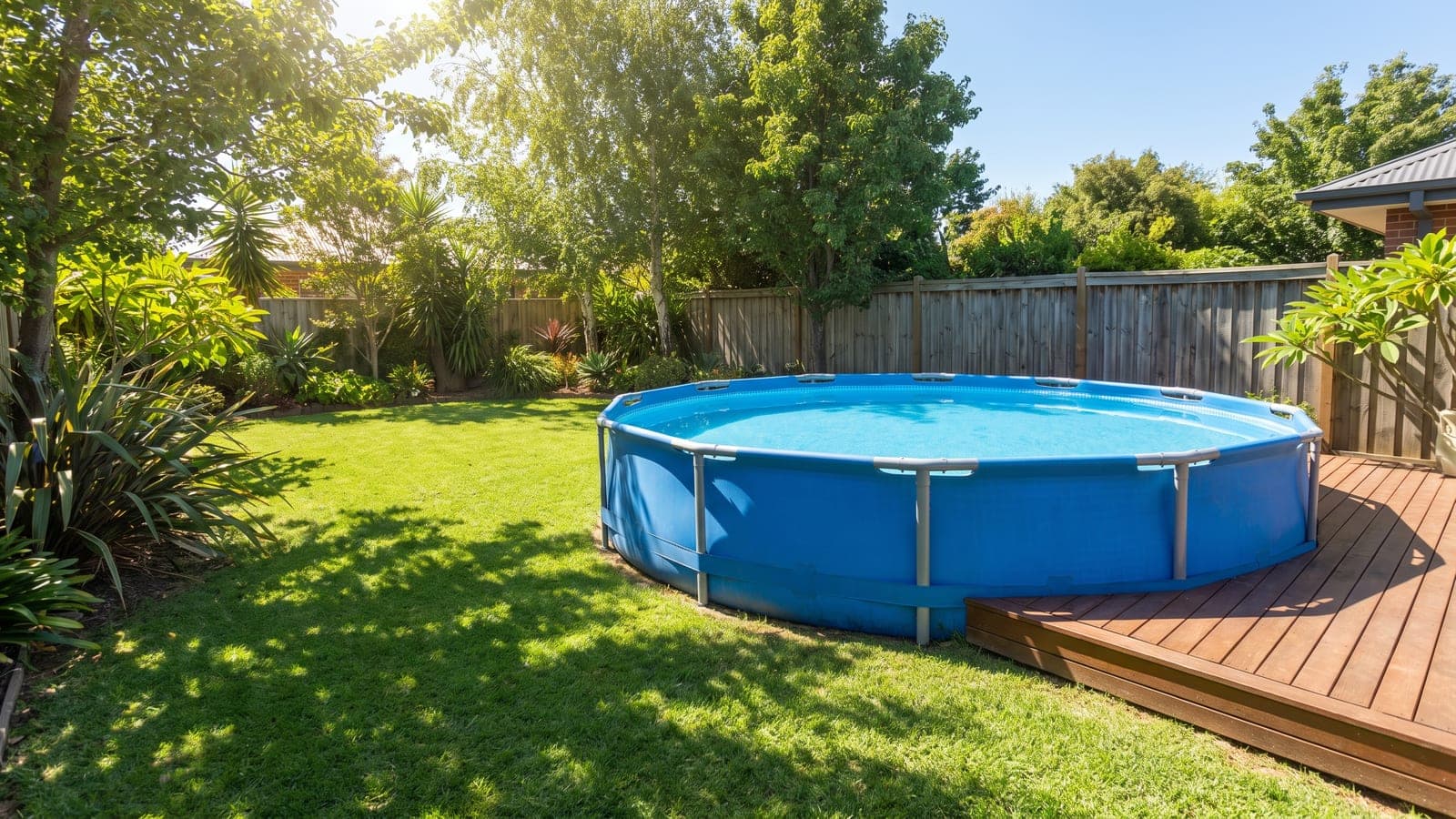
The largest above ground pool size that makes sense is not the biggest one you can find online. It is the biggest one your yard, ground prep, pump, filter, cover, ladder, electrical setup, safety plan, and patience can support without turning pool ownership into a part-time job.
A large above-ground pool can be wonderful. It can also become a giant blue reminder that water weighs a lot and leaves do not care about your weekend plans.
Key takeaways:
- Large above-ground pools need more than a large flat spot; they need circulation, filtration, access, safety, and storage planning.
- Round pools are usually simpler than oval pools, but yard shape may decide for you.
- A bigger pool means more gallons, more chemical demand, more cover weight, and more cleaning time.
- The pump and filter matter as much as the pool walls.
- A slightly smaller pool with better equipment often beats a huge pool with weak support gear.
Table of contents
- How large can an above-ground pool get before it gets annoying?
- What should decide the size besides yard space?
- How do gallons change the decision?
- Round, oval, or rectangular: which large pool shape works best?
- What equipment gets more important as pools get larger?
- What safety issues grow with pool size?
- What is the smarter large-pool buying path?
- What is a realistic large-pool scenario?
- When should you choose the smaller size?

How large can an above-ground pool get before it gets annoying?
A large above-ground pool starts getting annoying when the pool size outruns the equipment, the yard, or the owner’s willingness to maintain it. The water volume is only part of the decision.
Large pools are tempting because the product photos look calm and giant and suspiciously leaf-free. Real pools live under trees, beside grass, near kids, in weather, and sometimes under that one bird that has chosen your patio as headquarters.
Here is the practical size mindset:
| Pool size direction | Better for | The catch |
|---|---|---|
| Smaller round | Easy setup and lower water volume | Less swim room |
| Medium round | Family floating and easier circulation | Still needs solid site prep |
| Large round | Big gatherings and more open water | Cover and cleaning get heavier |
| Oval | More length in a narrow yard | Setup can be more involved |
| Large rectangle | Better swim path and yard fit | Corners and frame support matter |
The larger the pool, the less forgiving the setup becomes. A small pool on a slightly annoying site may still limp along. A large pool on a bad site can bulge, shift, drain poorly, or make the pump work like it lost a bet.
What should decide the size besides yard space?
Pool size should be decided by the whole ownership setup, not just open ground. A large pool needs a safe level base, strong enough equipment, and a plan for covers, chemicals, cleaning, and access.
Use these decision filters before choosing the biggest option:
- Site prep: Can the ground be made flat, solid, and level?
- Support: Can the surface uniformly support the filled pool?
- Access: Can people enter and exit safely?
- Equipment: Does the pump/filter match the water volume?
- Power: Can equipment be powered safely and legally?
- Safety: Can barriers, ladders, gates, and supervision be handled?
- Maintenance: Can you clean and cover it without hating everyone?
- Storage: Where do covers, hoses, poles, and winter gear go?
Bestway’s pool assembly guidance emphasizes a completely flat, solid, level surface and warns against unstable surfaces such as soft ground, mud, gravel, asphalt, and surfaces that shift. That advice becomes more important as pool size increases.
How do gallons change the decision?
Gallons turn a pretty pool size into a maintenance commitment. More gallons mean more sanitizer demand, more time to circulate, more startup chemicals, and more water to correct when something goes sideways.
Before buying a large above-ground pool, run the size through the pool volume calculator. Then use that number in the pool pump size calculator and the pool chemical cost calculator.
Here is why gallons matter:
| More gallons affect | What changes |
|---|---|
| Chlorine | More product may be needed to reach the same ppm change |
| Shock | Green or cloudy water fixes can require more product |
| Pump runtime | Bigger pools usually need more thoughtful circulation |
| Heating | More water takes more energy to warm |
| Cover handling | Larger covers are heavier and more awkward |
| Fill/drain time | Water changes become slower and more expensive |
The pool size you can maintain is often better than the pool size you can technically afford.
Round, oval, or rectangular: which large pool shape works best?
Round large pools are often simpler to plan and circulate, while oval and rectangular pools can fit long yards better. The best shape depends on yard geometry and how you want to use the water.
A round pool is nice for floating, kids, and casual swimming. It gives a central open area and tends to feel simple. But a large circle can waste space in a rectangular yard.
An oval or rectangle can make more sense when the yard is long and narrow. It can give a better swim path and leave more usable space on one side. The tradeoff is that the setup and cover plan can become more specific.
If your yard says rectangle, listen to it. Yards are not known for negotiating.
What equipment gets more important as pools get larger?
The larger the pool, the more the equipment decides whether ownership feels easy or exhausting. A big pool with a weak filter setup is basically a bathtub with homework.
Pay close attention to:
- Pump capacity and speed.
- Filter type and size.
- Ladder stability and safety features.
- Cover type and handling method.
- Skimmer quality.
- Vacuum or robotic cleaner compatibility.
- Ground pad or base material.
- Winterizing accessories if your climate needs them.
ENERGY STAR notes that certified pool pumps can use less energy than standard pumps, and variable/multi-speed pump planning can matter when the pool volume grows. DOE also says covering a pool when not in use is the single most effective way to reduce pool heating costs.
What you need module:
- Large above-ground pool kit.
- Properly matched pump and filter.
- Pool cover sized for the exact model.
- Cover reel or helper accessories where appropriate.
- Stable ladder or entry system.
- Ground pad.
- Test kit.
- Skimmer net and brush.
- Optional robotic cleaner for floor debris.
Affiliate placement idea: show a “large above-ground pool support kit” below the gallons section: upgraded pump/filter, cover, ladder, test kit, skimmer, and cleaner.
What safety issues grow with pool size?
Large above-ground pools need a better safety plan because they hold more water, attract more people, and often stay up longer. Treat them like real pools, because they are real pools.
Consider:
- Local barrier rules.
- Ladder removal or ladder locking.
- Gate access.
- Child supervision.
- Electrical safety.
- Drain and suction safety where applicable.
- Climbable objects near the pool wall.
- Night access and lighting.
The CPSC’s Pool Safely barrier guidance is a helpful starting point for thinking about residential pool access, but local rules can be stricter. Do not let a sales page be the only safety planning you do.
What is the smarter large-pool buying path?
The smarter path is to pick the pool size, then build the support system around it before you buy. Do not buy the biggest kit and hope the included accessories are enough.
Use this order:
- Measure the site.
- Check local rules and safety requirements.
- Choose a shape that fits the yard.
- Estimate gallons.
- Confirm pump and filter needs.
- Price the cover, ladder, pad, and cleaning tools.
- Check where everything will be stored.
- Buy only after the full setup makes sense.
The above-ground pool cost calculator should include the kit and the support gear. Otherwise you are not estimating the pool. You are estimating the box.
What is a realistic large-pool scenario?
Suppose a family wants a large above-ground pool for weekend swimming. The yard can fit a large round pool, but only if the ladder goes near the fence and the pump sits in a cramped corner. A slightly smaller rectangle would leave better pump access, easier cover handling, and room for a small storage deck or bin.
The smaller pool may be the better large-pool choice because the ownership experience is easier.
A good large above-ground pool gives you more water without making every task require three adults and a motivational speech.

When should you choose the smaller size?
Choose the smaller size when the larger pool forces bad compromises. Tight access, weak equipment, poor base prep, sketchy electrical plans, or no cover strategy are all signs to step down.
Pick the smaller pool if:
- You cannot comfortably walk around it.
- The pump location is awkward or unsafe.
- The cover would be too heavy to manage.
- The yard needs major grading you are not ready to do.
- The budget leaves no room for good equipment.
- The larger size creates safety or access problems.
The pool that makes sense is the one you will actually maintain. Giant and neglected is not better than medium and clear.
How do you compare two large pool sizes without guessing?
Compare two large above-ground pool sizes by building the full ownership picture for each one. Do not compare only diameter, gallons, or sale price.
Create a simple side-by-side note before buying:
| Decision point | Smaller large pool | Bigger large pool |
|---|---|---|
| Gallons | Lower chemical demand | More swimming room |
| Pump/filter needs | Easier to support | May need stronger equipment |
| Cover handling | More manageable | Heavier and more awkward |
| Yard access | Usually better | Can crowd ladders and equipment |
| Cleaning | Less surface and floor | More room for debris to travel |
| Setup risk | More forgiving | Less forgiving if site is uneven |
Then ask which version you will maintain on a normal Tuesday. Not the first sunny Saturday. Not the family cookout. A regular Tuesday after work when the pool has leaves in it and the filter wants attention.
That answer is usually more honest than the product photo.
What should be in the large-pool calculator module?
A large-pool buying page should include a calculator module that asks for size, shape, gallons, pump type, cover type, and cleaning plan. The output should not only say “your pool is X gallons.” It should show the maintenance consequence of that volume.
Useful outputs include:
- Estimated gallons.
- Suggested filter/pump check reminder.
- Cover size reminder.
- Startup chemical planning link.
- Cleaning method recommendation.
- Internal links to the pump size calculator and pool volume calculator.
This is where the article becomes more than advice. It becomes a decision tool, and decision tools are the pages people bookmark.
Frequently asked questions
What is the largest above-ground pool size that makes sense?
The largest size that makes sense is the biggest pool your yard, ground prep, pump, filter, cover, safety setup, and budget can realistically support.
Is a 24-foot above-ground pool too big?
A 24-foot pool can be great for families, but only if the site is level, access is safe, and the equipment can handle the water volume.
Do large above-ground pools need stronger pumps?
Large pools often need better circulation and filtration than small starter kits provide, so pump and filter sizing matter.
Are oval above-ground pools harder to install?
Oval pools can require more planning and support than simple round frame pools, depending on the model.
Should I choose a large pool or a smaller pool with better equipment?
For most owners, a slightly smaller pool with better filtration, a cover, and easier maintenance is the happier choice.