Steel frame pools cost less and go up fast, while resin pools resist rust and usually last longer, so your choice comes down to budget, climate, and how many seasons you plan to keep it. Steel gives you the most swim for the money right now. Resin gives you fewer rust headaches down the road. Neither is "better" in a vacuum, and the right pick depends on your yard and how long the pool stays up.
Above-ground pools use a frame of poles and connectors to hold a vinyl liner in a ring or rectangle. The frame is the part that either rusts or does not, which is exactly why the material matters.
What is the real difference between steel frame and resin?
Steel frame means the load-bearing poles and often the connectors are powder-coated steel. Resin means those structural parts are a hard plastic (usually a UV-treated polymer). Many pools are hybrids: steel uprights with resin joints, or resin caps on steel legs.
Steel is stiff and strong for the price. Its weak spot is corrosion. Any scratch, chip, or standing puddle gives water a path to bare metal, and rust works from the inside out where you cannot see it.
Resin does not rust, period. It also handles pool chemicals and direct sun better than a painted steel surface. The tradeoff is cost and, on cheaper models, a bit more flex in the frame.
Which one costs less?
Steel frame pools almost always win on sticker price, especially in larger sizes. If you want the biggest pool for a set budget this summer, steel stretches your dollars further.
Resin costs more up front for the same footprint. You are paying for parts that will not corrode. Over several seasons that can pencil out, since a rusted-through pole usually means replacing the whole frame, not one part.
A quick way to decide: divide the price by the number of summers you honestly expect to use it. A cheap steel pool you keep three years can beat a pricey resin one you outgrow, and the reverse is true if you plan to keep it a decade.
Which lasts longer in real backyards?
Resin generally lasts longer because the enemy of every above-ground pool is water where it should not be, and resin does not care. Owners in humid, rainy, or coastal areas tend to report longer life from resin frames.
Steel can last a long time too, but only if you keep it dry. That means a level base, a ground cloth under the liner, and no sprinklers soaking the legs. Take a steel pool down for winter in freezing climates and it will thank you with extra seasons.
Sun matters as much as water. UV chalks and weakens painted steel over time, while UV-treated resin holds up better. If your pool sits in full afternoon sun with no shade, lean resin.
Steel frame pools worth a look
If steel fits your plan, larger frames give you room without a huge price jump. The Intex Ultra XTR Frame Pool (18 ft x 52 in) uses a galvanized-steel frame and a taller 52-inch wall, which is a lot of pool for the money. For a rectangle that fits a narrow yard, the Intex Ultra XTR Rectangular Pool (18 ft x 9 ft x 52 in) gives you lap-style length.
On the smaller and simpler end, the Bestway Steel Pro MAX Pool (14 ft x 48 in) is an easy round option for a first pool or a smaller family. All three are steel frames, so plan on a dry, level base and a cover for the off-season.
You can compare sizes and shapes on our above-ground pools page before you commit to a footprint.
Which is easier to set up and move?
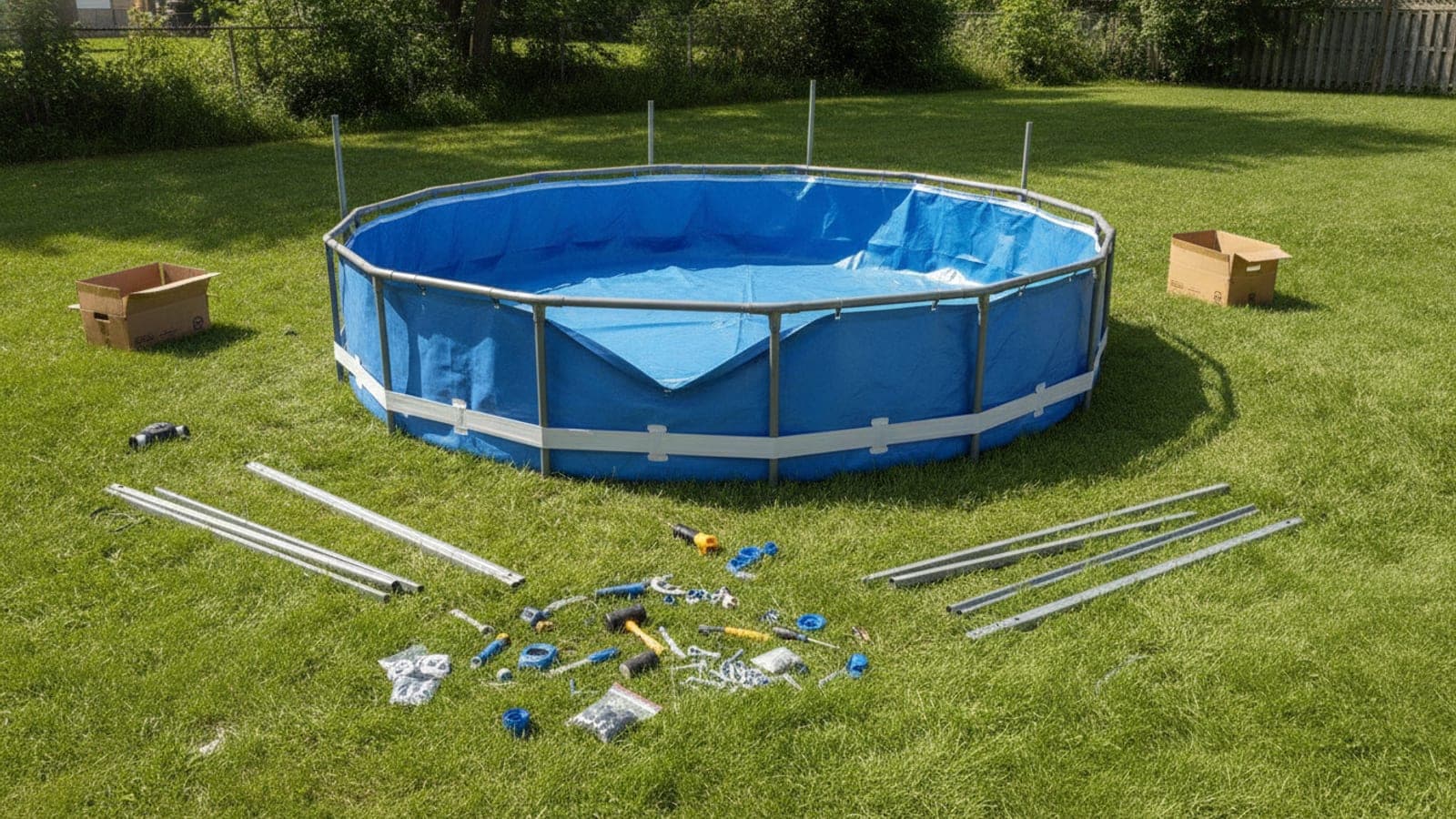
Both types assemble the same basic way, so a mid-size pool is a realistic two-person afternoon. Resin parts are often lighter to lift and click together, which some owners prefer on the bigger sizes.
Neither frame forgives an unlevel yard. A slope of more than an inch or two puts uneven load on the wall and can push water to one side. Spend your effort on leveling the ground and laying a smooth pad, because that decides how easy the pool is far more than steel versus resin does.
If you plan to take the pool down every fall, both pack away, though resin's lighter poles are a little kinder to store.
How do I keep either one running well?
The frame material does not change your water chemistry or your pump. Both need a cartridge or sand filter pump sized to your gallons, plus a steady chlorine, pH, and stabilizer (CYA, the sunscreen for your chlorine) routine. If the chemistry side feels fuzzy, start with our pool chemistry basics guide and a decent test kit.
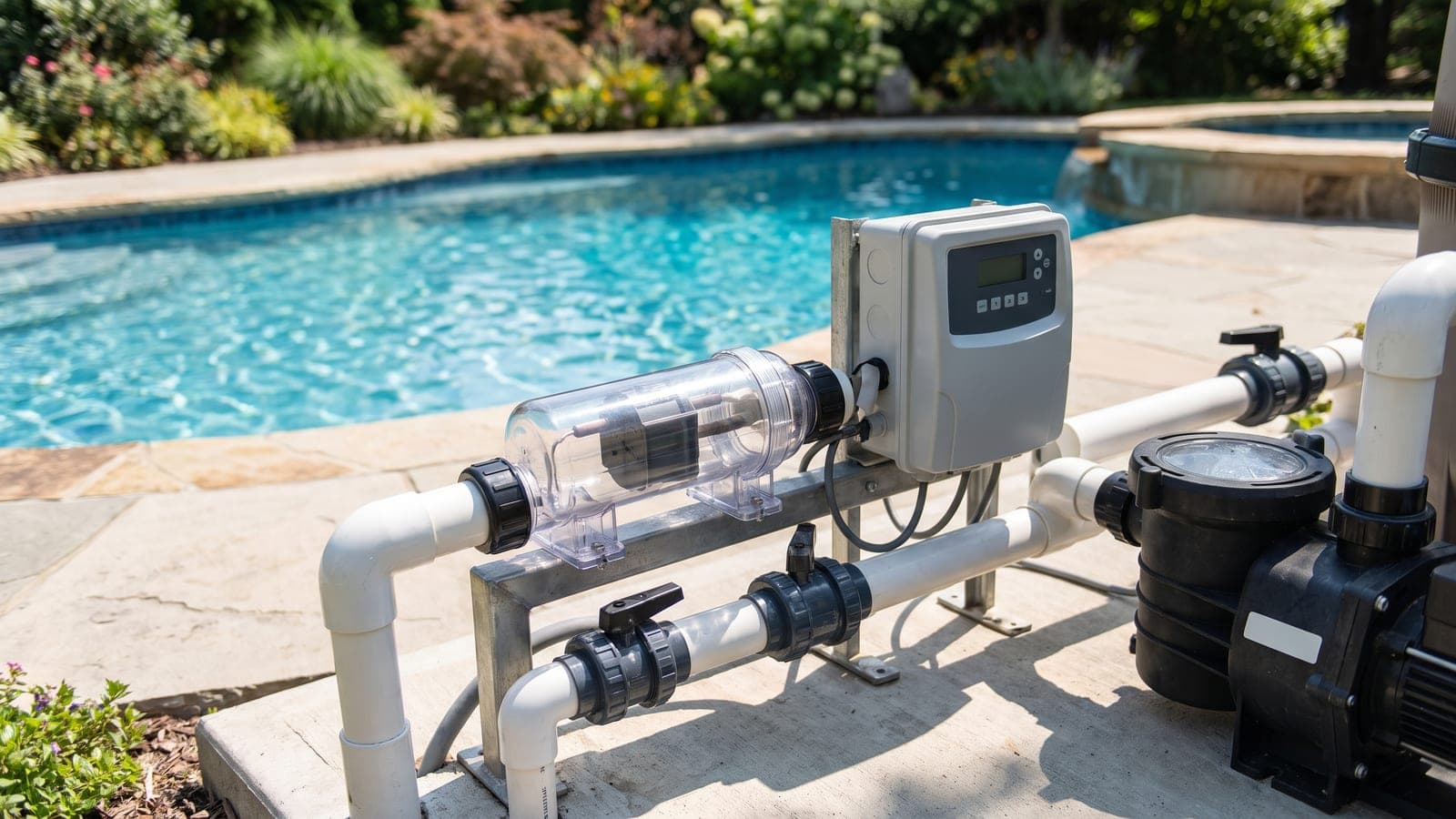
Prefer a gentler-feeling swim? An above-ground pool can run on salt, and our saltwater pool maintenance for beginners guide walks through it. Just note that salt is hard on bare metal, so a corrosion-friendly frame (or careful rinsing) matters more with a steel model.
Safety is the same for both: never leave kids unsupervised, use a proper barrier or removable ladder, and read the CPSC drowning prevention guidance plus Pool Safely before the first swim.
If you also have a hot tub or plan to add one, the same test-and-balance habit applies, and our hot tub maintenance for beginners guide covers it without the chemical panic.
So which should you buy?
Buy steel if you want the most pool for your money right now, you take it down each winter, or you are testing whether above-ground swimming fits your life. Buy resin if the pool stays up year-round, your climate is humid or coastal, or you want to buy once and stop thinking about rust.
Check the specific model's manual for wall height, frame material, and winterizing rules, since these vary and the manual is the final word for your pool.
Frequently asked questions
Which lasts longer, a steel frame or a resin above-ground pool?
Resin generally lasts longer because it does not rust, and it shrugs off pool chemicals and sun better than bare steel. That said, a well-maintained steel frame pool kept dry and out of standing water can run many seasons. Lifespan depends on your climate, water chemistry, and whether you drain and store it over winter.
Is a resin pool worth the extra money?
If your pool stays up year-round, sits in a humid or coastal spot, or you want fewer rust worries, resin usually earns its higher price. If you take the pool down each fall or only use it a few summers, a steel frame pool often makes more sense. It depends on how long you plan to keep it and how wet your climate is.
Can I leave a steel frame pool up over winter?
You can in mild climates, but freezing water and snow load put real stress on any above-ground frame, and moisture speeds up rust on steel. In freezing regions most owners drain below the return, add a cover, and sometimes take the frame down. Always follow your pool's manual, since leaving it up can void some warranties.
Do resin and steel pools use different pumps or chemicals?
No, both use the same basic setup: a cartridge or sand filter pump sized to your pool volume and the same chlorine, pH, and stabilizer routine. The frame material does not change your water chemistry. Match the pump flow to your gallons and follow standard above-ground filtration for either one.
Which frame material is easier to set up?
Both go up in a similar way, poles and connectors around a liner, and a two-person afternoon is realistic for mid-size models. Resin parts are often lighter to handle, while steel poles feel more rigid during assembly. Level ground and a smooth pad matter far more than the frame material for an easy, safe setup.