For most inflatable hot tubs, chlorine is the simpler, cheaper default in the hot tub chlorine vs bromine decision, and it is what Bestway and Intex write their care instructions around. Bromine is the better pick if you soak most days at 102 to 104°F and want a steadier reading, or if you want to avoid stabilizer buildup. CDC's targets are at least 3 ppm free chlorine or 4 to 8 ppm bromine, with pH 7.0 to 7.8. Both are safe when you hit those numbers. Neither is safe when you guess.
Key takeaways
- CDC hot tub targets: free chlorine at least 3 ppm, bromine 4 to 8 ppm, pH 7.0 to 7.8, water no hotter than 104°F.
- Bestway and Intex guides list 2 to 4 ppm free chlorine. Aim for 3 to 4 ppm to satisfy both.
- CDC recommends against cyanuric acid (CYA, the chlorine stabilizer) and stabilized chlorine in hot tubs. Bromine sidesteps that problem.
- Both inflatable manuals we read tell you to dose through a floating dispenser, not by tossing chemicals into the water.
- Switching sanitizers means drain, clean, refill. Never mix systems in the same water or floater.
This page answers the which-one question. For the full shopping list (pH adjusters, alkalinity, shock), see inflatable hot tub chemicals you actually need, and for the weekly routine, see hot tub maintenance for beginners.
What is the actual difference between chlorine and bromine?
Both kill germs, but they behave differently in hot water. Chlorine works fast and costs less, but it gets used up quickly at 104°F and its spent form (chloramines) is what gives a tub that stale chemical smell. Bromine works more slowly and costs more, but it holds steadier in hot water, and its spent form keeps some sanitizing power.
The other big difference is stabilizer. Many convenient chlorine products, like dichlor granules and trichlor tablets, contain CYA. Bromine tablets do not. That sounds like a footnote until you do the math below.
| Factor | Chlorine | Bromine |
|---|---|---|
| CDC hot tub target | At least 3 ppm free chlorine | 4 to 8 ppm |
| Bestway and Intex guides | 2 to 4 ppm free chlorine | Not addressed in the guides we read |
| Speed | Fast acting, quick to raise | Slower to establish |
| Stability at 104°F | Burns off quickly | Holds steadier |
| Adds stabilizer (CYA) | Dichlor and trichlor do; liquid chlorine does not | No |
| Typical form for inflatables | Small tablets in a floater, or labeled spa chlorine | Tablets in a floater |
| Cost | Lower | Higher |
| Smell when neglected | Sharp chloramine odor | Milder, but still noticeable |
What do the manufacturers of inflatable hot tubs say?
Read your own manual before buying either one, because the instructions are more specific than most owners expect.
The Bestway SaluSpa owner's manual we reviewed (models S100105 and S100205) says to use the chemical dispenser with tablets only, not granules, and not to throw tablets, granules or liquid directly into the water, because chemicals settle on the floor and can damage and discolor the PVC. It lists a target of 2.0 to 4.0 ppm free available chlorine, pH 7.4 to 7.6, total alkalinity 80 to 120 ppm, calcium hardness 200 to 400 ppm, and CYA 30 to 50 ppm. It also warns that chemical misuse is not covered by the warranty.
Intex's PureSpa water care quick guide describes chlorine tablets under 1 inch across in a floating dispenser, one tablet at a time, removed while people are in the tub. It lists free chlorine of 2 to 4 ppm and pH of 6.8 to 7.6, and says never to let undissolved chlorine touch the tub. Some Intex models have a saltwater sanitizer function, which makes chlorine from salt; if yours does, you are already on chlorine.
Neither guide mentions bromine. That is not a ban (Bestway has itself sold a hot tub starter kit built around brominating tablets), but it means the dosing directions in your manual assume chlorine. If you go bromine, follow the bromine product's spa label and keep using a floater.
Where a manual and a general guide disagree, including ours, the manual for your exact tub wins.
Why does stabilizer matter so much in a small hot tub?
Because it piles up fast in a few hundred gallons, and CDC recommends not using CYA or chlorine products containing it in hot tubs at all. Bestway's chart lists 30 to 50 ppm CYA, so the sources do not agree, and you should know why.
CYA protects chlorine from sunlight, which matters in an open pool. It also slows chlorine down. A covered hot tub gets little sun, so you pay the slowdown without much benefit. Worse, CYA does not get used up. It only leaves when you drain.
Here is a worked example. A common rule of thumb is that dichlor adds a little less than 1 ppm of CYA for every 1 ppm of chlorine it adds. Say a busy 210-gallon tub burns through 3 ppm of chlorine a day and you replace it all with dichlor. That is roughly 2.5 to 3 ppm of new CYA every day, or something like 75 to 90 ppm after a month, well past Bestway's 50 ppm ceiling. Our guide to stabilizer that is too high explains why chlorine stops pulling its weight at that point.
Two fixes keep chlorine honest:
- Drain on schedule. Intex's rule is gallons divided by 3, divided by average daily users. Two people a day in a 210-gallon tub works out to a fresh fill every 35 days.
- Or use a sanitizer without CYA. Bromine is the common choice. Unstabilized chlorine is the other, but check your manual before using any form it does not describe.
If you need help with the dose math, our chlorine calculator works at hot tub volumes; enter your tub's gallons from the manual, and treat the product label as the final word.
When is bromine worth the extra cost?
Bromine is worth it when you soak often, keep the water hot, and are tired of reading near-zero chlorine every evening. It holds steadier in hot water, does not build up stabilizer, and tends to produce less of the sharp smell that bothers some people.
It is not worth it if you soak once a week and drain often. In that case, chlorine's lower cost and faster response win, and CYA buildup barely gets a chance to start.
A few bromine realities:
- It is slower to bring up from zero, so a tub that runs dry needs patience or a shock to recover.
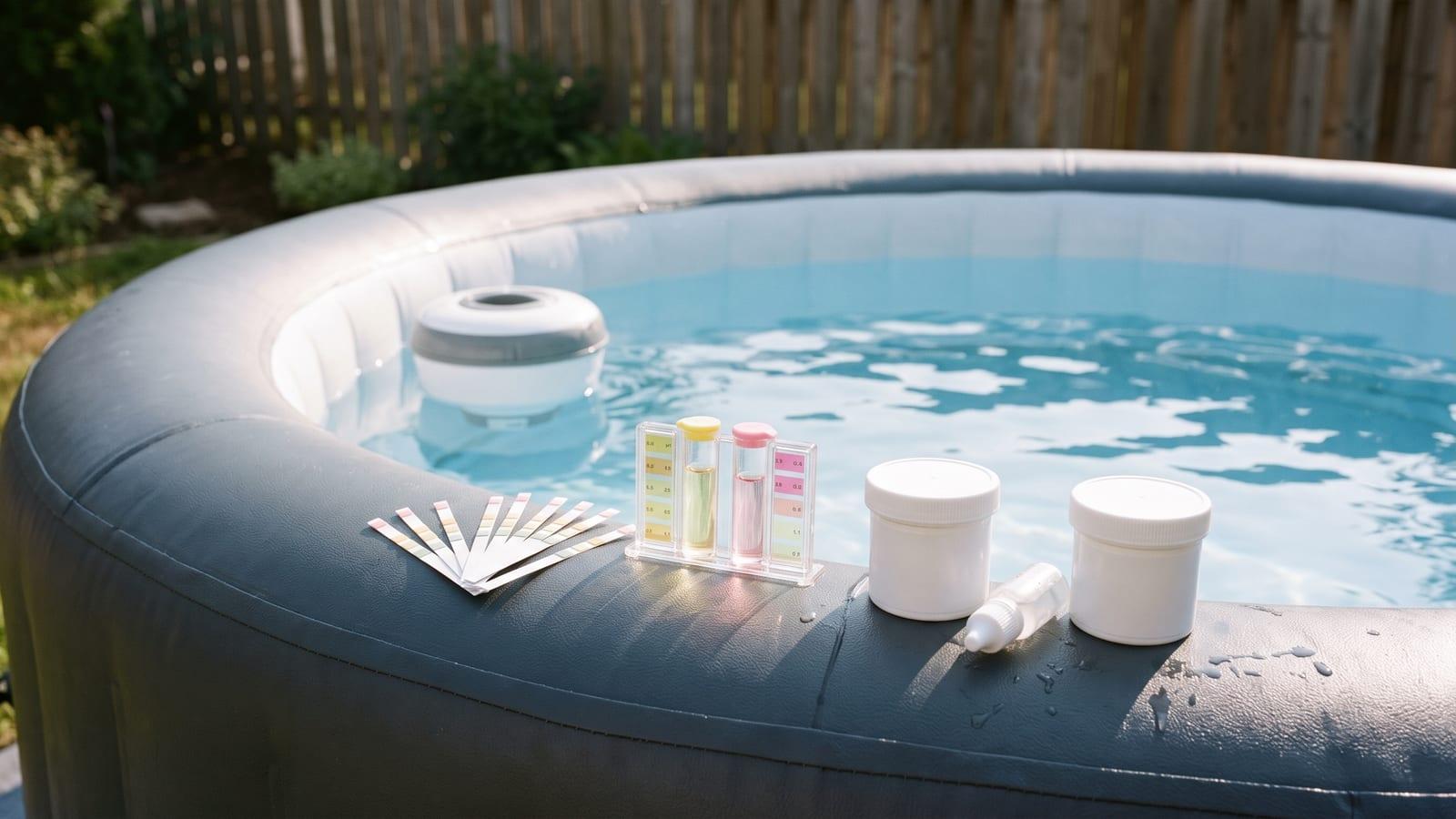
- Use a test strip or kit that reads bromine. A chlorine-only strip will not give you a usable number.
- Bromine tablets dissolve slowly in a floater, which is the point. Adjust the floater's opening, not the tablet count, to fine-tune.
How do you switch from chlorine to bromine?
Drain, clean, refill, then start fresh. Switching is not a chemistry experiment you run in the existing water.
- Drain the tub completely and rinse the liner per your manual.
- Clean or replace the filter cartridge.
- Use a new floater, or one cleaned thoroughly and dried. Never put bromine tablets into a floater with chlorine tablet residue.
- Refill, balance pH and alkalinity, then follow the bromine product's startup directions.
- Test daily for the first week while the level settles into 4 to 8 ppm.
Never mix chlorine and bromine products in storage, in a bucket, or in the same floater. Our pool chemical safety guide covers what not to store together.
How often should you test, whichever you choose?
More often than feels necessary. CDC's home hot tub guidance says to test chlorine and pH at least twice per day, more when many people are soaking. Intex says to test before each use and at least weekly. A realistic home routine is a strip test before every soak and a quick check on idle days.
Clear water tells you nothing about sanitizer. Test, adjust in small doses, run the filter, and retest. Keep the water at or below CDC's 104°F limit.
So which should you buy?
Start with chlorine if you are new, soak a few times a week, and follow your manual's tablet-and-floater instructions; just drain on schedule so stabilizer does not creep up. Choose bromine if you soak daily, keep the tub hot, or want to skip CYA entirely. Either way, buy test strips that read your sanitizer before you buy the sanitizer.
Tub size changes the dose, not the decision. Compare water capacities on our inflatable hot tubs page, from the Coleman SaluSpa Miami AirJet Inflatable Hot Tub (2-4 Person) to the Intex PureSpa Plus 6-Person Inflatable Hot Tub (170 Jets).
Frequently asked questions
Is bromine or chlorine better for an inflatable hot tub?
Both work when you keep them in range. Chlorine is cheaper, faster and what Bestway and Intex write their care instructions around. Bromine is steadier in hot water and adds no stabilizer, which makes it easier to live with if you soak often. Pick one and stay with it.
What bromine level should a hot tub have?
CDC lists 4 to 8 ppm bromine for hot tubs, with pH between 7.0 and 7.8. Use test strips or a kit that reads bromine specifically, and follow the product label for dosing.
What chlorine level should a hot tub have?
CDC recommends at least 3 ppm free chlorine in hot tubs. The Bestway and Intex guides we read both list 2 to 4 ppm, so 3 to 4 ppm satisfies the CDC minimum and the manufacturers' upper limit at the same time.
Can I add bromine tablets to a tub that has chlorine in it?
Do not mix them casually. Adding bromine products to chlorinated water or putting them in a floater that held chlorine tablets can cause unwanted reactions and wastes product. Drain, clean, refill and start bromine in fresh water with a new or thoroughly cleaned floater.
Does bromine smell less than chlorine?
Many owners find it does, but a strong chemical smell from either one usually signals a water-care problem, not too much sanitizer. Test, shock if needed, and change old water.
Can I use pool chlorine tablets in my hot tub?
Do not assume pool products are right for a small spa. Large pool tablets are typically trichlor, which is acidic and stabilized, and CDC recommends against chlorine products containing cyanuric acid in hot tubs. Use products labeled for spas and follow your tub manual.