Opening an above-ground pool is mostly a debris, circulation, and water-testing job. The mistake is treating it like a ceremony where every bottle in the garage gets a turn in the pool.
Key takeaways
- Start by removing water, leaves, and sludge from the cover before any of it falls into the pool.
- Do not add an opening kit until you test the water and know what the pool actually needs.
- Get the pump and filter running early, because chemicals cannot fix dead water by themselves.
- Use the pool volume calculator before dosing anything.
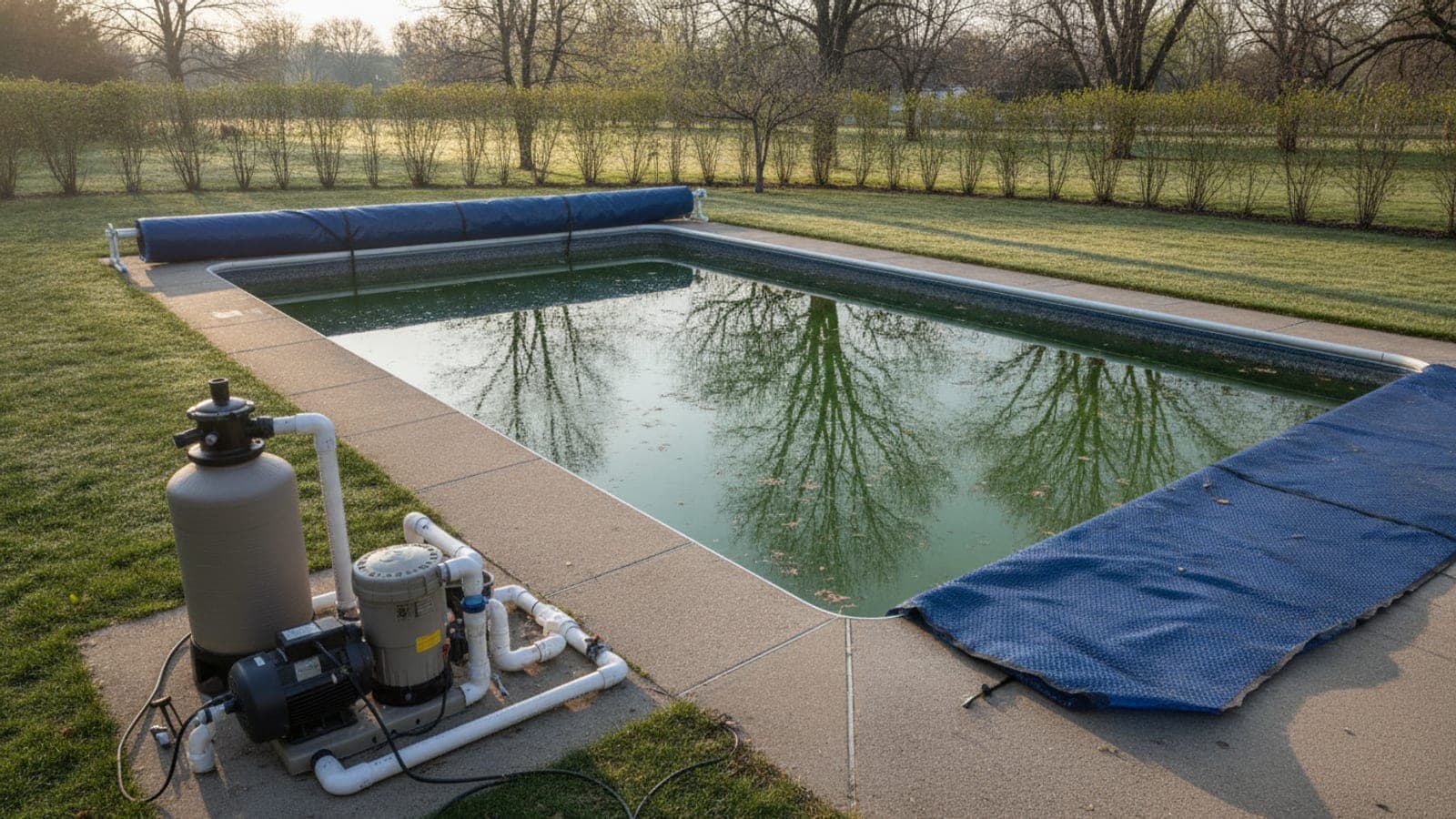
- If the water is green, switch to the green pool cleanup guide instead of doing a normal opening.
Table of contents
- What should you do first when opening an above-ground pool?
- What should you check before removing the cover?
- How do you reconnect the pump and filter?
- What should you test before adding chemicals?
- Should you use an opening kit?
- How do you clear cloudy or green water after opening?
- What should you buy before opening day?
- What should the first week look like?
What should you do first when opening an above-ground pool?
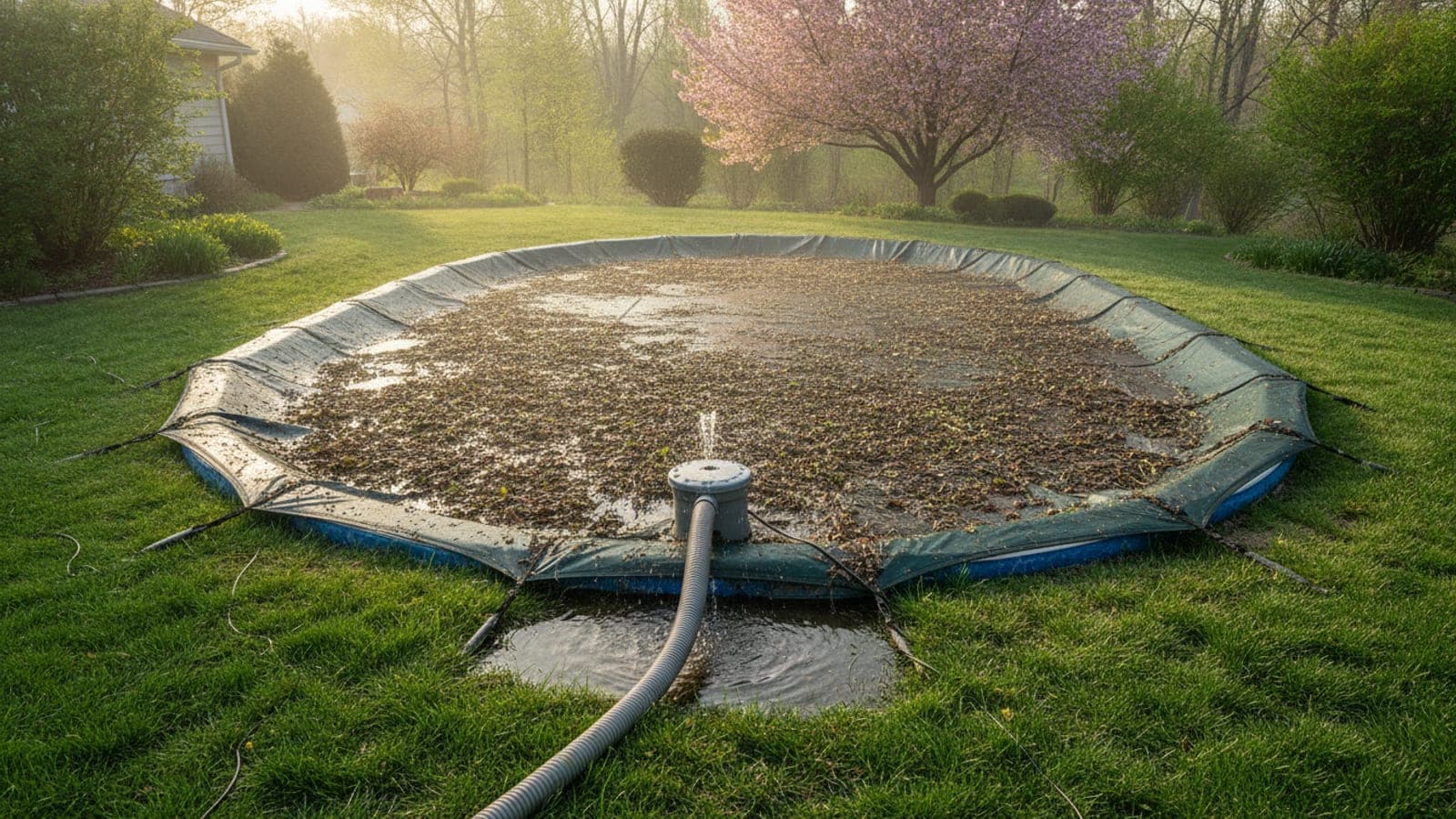
Start outside the pool. Remove standing water, leaves, sticks, and cover slime before you pull the cover off.
This is the part people rush, because it is boring. Unfortunately, the swamp on top of the cover is often worse than the water underneath. If it slides into the pool, you just bought yourself an extra round of brushing, vacuuming, shocking, and muttering.
Use a cover pump for standing water. Use a leaf net or soft broom for debris. Work slowly around the edges, especially if the cover is sagging. A little patience here can save a full day later.
Do not drag a filthy cover across the grass and then fold it wet. Rinse it, let it dry, and store it somewhere away from sharp tools and mice. Mice are tiny pool-cover accountants. They always find the expensive one.
What should you check before removing the cover?
Check the pool wall, top rail, liner, hoses, fittings, ladder, skimmer, and return before you start filling or circulating. An above-ground pool is simpler than an inground pool, but it is also less forgiving if a wall, liner seam, or hose fitting has been ignored all winter.
Look for these before the pool is fully open:
| Area | What to check | Why it matters |
|---|---|---|
| Liner | Tears, brittle spots, wrinkles, low water line | Leaks and liner movement get worse once circulation starts |
| Wall and rail | Rust, bulging, loose caps | Structural issues need attention before the pool is full and busy |
| Skimmer | Cracks, loose faceplate screws, damaged gasket | A skimmer leak can look like mysterious water loss |
| Return fitting | Cracks or loose threads | Small leaks become annoying fast |
| Pump hoses | Brittle ends, split cuffs, weak clamps | Cheap parts can ruin opening weekend |
| Ladder | Loose steps, rust, missing caps | Safety problem, not just cosmetic |
If the water level is far below normal, pause and figure out why. Some water loss over winter can happen, but a large drop may mean a liner or fitting leak. The pool evaporation calculator can help later, but opening day is mostly visual detective work.
How do you reconnect the pump and filter?
Reconnect the pump, filter, hoses, skimmer basket, return, drain plugs, pressure gauge, and any valves before adding serious chemicals. Circulation comes before correction.
For cartridge filters, inspect the cartridge before you trust it. If it is cracked, collapsed, furry, or permanently gray after cleaning, replacement is often better than pretending it still has one good season left.
For sand filters, confirm the multiport valve is set correctly and the pressure gauge works. Backwash if needed, then return to filter mode. For small above-ground cartridge systems, clean the cartridge often during the first few days. Opening debris clogs filters quickly.
A simple startup order:
- Install drain plugs.
- Reconnect hoses and tighten clamps.
- Fill water to the proper skimmer level.
- Prime the pump if your setup requires it.
- Start circulation.
- Check for leaks while the system is running.
- Note the clean filter pressure or normal flow.
- Brush the pool to move dust and algae into circulation.
If the pump sounds angry, dry, or screechy, shut it off. Pumps are not supposed to scream like a blender full of coins.
What should you test before adding chemicals?
Test pH, free chlorine, total alkalinity, and cyanuric acid before adding chemicals. If you have a saltwater above-ground pool, also test salt level with a reliable salt test.
CDC’s home pool guidance lists pH 7.0–7.8 and minimum chlorine levels for pools, with higher minimum chlorine guidance when cyanuric acid is used. Use that as general safety context, then follow your product label and equipment manual.
The big opening mistake is adding shock, algaecide, clarifier, stabilizer, and pH chemicals before you know the pool’s starting point. That is how people create expensive cloudy water.
Here is the clean order:
| Test | Why it matters at opening | Helpful page |
|---|---|---|
| Pool volume | Every chemical dose depends on gallons | Pool volume calculator |
| pH | Sanitizer works better when pH is in range | Pool pH calculator |
| Free chlorine | Tells you whether water is sanitized | Pool chlorine calculator |
| Total alkalinity | Helps pH stay steady | Pool alkalinity calculator |
| CYA/stabilizer | Affects how chlorine behaves outdoors | CYA calculator |
If you only have test strips, they are better than guessing. A drop-based kit is better for opening because you are making real dosing decisions, not just checking whether the water is “kind of okay.”
Should you use an opening kit?
An opening kit is useful only if its contents match what your water needs. It is not magic. It is a box.
Most opening kits include some combination of shock, algaecide, clarifier, stain control, or enzyme product. Some are convenient. Some are a chemical junk drawer with a nice label.
Use this quick decision table:
| Situation | Opening kit makes sense? | Better move |
|---|---|---|
| Water is clear and numbers are close | Maybe | Test, adjust lightly, run filter |
| Water is green | Not by itself | Follow the green pool cleanup path |
| pH is far off | Not first | Fix pH before big chlorine work |
| CYA is already high | Be careful | Avoid stabilized chlorine unless label math supports it |
| You do not know pool gallons | No | Calculate volume first |
| You want convenience | Yes, if you still test | Use only what the water needs |
The best “opening kit” is often a good test kit, liquid chlorine or the shock your pool surface and label allow, a clean filter, a brush, and enough patience to let circulation do its job.
What you need
Affiliate disclosure: We may earn a commission if you buy through links on this page. Your price should not change.
Suggested product cards:
- Pool opening kit, clearly labeled as optional.
- Drop-based pool test kit.
- Cover pump.
- Leaf net or deep skimmer net.
- Pool brush.
- Replacement cartridge or filter cleaner.
- Liquid chlorine or shock product, with label-first dosing note.
How do you clear cloudy or green water after opening?
Cloudy water usually means filtration, circulation, sanitizer, pH, or fine debris is not handled yet. Green water usually means algae is already in charge and you need a more deliberate cleanup plan.
For cloudy water, start with:
- Confirm the pump is actually moving water.
- Clean or backwash the filter.
- Brush the walls and floor.
- Test pH and chlorine.
- Run the pump longer than your normal schedule.
- Avoid clarifier until you know the basics are handled.
The cloudy pool water guide walks through that in more detail.
For green water, do not sprinkle random chemicals and hope the pool feels embarrassed. Use the pool shock calculator, brush aggressively, keep the filter clean, and retest. The green pool guide is the better page for that mess.
What should you buy before opening day?
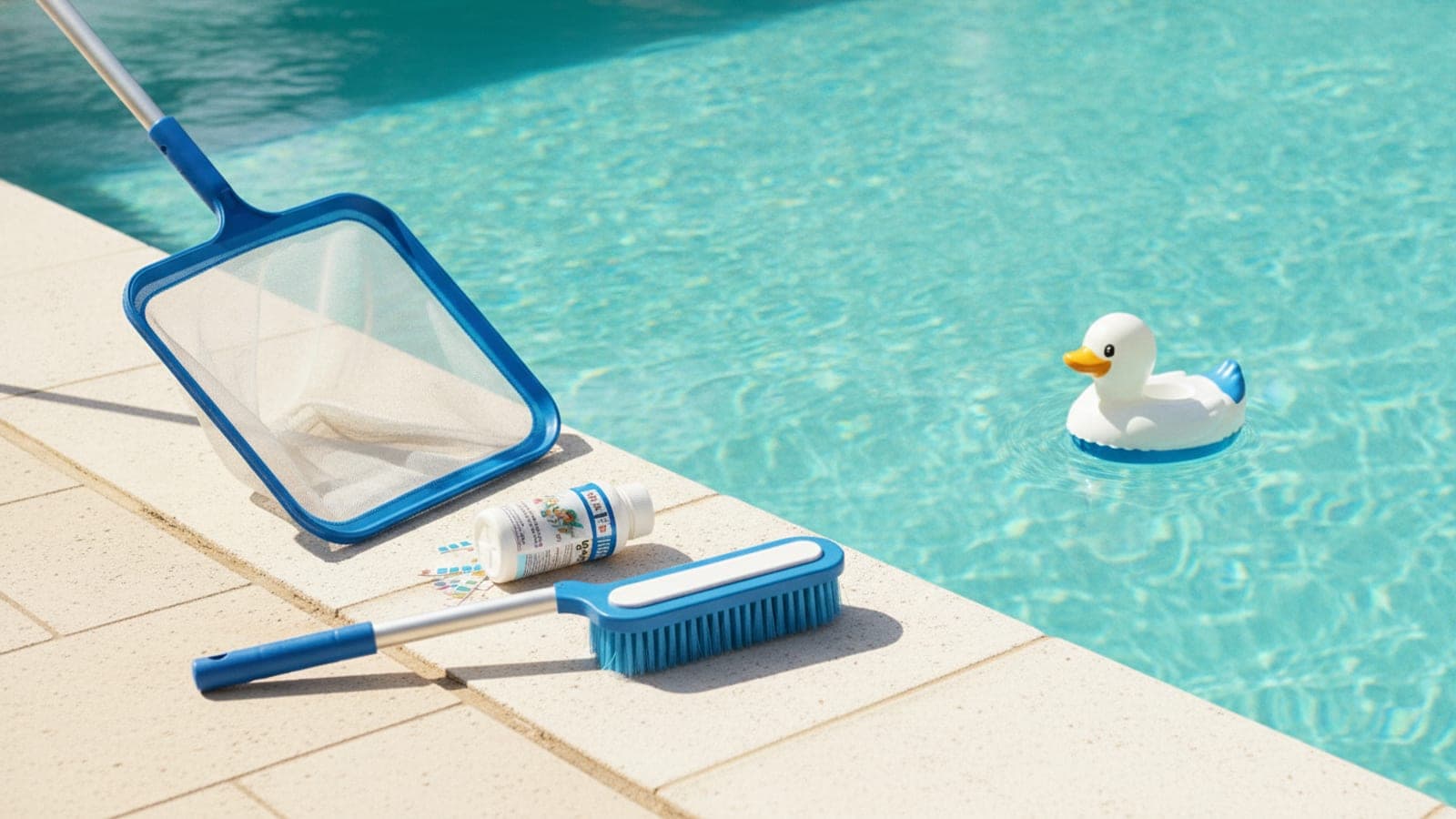
Buy the boring things first: test kit, cover pump, net, brush, replacement filter parts, and the chemicals your test results are likely to require. Leave the fun gadgets for after the pool can pass a basic water test.
A good pre-opening list:
- Drop-based test kit or fresh test strips.
- Cover pump.
- Leaf net.
- Pool brush.
- Replacement skimmer basket if cracked.
- Extra hose clamps.
- Replacement cartridge or filter cleaner.
- Shock or liquid chlorine.
- pH increaser/decreaser if your pool commonly needs it.
- Alkalinity increaser if your fill water runs low.
- Safety gloves and eye protection.
Pool chemicals deserve boring storage. CDC and EPA both publish pool chemical safety guidance because wet, mixed, contaminated, or badly stored pool chemicals can become dangerous. Keep chemicals dry, separated, labeled, and away from anything they should not touch.
What should the first week look like?
The first week is about getting the pool stable, not perfect. Clear water, working circulation, safe test numbers, and no leaks are the goal.
Here is a practical first-week opening plan:
| Day | What to do | What not to do |
|---|---|---|
| Day 1 | Remove cover, reconnect system, fill, circulate, test | Dump in every chemical you own |
| Day 2 | Brush, clean filter, adjust pH/chlorine based on test | Add clarifier before basics are fixed |
| Day 3 | Retest, vacuum or run cleaner, keep filter clean | Assume one shock dose fixed everything |
| Day 4–5 | Move toward normal pump schedule | Ignore pressure or weak flow |
| Day 6–7 | Start weekly routine | Stop testing because the water looks pretty |
Once the water is clear and stable, move into the weekly pool maintenance checklist. That is where the pool gets easier. Opening is the messy first date. Maintenance is the relationship.
FAQ
The FAQ for this article is stored in the page frontmatter so it can render clean FAQ cards and FAQPage schema.
Frequently asked questions
When should I open an above-ground pool?
Open it before the water gets warm enough for algae to take over. Many owners open when daytime weather is consistently mild, but the better trigger is water condition: if the cover is dirty, the water is warming, or circulation has been off for months, waiting usually makes cleanup harder.
Can I open an above-ground pool if the water is green?
Yes, but treat it like a cleanup job, not a normal opening. Remove debris, start circulation, test the water, adjust pH if needed, then use the shock calculator and clean the filter often.
Do I need an opening kit?
Not always. An opening kit is convenient, but a good test kit plus the specific chemicals your water actually needs is usually smarter than dumping a bundle into the pool blindly.
Should I shock before or after balancing pH?
Test first. If pH is far outside the normal pool range, adjust it before heavy shocking so the sanitizer can work better and your results are easier to read.
How long before swimming after opening?
Wait until the water is clear enough to see the bottom, circulation is working, and your test results are in a safe range according to your sanitizer label and local guidance.