Opening an inground pool goes better when you treat the first weekend like a system restart: cover off, equipment checked, water moving, debris removed, test results first, chemicals second.
Key takeaways
- Do not start with chemicals. Start with the cover, equipment, water level, circulation, and testing.
- If the pool is green or cloudy, expect cleanup to take longer than the physical opening.
- Use the pool volume calculator before any dose math.
- Get the filter working before blaming the water.
- A pool robot helps after large debris is removed, but it should not be the first tool in a leaf disaster.
Table of contents
- What is the right order to open an inground pool?
- What should you inspect before starting the pump?
- How do you remove the cover without ruining the water?
- How should you restart the equipment pad?
- What water tests matter on opening weekend?
- Should you vacuum, brush, or use a pool robot first?
- How do you handle green or cloudy opening water?
- What should you buy before opening an inground pool?
- What should happen after the first weekend?
What is the right order to open an inground pool?
The right order is cover, equipment, water level, circulation, debris removal, testing, then chemical adjustment. That order keeps you from solving the wrong problem with the wrong bottle.
Here is the opening sequence I would use:
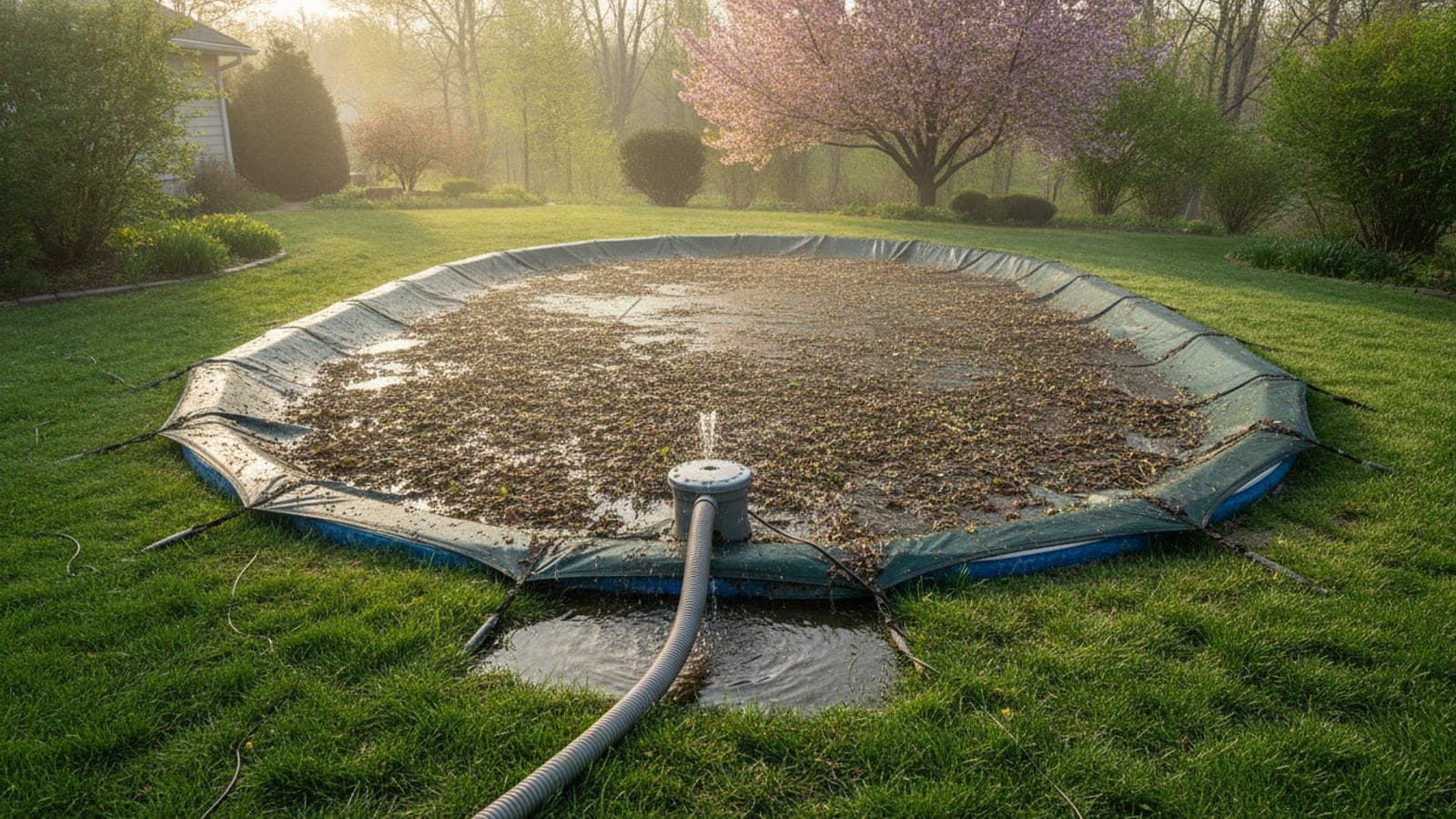
- Pump water and debris off the cover.
- Remove, clean, dry, and store the cover.
- Inspect the water level and visible pool surfaces.
- Reinstall drain plugs, baskets, fittings, ladders, and accessories.
- Inspect the pump, filter, valves, heater, salt system, and cleaner lines.
- Fill to the proper level if needed.
- Start circulation.
- Check for leaks and abnormal pressure.
- Brush and remove debris.
- Test water.
- Adjust chemicals based on actual test results.
- Run the filter and clean it as needed.
This order is less exciting than “throw in shock and hope.” It also works better.
What should you inspect before starting the pump?
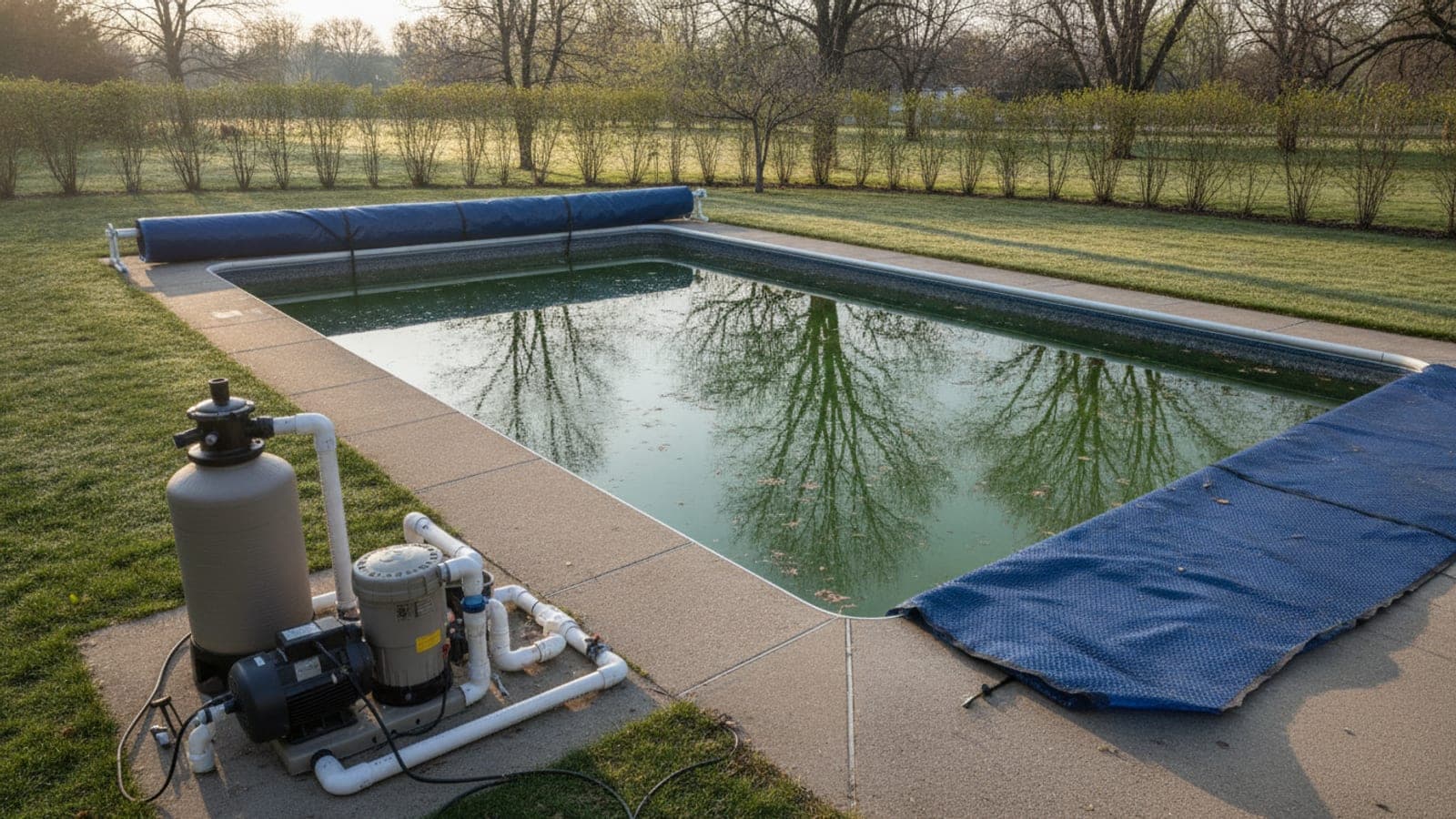
Inspect the equipment pad before water starts moving. Once the pump is running, small problems hide inside noise, pressure, and splashing.
Check these areas:
| Area | Opening check | Red flag |
|---|---|---|
| Pump | Basket clean, lid O-ring seated, plugs installed | Pump will not prime, lid leaks, loud grinding |
| Filter | Gauge installed, clamps secure, valve set correctly | Pressure spikes, leaking clamp, broken gauge |
| Valves | Handles move, positions make sense | Stuck valve or unknown setting |
| Heater | Bypass/valves correct, no nests or visible corrosion | Error codes, water leaks, gas smell |
| Salt system | Cell installed, unions tight, controller off until salt is tested | Low-salt warnings before testing |
| Cleaner line | Cap, valve, or booster setup correct | Air leaks or weak cleaner flow |
If anything looks unsafe, stop and call a qualified pool professional. Opening weekend is not the time to learn electrical troubleshooting by vibes.
How do you remove the cover without ruining the water?
Remove as much water and debris from the cover as possible before pulling it away. The top of a winter cover is often a separate ecosystem. You do not want to introduce it to the pool.
For a solid cover, use a cover pump and leaf net first. For a mesh safety cover, debris may already be in the water, so focus on removing the cover cleanly and then brushing and vacuuming.
Clean the cover before storage. Let it dry if you can. Store it in a bin or bag where rodents and sharp tools cannot chew it into next year’s surprise expense.
Pool covers are also worth thinking about beyond opening day. The Department of Energy notes that covering a pool when it is not in use is one of the most effective ways to reduce pool heating costs, mostly because covers reduce evaporation. That matters for heated pools, water bills, and the general annoyance level of owning a backyard bathtub with leaves.
How should you restart the equipment pad?
Restart the equipment slowly and watch what happens. The first ten minutes tell you a lot.
For many inground pools, the startup flow looks like this:
- Reinstall pump and filter plugs.
- Reinstall pressure gauge and sight glass if removed.
- Set valves to a basic circulation position.
- Fill pump basket with water if priming is needed.
- Secure the pump lid.
- Turn on the pump.
- Watch for prime, pressure, and leaks.
- Bleed air from the filter if your system requires it.
- Confirm return flow at the pool.
- Check skimmers and main drain behavior.
If the filter pressure is much higher than normal, clean or backwash the filter. If pressure is very low and flow is weak, look for clogged baskets, low water, air leaks, wrong valve positions, or pump priming issues.
Do not run a pump dry. A pump is expensive. Air is not a lubricant.
What water tests matter on opening weekend?
Test pH, free chlorine, total alkalinity, cyanuric acid, and salt if applicable. If the pool has metals or stains, you may need more specialized testing, but these basics drive most opening decisions.
CDC’s home pool guidance gives pH and sanitizer context for safe recreational water. Product labels and local guidance still matter, especially for the exact chemical you are using.
Use this opening test table:
| Test | Why it matters | If it is off |
|---|---|---|
| pH | Affects comfort and sanitizer behavior | Use the pH calculator |
| Free chlorine | Shows sanitizer level | Use the chlorine calculator |
| Total alkalinity | Helps pH stability | Use the alkalinity calculator |
| CYA/stabilizer | Changes outdoor chlorine behavior | Use the CYA calculator |
| Salt | Needed for salt chlorine generators | Use the salt calculator |
Do not make three chemical moves at once unless you know exactly why. If you adjust pH, alkalinity, chlorine, clarifier, and algaecide together, your next test result becomes a mystery novel.
Should you vacuum, brush, or use a pool robot first?
Remove large debris first, brush second, and use the pool robot or vacuum after the pool is safe for the cleaner. Robots are excellent at routine cleaning, but they are not built to swallow a winter’s worth of acorns, worms, leaf mush, and one mysterious plastic dinosaur.
A good cleanup order:
| Pool condition | First tool | Then |
|---|---|---|
| A few leaves | Leaf net | Robot or manual vacuum |
| Heavy leaf load | Leaf rake/net | Brush, then vacuum/robot |
| Dusty floor | Brush | Robot with fine filter or manual vacuum |
| Green water | Brush and filter | Shock process, then vacuum |
| Cloudy water | Filter and test | Brush, clean filter, run longer |
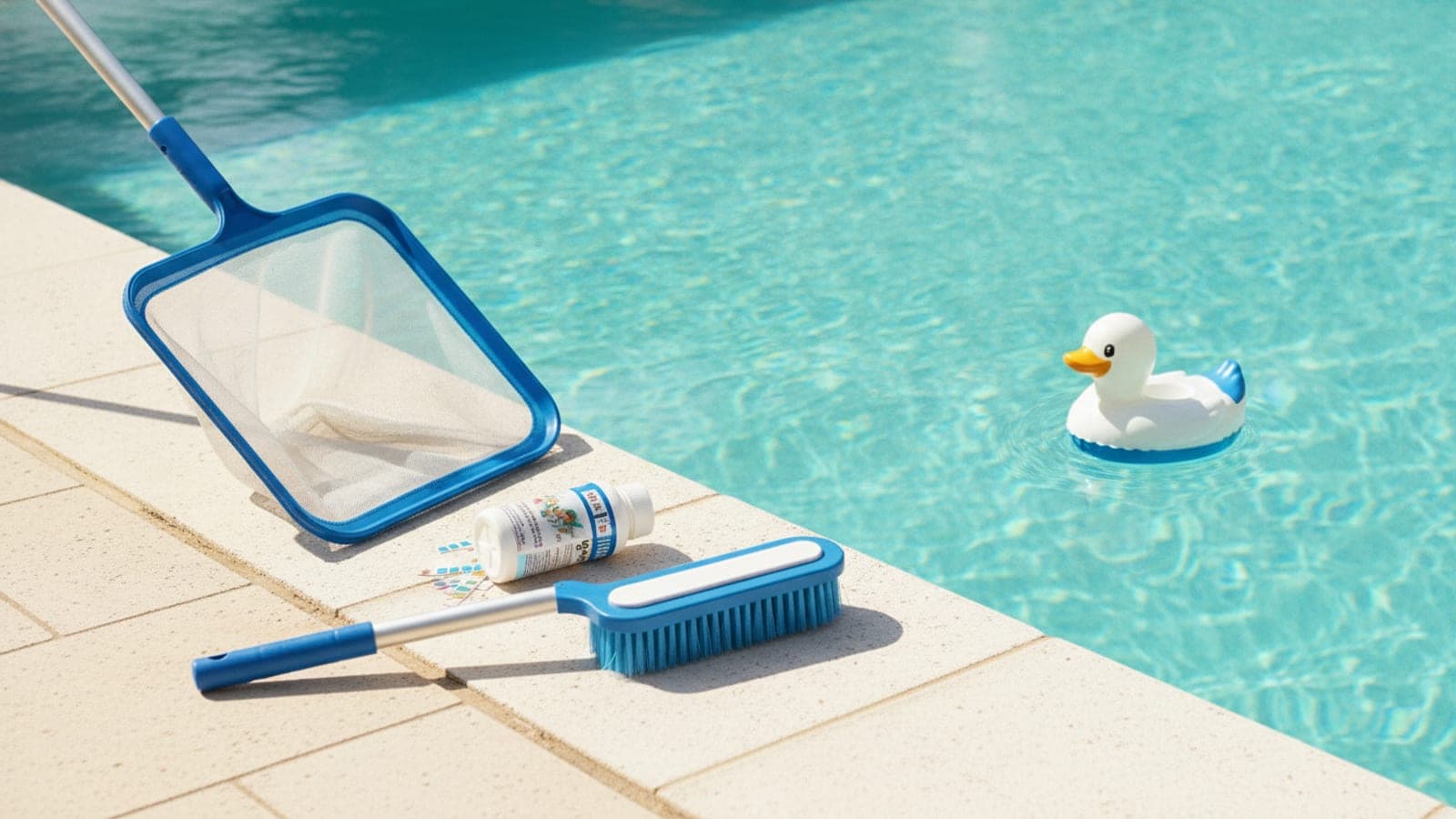
A robotic cleaner can be a huge help once the worst debris is out. If you are comparing cleaners, the robotic pool cleaner section should focus on pool size, surface type, debris type, cord/battery tradeoffs, filter type, and whether the unit can handle walls and waterline.
What you need
Affiliate disclosure: We may earn a commission if you buy through links on this page. Your price should not change.
Suggested product cards:
- Drop-based pool test kit.
- Cover pump.
- Leaf rake or deep net.
- Pool brush.
- Pool robot or manual vacuum.
- Filter cleaner or replacement cartridges/grids.
- Opening kit, labeled as optional.
How do you handle green or cloudy opening water?
Green water needs an algae cleanup plan. Cloudy water needs diagnosis. They are cousins, not twins.
For green water, use this path:
- Remove large debris.
- Confirm pump and filter are working.
- Test pH and adjust if needed.
- Confirm pool volume.
- Use the pool shock calculator.
- Brush the pool.
- Run the filter.
- Clean/backwash as pressure rises or flow drops.
- Retest and repeat as needed.
For cloudy water, start with the cloudy pool water guide. Cloudiness can come from dead algae, high pH, weak sanitizer, poor filtration, fine particles, or a filter that is present physically but not emotionally.
What should you buy before opening an inground pool?
Buy what helps you test, move water, remove debris, and clean the filter. Chemicals come after you know the water.
Opening shopping list:
- Fresh test kit reagents or a new test kit.
- Cover pump.
- Leaf net or leaf rake.
- Pool brush.
- Manual vacuum or working robot.
- Filter cleaner.
- Replacement cartridges, grids, or sand if due.
- Pump lid O-ring lubricant if appropriate for your equipment.
- Extra skimmer socks if you battle pollen.
- Liquid chlorine or shock product.
- Safety gloves and eye protection.
Pool chemical safety is not decorative. CDC says to store pool chemicals separately, protect them from moisture, and avoid mixing incompatible chemicals. EPA’s pool chemical alert also focuses on preventing fires, toxic vapor releases, and injuries from poor storage and handling.
What should happen after the first weekend?
After the first weekend, shift from opening mode to routine care. That means stable testing, predictable filtration, cleaner baskets, and fewer heroic chemical moments.
A sane first-week plan:
| Timing | Action |
|---|---|
| Opening day | Remove cover, restart system, remove debris, test |
| Next day | Brush, clean filter, adjust water based on results |
| Day 3 | Vacuum or run robot, retest chlorine and pH |
| Day 4–5 | Confirm filter pressure and clarity trend |
| End of week | Move to the weekly maintenance checklist |
The pool does not need to look brochure-ready on hour four. It needs to be moving in the right direction. Clear, balanced, safe water beats panic-shopping six bottles with names like Blue Sparkle Mega Clarifier Plus.
FAQ
The FAQ for this article is stored in the page frontmatter so it can render clean FAQ cards and FAQPage schema.
Frequently asked questions
How long does it take to open an inground pool?
Many inground pools can be physically opened over a weekend, but water cleanup can take longer if the pool is green, cloudy, full of debris, or the filter needs work.
Should I run the pump right after opening?
Yes, once the system is reassembled, primed if needed, and checked for obvious problems. Circulation is necessary before most water corrections can work properly.
Do I need to shock an inground pool when opening?
Often, but not blindly. Test first, confirm pool volume, adjust pH if needed, then dose according to your product label and water condition.
Can I use a robotic pool cleaner during opening?
Yes, if the water is not overloaded with leaves, sticks, or heavy sludge. Remove large debris first so the robot is not used like a tiny trash truck.
When is the pool safe to swim after opening?
Swim only when the water is clear enough to see the bottom, circulation is working, and sanitizer and pH are in a safe range according to testing and product guidance.