PoolGearGuide

Pool Maintenance for Beginners: The Short Version That Actually Helps

By the PoolGearGuide editorial team · Updated 2026-07-03

Share

Pool maintenance for beginners is mostly about doing a few boring things consistently: test the water, keep it circulating, remove debris, brush trouble spots, and dose chemicals based on pool volume instead of vibes.

Key takeaways

  • Clear water is not the same as balanced water. Test chlorine and pH before you trust how the pool looks.
  • Know your pool volume before adding chemicals. The pool volume calculator saves you from expensive guessing.
  • Most beginner problems come from weak testing, poor circulation, dirty filters, or adding five products when one would do.
  • A robot, skimmer, and brush make cleaning easier, but they do not replace water testing.
  • Store chemicals dry, separate, and according to the label. The garage chemical pile should not look like a science fair went sideways.

Table of contents

What should beginners do first with a pool?

Beginners should first learn the pool's volume, equipment layout, normal filter pressure, and basic water test results. Those four things make almost every later decision easier.

Start by writing down the boring details:

  • Pool type: inground, above-ground, vinyl, fiberglass, plaster, or other surface.
  • Approximate gallons from the pool volume calculator.
  • Filter type: cartridge, sand, or DE.
  • Normal clean-filter pressure on the gauge.
  • Pump type: single-speed, two-speed, or variable-speed.
  • Sanitizer type: liquid chlorine, tablets, salt system, or another setup.

That little notebook or phone note is not glamorous. It also prevents the classic beginner routine: walk into a store, say “my pool is weird,” leave with a cart that looks like it needs its own mortgage.

If you inherited the pool from a previous owner, assume nothing. People do creative things with valves, timers, tablet feeders, and mystery bottles. Take photos of the equipment pad before you touch anything.

What numbers should you actually test?

The core beginner numbers are free chlorine, pH, total alkalinity, cyanuric acid, and calcium hardness. Chlorine and pH are the most immediate day-to-day numbers because they affect sanitation and comfort.

CDC home pool guidance recommends pH between 7.0 and 7.8 and gives minimum chlorine guidance for pools, with a higher minimum when cyanuric acid is used. That does not mean every pool should live at the bare minimum. It means beginners should understand that chlorine and pH are safety basics, not decorative data.

Here is the plain-English version:

TestWhat it tells youWhy beginners should care
Free chlorineActive sanitizer availableLow chlorine can let water get unsafe or green
pHHow acidic/basic the water isBad pH can irritate swimmers and make chlorine less effective
Total alkalinitypH bufferVery low or high TA can make pH annoying to control
Cyanuric acidStabilizer levelToo little wastes chlorine; too much can make chlorine feel lazy
Calcium hardnessMineral hardnessEspecially important for plaster, heaters, and scale control

Test strips are convenient, but a drop-based kit is usually better for learning because it forces you to read actual numbers. Strips are fine for quick checks. The problem is when a strip becomes the entire operating system.

What does a simple weekly pool routine look like?

A simple weekly routine is test, skim, brush, empty baskets, inspect the filter pressure, run circulation, and correct only the numbers that need correcting. You do not need a twelve-step ceremony unless the water is already in trouble.

Use this beginner schedule as a starting point:

TaskTypical timingWhat you are looking for
Test chlorine and pHSeveral times weekly during swim seasonSanitizer and comfort range
Empty skimmer and pump basketsWeekly, more after stormsDebris restricting flow
Skim surfaceAs neededLeaves, bugs, pollen, sunscreen confetti
Brush walls, steps, cornersWeeklyAlgae starting in low-flow areas
Check filter pressureWeeklyRising pressure or weak return flow
Run robot or vacuumWeekly or as neededDirt on floor and steps
Check water levelWeeklyToo low for skimmer, too high after rain
Inspect equipment padWeeklyLeaks, odd noise, air bubbles, drips

A pool is easier to maintain when you catch small changes early. The goal is not to become a pool chemist. The goal is to notice the pool muttering before it starts yelling.

How do you know how much chemical to add?

You know how much chemical to add by using current test results, target range, product strength, and pool volume. Guessing by “one scoop usually works” is how beginners overshoot pH, spike stabilizer, or create cloudy water.

The order is simple:

  1. Test the water.
  2. Confirm your pool volume.
  3. Pick one correction.
  4. Read the product label.
  5. Dose conservatively.
  6. Circulate.
  7. Retest before adding more.

For example, a 10,000-gallon pool and a 25,000-gallon pool do not want the same dose. They are both “backyard pools,” but one needs a very different chemical amount. Use the pool chlorine calculator, pool pH calculator, and pool alkalinity calculator as guardrails.

Do not mix chemicals together in a bucket unless the label specifically tells you to. Add products to pool water according to label directions and keep the pump running when the product requires circulation.

What equipment should a new pool owner buy first?

A beginner should buy testing gear before gadgets. The best cleaner in the world cannot tell you your pH is drifting or your chlorine is too low.

Start with this order:

  1. Reliable test kit for chlorine, pH, alkalinity, CYA, and hardness.
  2. Pool brush matched to your surface.
  3. Skimmer net for leaves and surface debris.
  4. Manual vacuum or robotic cleaner depending on budget and patience.
  5. Thermometer because warm water changes chemical demand.
  6. Chemical storage bin or shelf system that keeps products dry and separated.

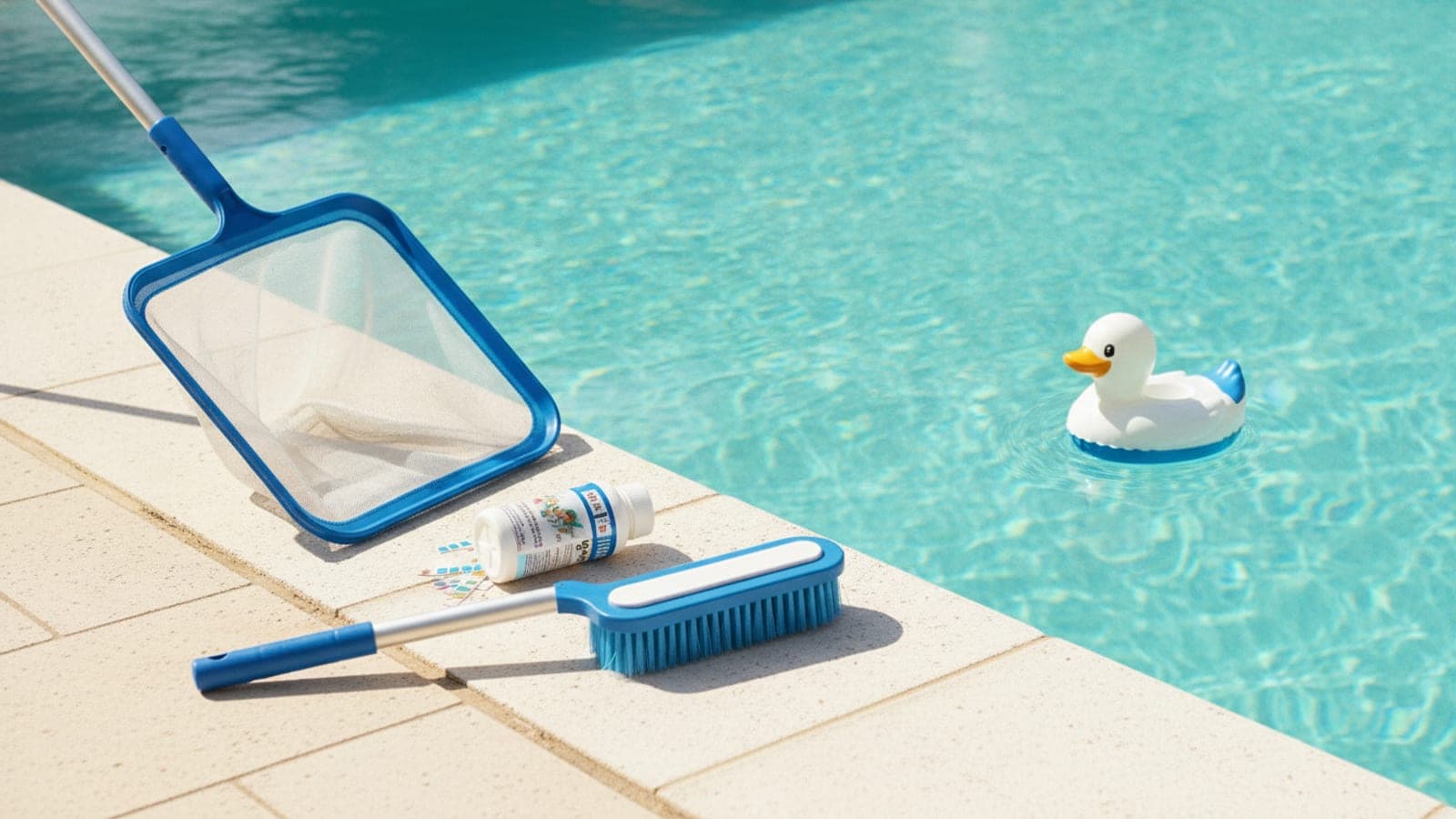
What you need

  • Drop-based pool test kit for weekly testing.
  • Skimmer net for leaves, bugs, and whatever the wind delivered as a gift.
  • Pool brush for walls, steps, corners, and algae-prone spots.
  • Robotic pool cleaner if you want to reduce manual floor cleaning.
  • Safety gloves and goggles for handling acid, chlorine, and other chemicals.
  • Dry, ventilated storage that keeps incompatible products apart.

Affiliate disclosure: PoolPros may earn a commission when you buy through product links. Use the product label and your equipment manual as the final authority.

How long should you run the pool pump?

Pump run time depends on pool volume, pump speed, filter condition, weather, debris, and swimmer load. The beginner answer is to run it long enough to circulate and filter effectively, then tune the schedule instead of guessing forever.

Use the pool pump run time calculator as your starting point. If you have a variable-speed pump, slower and longer can be more efficient than blasting a single-speed pump for a shorter block. ENERGY STAR notes that variable-speed and multi-speed pool pumps can reduce energy costs and often run quieter.

Watch the pool, not just the timer:

  • If water gets cloudy, increase circulation and check the filter.
  • If the skimmer barely pulls, check baskets and valves.
  • If the filter pressure climbs, clean or backwash according to your filter type.
  • If the pool looks good for weeks, you may be able to fine-tune run time.

Circulation is not glamorous, but it is the delivery truck for everything else. Chemicals do not work evenly if they are sitting in one moody corner.

When should you brush, skim, vacuum, or use a robot?

Skim when debris is floating, brush when surfaces are slick or dusty, vacuum when debris is on the floor, and use a robot when you want routine floor cleaning without babysitting a hose.

Each cleaning tool has a job:

ToolBest forNot great for
Skimmer netLeaves, bugs, surface debrisFine dust on the floor
Pool brushWalls, steps, algae-prone spotsRemoving piles of debris
Manual vacuumHeavy floor cleanupPeople who hate hoses, which is nearly everyone
Robotic cleanerRoutine floor cleaningGiant leaf piles, sticks, chemical balance
ClarifierSome fine suspended particlesFixing algae, poor sanitizer, dirty filters

A robot is useful, especially if you do not want to vacuum every weekend. But do not use it like a tiny garbage truck after a storm. Scoop out large debris first, then let the robot handle what is reasonable.

If you are shopping for one, start with robotic pool cleaners or use the pool robot finder once your product data is live.

What beginner mistakes make pool maintenance harder?

The biggest beginner mistake is treating symptoms without checking the basics. Cloudy water, green water, and poor circulation usually have a cause; dumping in three products can hide it for a day and make tomorrow worse.

Avoid these common mistakes:

  • Adding chemicals without testing.
  • Dosing without knowing pool volume.
  • Ignoring pH because chlorine is “the main thing.”
  • Letting the filter get dirty and blaming the chemical shelf.
  • Backwashing or cleaning filters too often or not enough.
  • Using tablets constantly without watching stabilizer.
  • Mixing chemicals or storing them in damp, messy places.
  • Letting leaves sit until they become backyard soup.

The boring rule: fix water in the right order. Circulation, filtration, pH, sanitizer, then specialty fixes. If you skip the first two, chemicals have to do the work of plumbing. They will file a complaint.

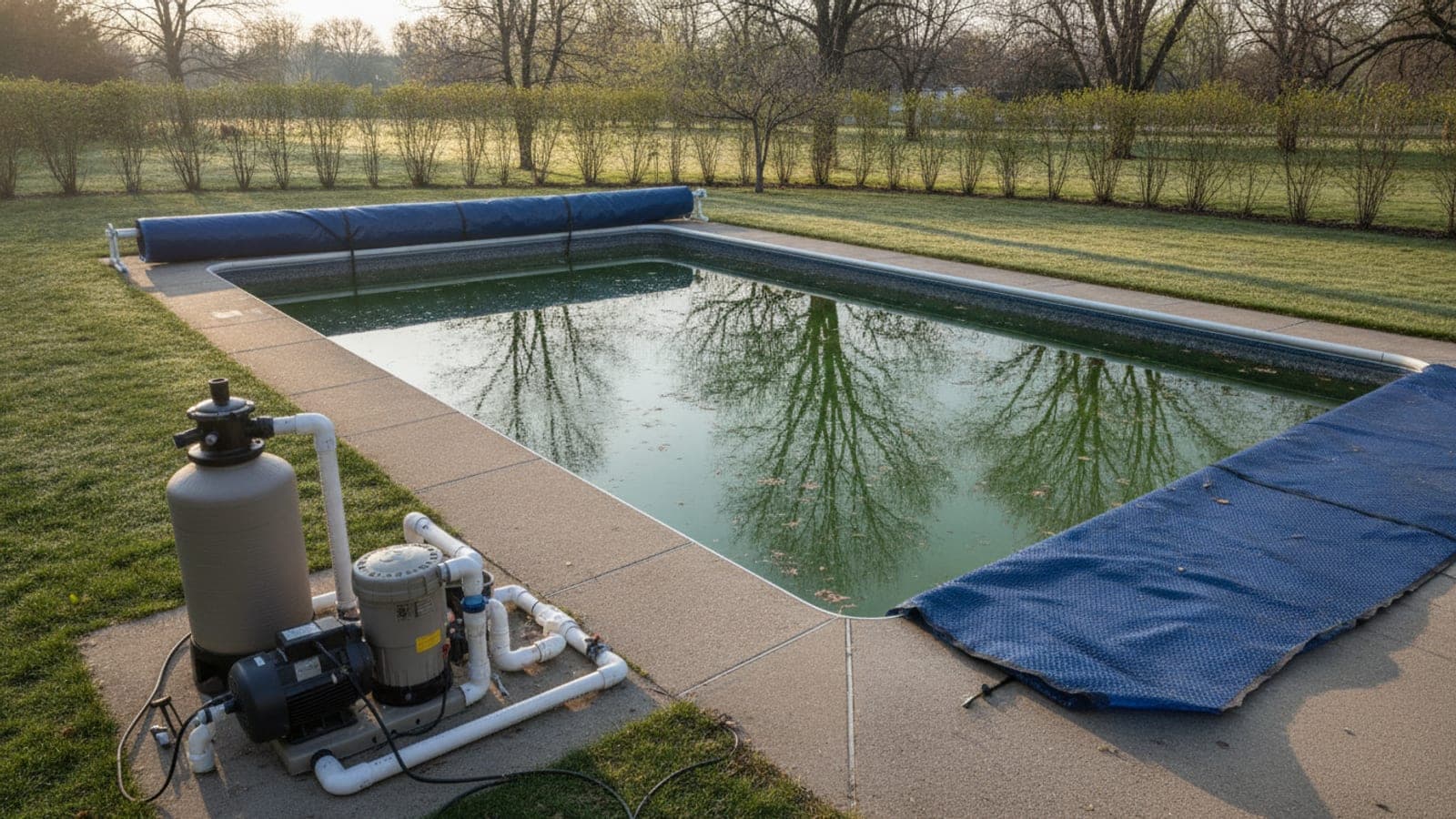
What should you do when the pool turns cloudy or green?

When the pool turns cloudy or green, stop adding random products and diagnose the cause. Test the water, check circulation, inspect the filter, brush surfaces, and use the right calculator before dosing.

Use this path:

  1. Confirm water level is high enough for the skimmer.
  2. Empty baskets.
  3. Check pump prime and return flow.
  4. Note filter pressure compared with clean pressure.
  5. Test free chlorine, pH, alkalinity, and CYA.
  6. Brush walls and steps.
  7. Use the pool shock calculator only after confirming volume and product instructions.

For green water, read how to clean a green pool. For cloudy water, read how to clear cloudy pool water. Those problems overlap, but they are not always the same problem.

What should you keep on hand?

Keep the basics on hand so a normal weekend problem does not become an emergency trip. Do not build a pool-store bunker full of products you do not understand.

A sensible beginner shelf:

  • Test kit or fresh test strips.
  • Your normal sanitizer.
  • pH reducer or acid.
  • Soda ash or pH increaser.
  • Alkalinity increaser.
  • Shock or liquid chlorine.
  • Filter cleaner if your filter type needs it.
  • Gloves and goggles.
  • Clean, dry measuring tools used only for pool chemicals.

Store chemicals in original containers with labels intact. CDC and EPA pool chemical safety guidance both emphasize keeping products dry, separated, and protected from accidental mixing. That matters because pool chemicals can react badly when contaminated with moisture, incompatible products, or random garage weirdness.

Beginner pool maintenance is not about knowing everything. It is about having a repeatable routine that catches problems early. Test, clean, circulate, dose carefully, and do not let the pool store become your personality.

Frequently asked questions

What is the most important pool maintenance task for beginners?

Testing and adjusting sanitizer and pH are the most important beginner tasks because clear-looking water can still be poorly balanced or under-sanitized.

How often should a beginner test pool water?

Test often enough to catch changes before the pool turns cloudy or green. Many owners test chlorine and pH several times per week during swim season and more often after heavy use, rain, or heat.

Do I need a robotic pool cleaner as a beginner?

No, but a robotic cleaner can remove a lot of routine floor cleaning. You still need to test water, brush problem areas, empty baskets, and maintain the filter.

What chemicals should a new pool owner keep on hand?

Start with a reliable test kit, your normal sanitizer, pH adjusters, alkalinity increaser, and shock or liquid chlorine. Buy based on test results and pool volume, not shelf panic.

Why does my pool get cloudy even when I add chlorine?

Cloudy water usually points to a combination of sanitizer, pH, circulation, filtration, debris, or stabilizer problems. The fix starts with testing and filter inspection, not dumping in random clarifier.

Can I maintain a pool without going to the pool store every week?

Yes. A good home test kit, a simple weekly routine, and a few calculators can handle most normal maintenance. Use the store for confirmatory testing or unusual problems.

The weekly skim

One short email a week: what to test, what to buy, and what to skip. No daily drip. Unsubscribe anytime.

Keep reading