A pool chemical shopping list should start with your test results, not with a panicked cart full of bottles that all promise to fix "water problems." Pool water is not impressed by confidence. It wants the right product, in the right amount, for the right reason.
This page should work as a shopping-list builder: choose your pool type, pool gallons, sanitizer, current test results, and main problem. Then it gives you a focused list instead of turning your garage into a small chemical warehouse.
Key takeaways
- The best pool chemical shopping list starts with pool volume and current test results.
- A reliable test kit belongs on almost every list because guessing makes every chemical more expensive.
- Buy core products first: sanitizer, pH control, alkalinity control, and safety gear.
- Do not buy clarifier, floc, algaecide, phosphate remover, metal remover, and specialty products unless the problem actually calls for them.
- Chemical storage matters. Keep products dry, separate, ventilated, and away from anything the label says to avoid.
Table of contents
- What should a pool chemical shopping list include?
- What should the shopping list builder ask first?
- What chemicals do most chlorine pools need?
- What chemicals do saltwater pools still need?
- What should you buy for green or cloudy water?
- What should beginners not buy yet?
- How should the list handle safety gear and storage?
- What does a worked shopping-list example look like?
- How should this page connect to affiliate products and calculators?
What should a pool chemical shopping list include?
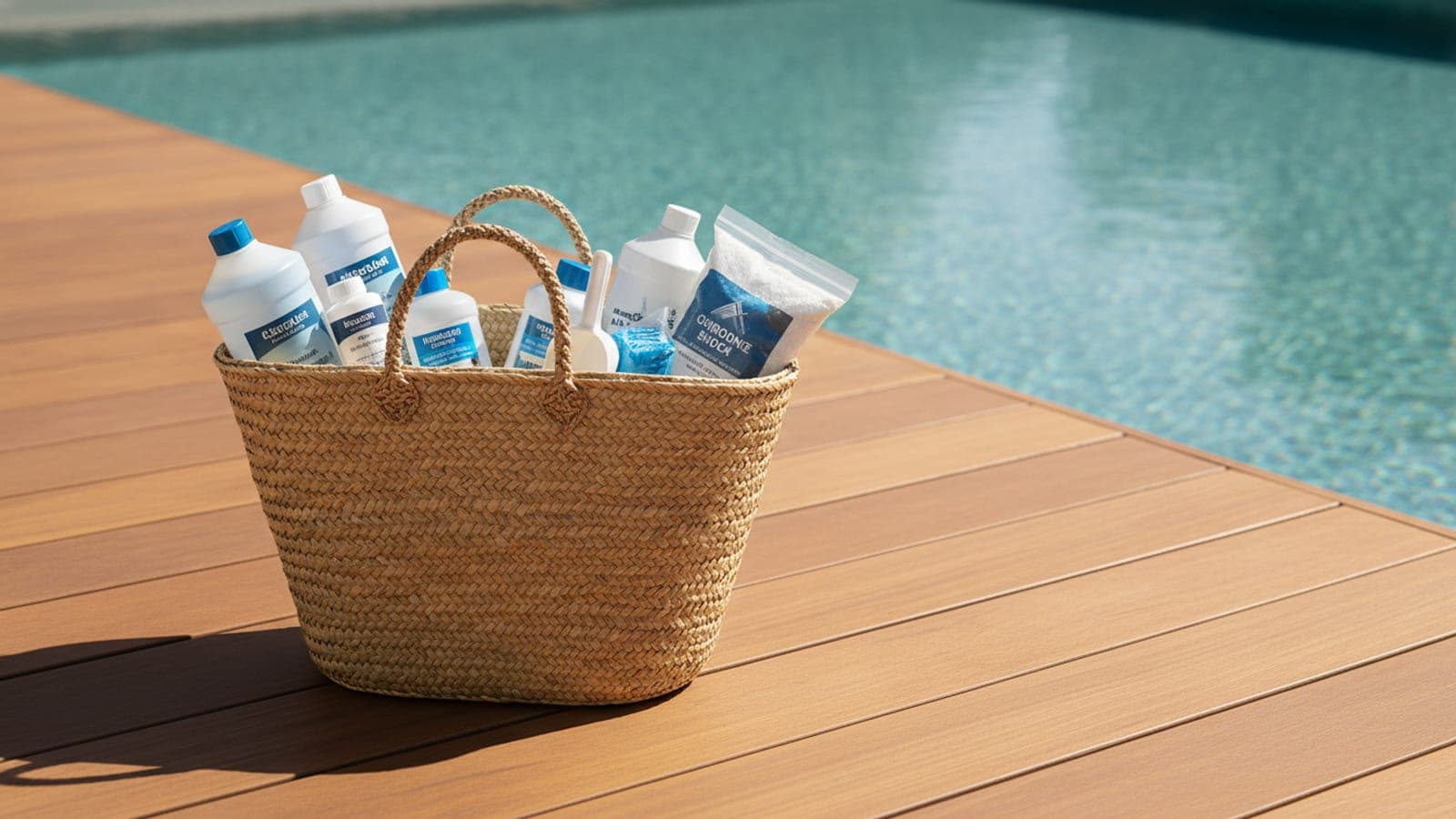
A pool chemical shopping list should include testing supplies, sanitizer, pH adjustment products, alkalinity adjustment products, and only the specialty products your water problem actually needs. The list should also include basic safety gear because pool chemicals are useful, not cuddly.
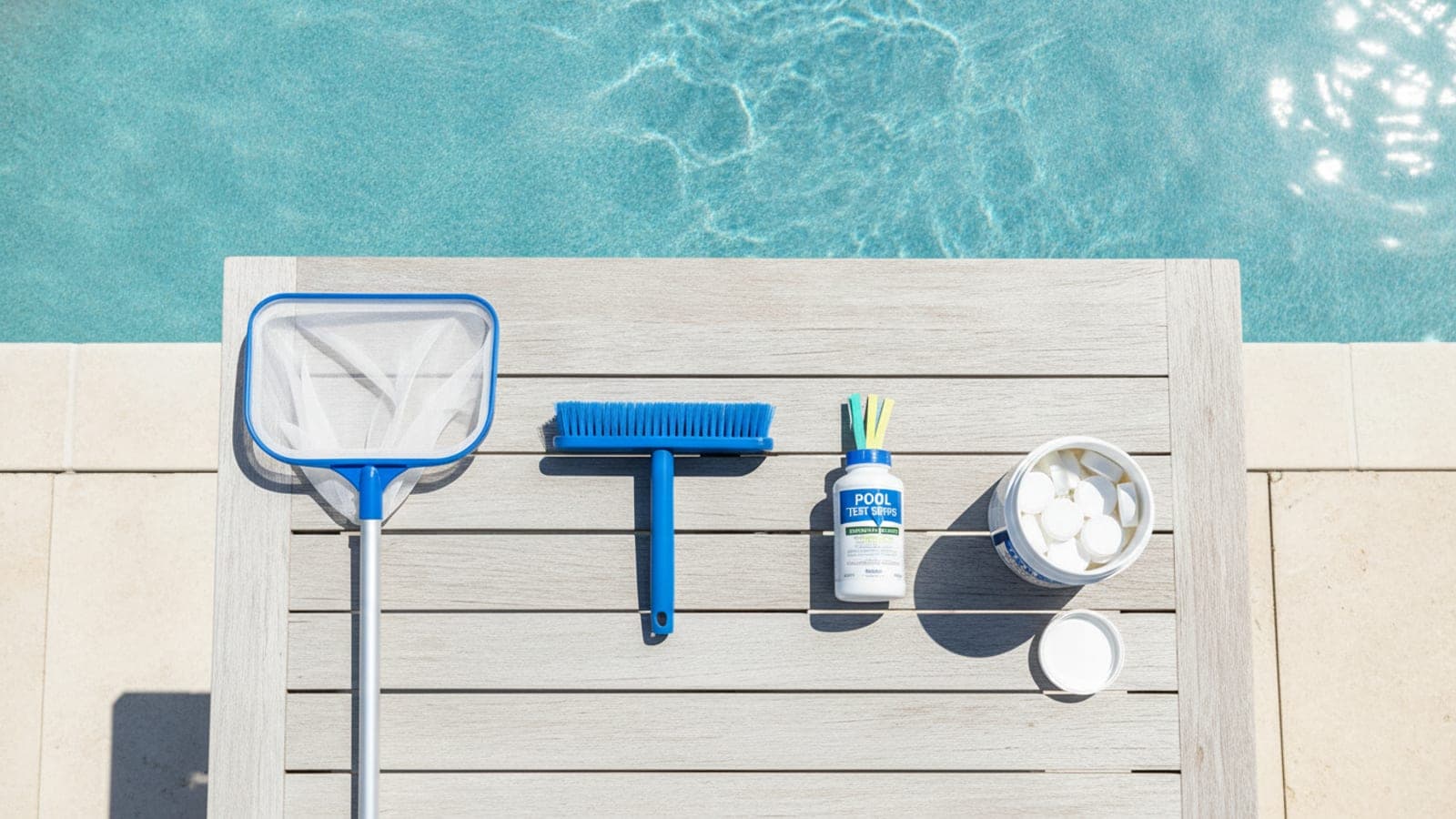
A practical starter list looks like this:
| Category | What belongs here | Why it matters |
|---|---|---|
| Testing | Drop-style test kit or quality strips | You need numbers before dosing |
| Sanitizer | Liquid chlorine, tablets, or salt system support | Keeps water sanitized when used correctly |
| pH control | Muriatic acid, dry acid, or soda ash | Helps keep chlorine working and water comfortable |
| Alkalinity | Alkalinity increaser or acid when lowering TA | Helps control pH drift |
| Stabilizer | Cyanuric acid when appropriate | Helps outdoor chlorine last in sun |
| Cleaning support | Brush, skimmer, filter cleaner | Chemistry fails when circulation and cleaning fail |
| Safety | Gloves, goggles, dry storage bin | Reduces risk while handling products |
The exact list depends on the pool. A small above-ground pool, a large plaster inground pool, and a saltwater pool do not need identical shelves. If the page gives the same shopping list to everyone, the page is being lazy in a polo shirt.
What should the shopping list builder ask first?
The shopping list builder should ask for pool volume, pool type, sanitizer type, and current test results before suggesting products. Without those inputs, the list is just a guess with affiliate links taped to it.
The first questions should be:
- How many gallons is the pool?
- Is it chlorine, saltwater, or another sanitizer system?
- Is the pool inground, above-ground, vinyl, plaster, fiberglass, or unknown?
- What are the current chlorine and pH readings?
- Do you know alkalinity and CYA/stabilizer?
- Is the water clear, cloudy, green, foamy, or stained?
- Did the problem start after rain, heavy swimming, opening, or a chemical addition?
- What test method are you using?
The pool volume calculator should be linked before any dose-related product recommendation. Pool gallons decide how much product is needed. A 5,000-gallon above-ground pool and a 25,000-gallon inground pool can both be cloudy, but they should not get the same chemical dose.
The builder should also ask how confident the reader is in the test results. If someone is using old strips found behind a bag of towels from 2022, the first recommended product should be a test kit. Not more shock. Not a miracle bottle. A test kit.
What chemicals do most chlorine pools need?
Most chlorine pools need a sanitizer source, pH control, alkalinity control, stabilizer when appropriate, and enough testing supplies to avoid blind dosing. The exact products depend on whether the owner uses liquid chlorine, tablets, a feeder, or occasional shock.
For a standard outdoor chlorine pool, the builder can recommend:
- Liquid chlorine or pool shock for raising free chlorine.
- Chlorine tablets only when the owner understands they often add stabilizer/CYA too.
- Muriatic acid or dry acid for lowering pH.
- Soda ash or pH increaser for raising pH when needed.
- Alkalinity increaser for low total alkalinity.
- Cyanuric acid/stabilizer for outdoor chlorine pools that need it.
- A brush and skimmer because chemicals cannot scrub walls.
- A test kit that can read chlorine, pH, alkalinity, and stabilizer.
The CDC recommends pH between 7.0 and 7.8 for pools and gives minimum free chlorine guidance that changes depending on whether cyanuric acid is used. That matters because a shopping list should not push products without explaining the target.
Use these calculators in the output:
What chemicals do saltwater pools still need?
Saltwater pools still need chemicals. The salt system makes chlorine from salt, but it does not remove the need for testing, balancing, brushing, filtering, or correcting pH.
A saltwater shopping list usually includes:
- Pool-grade salt.
- A salt test method or meter if the system reading is uncertain.
- A chlorine/pH test kit.
- Muriatic acid or dry acid for pH control.
- Alkalinity increaser if TA is low.
- Stabilizer/CYA when appropriate for an outdoor salt pool.
- Cell-cleaning supplies only if the manufacturer recommends them and the cell needs it.
- Gloves and goggles for chemical handling.
The list should also include a warning: check the actual salt system manual before adding salt. Different systems use different target ranges. Guessing salt is annoying because lowering salt usually means draining and replacing water. Nobody wants to do that because of a shrug-powered calculation.
Link saltwater users to:
What should you buy for green or cloudy water?
For green or cloudy water, the shopping list should focus on testing, sanitizer, brushing, circulation, and filtration before specialty products. Green and cloudy water often get worse when people buy five fixes before they know the actual cause.
A green-pool list can include:
- Reliable test kit.
- Chlorine or shock product appropriate for the pool.
- Pool brush.
- Filter cleaner or replacement cartridge if filtration is weak.
- Skimmer net or leaf rake if debris is feeding the problem.
- Gloves and goggles.
A cloudy-pool list can include:
- Test kit.
- Filter-cleaning supplies.
- Replacement cartridge or filter media if needed.
- Clarifier only when chemistry and filtration are already mostly under control.
- Robot filter panels or fine filter basket if a robotic cleaner is leaving fine debris.
The builder should avoid making clarifier or algaecide the first answer. Sometimes those products help. Sometimes they add one more bottle to a situation that needed chlorine, brushing, filtration, and patience. Pools do not respect impatient shopping.
Helpful internal links:
What should beginners not buy yet?
Beginners should avoid buying every specialty chemical before they understand their pool's normal numbers. The goal is not a full shelf. The goal is controlled water.
Do not rush to buy:
- Phosphate remover without confirming phosphates are part of a recurring problem.
- Metal remover without signs of metal staining or confirmed metals.
- Flocculant if you cannot vacuum to waste or handle the cleanup.
- Algaecide as a substitute for proper chlorine control.
- Multiple brands of the same chemical that may dose differently.
- Giant buckets of tablets if your CYA is already high.
- Random "all-in-one" products when you do not know what they contain.
This is where the content can be honest and still sell well. Tell people not to buy what they do not need. Then recommend the products that actually help them act: test kit, basic sanitizer, pH control, safety gear, and cleaning tools.
That builds more trust than squeezing one extra cart click out of someone who is already confused.
How should the list handle safety gear and storage?
The list should treat safety gear as part of the purchase, not an afterthought. Pool chemicals can be safe when used properly, but poor storage and mixing can create serious hazards.
The CDC and EPA both publish pool chemical safety guidance. The practical version for homeowners is simple:
- Read the label before using any product.
- Keep chemicals dry.
- Keep lids closed.
- Store incompatible chemicals separately.
- Do not mix products together.
- Do not add water to chemical unless the label specifically says so.
- Use gloves and eye protection when the label calls for it.
- Keep chemicals away from children, pets, heat, and moisture.
The shopping list should include a small safety module:
| Safety item | Why it belongs on the list |
|---|---|
| Chemical-resistant gloves | Protects skin during handling |
| Safety goggles | Helps protect eyes from splashes or dust |
| Dedicated measuring cup | Keeps products from cross-contaminating |
| Dry storage bin or shelf | Helps keep chemicals away from moisture |
| Label marker | Helps date opened products |
Link the full safety explanation to pool chemical safety. That page should be one of the trust builders of the whole site.
What does a worked shopping-list example look like?
Here is a worked example for a 12,000-gallon outdoor chlorine pool. The owner says the water is slightly cloudy, chlorine is low, pH is high, and the filter cartridge has not been cleaned recently.
A useful list would look like this:
| Priority | Buy or check | Why |
|---|---|---|
| 1 | Test kit | Confirm chlorine, pH, alkalinity, and CYA before dosing |
| 2 | Liquid chlorine or shock | Low chlorine needs correction based on pool volume |
| 3 | Muriatic acid or dry acid | High pH may need lowering based on test result |
| 4 | Filter cleaner | Dirty cartridge may be contributing to cloudy water |
| 5 | Pool brush | Brushing helps move film and debris into circulation |
| 6 | Safety gloves and goggles | Needed for careful chemical handling |
| Maybe later | Clarifier | Only after chemistry and filtration are addressed |
Notice what is missing: six random bottles with names that sound like yacht colognes. The list is focused because the problem is focused.
How should this page connect to affiliate products and calculators?
This page should be one of the strongest affiliate pages on the site because it catches people when they are ready to buy, but it should still behave like a guide. The tool gives the list. The article explains why. The affiliate modules help them get the supplies.
Use product sections like:
- Testing supplies for every pool.
- Chlorine products for low sanitizer.
- pH products for high or low pH.
- Alkalinity products for unstable pH.
- Saltwater supplies for salt systems.
- Cleaning supplies for green or cloudy water.
- Safety gear for chemical handling.
Every product module should include a clear affiliate disclosure before links. Keep Amazon and specialty-retailer buttons separate. Use rel="sponsored nofollow" in the component. And do not make the page feel like it has one answer for every pool, because it does not.
The best shopping list is boring, measured, and specific. That is why it works.
Frequently asked questions
What pool chemicals should I keep on hand?
Most pool owners should keep a reliable test kit, sanitizer, pH adjuster, alkalinity adjuster, and any products required by their specific pool system. The exact list should come from pool volume, test results, and product label directions.
Should I buy every pool chemical at once?
No. Buy the basics and the chemicals your test results actually call for. Buying every bottle on the shelf leads to clutter, expired products, and more chances to store incompatible chemicals poorly.
What should I buy for a green pool?
Start with a test kit, chlorine or shock product appropriate for your pool, a brush, and filter-cleaning supplies. Do not buy clarifier, floc, algaecide, and random specialty products before testing and fixing sanitizer, pH, circulation, and filtration.
Do saltwater pools need chemicals?
Yes. Saltwater pools still need testing supplies, pH adjusters, alkalinity control, stabilizer when appropriate, pool-grade salt, and occasional cleaning or replacement parts for the salt system.
How should pool chemicals be stored?
Store pool chemicals dry, cool, ventilated, protected from water, and separated from incompatible products. Follow the product label and safety guidance from CDC, EPA, and the manufacturer.