PoolGearGuide

Pool Maintenance Schedule Generator

By the PoolGearGuide editorial team · Updated 2026-07-03

Share

A pool maintenance schedule generator should turn your pool's real life into a simple routine: test this, skim that, brush here, clean the filter then, and stop pretending Saturday morning will magically fix everything. The best schedule is not the busiest one. It is the one you will actually follow before the water gets cloudy, green, or emotionally complicated.

Pool care gets easier when the work is split into small, boring tasks. Boring is good. Boring means you are skimming leaves instead of apologizing to guests because the deep end looks like soup.

Key takeaways

  • A good pool maintenance schedule changes based on pool size, season, debris load, usage, sanitizer type, and filter system.
  • Water testing should drive chemical decisions; the schedule should not tell people to add products blindly.
  • Short daily or every-other-day checks usually prevent bigger weekend rescues.
  • Saltwater pools still need maintenance, including pH checks, chlorine checks, salt checks, and salt-cell inspection.
  • The schedule should link directly to calculators, product modules, and troubleshooting guides so the reader knows the next step.

Table of contents

What should a pool maintenance schedule generator actually do?

A pool maintenance schedule generator should create a practical plan based on the pool's conditions, not a generic list copied from a bottle label. It should tell the owner what to check daily, weekly, monthly, and seasonally, then point them to the right calculator when a number is off.

The schedule should not say, "add shock every Sunday" as if every pool lives the same life. A screened pool in a calm yard does not need the same routine as a pool under two oak trees, three kids, one Labrador, and a maple tree that seems personally committed to chaos.

The generator should make decisions from inputs like:

  • Pool type: inground, above-ground, vinyl, plaster, fiberglass, or saltwater.
  • Pool volume: estimated gallons from the pool volume calculator.
  • Sanitizer type: chlorine, saltwater chlorine generator, bromine in a spa, or mineral system.
  • Debris load: low, normal, heavy, or "I live under a tree with opinions."
  • Usage: occasional, family use, heavy weekend use, rentals, or party-heavy.
  • Filter type: cartridge, sand, or DE.
  • Pump type: single-speed, two-speed, variable-speed, or unknown.
  • Robot or manual cleaning: no robot, floor robot, surface skimmer, or both.

The output should be specific. "Test water" is weak. "Test chlorine and pH before the weekend, after storms, and after heavy swimming" is useful.

What inputs should the generator ask for?

The generator should ask enough questions to make the schedule smarter, but not so many that the user quits and goes back to guessing. A good first version can use 8 to 10 questions.

InputWhy it mattersExample schedule effect
Pool gallonsChemical doses depend on water volumeLinks to chemical calculators before dosing
Pool typeSurfaces and equipment change care needsVinyl pools get gentler brushing guidance
SanitizerSaltwater and tablet pools drift differentlyAdds salt-cell or stabilizer reminders
Debris levelLeaves and pollen change cleaning frequencyAdds skimming, basket, and filter checks
Swim loadMore swimmers use sanitizer fasterAdds post-swim testing reminders
Filter typeFilter maintenance is differentCartridge cleaning vs sand backwash prompts
Pump typeRuntime planning differsLinks to pump runtime calculator
Weather exposureSun, rain, and wind change chemistryAdds after-storm checks
Robot ownedCleaning tasks can shiftAdds robot filter basket cleaning reminders
Trouble historyGreen/cloudy pools need preventionAdds extra test and brushing reminders

This is also useful for email capture. The form can ask for an email at the end with a line like: "Send me this schedule." That is much better than begging someone to join a newsletter called "Pool Tips," which sounds like homework in a wet hat.

What should be on the daily pool schedule?

The daily schedule should be short enough to complete in a few minutes. It is not a second job. It is a quick look so small problems do not become Saturday disasters.

A simple daily or every-other-day check can include:

  1. Look at the water clarity.
  2. Check the water level.
  3. Empty skimmer baskets if debris is visible.
  4. Skim the surface if leaves, bugs, or pollen are collecting.
  5. Confirm the pump is moving water normally.
  6. Check robot basket if the robot ran.

This is not about perfection. It is about catching the obvious stuff early. If the return jets are weak, the skimmer basket is packed, or the water level is below the skimmer mouth, the pool is already telling you something.

A schedule generator should add more daily tasks during:

  • Heavy pollen season.
  • Leaf season.
  • Stormy weeks.
  • Heat waves.
  • Vacation rental use.
  • After pool parties.
  • When water has recently been green or cloudy.

For chemical safety, the schedule should never casually tell people to mix products, add chemicals together, or store everything in a damp corner. Pool chemicals deserve respect. Not fear. Respect. Like a table saw, but with smaller print on the label.

What should be on the weekly pool schedule?

The weekly schedule should handle the bigger maintenance rhythm: testing, brushing, vacuuming or robot cleaning, filter checks, and dose calculations. This is where most pool owners either build control or start the slow march toward cloudy water.

A strong weekly schedule includes:

  • Test free chlorine and pH.
  • Check alkalinity if pH keeps drifting.
  • Check stabilizer/CYA periodically if using stabilized chlorine or outdoor chlorine.
  • Brush walls, steps, ladders, corners, and behind returns.
  • Run the pool robot or vacuum manually.
  • Clean robot filters or filter baskets.
  • Inspect skimmer baskets and pump basket.
  • Check filter pressure if the system has a pressure gauge.
  • Review the waterline for scum, pollen film, or scale.
  • Top off water if the level is low.

The CDC gives pool owners a clear baseline for pH and chlorine: pH should generally be 7.0 to 7.8, and minimum free chlorine guidance changes depending on whether cyanuric acid is used. That is why your schedule should link to the pool chlorine calculator and pool pH calculator instead of giving one-size-fits-all doses.

The weekly routine should also point to pool chemistry basics for readers who need the numbers explained without a chemistry lecture wearing a tiny lab coat.

What should change by season?

A pool schedule should change by season because the pool is not living the same life in April, July, October, and January. Sun, temperature, leaves, use, and storm patterns all change the work.

Season or situationWhat usually changesSchedule adjustment
Opening weekDirty water, low sanitizer, debris, covered waterTest, brush, filter, clean, and dose in order
Hot summerChlorine demand rises, swimmers increaseTest more often and watch pH drift
Stormy weeksDebris, dilution, runoff, low water claritySkim, brush, test, and clean baskets after storms
Leaf seasonSurface debris sinks fastIncrease skimming and robot/filter checks
Vacation weekNobody is watching the poolPrep water, baskets, pump schedule, and cover before leaving
Closing seasonBalance and protect equipmentUse a closing checklist instead of winging it

The generator should ask the month or season, then adjust the default plan. A summer schedule can be more active. A winterized pool needs a different checklist. A covered but open pool still needs periodic checks, especially if water collects on the cover or equipment is exposed to freezing weather.

Link seasonal schedules to:

How should the schedule handle saltwater pools?

A saltwater pool schedule should treat the salt system as a chlorine system with extra equipment, not a magical water machine. Saltwater pools still need testing, brushing, filter care, and pH attention.

The schedule should include:

  • Test free chlorine and pH.
  • Check salt level based on the specific salt system manual.
  • Inspect the salt cell on the schedule recommended by the manufacturer.
  • Watch for scale on the cell or around the waterline.
  • Track stabilizer/CYA when used outdoors.
  • Clean filters and baskets like any other pool.
  • Use the pool salt calculator only after confirming the water volume and the equipment's target salt range.

The big saltwater mistake is assuming the system is making enough chlorine because the control panel has lights and vibes. Test the water. The water is the boss. The control panel is just an employee with a tiny screen.

If the schedule detects a saltwater pool, it should link to saltwater pool maintenance for beginners and saltwater vs chlorine pool.

What supplies should the schedule recommend?

The schedule should recommend supplies based on the user's tasks, not a giant shopping cart. The best affiliate module here is a "maintenance starter kit" that changes based on the answers.

For most pools, the starting list is:

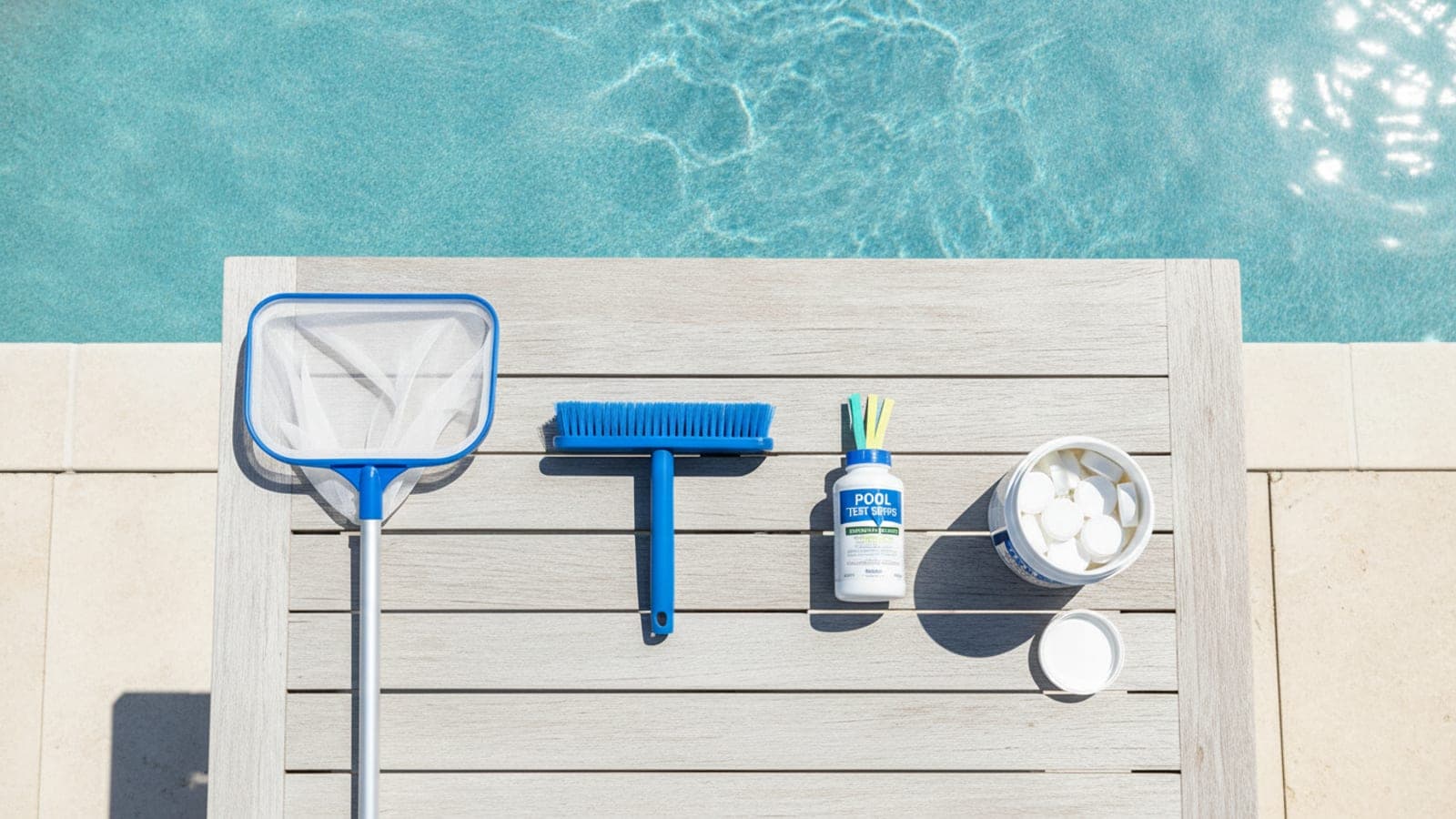
  • A reliable drop-style test kit or high-quality strips.
  • A pool brush matched to the pool surface.
  • A telescoping pole that does not feel like cooked spaghetti.
  • A manual skimmer net or deep leaf rake.
  • Replacement skimmer baskets if the current ones are cracked.
  • Filter cleaner or replacement cartridges when needed.
  • Gloves and goggles for chemical handling.
  • A robotic pool cleaner if manual vacuuming is the task people keep avoiding.

The affiliate module should not push every product at once. It should group products by task:

TaskRecommended module
TestingTest kit, strips, smart monitor if appropriate
Surface cleaningSkimmer net, leaf rake, skimmer socks
Wall/floor cleaningBrush, robot, replacement robot filters
Chemical dosingMeasuring cup, gloves, goggles, label-safe chemicals
Filter careCartridge cleaner, replacement cartridge, pressure gauge if applicable
SchedulingTimer, smart plug, printable checklist

This keeps the page helpful and monetizable without turning it into a chemical aisle with a keyboard.

What does a real example schedule look like?

A real schedule should feel doable. Here is an example for a 15,000-gallon outdoor chlorine pool with moderate tree debris, a cartridge filter, a floor robot, and family weekend use.

FrequencyTasks
Daily or every other dayCheck clarity, skim visible debris, empty skimmer basket if needed, confirm water level
Twice weekly in summerTest chlorine and pH, run robot, clean robot basket
WeeklyBrush steps and walls, check pump basket, inspect filter pressure/flow, adjust chemistry based on calculator results
After stormsSkim, empty baskets, brush, test chlorine and pH, run pump/robot as needed
MonthlyInspect cartridge condition, clean cartridge if pressure/flow suggests it, check ladder/rails, review supply inventory
SeasonalOpening checklist, closing checklist, salt-cell check if applicable, equipment inspection

The point is not to make the owner busy. The point is to make the pool predictable. A predictable pool is cheaper, easier, and less likely to turn green the day before company arrives, because pools have a mean little sense of timing.

This page should be a central hub. It should link to the calculators whenever the schedule says "adjust," because adjustment without measurement is just pouring money into water.

Internal links to include naturally:

Affiliate modules should appear after the generator output, not before it. Let the reader see the schedule first. Then show "what you need for this schedule," grouped by the tasks they were given.

That is the difference between helpful affiliate content and a shopping page wearing a fake mustache.

Frequently asked questions

What should a pool maintenance schedule include?

A useful pool maintenance schedule includes water testing, skimming, brushing, vacuuming or robot cleaning, filter checks, chemical adjustments, and seasonal tasks. The exact frequency depends on pool use, weather, debris, sanitizer type, and equipment.

How often should I test pool water?

Many homeowners test chlorine and pH several times per week during swimming season, and more often after heavy use, storms, heat, or chemical changes. Always follow local guidance and product label directions.

Can I maintain a pool once a week?

Some light-use pools can get by with one bigger weekly session plus quick checks, but most pools do better with short recurring tasks. Skimming and testing are much easier than recovering a neglected pool.

Should the schedule change for saltwater pools?

Yes. Saltwater pools still need pH, chlorine, alkalinity, stabilizer, salt level, cell inspection, and filter care. The generator should add salt-cell checks instead of treating saltwater as maintenance-free.

What should I buy first for pool maintenance?

Start with a reliable test kit, brush, telescoping pole, skimmer net, and the chemicals your actual test results call for. Add a robot, skimmer socks, or filter cleaner once you know your pool's regular problems.
The weekly skim

One short email a week: what to test, what to buy, and what to skip. No daily drip. Unsubscribe anytime.

Keep reading