A pool opening checklist should keep you from doing the classic spring routine: rip off the cover, gasp dramatically, dump in chemicals, and hope the pool remembers how to be water. A better opening plan is slower and much less theatrical: remove debris, inspect equipment, start circulation, test the water, clean the pool, then dose based on actual numbers.
Opening a pool is not one task. It is a sequence. If you do the sequence in the wrong order, you usually make more work for yourself.
Key takeaways
- Open the pool in order: cover, equipment, water level, circulation, debris removal, testing, chemistry, filtering, then swim check.
- Do not add a pile of chemicals before you test the water and confirm the pool volume.
- Clear water is not the only safety check; sanitizer, pH, circulation, visibility, and equipment condition all matter.
- Above-ground pools need extra attention to liner, frame, ladder, and wall condition.
- Inground pools need extra attention to valves, plugs, returns, pump baskets, cleaners, and equipment-pad leaks.
Table of contents
- What should a pool opening checklist generator do?
- What should you check before removing the pool cover?
- What is the right order for opening a pool?
- How should you restart the equipment?
- What should you test before adding chemicals?
- When should you shock or chlorinate during opening?
- What changes for above-ground pools?
- What changes for inground pools?
- What should you buy for opening day?
- When is the pool safe to swim?
What should a pool opening checklist generator do?
A pool opening checklist generator should create a step-by-step plan based on pool type, cover type, water condition, equipment, and whether the pool is green, cloudy, or mostly clear. It should not treat every spring opening like the same tidy brochure photo.
The generator should ask:
- Is the pool above-ground or inground?
- Is there a solid cover, mesh cover, safety cover, or no cover?
- Is the water clear, cloudy, green, black, or unknown?
- Can you see the bottom?
- What filter type do you have?
- Was the equipment winterized?
- Is the water level low, normal, or overflowing?
- Do you know the pool gallons?
- Do you own a pool robot, manual vacuum, or both?
Then it should create a checklist with sections for before, during, and after opening. That matters because people forget the little things: plugs, baskets, clamps, returns, valves, ladders, and the mysterious part sitting on the equipment pad that everyone agrees is probably important.
What should you check before removing the pool cover?
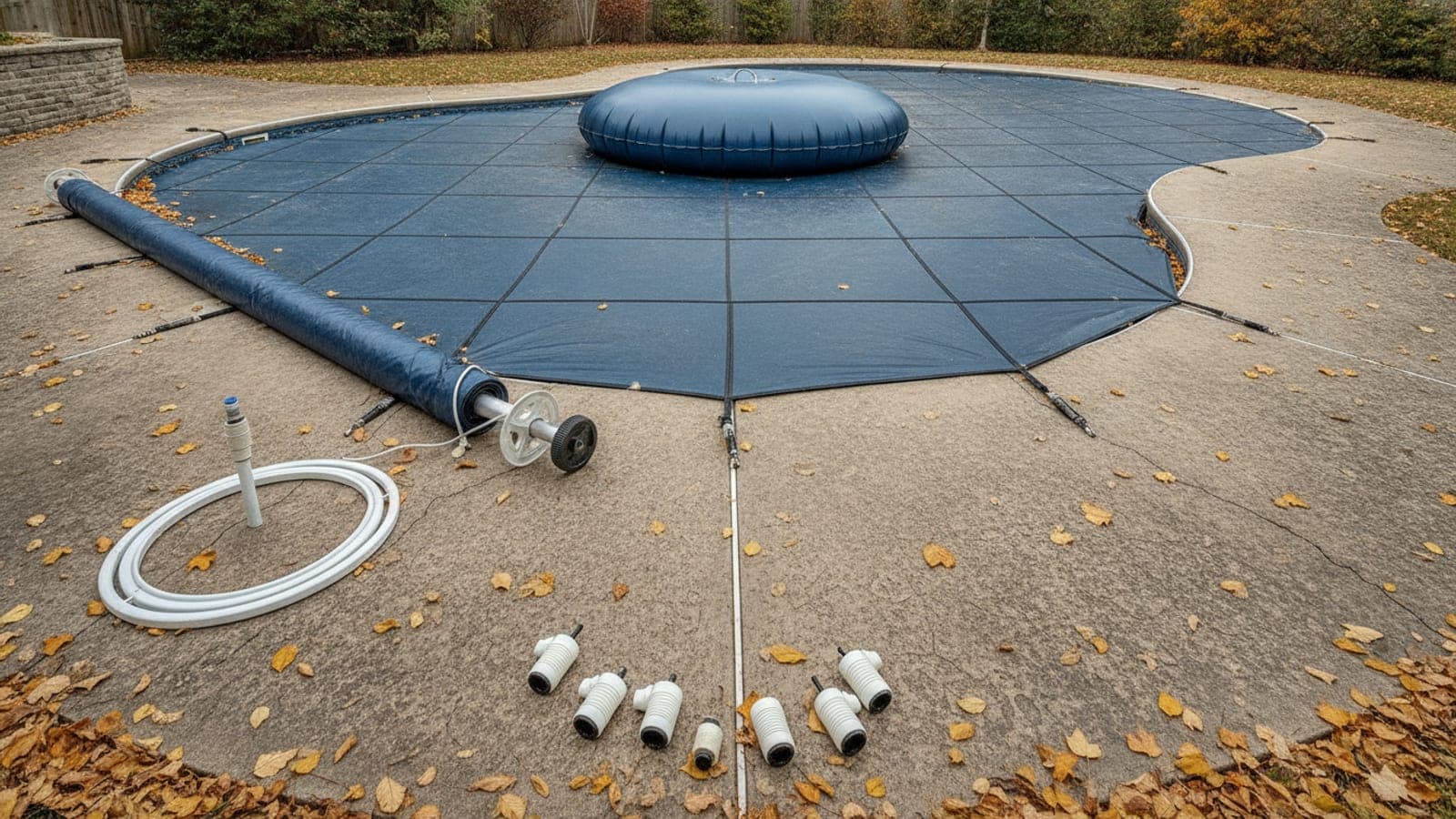
Before removing the cover, check the cover condition, standing water, debris load, anchors, springs, and anything that might dump dirty water into the pool. A rushed cover removal can turn a mostly decent pool into leaf soup with a splashy entrance.
Before pulling the cover:
- Remove large debris from the top.
- Pump off standing water if using a solid cover.
- Keep cover water out of the pool when possible.
- Inspect cover anchors, straps, springs, and fabric.
- Look around the equipment pad for obvious damage.
- Check for cracked lids, missing plugs, or loose unions.
- Confirm the water level is close enough for safe startup.
This is also a good place for an affiliate module: cover pump, leaf rake, cover cleaner, storage bag, gloves, and replacement cover hardware. People opening pools often discover what broke during winter. The page should help them replace the boring parts, because boring parts are what keep opening day from becoming a plumbing podcast.
What is the right order for opening a pool?
The right order is clean first, circulate second, test third, and dose fourth. Chemical products work better when debris is removed, water is moving, and the test results are known.
Here is the basic order:
| Step | Task | Why it matters |
|---|---|---|
| 1 | Remove cover water and debris | Keeps dirty cover water out of pool |
| 2 | Remove and clean the cover | Prevents moldy storage and next year's regret |
| 3 | Reinstall plugs, baskets, ladders, returns, and fittings | Restores normal pool setup |
| 4 | Fill to proper water level | Protects pump and skimmer operation |
| 5 | Start circulation | Moves water through the system |
| 6 | Skim, brush, vacuum, or run robot | Removes debris before heavy dosing |
| 7 | Test water | Tells you what is actually needed |
| 8 | Adjust pH, chlorine, alkalinity, and stabilizer as needed | Balances water based on numbers |
| 9 | Run filter and clean/backwash as needed | Clears suspended material |
| 10 | Confirm swim safety before use | Protects swimmers and equipment |
The generator should let users mark each step done. People love checkboxes because they make messy jobs feel like they are losing.
How should you restart the equipment?
Restart equipment carefully and watch the system for leaks, weak flow, air bubbles, strange noises, and pressure changes. Opening is when small equipment problems crawl out from winter and ask for attention.
Equipment restart checklist:
- Remove winter plugs from returns and skimmers.
- Reinstall drain plugs in pump, filter, heater, and chlorinator if removed.
- Inspect O-rings and lube only with manufacturer-approved lubricant.
- Fill pump basket with water before starting if needed.
- Open valves to the correct positions.
- Start the pump and watch for prime.
- Check filter pressure after flow stabilizes.
- Look for leaks around unions, lids, plugs, and filter bands.
- Confirm return jets are moving water.
- Clean pump and skimmer baskets after the first debris-heavy run.
If the pump will not prime or flow is weak, do not keep running it dry while staring at it with hope. Shut it off and check water level, baskets, valves, lid seal, plugs, and air leaks.
This section should internally link to the pool pump run time calculator and pool pump size calculator once those pages are live.
What should you test before adding chemicals?
Test pH, free chlorine, alkalinity, stabilizer/CYA when relevant, and salt level if the pool uses a saltwater chlorine generator. Testing before adding chemicals keeps opening from becoming expensive guessing.
The first test round should answer:
- Is free chlorine low, high, or okay?
- Is pH inside a workable range?
- Is alkalinity low, high, or contributing to pH drift?
- Is stabilizer/CYA too low or too high?
- Is salt in the target range for the specific salt system?
- Is the water clear enough to see the bottom?
The CDC recommends pH 7.0 to 7.8 for pools and gives minimum chlorine guidance for pools with and without cyanuric acid. That is why the checklist should link to calculators instead of telling everyone to add the same amount of product.
Use:
- Pool volume calculator
- Pool chlorine calculator
- Pool pH calculator
- Pool alkalinity calculator
- CYA calculator
When should you shock or chlorinate during opening?
Shock or chlorinate after you know the pool volume, water condition, and current test results. Many openings do need a chlorine boost, but the dose should come from the product label and a calculator, not from the emotional condition of the water.
If the water is green, the plan is usually:
- Remove debris.
- Start circulation.
- Test pH and chlorine.
- Adjust pH if needed before aggressive chlorination.
- Dose chlorine/shock based on gallons and label directions.
- Brush thoroughly.
- Filter continuously or on an extended schedule while cleaning.
- Clean/backwash filter as pressure or flow requires.
- Retest before swimming.
If the water is clear but sanitizer is low, the plan is simpler. Dose sanitizer, circulate, retest, and confirm the pool is safe before use.
Link green water to how to clean a green pool. Link cloudy water to how to clear cloudy pool water. Those two pages should catch the messier openings.
What changes for above-ground pools?
Above-ground pool openings need extra checks for the liner, frame, wall, legs, supports, ladder, pump hoses, and ground condition. Above-ground pools can be wonderfully simple, but they do not love uneven ground, soft spots, or ignored frame issues.
Above-ground checklist additions:
- Check the liner for wrinkles, brittleness, or leaks.
- Inspect wall panels, frame pieces, rails, and legs.
- Confirm the pool is still level and supported.
- Check hoses, clamps, pump connections, and filter fittings.
- Inspect ladder stability.
- Make sure electrical cords and pump placement are safe and dry.
- Fill slowly if the water level dropped a lot.
If the pool is new or being re-set for the season, link to above-ground pool cost calculator, how long it takes to set up an above-ground pool, and above-ground pool in a small yard.
What changes for inground pools?
Inground pool openings often involve more plumbing, valves, cleaners, heaters, automation, and equipment-pad checks. The water may be similar, but the equipment ecosystem has more ways to be dramatic.
Inground checklist additions:
- Check skimmer and return plugs.
- Inspect pump lid, pump basket, filter, heater, valves, and chlorinator.
- Confirm automation settings if used.
- Reinstall ladders, handrails, cleaner fittings, and return eyeballs.
- Check main drain and skimmer suction behavior.
- Inspect cleaner hoses or robotic cleaner parts.
- Watch for leaks at the equipment pad during startup.
If the pool uses a robotic cleaner, link to how often to run a pool robot and can you leave a pool robot in the pool. Opening is when many owners discover the robot filter basket is full of last year's archaeology.
What should you buy for opening day?
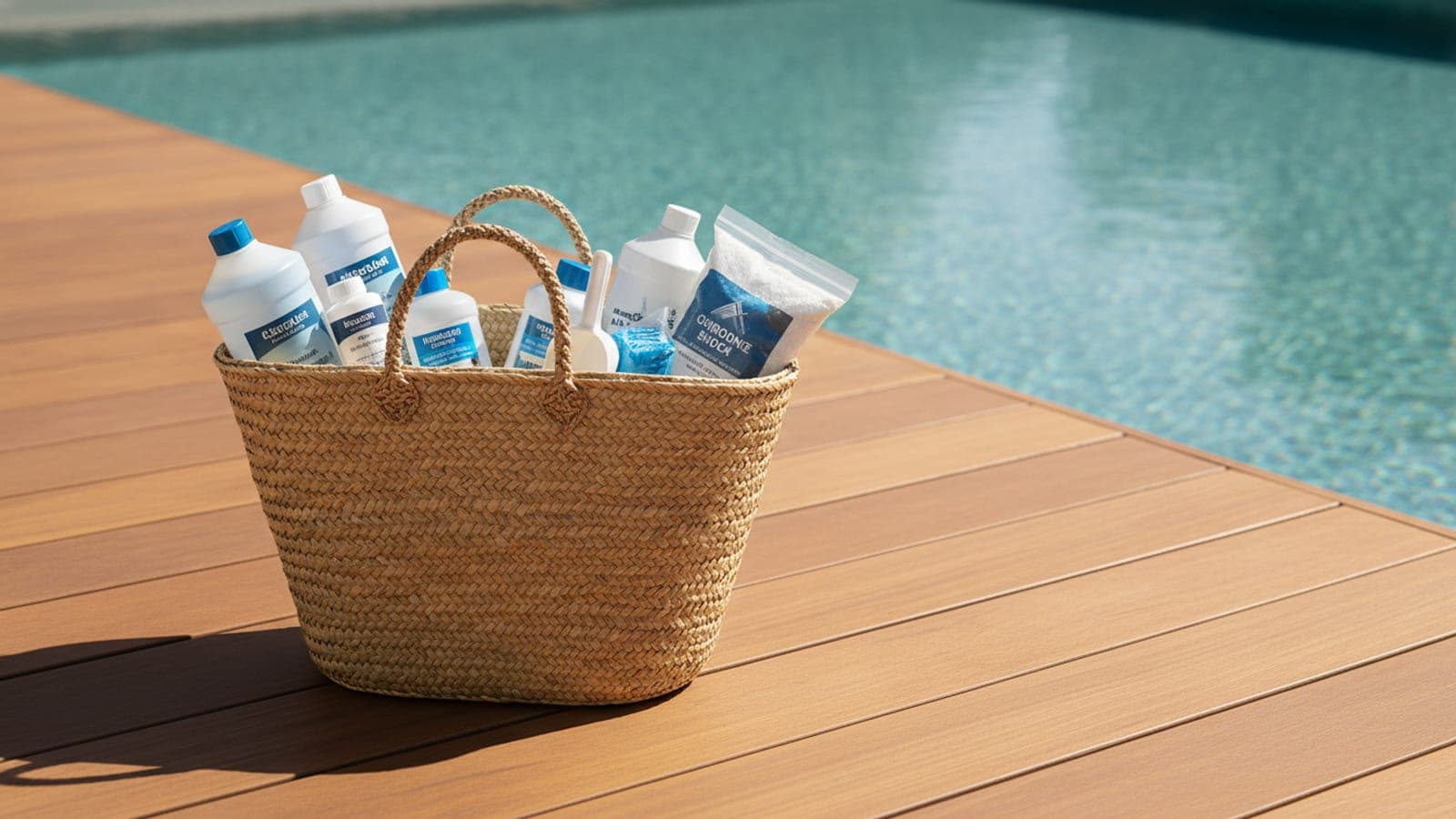
The opening-day shopping list should be based on the checklist result. Do not buy a giant opening kit and assume every item belongs in the water. Some kits are useful. Some are too generic for your pool's actual test results.
Recommended affiliate sections:
| Situation | Useful products |
|---|---|
| Cover has standing water | Cover pump, hose, leaf rake |
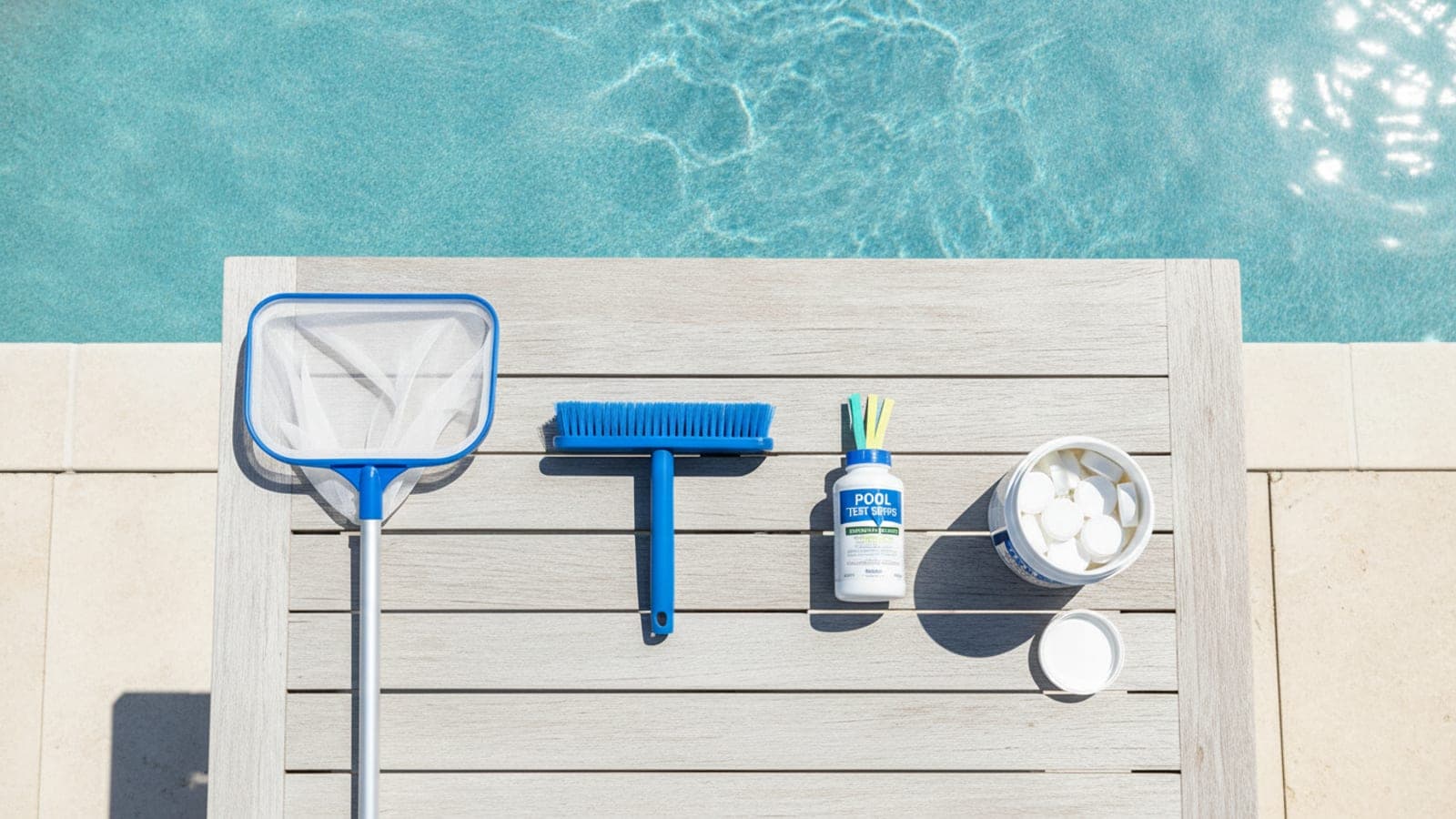
| Heavy debris | Leaf rake, skimmer net, replacement baskets |
| Unknown water chemistry | Drop-style test kit, strips as backup |
| Low sanitizer | Liquid chlorine or shock product based on label |
| High or low pH | Acid or soda ash based on calculator result |
| Dirty filter | Filter cleaner, replacement cartridge, DE or sand supplies as needed |
| Manual cleaning needed | Brush, pole, vacuum head, robot cleaner |
| Safety | Gloves, goggles, dry storage bin |
Place the affiliate module after the checklist output. The page should say: "Based on your answers, here is what you may need." That feels helpful. Starting with product cards before the checklist feels like the pool store hid inside the article.
When is the pool safe to swim?
The pool is safe to swim only when the water is clear enough to see the bottom, equipment is operating properly, and sanitizer and pH are in appropriate ranges. Do not treat a newly opened pool as ready just because it looks less scary than it did in the morning.
Before swimming, confirm:
- You can see the bottom clearly.
- Free chlorine is in the proper range for the pool and stabilizer use.
- pH is in range.
- The pump and filter are operating normally.
- There are no electrical, ladder, cover, or drain hazards.
- Chemical additions have circulated according to product label directions.
- The pool does not smell harsh, look cloudy, or have visible algae.
Link this final step to Is my pool safe to swim in?. That page should be the final safety checkpoint before the fun part, which is using the pool instead of arguing with it.
Frequently asked questions
What should be on a pool opening checklist?
A pool opening checklist should include removing water and debris from the cover, inspecting equipment, reinstalling plugs and fittings, filling to the correct level, starting circulation, cleaning debris, testing water, balancing chemistry, and waiting until the water is safe before swimming.
Should I shock the pool right after opening?
Often you will need chlorine or shock during opening, but test first and dose based on pool volume, product label directions, and current water condition. Do not add products blindly just because the cover came off.
Can I swim the same day I open the pool?
Only swim when the water is clear enough to see the bottom, equipment is operating safely, and sanitizer and pH are in appropriate ranges. If the pool is cloudy, green, or chemically out of range, wait.
What is the biggest pool opening mistake?
The biggest mistake is adding several chemicals before cleaning debris, starting circulation, and testing the water. Opening works better when you clean, circulate, test, then dose.
Do above-ground and inground pools need different opening checklists?
Yes. The basic order is similar, but above-ground pools often need more wall, liner, and frame checks, while inground pools may involve more plumbing, valves, drains, cleaners, and equipment pad inspection.