A green pool is an algae bloom, and the fix is a specific sequence — not throwing every bottle in the shed at it. Random chemical soup wastes money, can make the water worse, and skips the steps that actually clear it. Here's the orderly path from green to clear. Follow all product labels and keep people out until the water's balanced and clear.
Understand what green means
Green water is algae, and algae blooms when there isn't enough active chlorine to kill it — usually because chlorine ran low, stabilizer is off, or the water sat unbalanced. That's why the fix isn't one magic product: it's restoring sanitizer and filtration in the right order. Reaching for algaecide first, or dumping in mixed chemicals, treats the symptom randomly instead of the cause. Do the steps in sequence and it clears reliably.
Step 1: Balance pH, then shock hard
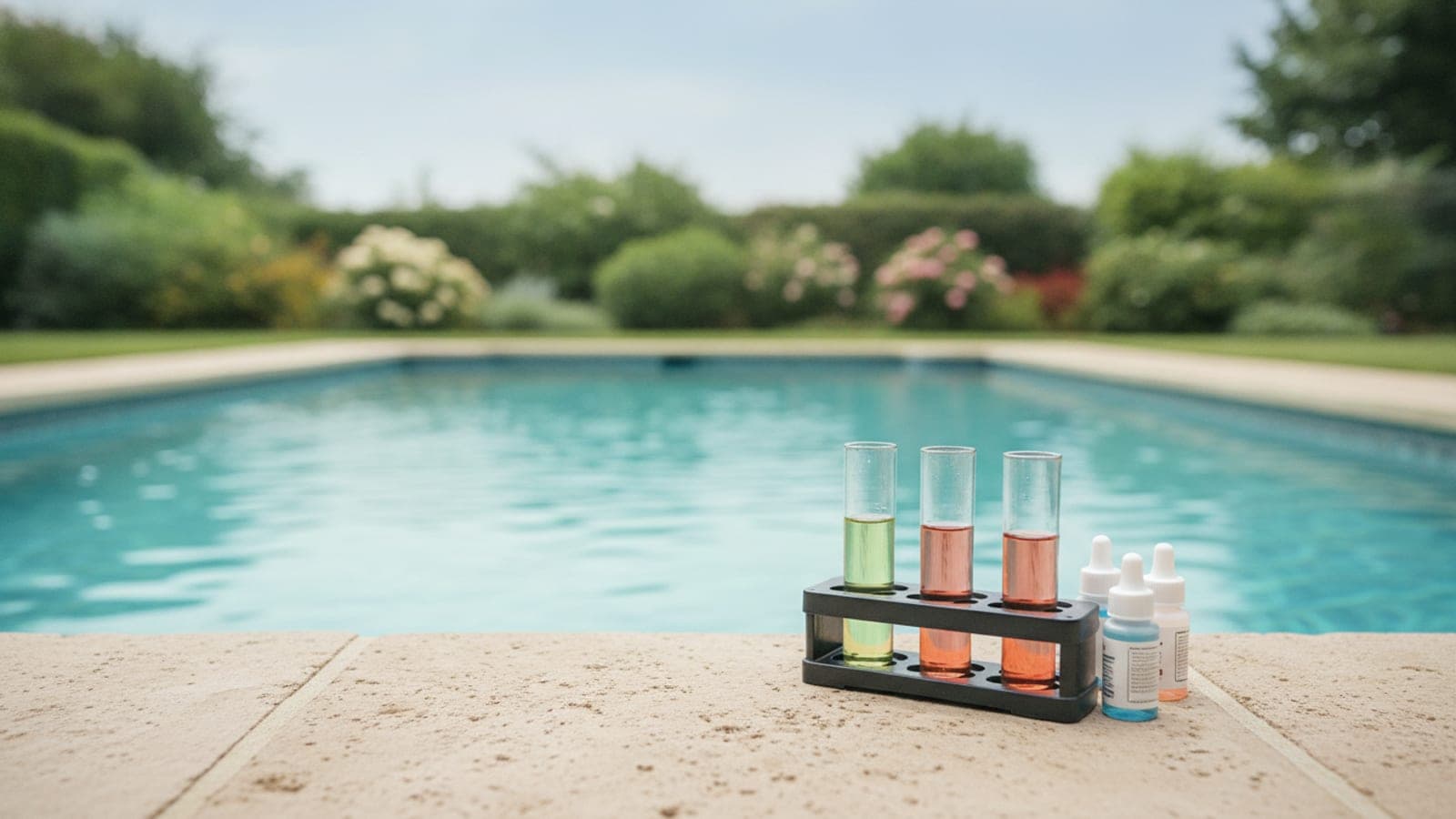
Chlorine works best when pH is in range, so test and adjust pH to roughly 7.2–7.6 first — shocking into high-pH water wastes much of the chlorine. Then shock the pool with a heavy dose of chlorine, following the product label for the amount relative to your pool volume. Green water needs a real shock, not a normal dose; under-shocking is why blooms come back. Run the pump continuously so the chlorine circulates everywhere.
Step 2: Brush, circulate, and filter
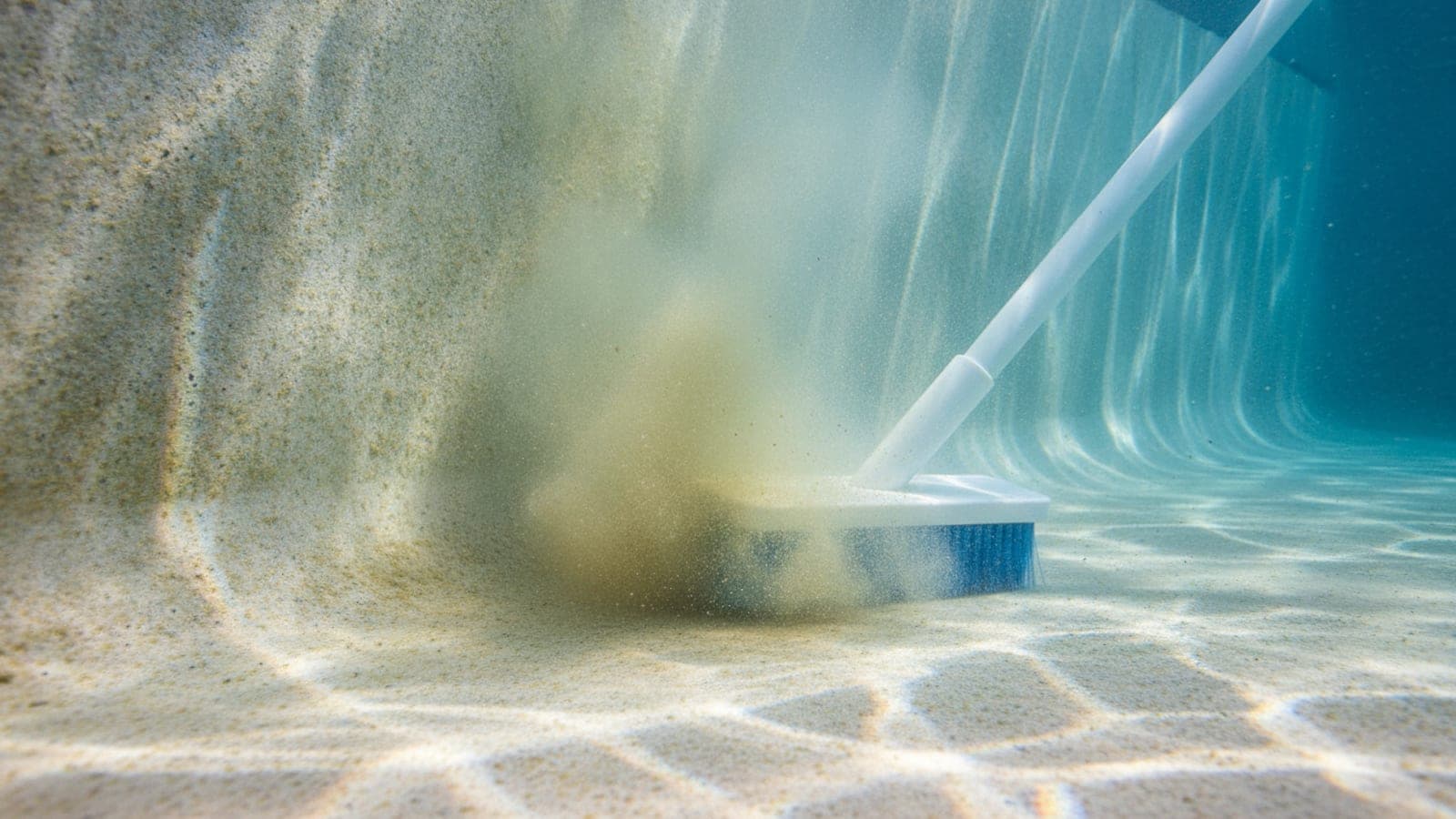
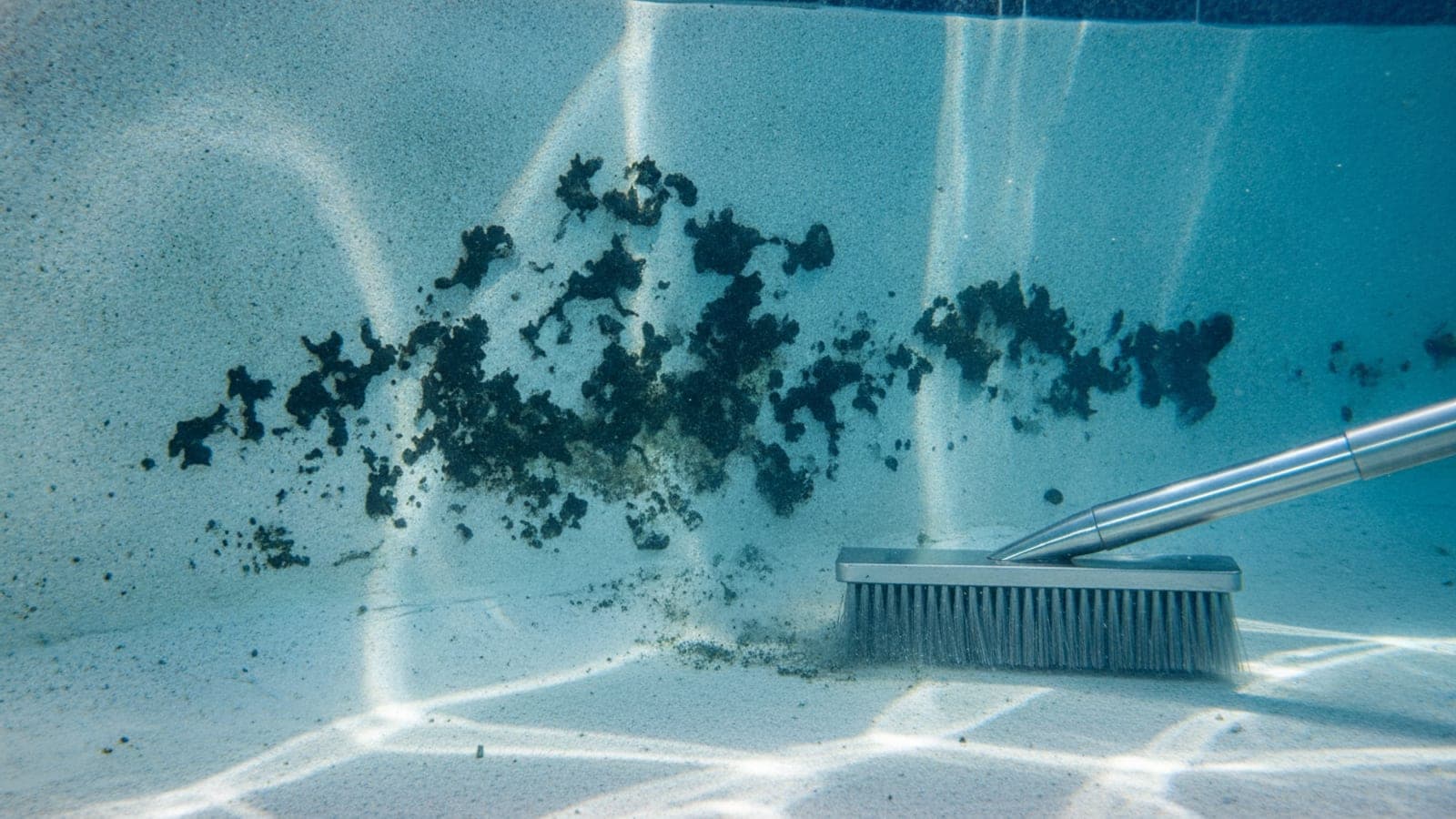
Chlorine kills the algae, but your filter and brush remove the dead remains. Brush the walls and floor to knock loose clinging algae so the chlorine can reach it, run the pump 24 hours a day while you clear the bloom, and clean or backwash the filter as it loads up with dead algae — it will clog fast. This circulation-and-filtration step is what actually turns the water from green to cloudy to clear, and it takes patience over a day or more.
Step 3: Retest and hold chlorine up
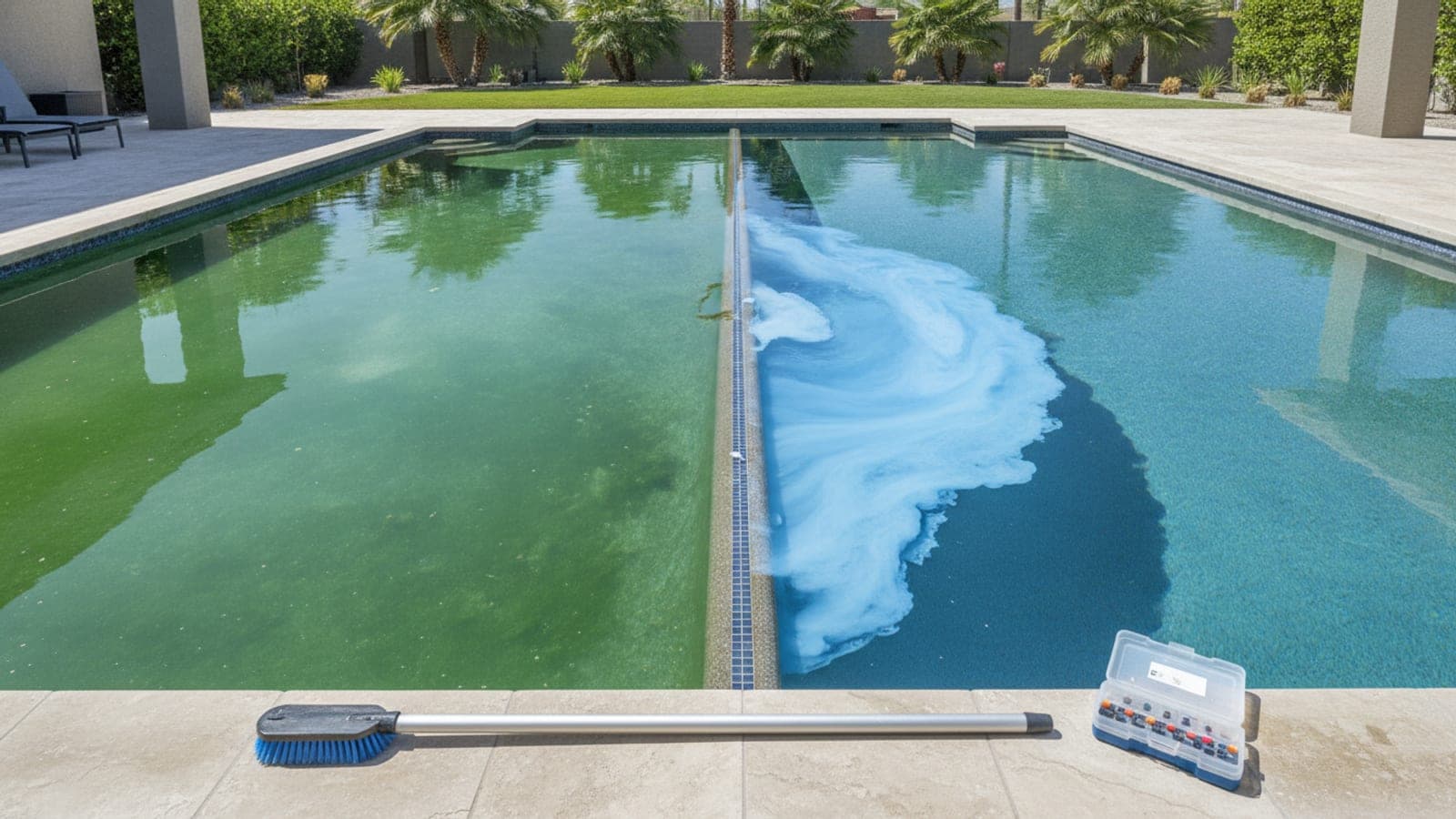
Keep chlorine elevated until the water clears and holds. As the bloom dies the water usually goes from green to cloudy white before clearing — that's progress. Retest and keep free chlorine high until it stops dropping overnight, which signals the algae is dead. Then rebalance everything back to normal ranges. An algaecide can help as a follow-up preventive once the water's clear, but it's a supplement to chlorine, not a replacement for the shock-and-filter work.
Prevent the next one
Green pools are almost always a lapse in the basics. Keep free chlorine steady in range, keep stabilizer (CYA) where it belongs so chlorine isn't burned off by the sun or locked up by excess, test regularly, and run adequate filtration. Catching a chlorine dip with a test kit before it becomes a bloom is far cheaper and easier than clearing green water. Our shock calculator can size the dose when you do need to knock one out.
Frequently asked questions
What is the fastest way to clean a green pool?
The fastest reliable path is to remove debris, test the water, correct pH if needed, dose chlorine based on pool volume and test results, brush thoroughly, run filtration, clean the filter, and retest.
Can I just add shock to a green pool?
Shock helps, but it is not the whole job. A green pool also needs brushing, circulation, filtration, and repeated testing.
Why did my green pool turn cloudy blue?
That often means algae has been killed or damaged but the dead material still needs filtration, brushing, and time to clear. Check the filter before adding random clarifiers.
When should I call a pool professional for a green pool?
Call a professional if you cannot see the floor, the equipment is not running, the pool has heavy debris, you suspect a major chemical mistake, or the water does not improve after correct testing and filtration.
Can a robotic pool cleaner clean a green pool?
A robot can help remove debris after the water is safe for the equipment, but it does not replace chlorine, brushing, circulation, and filtration. Do not use expensive equipment in water that may damage it.