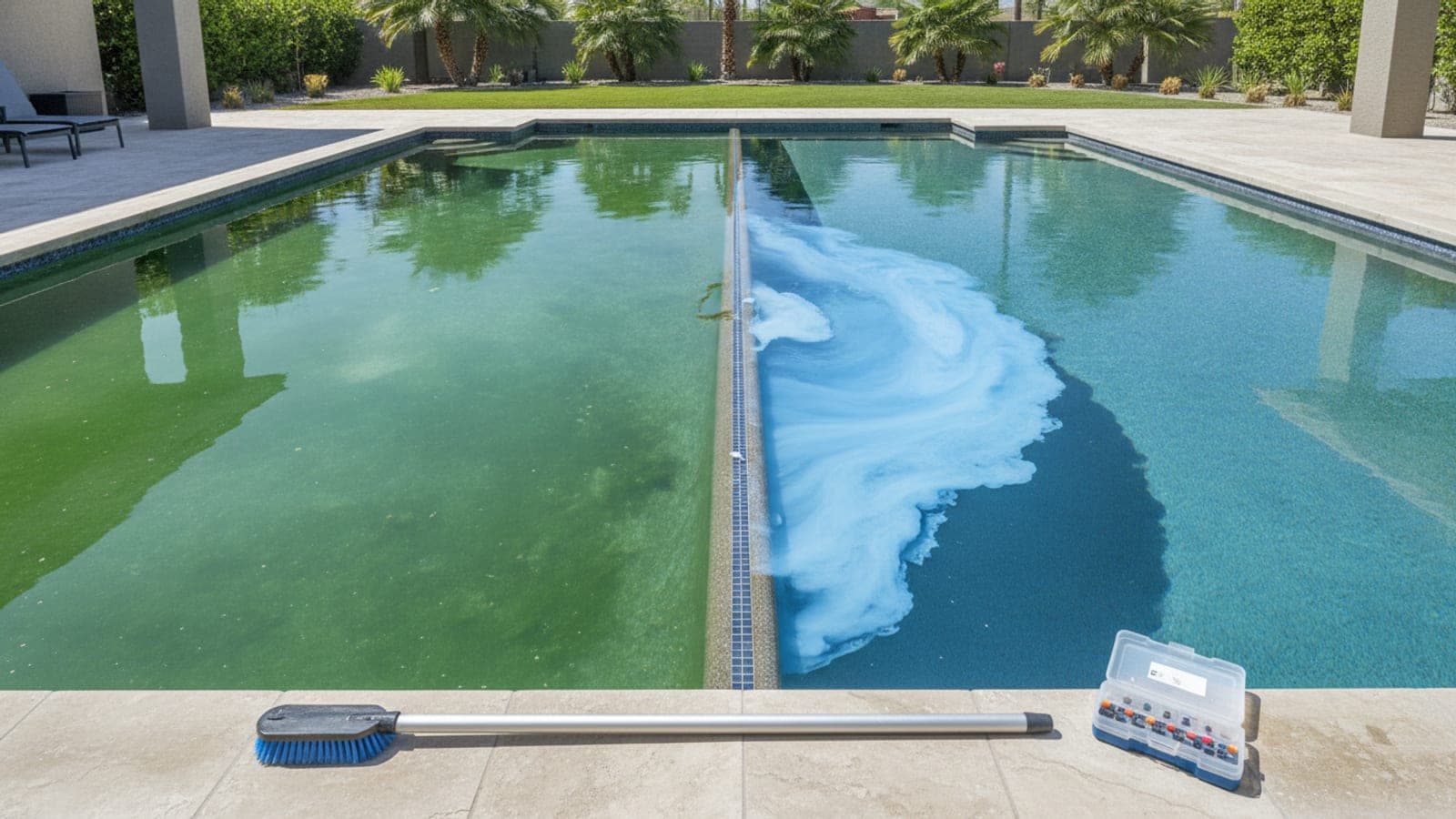
Pool foam almost always comes from three things: water that is low in calcium hardness, leftover soaps and lotions from swimmers, or too much algaecide. The bubbles that pile up around your jets and skimmer are a surface-tension problem, and once you know which of those three is behind it, the fix is usually simple and cheap.
Foam is different from cloudy water or scum. Foam is a layer of small, stubborn bubbles that do not pop the way normal splash bubbles do. That stubbornness is the clue. Something in the water is holding the bubbles together, and that something is what you need to find and remove.
What actually causes pool foam?
The most common cause is low calcium hardness. Calcium hardness is the amount of dissolved calcium in your water, measured in parts per million (ppm). Soft water, meaning water low in calcium, has weak surface tension and foams easily when the pump pushes it around. Most pools are happiest between 200 and 400 ppm, though you should check your equipment manual since some surfaces and heaters want a specific range.
The second big cause is organic gunk from people. Sunscreen, tanning oil, deodorant, hair products, laundry detergent left in swimsuits, and even some pool floats leave a soapy film. Those are surfactants, and surfactants are literally what makes bubbles in dish soap. A busy pool weekend can load the water enough to foam by Monday.
The third cause is chemical, usually algaecide. Cheaper algaecides use poly-quaternary compounds (poly-quats) that are surfactants themselves. If you pour in a heavy dose to fight a green pool, do not be surprised when the water foams for days afterward. Some low-quality clarifiers and even certain generic chemicals can do the same.
How do I figure out which cause is mine?
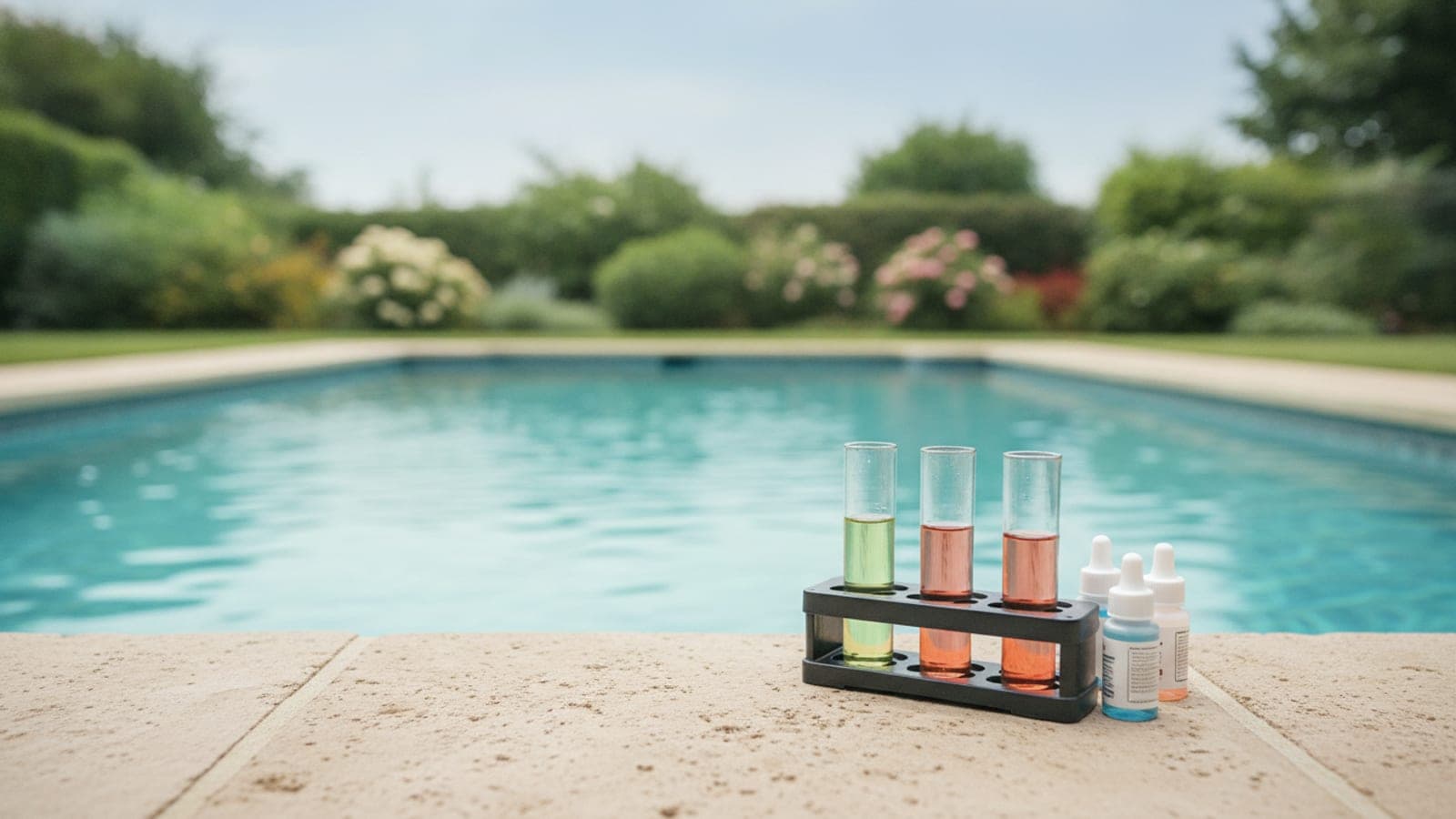
Start with a test kit or test strips, because guessing wastes chemicals. If you do not have a reliable kit, that is the first thing to grab from our pool maintenance supplies, and our pool chemistry basics guide walks through what each reading means.
Check calcium hardness first. If it is under about 150 ppm, low calcium is very likely your foam source, especially if you have a plaster or salt pool where soft water is common. The CDC has a plain-language overview of home pool water testing and treatment worth reading if you are new to this (cdc.gov).
Next, think about recent activity. Did you host a pool party, add a fresh dose of algaecide, or drop in new floats or toys right before the foam showed up? Timing is your best detective tool. If the foam started right after you treated for algae, you have your answer.
How do I get rid of foam from low calcium?
Raise the calcium hardness. A calcium hardness increaser, which is basically calcium chloride, brings soft water back into range and restores surface tension so the bubbles stop forming. In The Swim Calcium Hardness Increaser (25 lb) is a straightforward option, and the label will give you the dose per 10,000 gallons.
Add it slowly and retest before adding more, since raising calcium is easy but lowering it means draining and refilling. Run the pump while it dissolves and give it a day to circulate. If you have a saltwater setup, our saltwater pool maintenance guide covers why salt pools drift low on calcium and how to stay ahead of it.
How do I clear foam from lotions, soaps, and body oils?
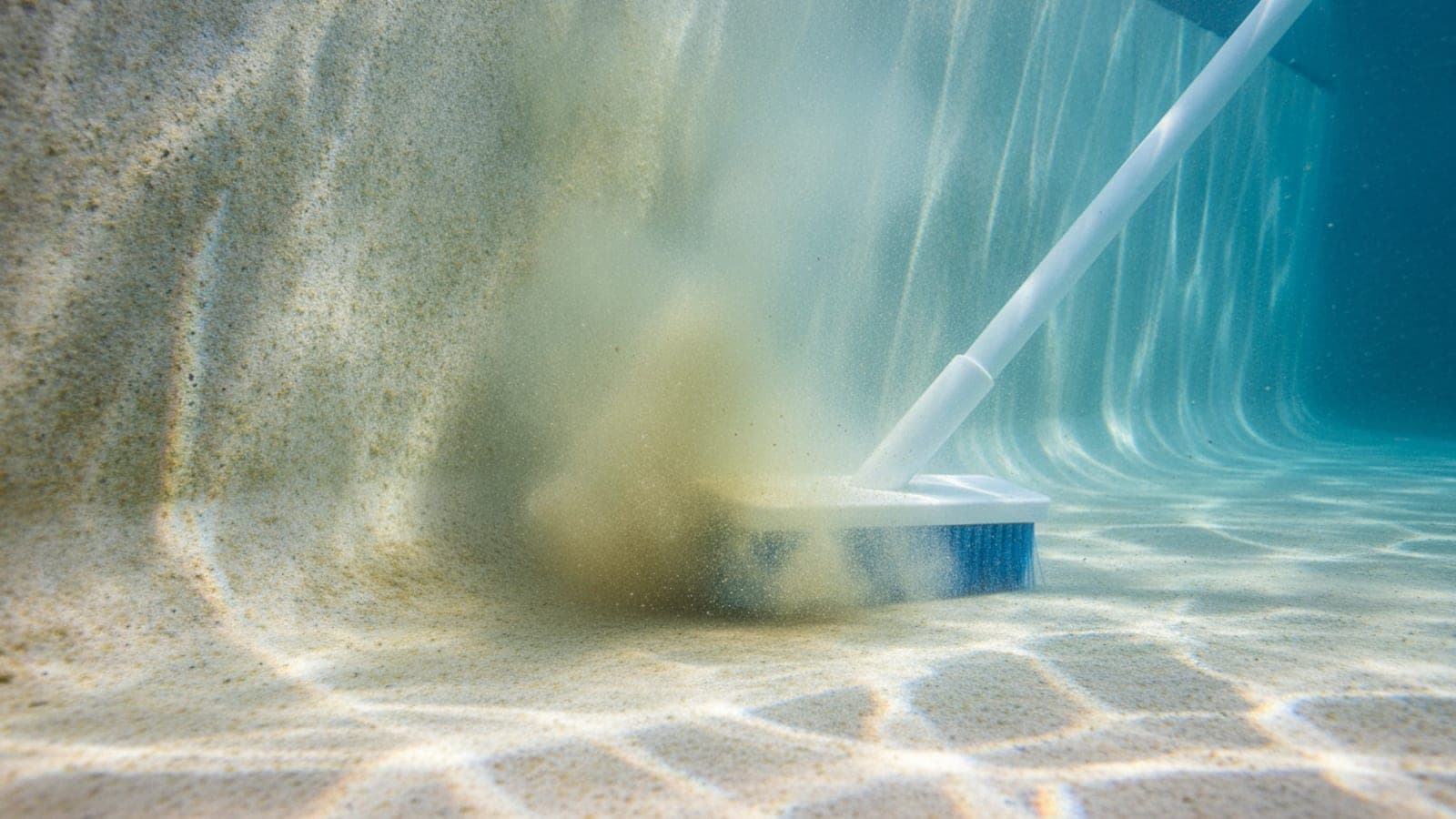
Filter it out and break it down. Run the filter continuously for a day, and if you have a sand or cartridge filter, clean or backwash it since a dirty filter cannot grab the fine oils.
A clarifier helps here by clumping tiny particles so the filter can catch them. In The Swim Super Clarifier (1 Quart) is a common choice for this job. For a heavy organic load, a normal chlorine shock also helps oxidize the oils and soaps, so make sure your chlorine and pH are in range first. Ask everyone to rinse off before swimming, and wash new swimsuits before their first dip, because fresh detergent in fabric is a sneaky foam source.
What if algaecide caused the foam?
There is no instant cure, so plan for patience. If you overdosed a poly-quat algaecide, the surfactant has to break down and dilute over time. The fastest thing you can do is a partial water change, draining and refilling maybe a quarter of the pool to cut the concentration.
Keep the pump running and the filter clean, and the level will drop over about a week. Going forward, measure algaecide carefully and consider a higher-quality product like In The Swim Algaecide 60 Plus (1 Quart), which is more concentrated so you use less and foam less. Better yet, keep chlorine steady so you rarely need algaecide at all.
Can I just use a defoamer to kill the bubbles?
Yes, but understand what it does. Anti-foam or defoamer products break the surface tension holding the bubbles together, so the foam collapses within minutes. That is great before a party, but it is purely cosmetic. The underlying cause is still there, and the foam will come back until you fix it.
Treat defoamer as a stopgap, not a solution. Use the quiet time it buys you to test the water and address the real issue.
When should I call a pro or change the water?
If you have tested, corrected calcium, cleaned the filter, and the foam still will not quit after a week, it is time to escalate. Persistent foam alongside odd colors, strong odors, or a sudden inability to hold chlorine can point to a bigger chemistry problem or a contaminant that needs draining.
Whenever you handle pool chemicals, follow safe storage and handling practices, since mixing the wrong things is genuinely hazardous (epa.gov and npic.orst.edu). Hot tubs foam for the same reasons but faster, thanks to hot water and heavy jets, so our hot tub maintenance guide is worth a look if your spa is the culprit. When in doubt, a local pool pro can test for things a home kit cannot and save you a full drain.
Frequently asked questions
Is pool foam dangerous to swim in?
Foam itself is usually harmless, but it is a signal that your water chemistry or cleanliness is off. Test the water before swimming, and if the foam came with cloudy or smelly water, hold off until you have balanced things. The bubbles are a symptom, not the disease.
Will an anti-foam or defoamer product fix the problem for good?
No. Defoamers knock the bubbles down in minutes but do nothing about the cause, so the foam usually returns. Use them as a quick cosmetic fix before guests arrive, then chase the real issue like low calcium or leftover algaecide.
Can too much algaecide cause foam?
Yes, this is one of the most common causes. Cheaper poly-quat algaecides are surfactants, and an overdose makes the water foam every time the pump agitates it. There is no fast antidote besides diluting with fresh water and letting it work through over time.
Why does my pool foam more when the jets are on?
Agitation whips air into water that already has foam-forming stuff in it, like low calcium, soaps, or algaecide. The jets do not create the problem, they just reveal it. If foam only shows with high agitation, that is a strong hint the water needs attention.
How long does it take for pool foam to go away after I fix the cause?
It depends on the cause. Raising calcium hardness or adding clarifier can clear foam within a day or two, while an algaecide overdose may take a week of run time and partial water changes. Keep the filter running and retest as you go.