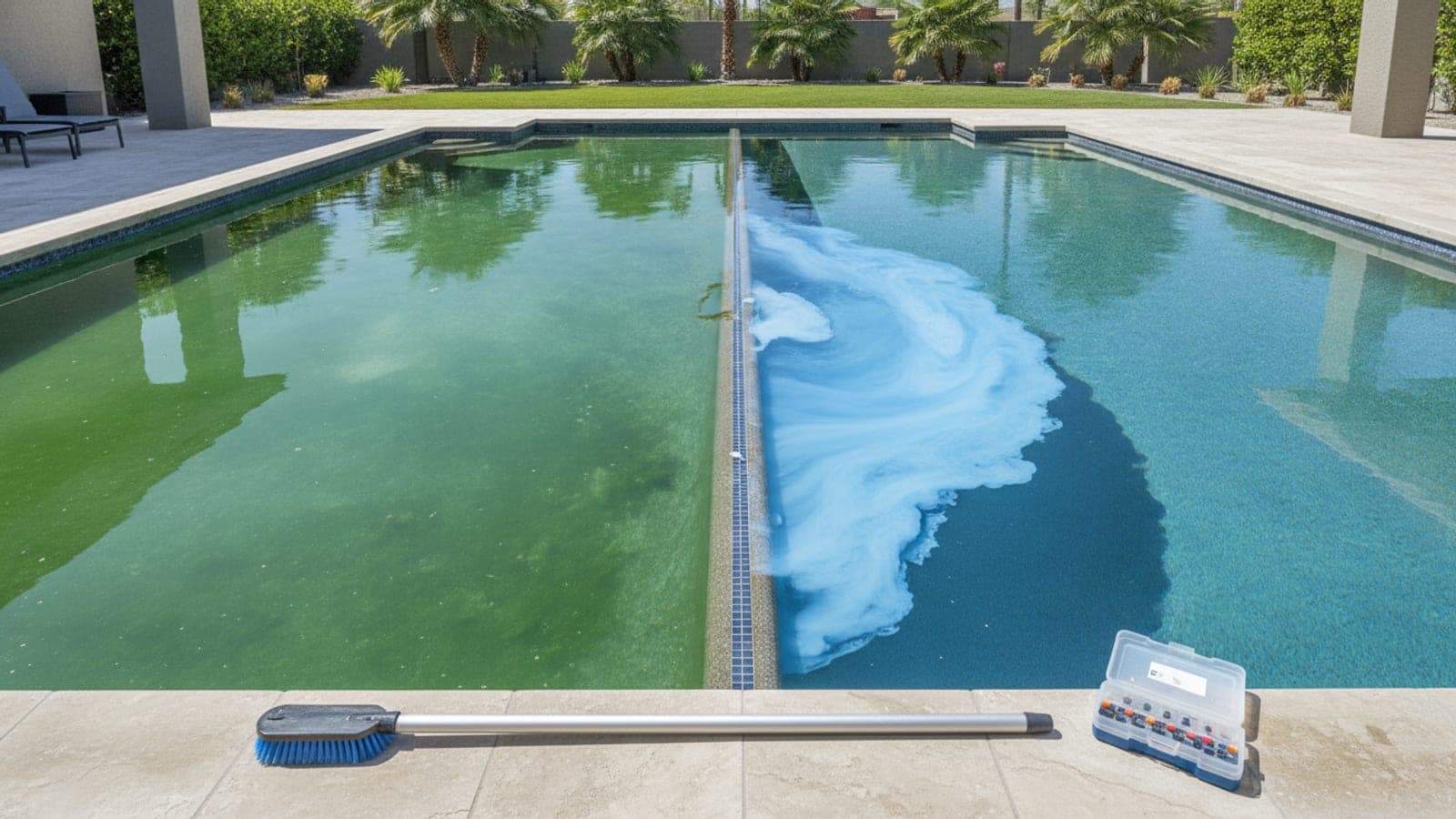
Mustard algae — the dusty yellow-green stuff that brushes off walls and floor but keeps coming back — is stubborn because it resists normal chlorine levels and clings to everything, including your gear. Beating it takes a thorough, complete-the-course approach. Here's how. Follow all product labels and keep people out until the water is balanced and clear.
Know what you're fighting
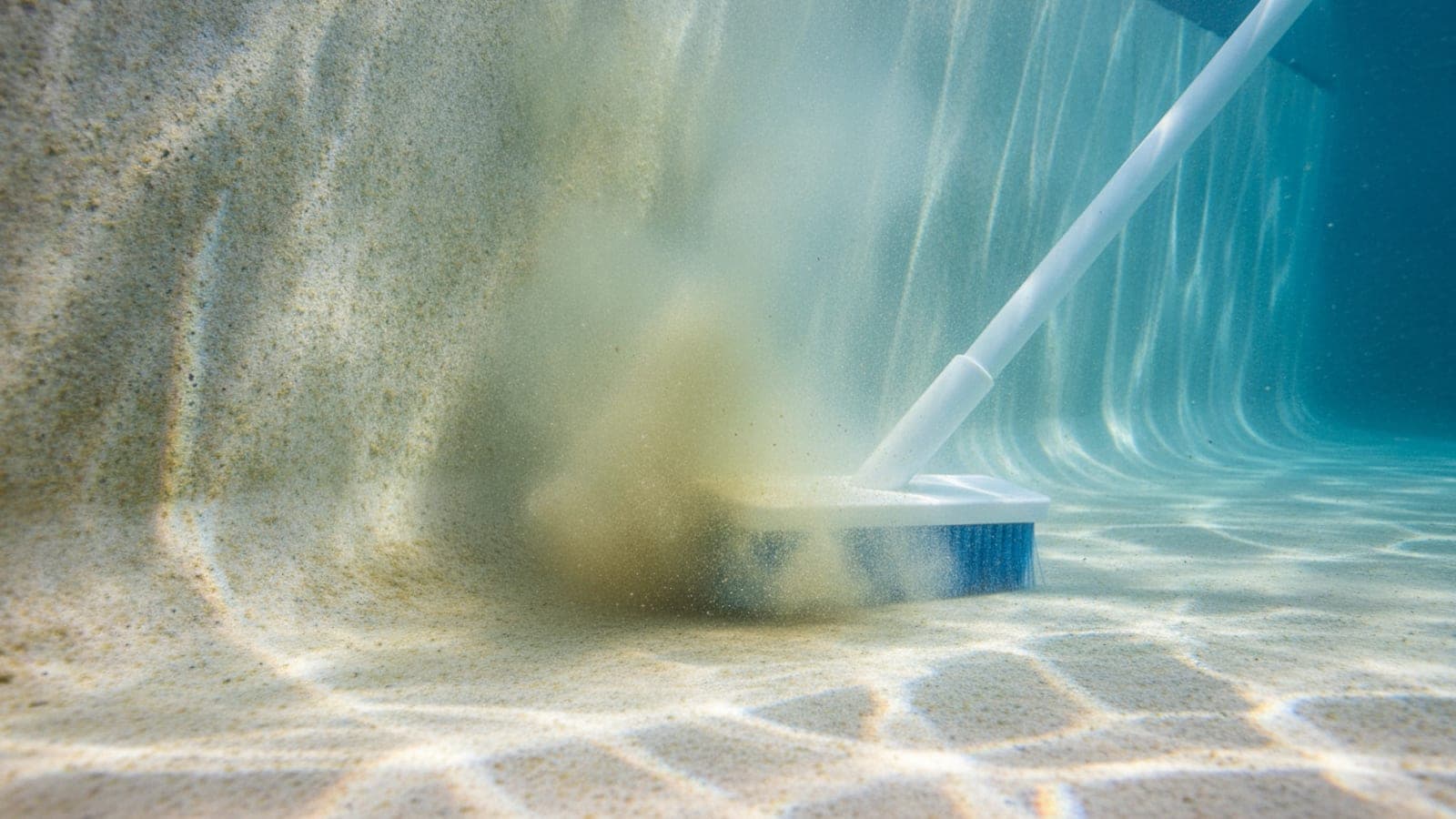
Mustard algae (sometimes called yellow algae) looks like sand or pollen dusted on the shady side of the pool, wipes away easily when brushed, then returns within days. What makes it stubborn is that it tolerates chlorine levels that would kill green algae, and it hides in and on everything the water touches — walls, floor, and crucially your equipment, floats, brushes, and even swimsuits. That's why half-measures fail: you kill it in the water but reinfect from your gear.
Balance, then shock harder than usual
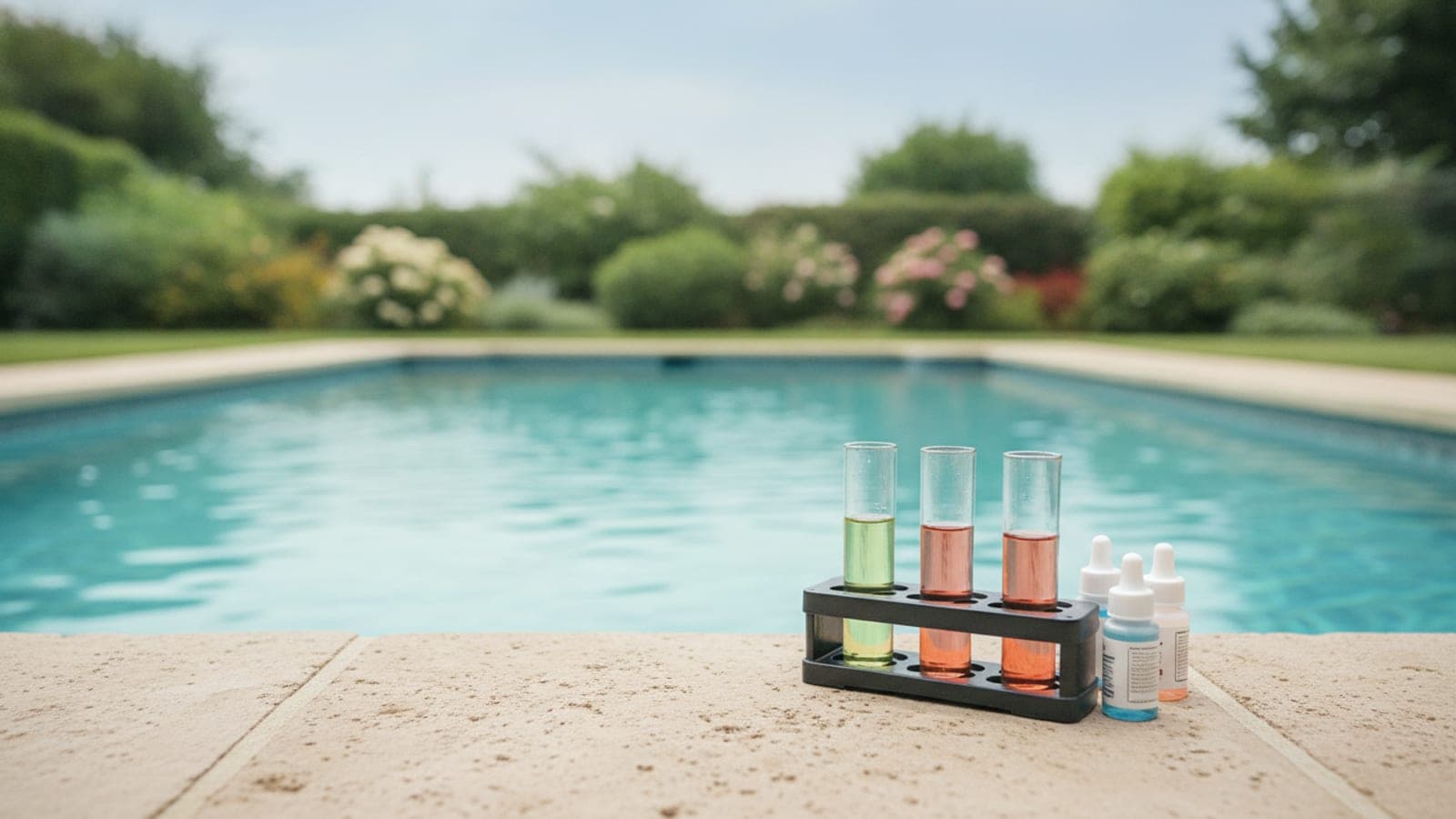
Get chlorine working at full strength. Adjust pH into the 7.2–7.6 range so chlorine is effective, then shock the pool to a higher level than you would for green algae, following the product label for your volume — mustard algae needs a stronger, sustained chlorine hit. Some owners use a specialty mustard-algae treatment alongside the shock. Run the pump continuously throughout so the elevated chlorine reaches every surface, and hold it high until the algae stops returning.
Brush everything, repeatedly
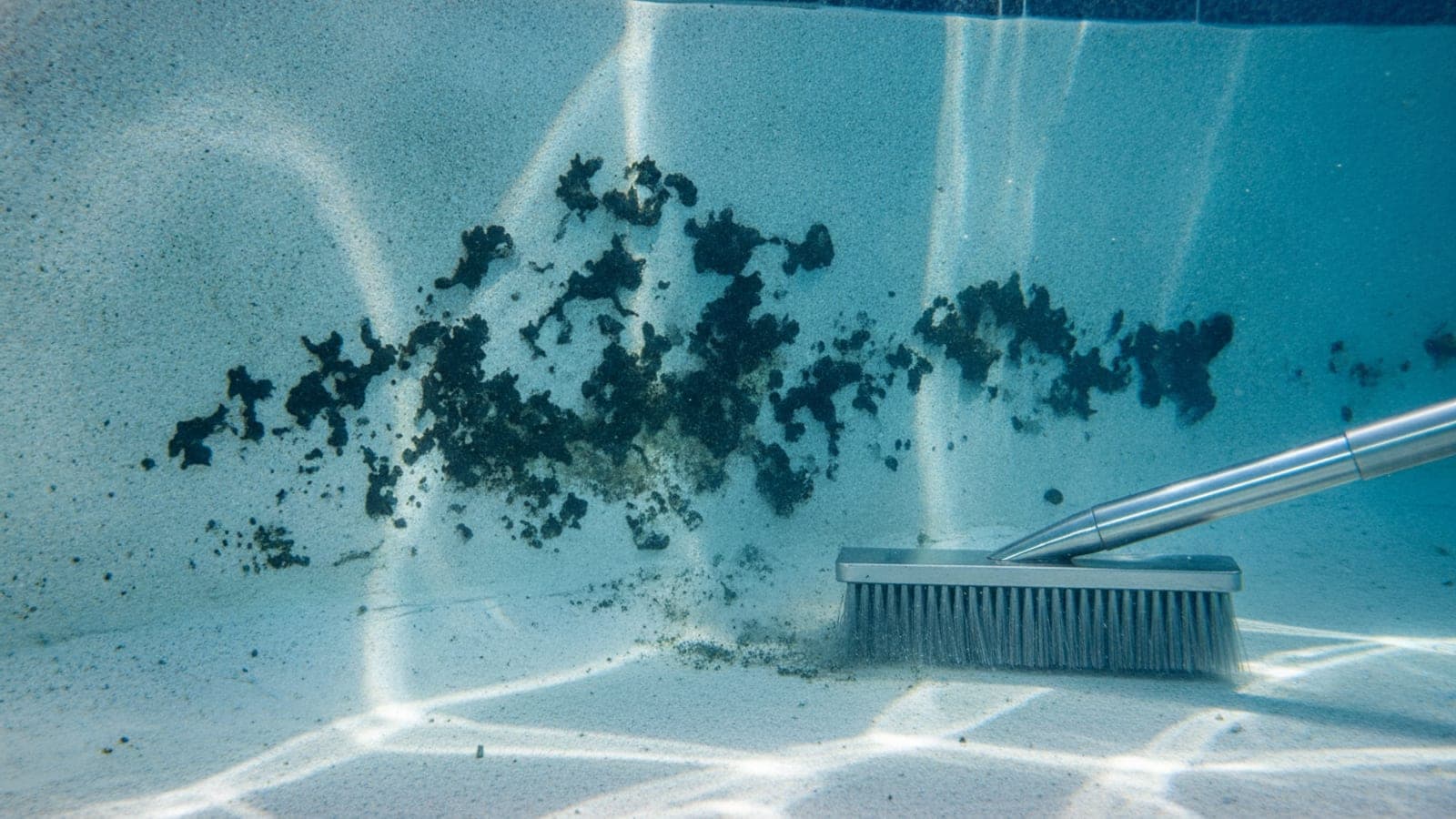
Mechanical removal matters as much as chemistry. Brush the entire pool — especially the shady walls and steps where mustard algae hides — to break it loose so chlorine can reach and kill it, and repeat the brushing over the treatment days because it clings back on. A stiff pool brush is your main tool here. Vacuum up the loosened algae, and clean or backwash the filter often, since it will collect the dead algae and clog.
Decontaminate your gear
This is the step people skip and then wonder why it comes back. Mustard algae survives on anything that went in the pool, so while you treat the water, clean and disinfect everything that touched it — the robot and its filter, brushes, nets, poles, floats, toys, and any swimwear (wash it). If you leave live algae on your equipment, it reinfects the pool the moment you dip the gear back in. Treat the whole system, not just the water.
Confirm it's gone and prevent it
Don't stop early. Keep chlorine elevated and keep brushing until the yellow film stops reappearing for several days straight — quitting the moment it looks clean is why it recurs. Then rebalance to normal ranges. To prevent a return, keep chlorine and stabilizer steady in range, brush shady spots during your routine, and stay on top of testing. Mustard algae mostly gets a foothold when sanitizer dips, so consistent chemistry is the real defense.
Frequently asked questions
What is mustard algae in a pool?
Mustard algae (also called yellow algae) is a chlorine-resistant algae that looks like fine yellow or brownish dust or sand, usually on shaded walls and floor. It brushes away easily but returns fast, and unlike green algae it can survive normal chlorine levels — which is why it feels impossible to kill.
Why does mustard algae keep coming back?
Because it tolerates normal chlorine and it hides on anything that touched the pool — swimsuits, towels, floats, the pole and brush, and the robot. If you only treat the water and skip those items, survivors re-seed the pool within days. Clearing it for good means treating the water and decontaminating the gear at the same time.
Will regular pool shock kill mustard algae?
A single normal dose often isn't enough. Mustard algae usually needs chlorine raised well above normal and held there while you brush repeatedly, plus decontamination of everything that contacted the water. Always follow your shock product's label for dosing and swim-safe timing.
Is mustard algae harmful to swim in?
The algae itself is generally considered non-toxic, but a pool with an active bloom often has chlorine that can't keep up, which means other organisms may not be controlled either. Get chlorine back in range and the water clear before swimming, and follow product labels on when it's safe.
How do I stop mustard algae from returning?
Keep sanitizer and stabilizer (CYA) in range so chlorine stays effective, brush shaded areas regularly, run the filter enough, and rinse or sun-dry pool toys and swimwear. A relapse almost always traces back to low effective chlorine or a contaminated item that never got cleaned.