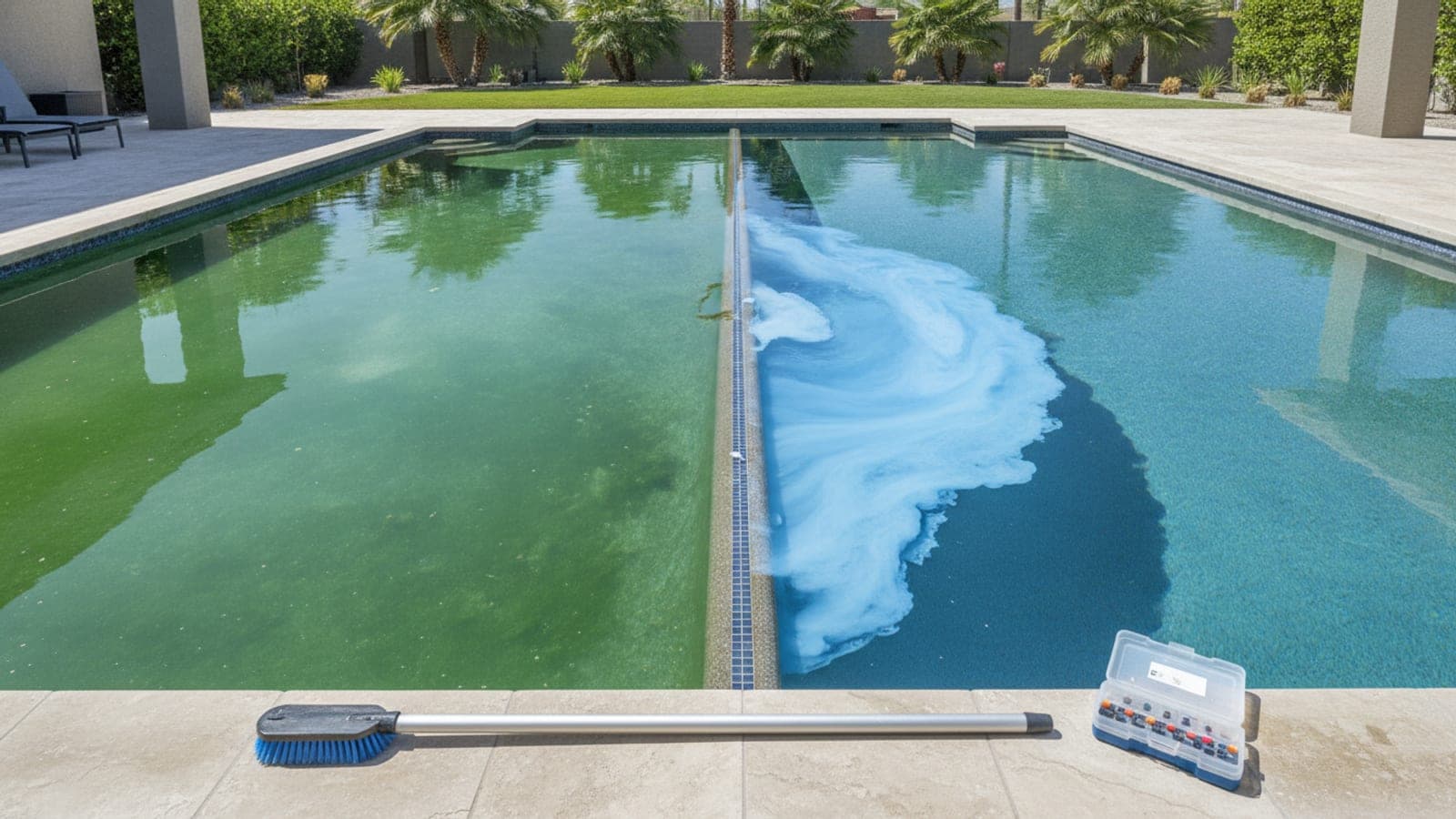
Cloudy water has a handful of common causes, and clearing it fast is about diagnosing which one you have rather than guessing. Chase the wrong cause and you'll pour in chemicals that don't help. Here's a simple path from cloudy to clear. Follow product labels and retest as you go.
The four usual suspects
Cloudy water almost always comes down to one of four things: unbalanced chemistry (especially high pH or off sanitizer), poor filtration or too little run time, fine debris the filter can't catch, or the early or dying stage of an algae bloom. The fix is to check them in order — chemistry first, then filtration, then debris, then algae — because the cheapest, most common causes come first. Working the path beats dumping in clarifier and hoping.
Step 1: Test and balance the chemistry
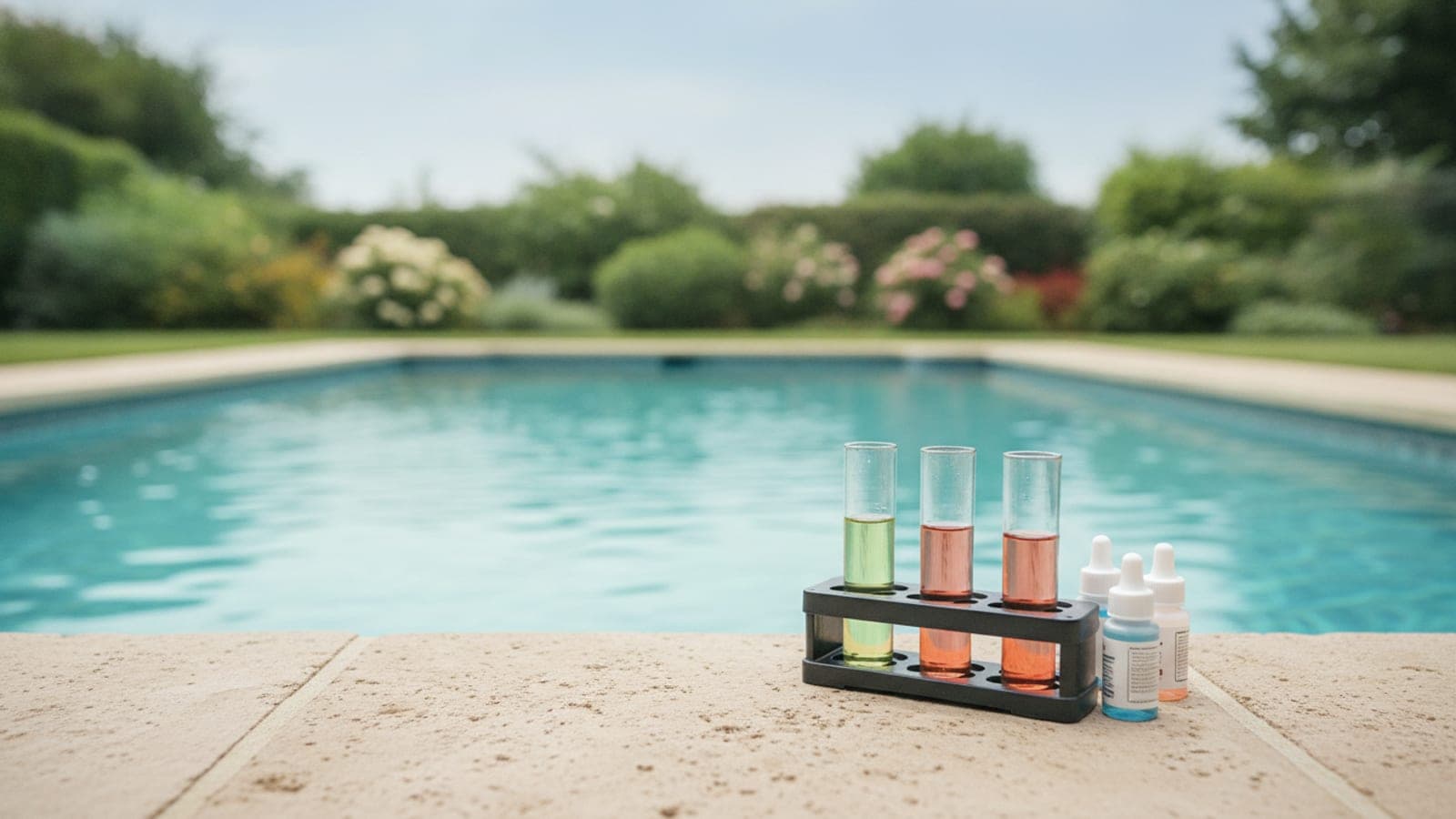
Start with a test kit. High pH is a classic cause of cloudiness — it makes minerals fall out of solution and hazes the water — so bring pH into the 7.2–7.6 range. Check that free chlorine is in range too; low chlorine both allows early algae and lets organics accumulate. Also check calcium hardness and total alkalinity, since very high levels can cloud water. Often, simply rebalancing pH and chlorine clears the haze within a day of filtering.
Step 2: Fix the filtration
If chemistry's fine, look at the filter and circulation. Cloudy water needs your pump and filter running — increase run time (even 24 hours while clearing), make sure the filter is clean (a clogged cartridge or sand bed can't polish the water), and confirm water is circulating to all parts of the pool. Under-filtration is a leading cause of persistent haze; many "mystery" cloudy pools clear once the filter is cleaned and the pump runs longer.
Step 3: Help the filter catch fine particles
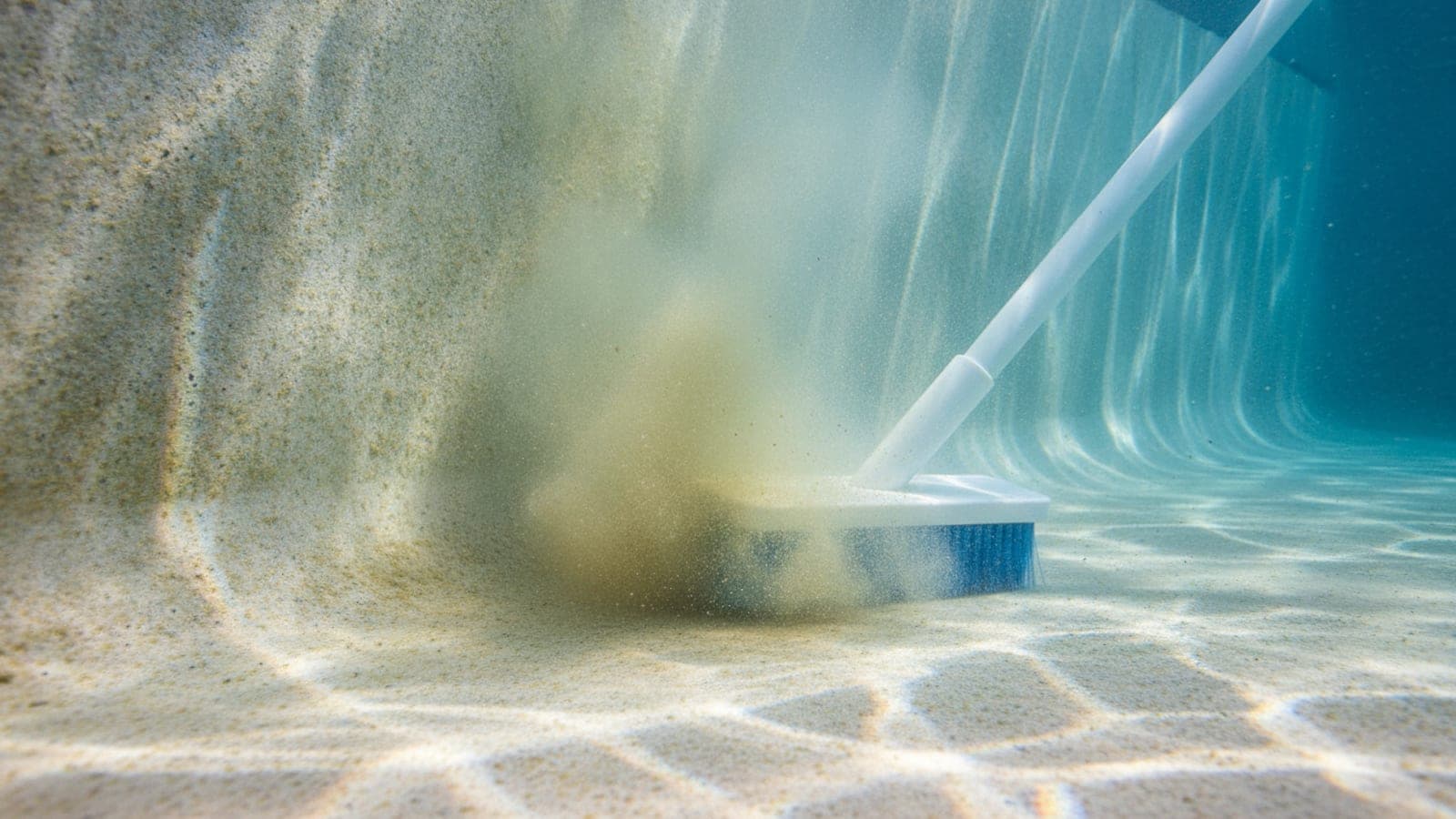
When the cloudiness is very fine suspended particles the filter keeps passing, a water clarifier clumps them together so the filter can catch them — follow the label and keep filtering. For settled fine debris, a bottom-drain flocculant plus vacuuming to waste is the heavier option. Brushing the walls and floor resuspends settled particles so filtration can remove them. Give these time; clarity returns as the filter does the work, not instantly.
Step 4: Rule in or out algae
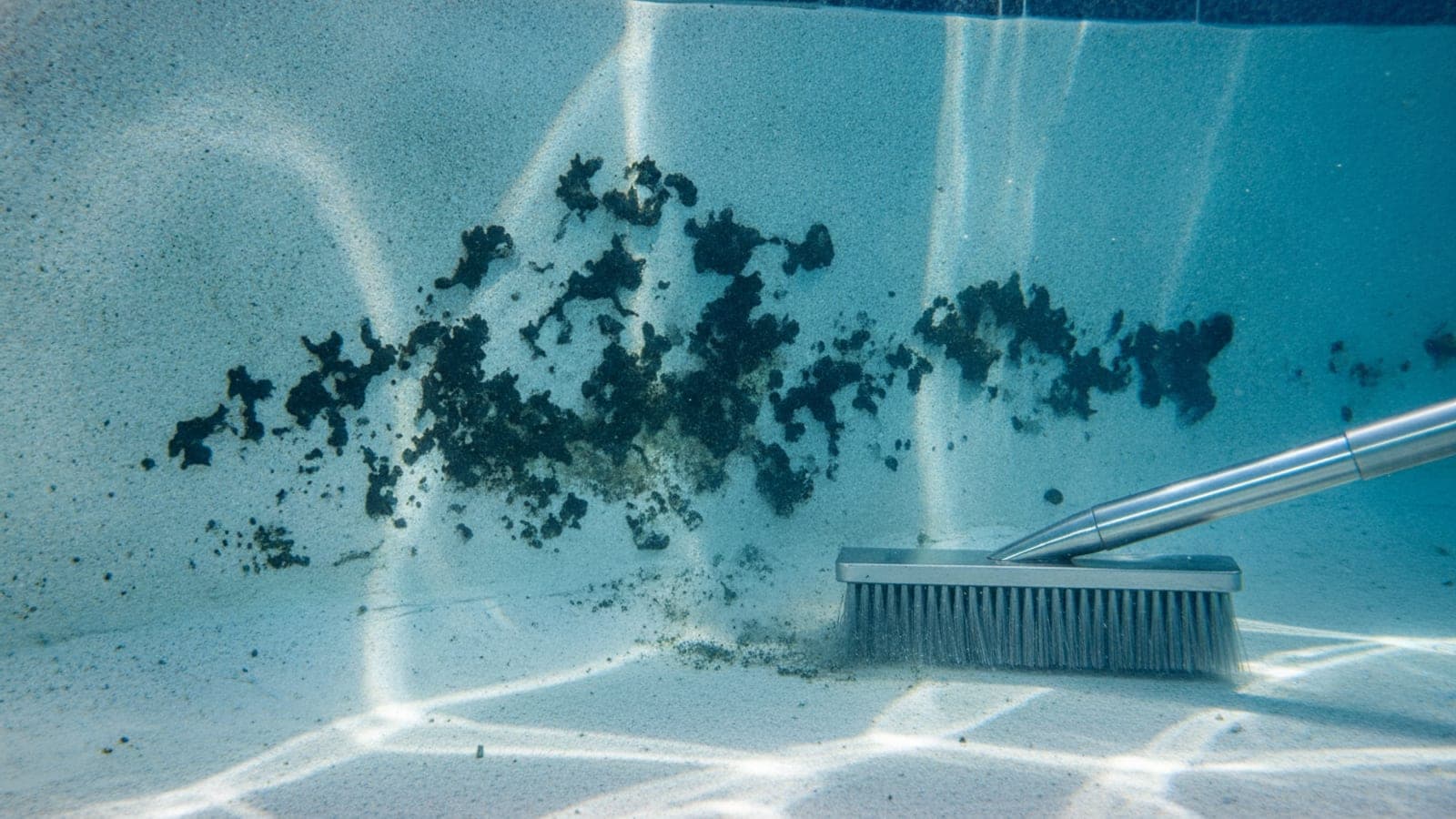
If it's still cloudy — especially with a green, yellow, or slick tint — treat it as an algae bloom: balance pH, shock hard per your pool volume, brush, and filter continuously until it clears. Cloudy-white that won't clear despite good chemistry and filtration is often dead algae from an earlier bloom that the filter is still removing. Work the path in order and you'll land on the real cause instead of guessing; our shock and volume calculators help size any dose you need.
Frequently asked questions
Why is my pool cloudy even though chlorine is high?
The chlorine may be killing algae or oxidizing contaminants, while the filter still needs time to remove fine particles. Also check pH, CYA, filter condition, and circulation.
Will pool clarifier clear cloudy water?
Clarifier may help with fine suspended particles, but it should not be the first move if chlorine, pH, filtration, or debris is the real problem.
How long does it take cloudy pool water to clear?
It depends on the cause, filter condition, circulation, and water balance. Some pools improve in a day or two; neglected pools can take longer. Retest and clean the filter instead of guessing.
Can a robotic pool cleaner help cloudy water?
A robot can remove floor debris and fine dirt if it has the right filter, but it will not fix bad chemistry or a failing pool filter.
Should I shock cloudy pool water?
Shock may help if sanitizer is low, combined chlorine is high, or algae is involved. If chemistry is fine and the filter is dirty, shock is not the first fix.