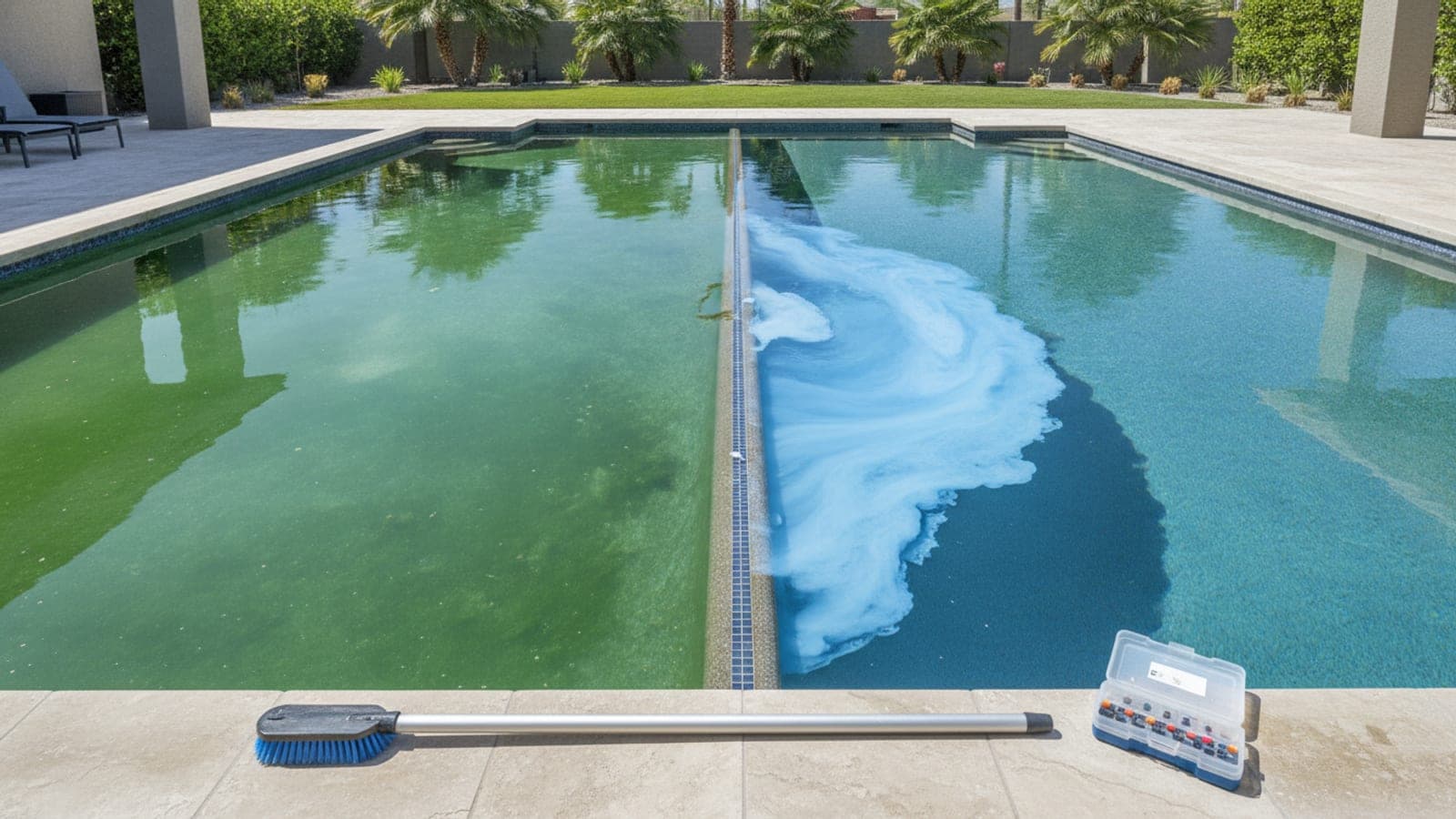
Black algae is the toughest algae a home pool gets — dark spots with roots that dig into plaster and a protective layer that shrugs off normal chlorine. Killing it means physically breaking that layer and hitting the roots hard. Here's the method. Follow all product labels; this is a research-based guide, not a hands-on test.
Why black algae is different
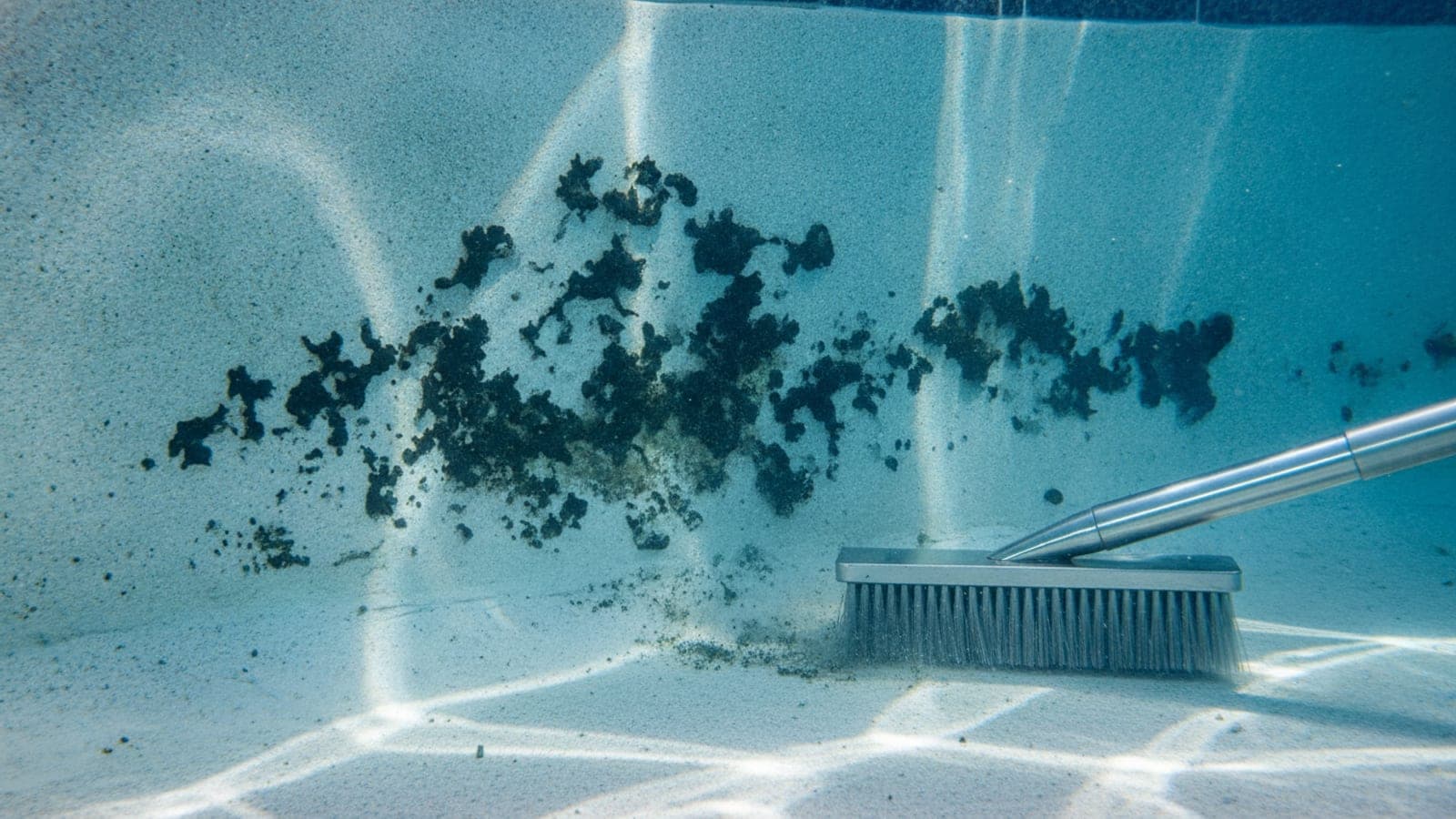
Black algae forms dark green-to-black raised spots, usually on rough or porous surfaces like plaster and gunite, and it's built to survive. It anchors with roots that penetrate the surface, and it grows a waxy protective layer over itself that normal chlorine levels can't get through. That combination — roots below, armor above — is why you can't just shock it away like green algae. You have to break the armor and kill the roots, or it grows right back from what's left.
Scrub the spots hard
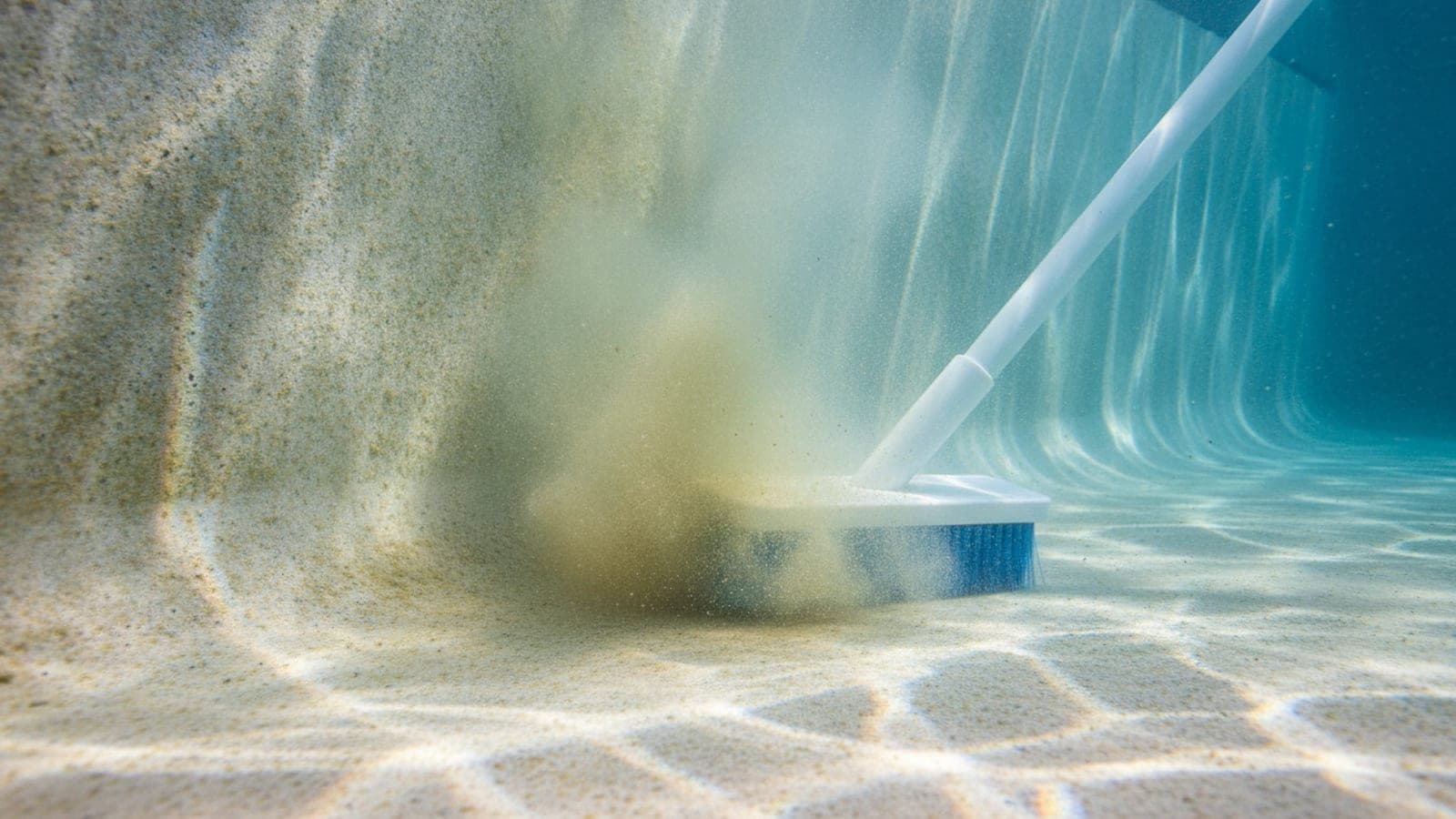
Mechanical destruction comes first. Use a stiff pool brush — a stainless or algae brush on stubborn plaster surfaces, but only what's safe for your finish (never steel on vinyl or fiberglass) — and scrub each black spot aggressively to break through its protective layer. This is physical work, and it's essential: unless you break that coating, no chemical reaches the living algae underneath. Brush every visible spot thoroughly before and during treatment.
Attack the roots
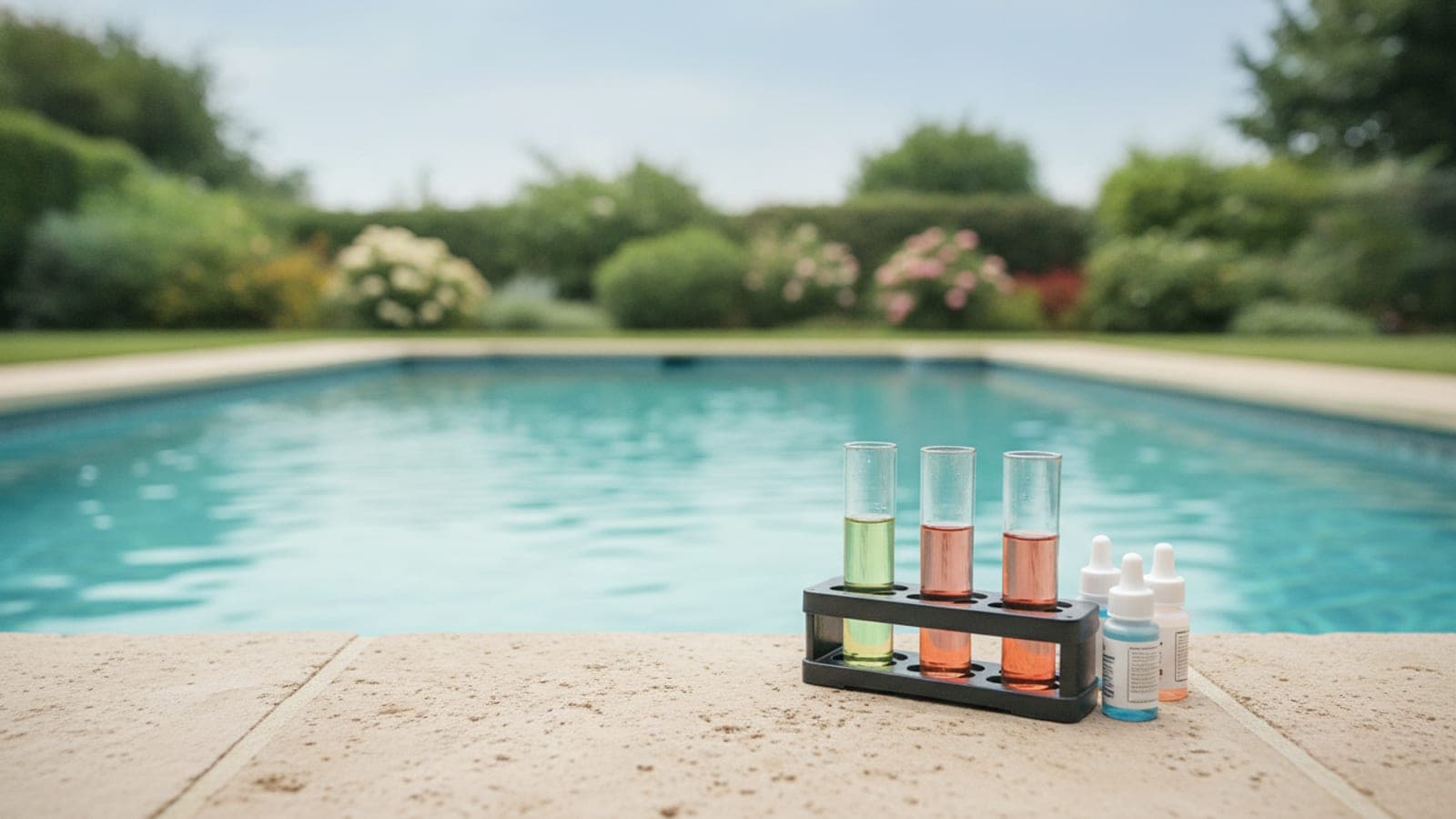
With the armor broken, hit it chemically. Balance pH into range, then shock the pool to a high level per your volume so chlorine can now penetrate the scrubbed spots. Many owners work chlorine directly into the broken spots for a concentrated hit and use a black-algae-specific treatment. Run the pump continuously and keep chlorine elevated over several days — the roots need sustained exposure to die. Rebrush the spots between doses to keep them open to the chlorine.
Be patient and complete the course
Black algae comes back if you stop early, because surviving roots regrow. Keep brushing and holding chlorine high until the spots are gone and stay gone for several days — this often takes longer than any other algae. Clean or replace the filter as it collects dead algae, and disinfect any brushes and gear you used, since black algae is hardy. Rushing this is the number-one reason it returns.
Prevent a comeback
Prevention leans on surface care and chemistry. Black algae favors rough, pitted plaster and dead spots with poor circulation, so keeping surfaces in good repair, brushing regularly, ensuring good water movement, and holding steady chlorine and stabilizer all deny it a foothold. Persistent, recurring black algae on old plaster sometimes signals the surface itself needs attention. Catch and scrub any dark spot early, before it establishes roots, and you'll rarely fight a full outbreak.
Frequently asked questions
What is black algae in a pool?
Black algae shows up as dark blue-green or black spots, often the size of a pea to a coin, that cling stubbornly to plaster, grout, and rough surfaces. It grows roots into the surface and forms a protective outer layer, which is why it resists normal chlorine and keeps regrowing from the same spots.
Why is black algae so hard to kill?
Two reasons: its roots dig into porous surfaces so brushing alone can't remove it, and a waxy protective layer shields the colony from chlorine. You have to physically break that layer and the roots by brushing hard, then hit it with elevated chlorine so the sanitizer can finally reach the living cells.
Will shock alone get rid of black algae?
Rarely on its own. Shock is necessary but not sufficient — without breaking the protective heads and roots by aggressive brushing first, the chlorine can't penetrate. The winning combination is brush hard, then shock high and hold it, and repeat over several days.
What kind of brush kills black algae?
On plaster or gunite, a stiff stainless-steel algae brush works because the surface can take it. On vinyl or fiberglass, never use a wire brush — it will damage the surface; use a stiff nylon brush and be extra thorough, since black algae is less common on those smooth surfaces anyway.
How do I keep black algae from coming back?
Keep chlorine and stabilizer in range so sanitizer stays effective, brush the spots regularly even after they look gone (the roots can linger), maintain good circulation with no dead spots, and keep the filter clean. Because it roots into the surface, black algae needs weeks of vigilance, not one treatment.