Pool stains fall into two families — organic and metal — and the fix depends entirely on which you have, because treating the wrong type does nothing. A quick test tells them apart. Here's how to identify and remove each. Follow product labels and test on a small area first.
Two kinds of stains
Stains come from two very different sources. Organic stains come from leaves, berries, algae, and other debris that sat on the surface and left a mark — usually green, brown, or reddish. Metal stains come from dissolved metals (iron, copper, manganese) in the water precipitating onto surfaces — often rust-brown, blue-green, or grayish. They look similar but respond to opposite treatments, so identifying the type before you treat is the whole job. Guess wrong and you'll scrub or dose with no result.
The vitamin C test
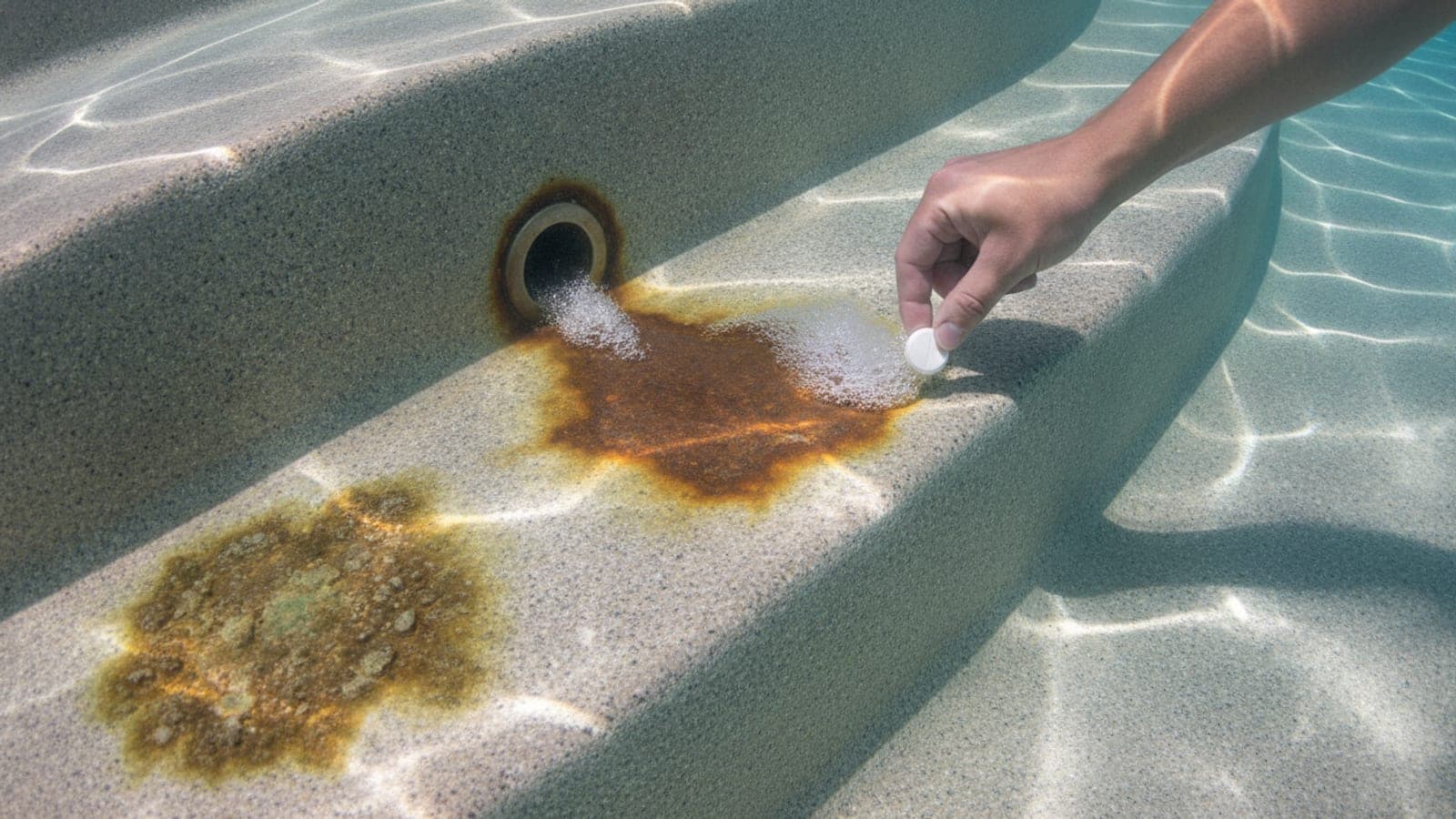
There's a simple field test. Hold a vitamin C tablet (ascorbic acid) against a stain for a minute or so: if the stain lightens or disappears, it's a metal stain (ascorbic acid lifts metals). For organic stains, a similar spot test with a bit of chlorine — like a trichlor tablet held to the stain — will lighten it if it's organic. So: reacts to vitamin C, it's metal; reacts to chlorine, it's organic. This five-minute test saves you from treating the wrong way.
Removing organic stains
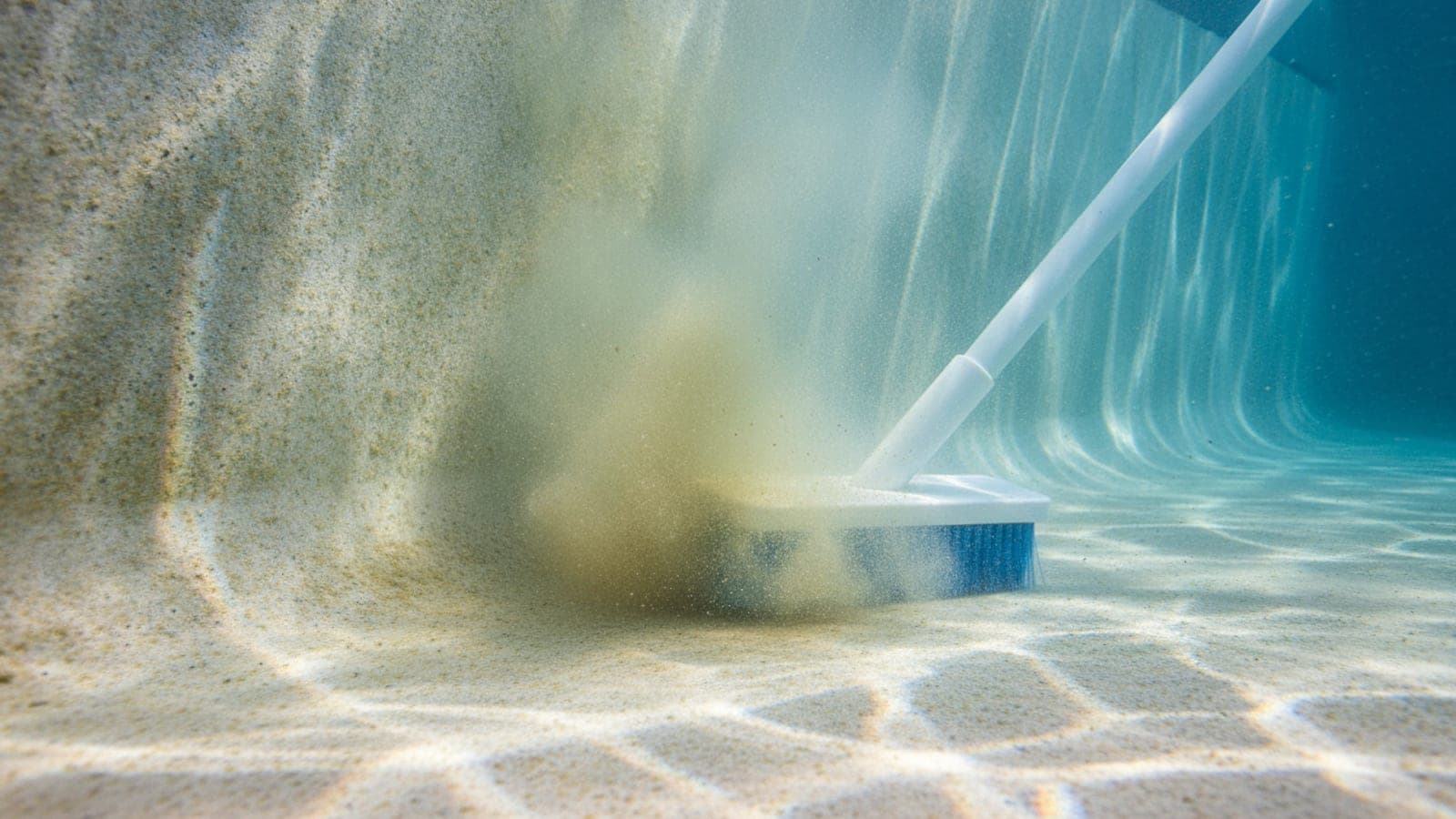
Organic stains yield to chlorine and scrubbing. Brush the stained area, then shock the pool to a good chlorine level per your volume and hold it there — organic stains and the debris that caused them break down under sustained chlorine. Keeping the water balanced and well-sanitized both removes the stain and prevents new ones. Persistent organic marks may need direct brushing with the chlorine working. Because chlorine is the tool, organic stains are generally the easier of the two to clear.
Removing metal stains
Metal stains need the opposite approach — and importantly, chlorine makes them worse by oxidizing the metals onto the surface. Use an ascorbic-acid or a dedicated metal stain remover per the label, which lifts the metal off the surface back into the water. Then, because the metal is now dissolved in the water again, use a metal sequestrant to bind it so it doesn't re-stain, and address the metal source (fill water, corroding equipment, or certain algaecides). Skipping the sequestrant step just lets the stain come back.
Prevent the next stain
Prevention differs by type too. For organic stains, keep chlorine and chemistry steady and remove leaves and debris before they sit and mark the surface. For metal stains, test your fill water for metals, use a sequestrant if your source water is metal-heavy, and keep pH balanced since swings can drop metals out of solution. Identify early, treat by type, and most stains lift without draining the pool. Our chemistry guides cover keeping the water balanced so stains get fewer chances to form.
Frequently asked questions
How do I tell a metal stain from an organic stain?
Do a spot test. Hold a chlorine tablet near an organic stain (from leaves or berries) and it lightens. Hold a vitamin C (ascorbic acid) tablet against a metal stain and it fades. Whichever test lightens the stain tells you the type — and therefore the treatment. Color is a clue too: brown/green often organic or iron, blue-green or teal is copper, purple-black can be manganese.
What removes organic pool stains?
Chlorine. Organic stains from leaves, berries, algae, or worms respond to raising chlorine and brushing the spot; a chlorine tablet held on a stubborn stain often lifts it. Remove the debris causing it, then shock and brush. Organic stains are the easier kind to clear.
What removes metal stains?
Ascorbic acid (vitamin C) for iron and copper stains, or a specialty stain remover, followed by a sequestrant to hold the freed metal in solution so it doesn't re-stain. Crucially, do NOT add chlorine to a metal stain — chlorine sets metal stains and makes them worse. Lower chlorine before an ascorbic-acid treatment.
Why did shocking my pool make the stain worse?
Because it was a metal stain. Chlorine lifts organic stains but oxidizes and sets metal stains, darkening them. If a stain got worse after shocking, treat it as metal: use ascorbic acid with chlorine lowered, then sequester the metal and rebalance.
How do I stop pool stains from coming back?
For metals, keep a sequestrant going, test and treat your fill water, and fix corroding equipment that sheds metal. For organics, skim and remove leaves and debris promptly and keep sanitizer in range. Balanced water — especially pH and calcium — reduces both scaling and staining.