It's one of the most baffling pool problems: your chlorine reads high, yet the pool is green. The usual answer isn't a bad test — it's that your chlorine is present but locked up and can't work, and something else is coloring the water. Here's what's really going on. Follow product labels as you correct it.
The green-but-high paradox
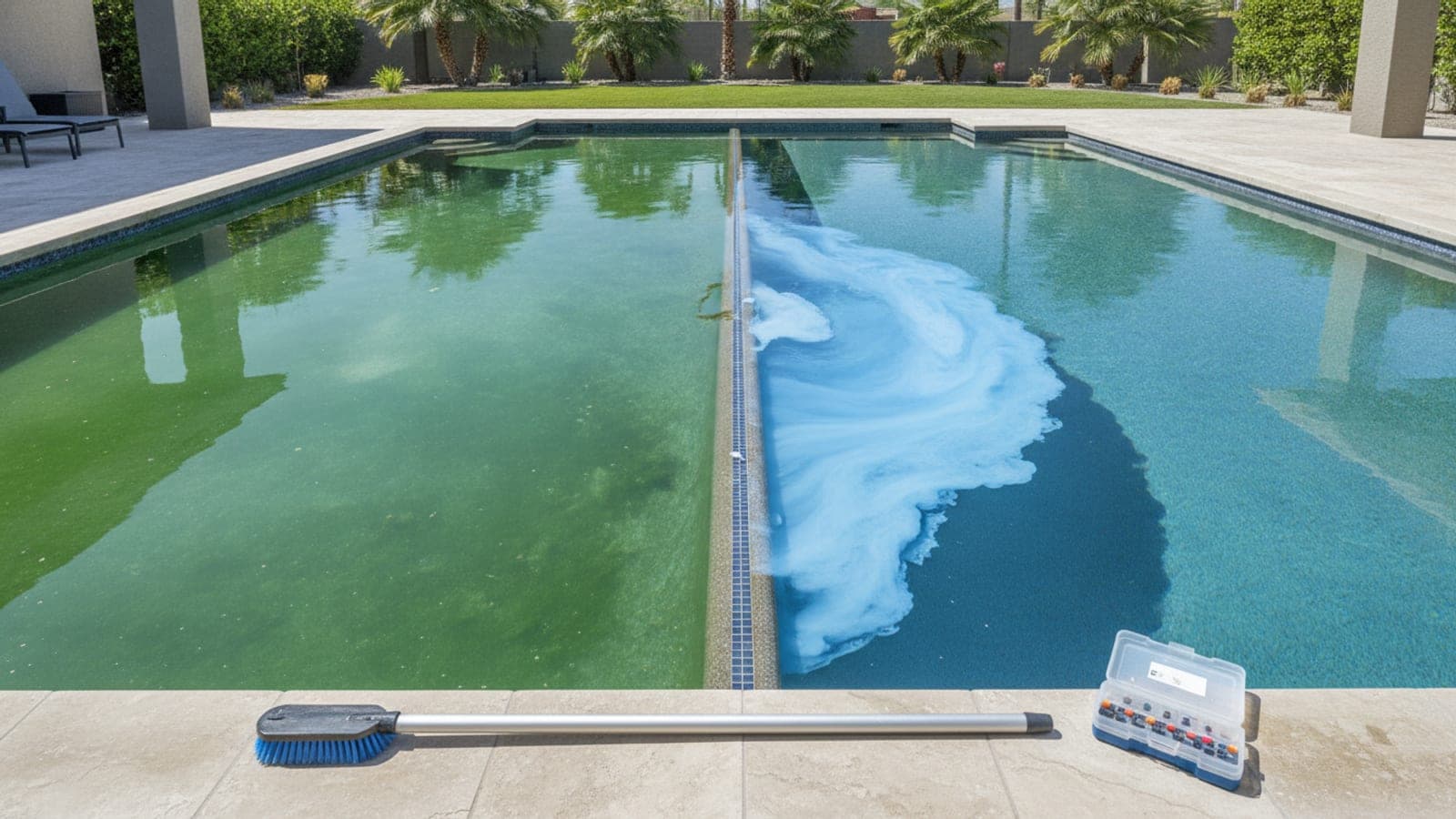
If chlorine is high but the pool is green, the chlorine almost certainly isn't doing its job — and there are two main reasons that happens. Either your stabilizer (cyanuric acid) is so high it's binding the chlorine and rendering it ineffective, or the "green" isn't algae at all but dissolved metals reacting with the chlorine. A high chlorine number tells you chlorine is present, not that it's active. Figuring out which of these you have is the whole fix.
Cause 1: too much stabilizer
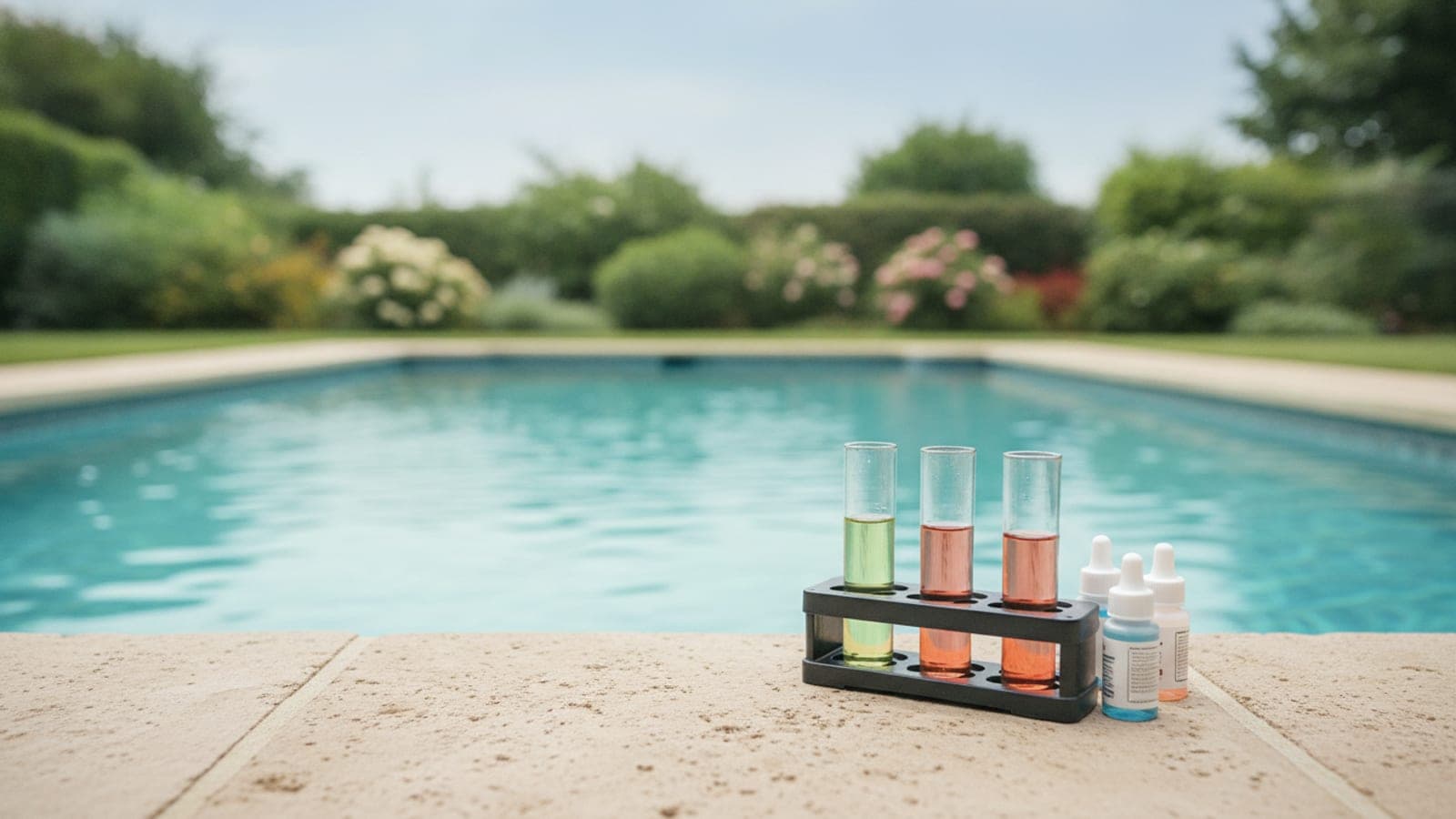
The most common culprit is excessive cyanuric acid. CYA protects chlorine from the sun, but too much of it locks chlorine up so tightly that it can't sanitize — so you can have a healthy free chlorine reading and still grow algae, because that chlorine is largely inactive. This happens on pools run all season on stabilized (trichlor) tablets, which add CYA with every dose. Test your CYA: if it's well above 50 ppm and the pool's green despite good chlorine, this is likely it. The fix is dilution — partially drain and refill to bring CYA back to 30–50 ppm, and the chlorine starts working again.
Cause 2: metals in the water
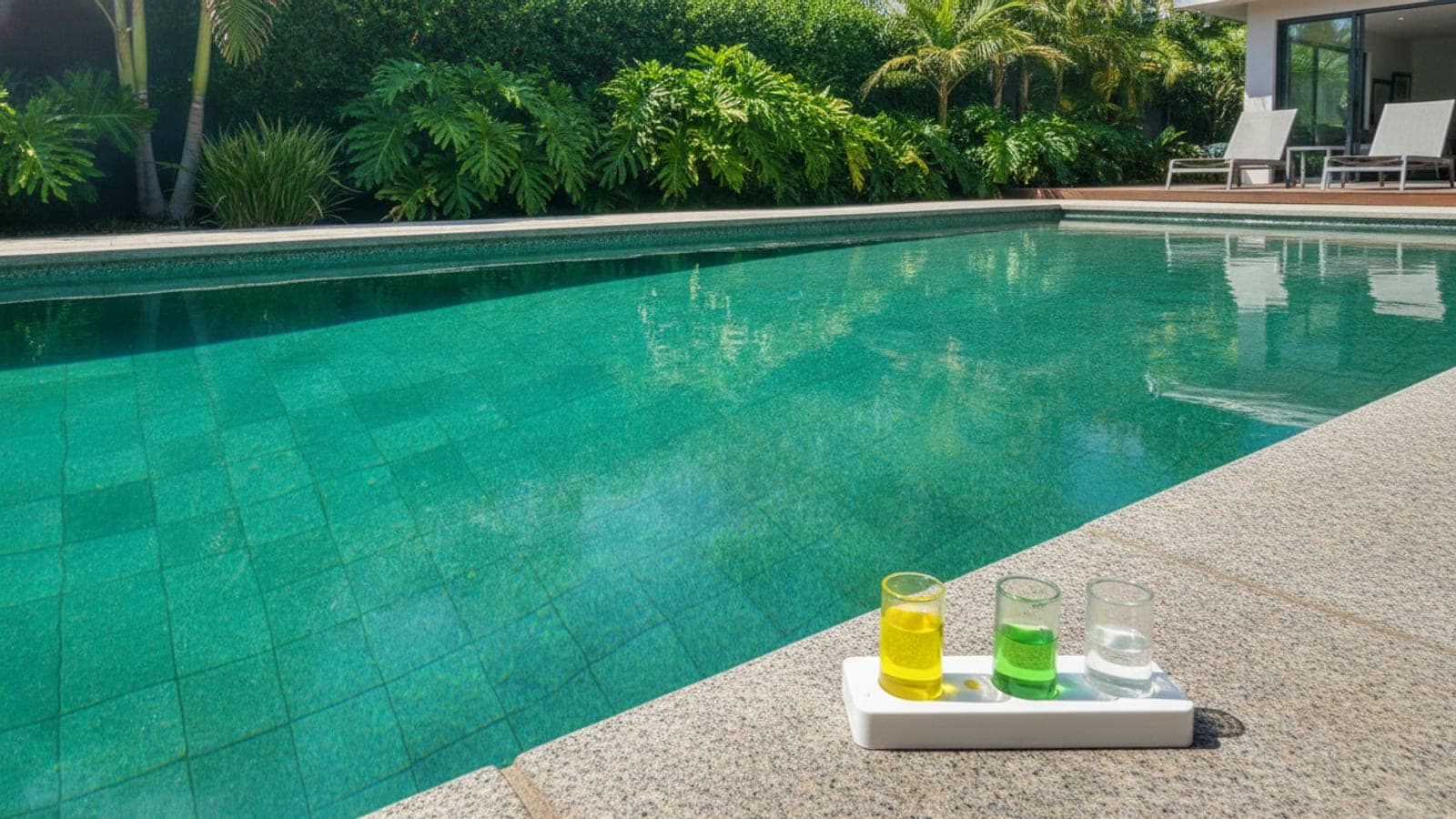
Sometimes the green isn't algae. Dissolved metals — especially copper, from fill water, corroding equipment, or certain algaecides — can turn water green or teal, and adding chlorine (or shocking) makes it worse by oxidizing the metal and deepening the color. The tell: the water is often clear but tinted rather than cloudy and slimy like an algae bloom, and it may have appeared right after shocking or adding fresh water. The fix is a metal sequestrant to bind the metal, plus addressing the metal source, not more chlorine.
Tell them apart
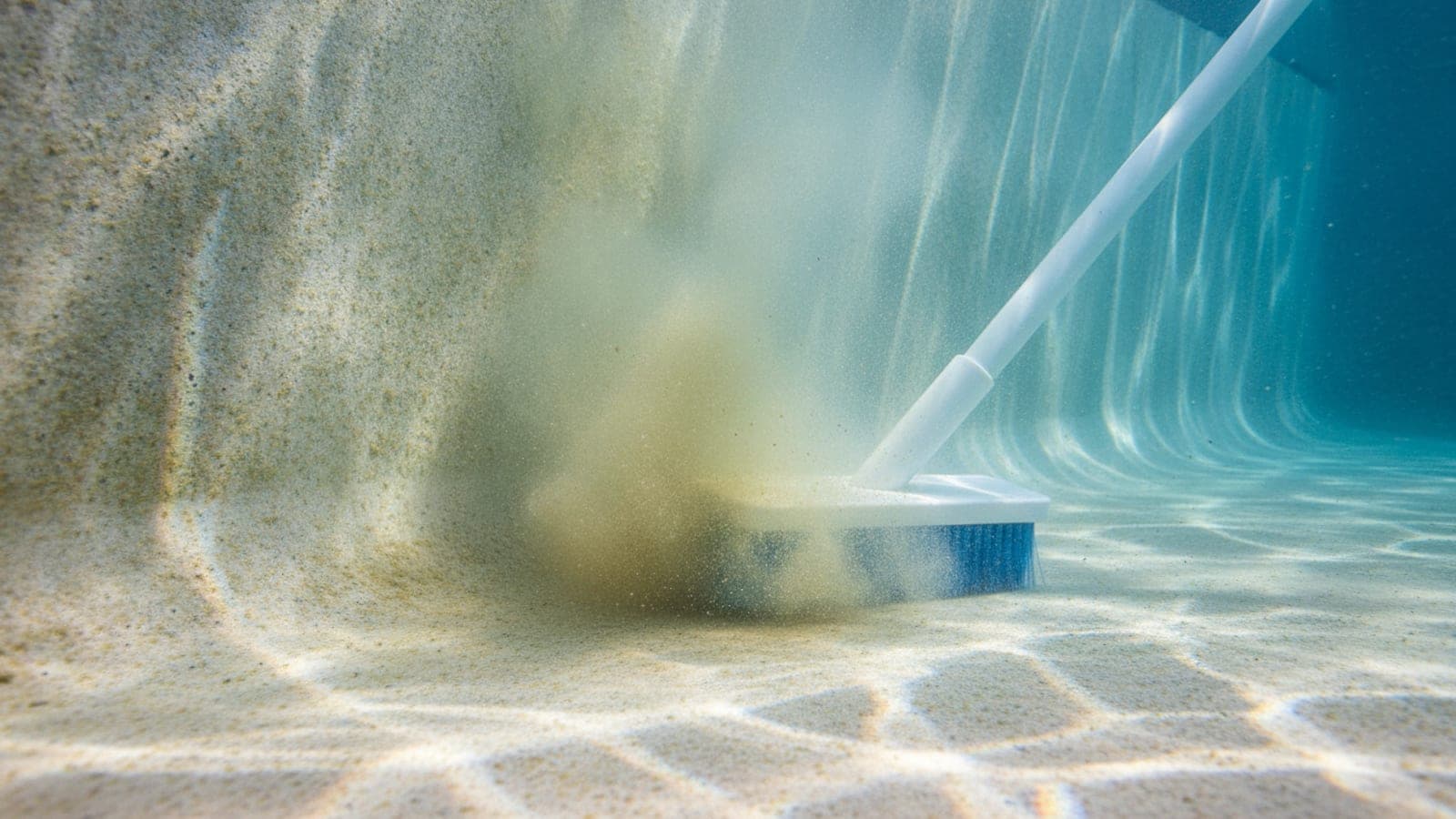
Diagnose before you treat. Algae (chlorine locked by high CYA) usually makes the water cloudy, dull, and sometimes slick on the walls, and CYA tests high. Metal staining makes the water clearer but distinctly tinted green or blue-green, often worsening right after you add chlorine, with normal CYA. Testing CYA and checking whether the water is cloudy (algae) versus clear-but-tinted (metals) points you to the right cause. Treating the wrong one wastes time and chemicals.
Fix the right cause
Match the solution to the diagnosis. High CYA: dilute with fresh water to restore the 30–50 ppm range, then your existing chlorine sanitizes and the algae clears with normal shocking and filtering. Metals: use a sequestrant per the label, address the source (test fill water, check for corroding equipment), and keep pH balanced so metals stay in solution. In both cases, the lesson is the same — a high chlorine reading doesn't guarantee working chlorine, so when the pool's green anyway, look at stabilizer and metals. Our stabilizer and shock calculators help once you know which fight you're in.
Frequently asked questions
Why is my pool green even though the chlorine is high?
Usually one of three things: dissolved metals (often copper) tinting clear water green, over-stabilized water where high CYA has neutralized your chlorine so algae survives, or a false-high chlorine reading from a bleached-out test. The fix depends on which one it is, so diagnose before dumping more chemicals.
How do I tell algae from metal stains?
Algae water is usually cloudy or slimy and coats the walls and floor; you can feel it. Metal-tinted water is often clear but colored — green from copper, brown from iron. If the water is clear and green, suspect metals; if it's murky and green with film on surfaces, suspect algae.
Can high CYA make my pool turn green?
Yes, indirectly. Very high cyanuric acid (stabilizer) locks up your chlorine so its effective sanitizing power drops, and algae can bloom even though the chlorine test reads high. The fix is to lower CYA by partial dilution and then let chlorine actually work.
Why does my chlorine test read high but the water is green?
At very high chlorine levels some tests bleach out and give a falsely low or falsely high reading, and CYA can mask true sanitizing power. Retest with fresh reagents or a diluted sample, and check CYA — a high chlorine number means little if stabilizer has neutralized it or the reading is wrong.
Will shocking a green metal pool fix it?
No — if the green is from dissolved metals, adding more chlorine can actually set metal stains and make it worse. Shock is for algae. Confirm whether you're dealing with metals or algae first; metals need a sequestrant (and often a partial drain), not chlorine.