The one most people should get is a sturdy aluminum telescopic pole in the 8 to 16 foot range, because it fits standard attachments and reaches the deep end without flexing like a noodle. A pole is just the handle, so the real decision is which attachments you clip onto it: a fine net for daily skimming, a wide leaf rake for storms, and a vacuum head plus hose for the floor. Buy one good pole and a couple of task-specific heads, and you have covered almost every cleaning job.
A telescopic pole (a two-piece handle that slides longer or shorter and locks with a cam or twist collar) is the backbone of pool cleaning. Everything below attaches to it.
| Pick | Best for | Watch out for |
|---|---|---|
| Telescopic Pool Pole (8–16 ft) | The core handle for all jobs | Twist locks can slip when worn |
| ProTuff Pool Net Leaf Skimmer Rake | Deep debris scooping | Bulkier than a flat skimmer |
| Poolmaster Heavy-Duty Leaf Rake | Big loads after storms | Wide head is heavy when full |
| Poolmaster Classic Vacuum Head | Vacuuming the floor | Needs a hose, sold separately |
| Poolmaster 1.5-Inch Pool Vacuum Hose | Connecting head to suction | Kinks if stored coiled tight |
| Pool Skimmer Socks (Basket Filters) | Catching fine debris | Must be rinsed often |
What pole should most pool owners buy first?: Telescopic Pool Pole (8–16 ft)
Mid-range
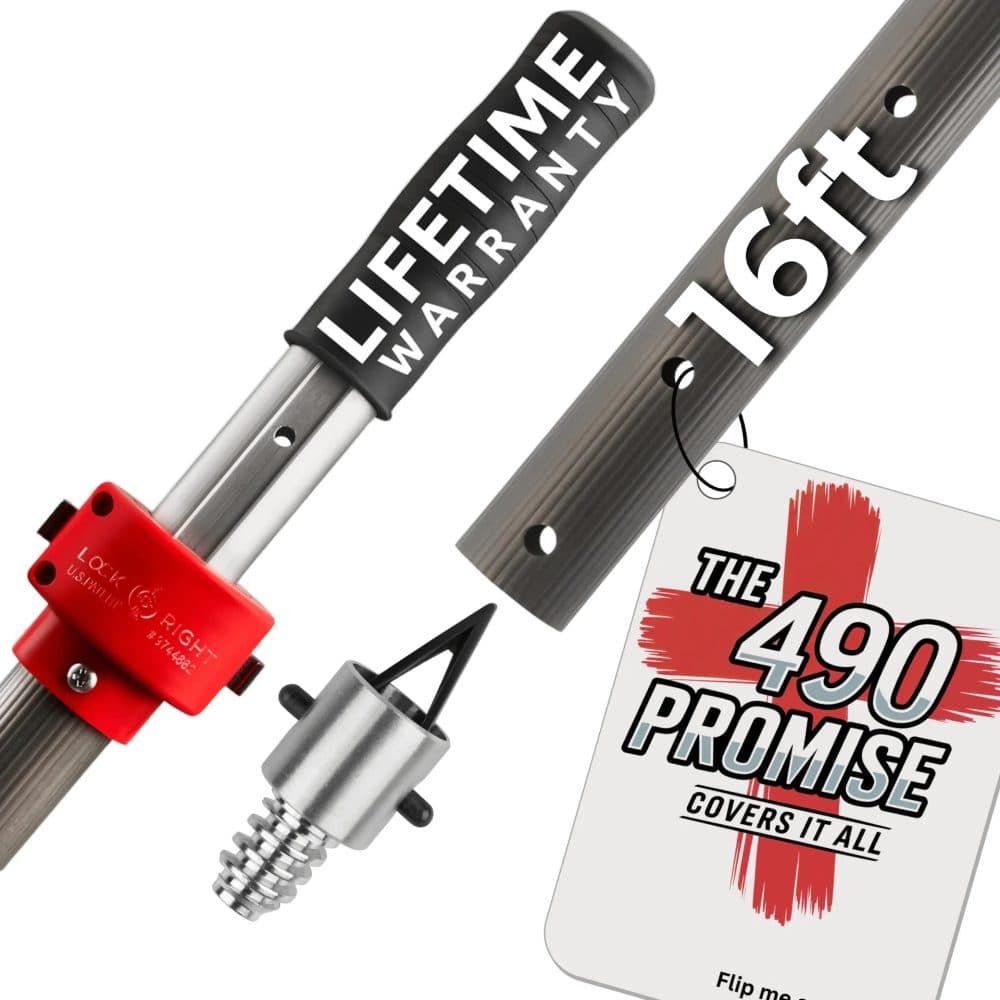
This is the foundation, and the 8 to 16 foot range covers the widest span of residential pools from the deck. It fits standard-collar attachments, so one pole handles your net, brush, and vacuum head. Owners consistently point to the locking mechanism as the make-or-break feature, so look for a solid cam lock over a flimsy plastic twist.
The tradeoff is weight versus reach. Longer aluminum poles flex more at full extension, especially with a full leaf rake on the end. If your pool is small or above-ground, you may never need the top of that range, and a shorter, stiffer pole will feel steadier in your hands.
Which net is best for scooping deep debris?: ProTuff Pool Net Leaf Skimmer Rake
Mid-range
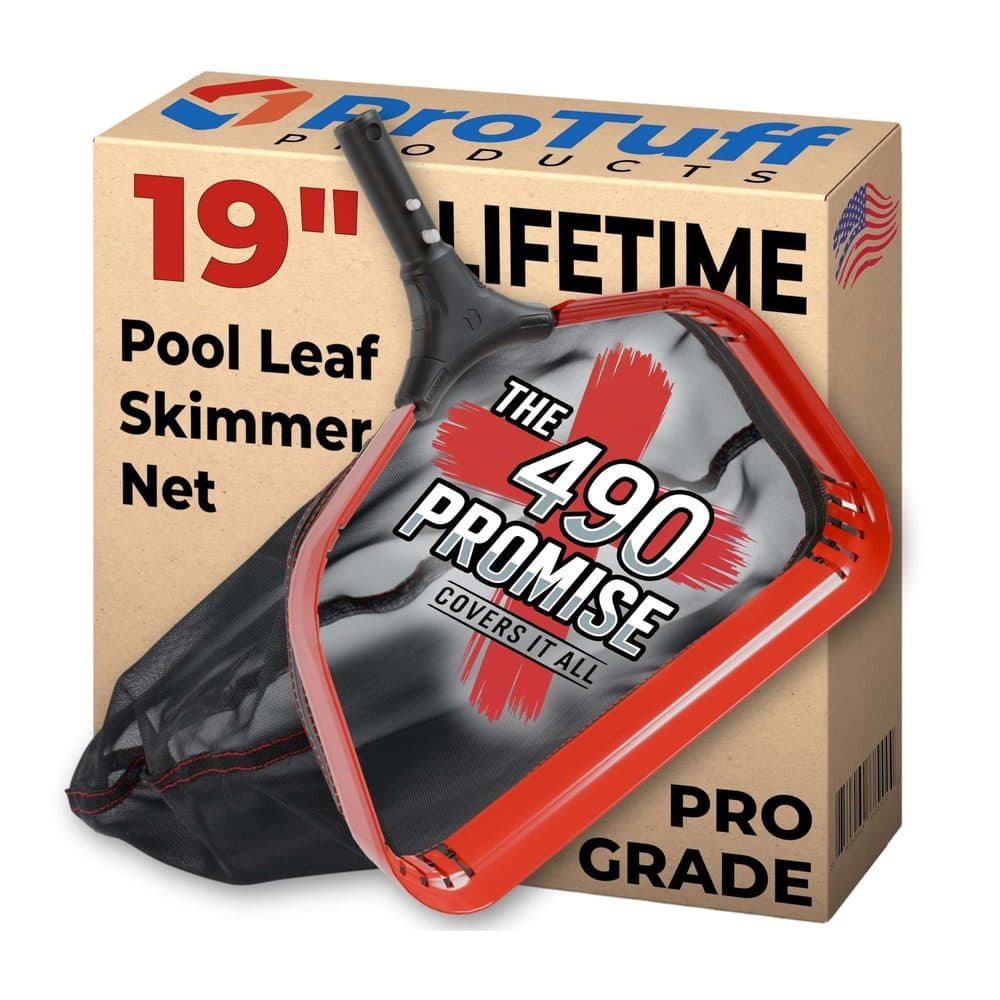
A deep-bag rake is the pick for leaves, acorns, and bugs that sink before you get to them. The mesh bag holds a large load, so you scoop the bottom and lift without everything spilling back out. It fits a standard pole and is the workhorse for pools under trees.
The downside is bulk. A deep bag pushes more water, so dragging it across the surface is slower than a flat skimmer for that thin film of pollen. Many owners keep both: this rake for volume, a flat net for a quick daily pass.
What handles a big post-storm mess?: Poolmaster Heavy-Duty Leaf Rake
Budget
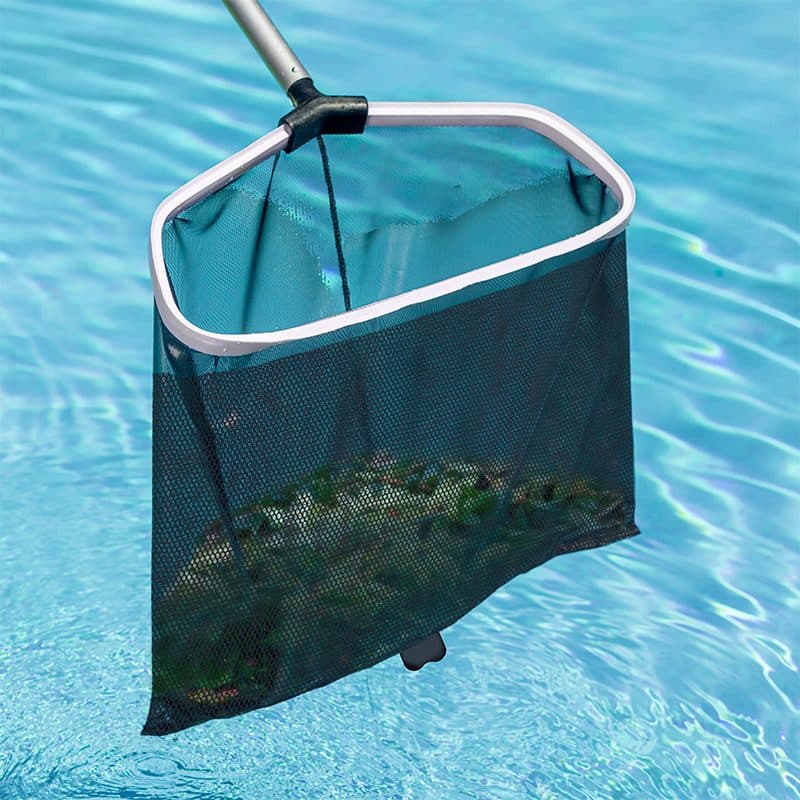
After a windstorm dumps half the yard in the water, a wide heavy-duty rake clears it in fewer passes. The larger frame and reinforced net take abuse that a light net cannot. This is the tool for spring openings and the day after bad weather.
The catch is that a wide, loaded head gets heavy fast and puts strain on the pole and your shoulders. Take smaller scoops than you think you can lift, and empty often. On a long pole at full extension, that strain adds up quickly.
What should I use to vacuum the pool floor?: Poolmaster Classic Vacuum Head
Budget
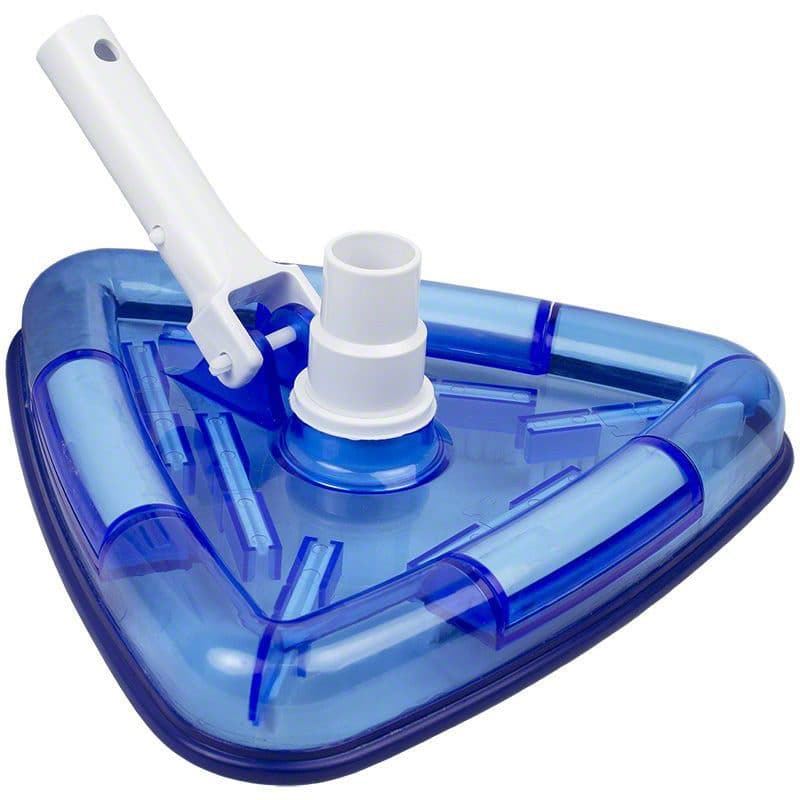
For manual vacuuming, a weighted vacuum head is the standard choice. It attaches to your telescopic pole, sits flat on the floor, and pulls dirt through a hose to your suction. Wheels or a brushed edge help it glide on the plaster or liner without scratching.
Remember the head is only half the setup. It does nothing without a hose connecting it to your skimmer or dedicated vacuum line, and priming out the air matters or you lose suction. Match the head style to your surface, since a stiff head can be rough on a soft vinyl liner.
Which hose connects the vacuum head to suction?: Poolmaster 1.5-Inch Pool Vacuum Hose
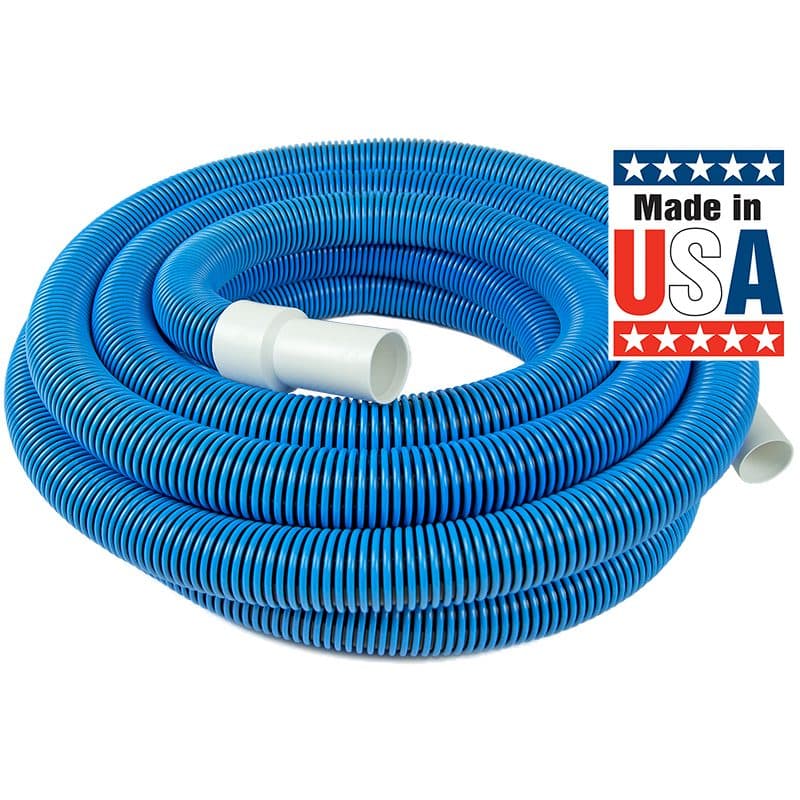
Budget
The vacuum head needs a hose, and the 1.5 inch size fits most residential skimmers and vacuum plates. Length should reach from the far end of the pool back to your skimmer with slack to spare, so measure before you buy. A hose that is too short will not reach the deep-end corners.
The common frustration is kinking and coil memory. Store it loosely looped or hung, not crushed in a tight coil, or it fights you every time. A kinked hose chokes suction, so the vacuum head crawls instead of pulling.
What catches the fine stuff my net misses?: Pool Skimmer Socks (Basket Filters)

Budget
These stretch over your skimmer basket to trap fine debris like pollen, silt, and small leaf bits before they reach the pump and filter. They are cheap, and they cut down how often you deep-clean the filter. Think of them as a pre-filter that does quiet work.
The tradeoff is upkeep. They clog and need rinsing every few days during heavy debris season, and a neglected sock restricts flow to the pump. They are a helper, not a set-and-forget fix, and when they tear you simply swap in a new one.
How to pick the right combo
Start with a solid pole, add a net that matches your debris (deep rake under trees, flat net for film), and only buy the vacuum head and hose when you are ready to do the floor. Keeping the water clear also keeps your chemistry stable, and clean water is easier to balance, which our pool chemistry basics guide walks through. Salt pools follow the same cleaning routine, covered in the saltwater pool maintenance guide.
Cleaning gear is not safety gear. A clean pool is easier to supervise, but it does not replace fencing, alarms, and eyes on the water. For layered drowning prevention, review the guidance at Pool Safely and the CPSC drowning prevention toolkit. You can browse the full lineup of nets, heads, and hoses on our pool accessories page, and if you also keep a spa, the hot tub maintenance guide uses many of the same tools at a smaller scale.
Frequently asked questions
What size telescopic pool pole do I need?
For most residential pools, a pole that extends to 12 to 16 feet covers the deep end and the far wall from the deck. Smaller above-ground pools can get by with something shorter. Measure the widest reach you actually need before buying, since a pole that is too long is heavier and harder to control.
Are all pole attachments interchangeable?
Most skimmer nets, vacuum heads, and brushes use a standard two-hole or spring-clip end that fits standard poles, but it is not guaranteed. Check that the attachment collar matches your pole diameter, usually around 1.25 inches. When in doubt, buy the pole and heads from the same line to avoid loose or rattly connections.
Why does my telescopic pole keep collapsing while I skim?
That is usually a worn or loose cam lock or an over-tightened plastic collar that has stripped. Clean the locking mechanism, and if it still slips, the pole is likely near the end of its life. Aluminum poles with external cam locks tend to hold better over time than internal twist locks.
Can I use the same pole for a hot tub or spa?
You can, though a full-length pole is overkill for a small spa and awkward in tight spots. A short net on a compact pole is easier. For spa upkeep basics, see our hot tub maintenance guide.
Do I need a separate vacuum head and hose, or is the pole enough?
The pole is only the handle. To vacuum, you attach a vacuum head to the pole and connect a vacuum hose from the head to your skimmer or dedicated suction port. Skimming and brushing need only the pole plus that specific attachment.