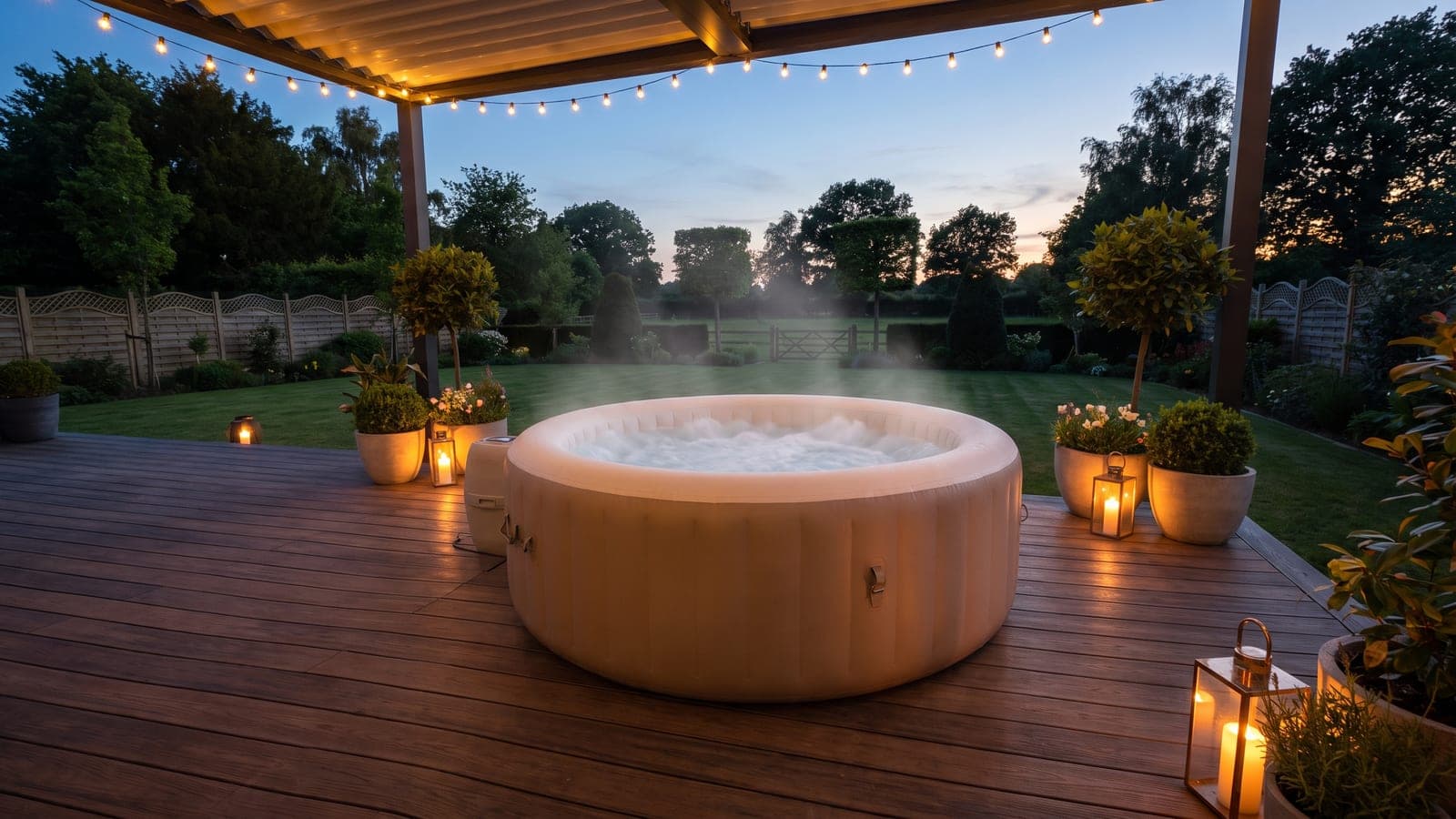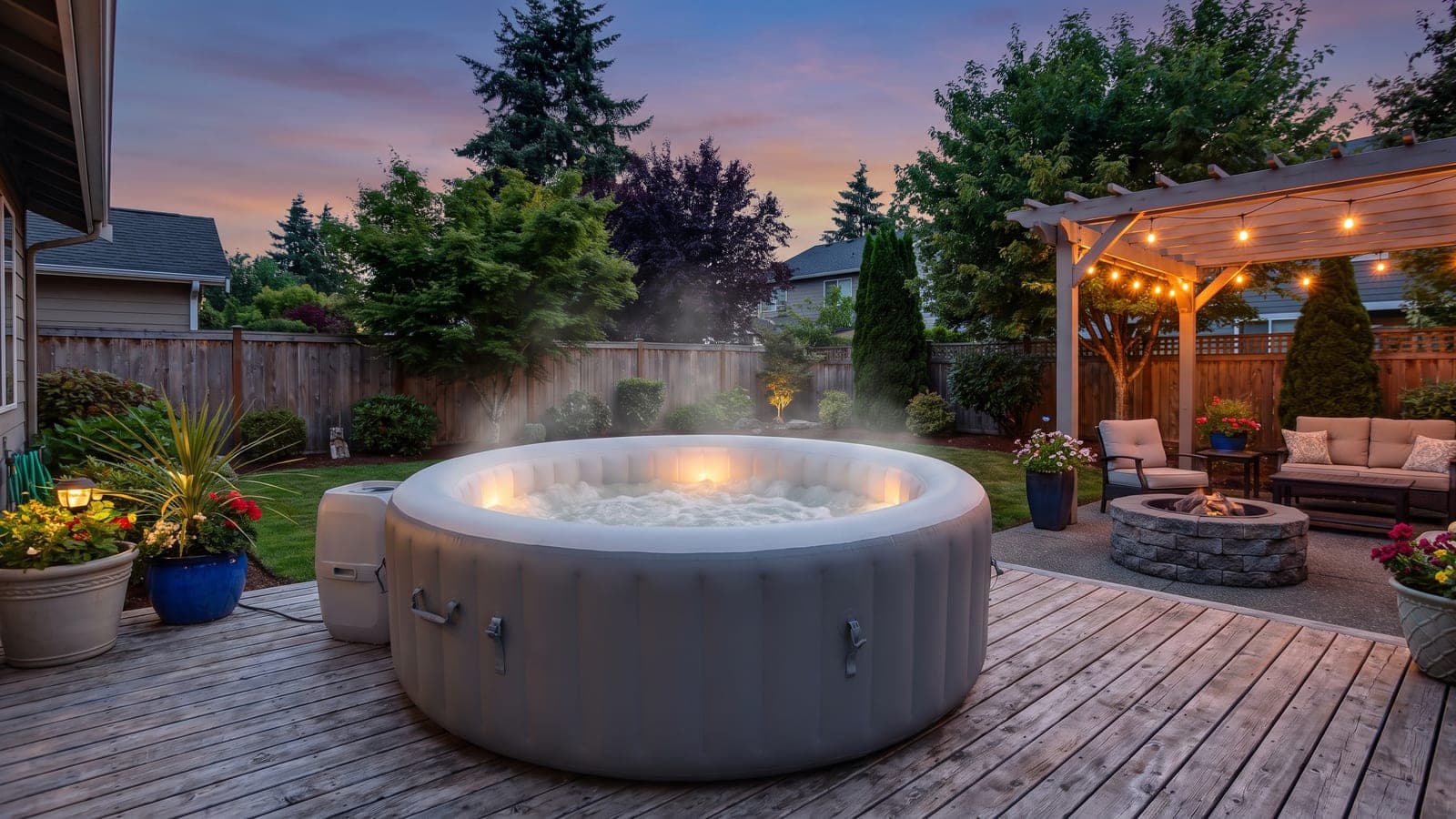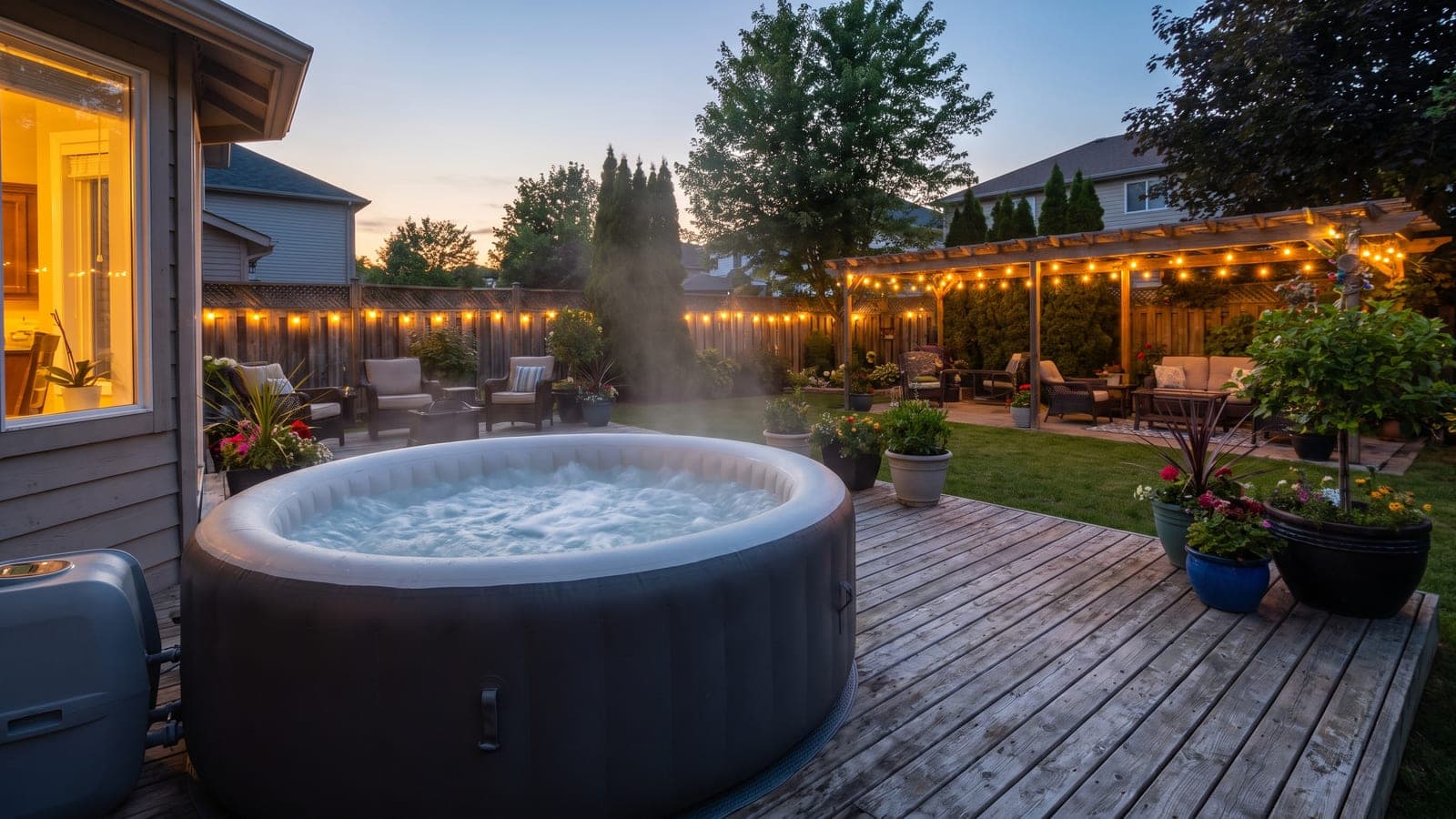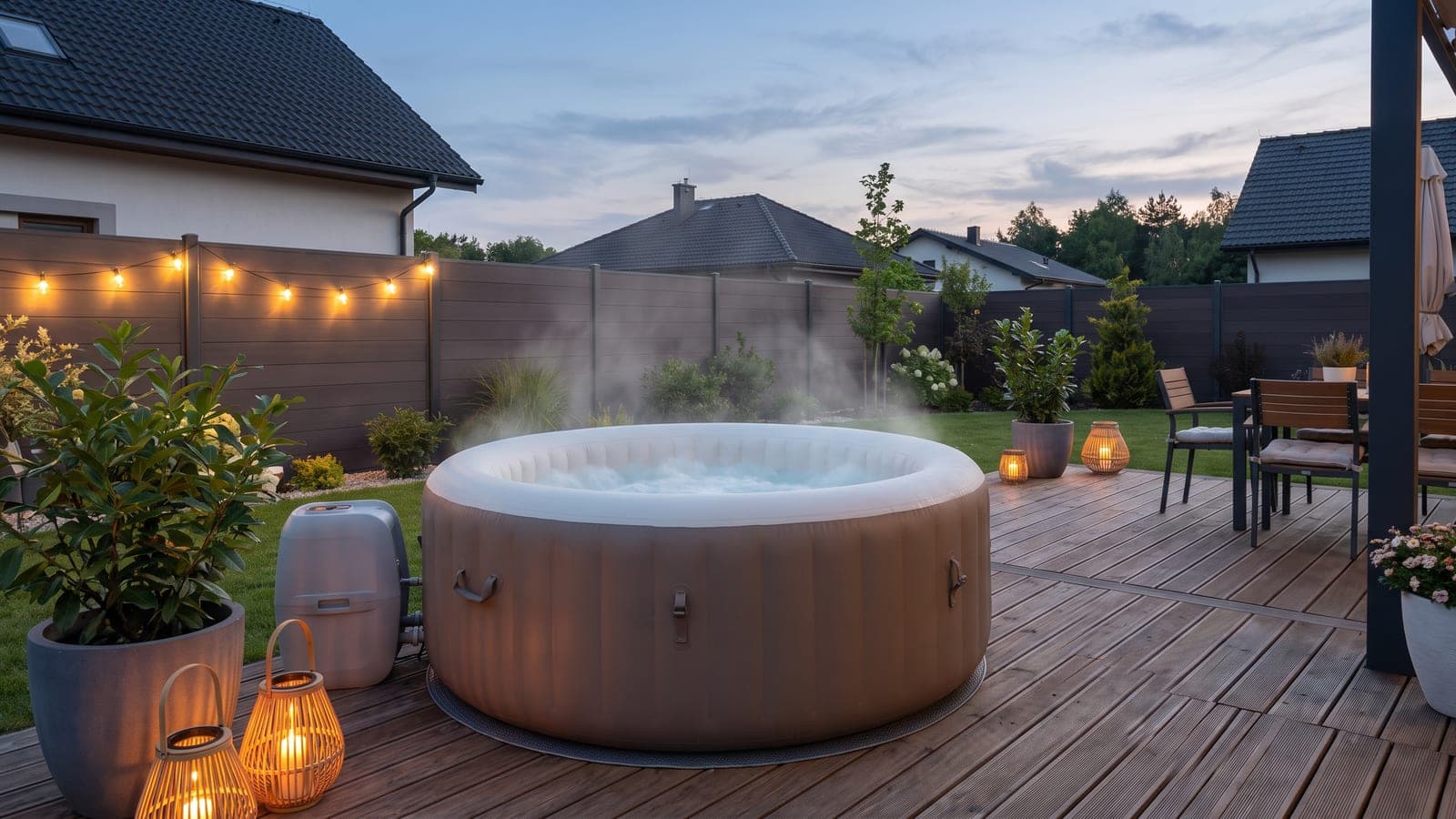
Yes, inflatable hot tubs hold heat in winter, but only if you help them, because a soft-sided tub has far less insulation than a hard acrylic spa. The pump and heater can keep the water hot in freezing weather, they just have to work harder and run more often to do it. With a few cheap upgrades and some common sense, a winter soak is realistic in most of the country.
Here is the honest version. The vinyl walls and inflatable lid trap some heat, but not a lot. So the difference between a miserable winter tub and a great one comes down to insulation, cover discipline, and never letting the water get dangerously cold.
Why do inflatable hot tubs lose heat faster in winter
Heat escapes an inflatable hot tub three ways: through the thin walls, up off the water surface, and down into the cold ground. In summer none of these matter much. In winter all three gang up on you.
The walls are the obvious weak point. A hard spa has thick foam and a cabinet, while an inflatable tub is essentially a heavy-duty air mattress wrapped around water. The trapped air in those I-beam walls helps a little, but it is nowhere near the same barrier.
The bigger surprise for most owners is ground loss. Set a tub on bare concrete or frozen dirt and the floor acts like a giant heat sink, pulling warmth out of the water all night.
Can inflatable hot tubs actually stay hot in freezing weather
Most models can, within limits. Manufacturers typically rate these tubs to operate down to roughly 40°F ambient air, and many include a freeze-protection mode that automatically kicks the heater on to keep the water from icing over.
The catch is heat-up speed. In cold weather these heaters usually raise water temperature by only about 1 to 3 degrees per hour, and that slows further when it is freezing out. Filling a tub with cold hose water in January can mean a full day before it reaches soak temperature, so plan ahead.
Some newer models lean into cold-weather use. The Coleman Palm Springs EnergySense Smart AirJet Plus Hot Tub (4–6 Person) markets improved energy efficiency and insulation, which helps the heater keep up in shoulder-season cold. Always confirm the specific minimum operating temperature in your manual, because it varies by model.
What keeps an inflatable hot tub warm in winter
Insulation is the whole game. Here is where your money and effort actually pay off.
Start under the tub. An insulated ground pad or foam interlocking mat under the included base layer blocks that downward heat loss. This is the single cheapest upgrade with the biggest return.
Next, the cover. The stock inflatable lid is fine, but a floating thermal blanket on the water surface plus the clipped lid on top makes a real difference. Most heat leaves through the surface, so trapping it there matters most.
Finally, wind. A tub tucked against a wall or behind a windbreak loses less heat than one exposed in an open yard. You do not need to build anything fancy, even a fence panel or a few storage cubes on the windward side helps.
A well-insulated setup pairs naturally with a roomier tub like the Intex PureSpa Plus 6-Person Inflatable Hot Tub (170 Jets), since more water volume actually holds temperature more steadily once it is hot. Smaller tubs heat faster but also cool faster.
Should you leave the heater running all winter
In freezing climates, generally yes. Leaving the heater and freeze-protection on prevents the water, pump, and pipes from freezing solid, which can crack the liner and destroy the heater. The running cost is the tradeoff, and it is real, but a cracked tub costs far more.
Your other option is to fully drain and store the tub for winter. Draining is the safest choice if you will not use it for weeks, just follow the manual's cold-storage steps so no water is left to freeze inside the pump. Half-measures are what break tubs. Leaving cold water sitting in the tub during a hard freeze is the worst of both worlds.
If you keep it running, keep up with the water too. Cold weather does not pause your chemistry, and the CDC still recommends regular testing and sanitizer to keep hot tub water safe. Our hot tub maintenance guide for beginners walks through a simple winter-friendly routine, and if the terms feel fuzzy, the pool chemistry basics guide explains pH, chlorine, and CYA in plain English.
What to check before your first cold-weather soak
Run through this quick list before the temperature drops:
- Confirm your GFCI outlet trips and resets correctly, and keep the cord out of snow and standing water.
- Add an insulated mat under the tub and a floating thermal cover on the water.
- Keep the lid clipped and locked between soaks, per CPSC drowning-prevention guidance, so kids and pets cannot get in.
- Top off and test the water so sanitizer and pH stay in range even in the cold.
- Know your model's minimum operating temperature and freeze-protection behavior.
If you are still shopping and want a tub you can realistically run past October, compare the current inflatable hot tubs with an eye on stated insulation, freeze protection, and heater wattage. A model like the Coleman SaluSpa Atlantis AirJet Inflatable Hot Tub (4–6 Person, App Control) lets you monitor and adjust temperature from your phone, which is genuinely handy when you would rather not walk out into the cold to check.
The short answer
Inflatable hot tubs do hold heat in winter, but they need insulation under and over the water, a heater left running for freeze protection, and an owner who keeps the cover clipped. Do those three things and a cold-weather soak is not just possible, it is one of the best reasons to own the tub. Skip them and you will fight the cold all season, or worse, crack the liner. If you run a salt-based sanitizer system, the saltwater maintenance basics still apply in winter, just with more attention to the cold.
Frequently asked questions
Can I use an inflatable hot tub in freezing temperatures?
Most inflatable hot tubs are rated to run down to around 40°F ambient, and some models will not heat properly below that. Below freezing you can often still soak, but the heater runs almost constantly and you must never let the water fully cool and freeze. Check your model's manual for its exact minimum operating temperature.
How much does it cost to run an inflatable hot tub in winter?
It depends on your local electricity rate, water volume, and how cold it gets, so a firm number is impossible. Expect winter running costs to be noticeably higher than summer because the heater cycles far more often. Insulation under and over the tub is the cheapest way to hold that cost down.
Will the water freeze overnight if I turn the heater off?
In sub-freezing weather, yes, it can, and a frozen tub can crack the liner, pump housing, and heater. Leave the heater and freeze-protection running, or fully drain the tub if you plan to stop using it. Never leave water sitting cold in the tub during a hard freeze.
Do I need to put anything under my inflatable hot tub in winter?
An insulated ground pad or foam mat is strongly recommended because bare concrete or ground pulls heat straight out of the floor. Most brands include a thin base pad, but adding a thicker insulating layer under it helps in cold weather. It also protects the liner from abrasion and sharp objects.
Is it safe to leave an inflatable hot tub running unattended in winter?
Running it to maintain heat is normal and expected, but it should stay covered and locked when not in use to keep children and pets out. Follow the CPSC drowning-prevention guidance and keep the cover clipped down. Also confirm your GFCI outlet is working and the cord is kept out of standing water and snow.