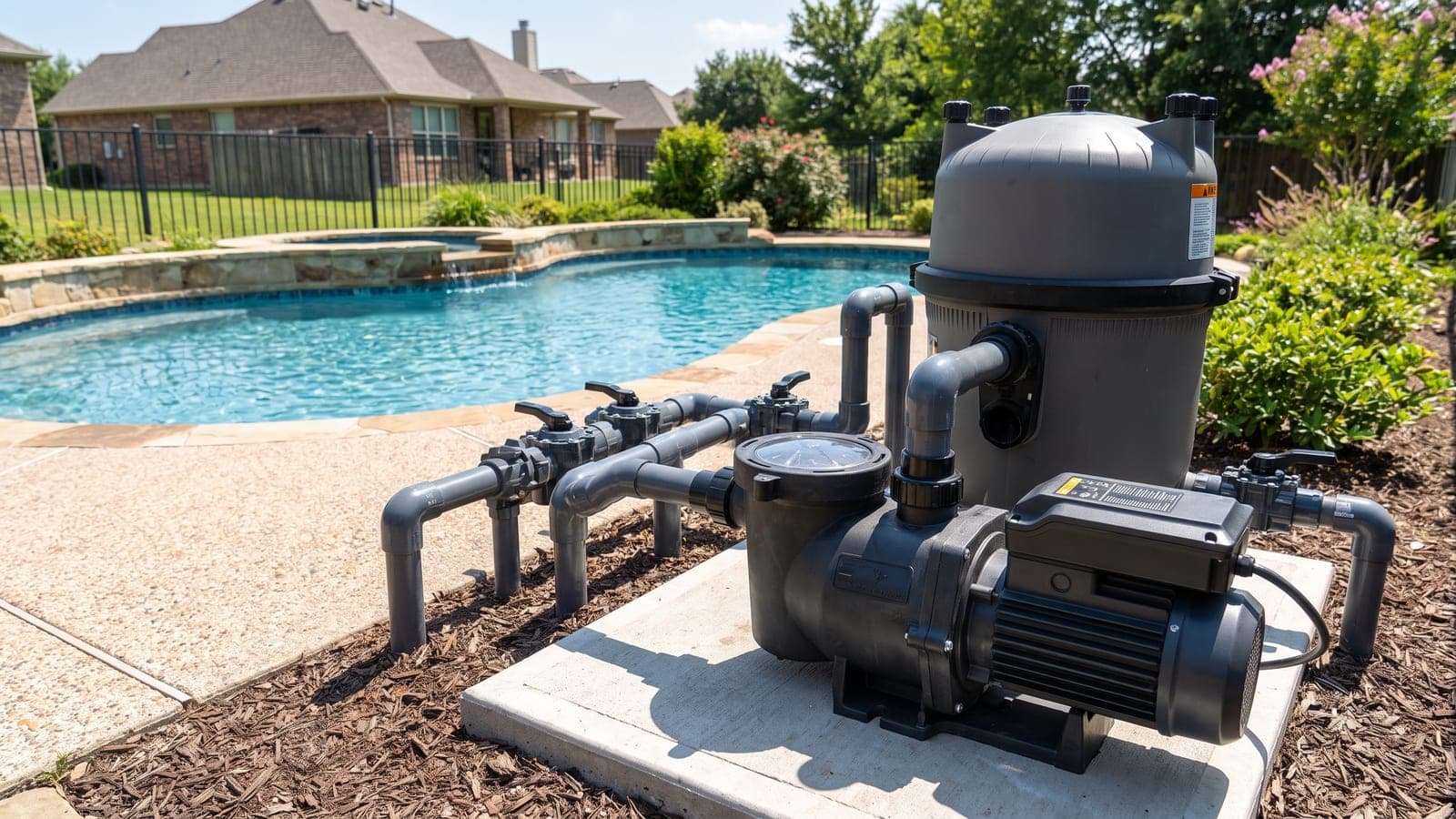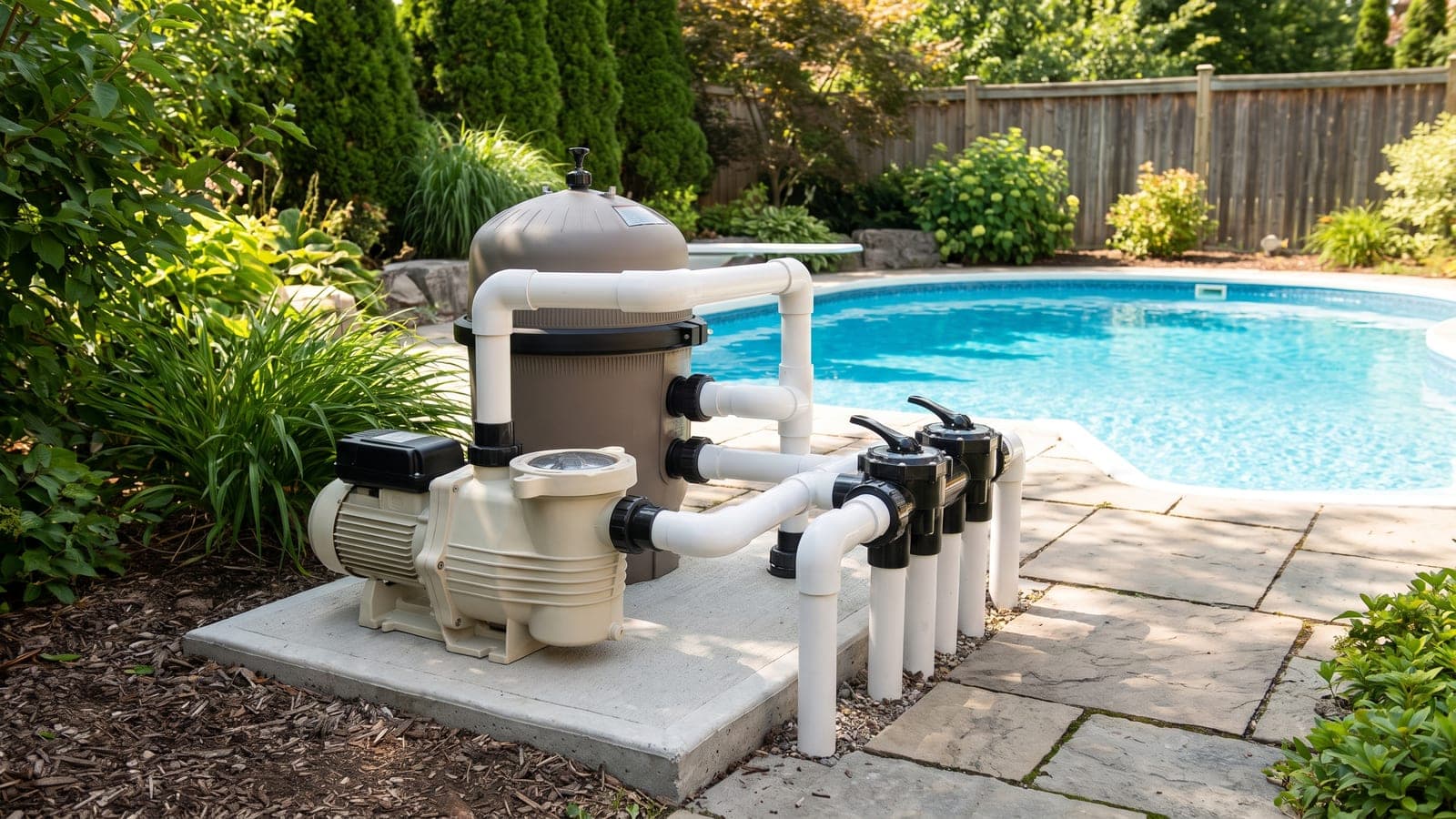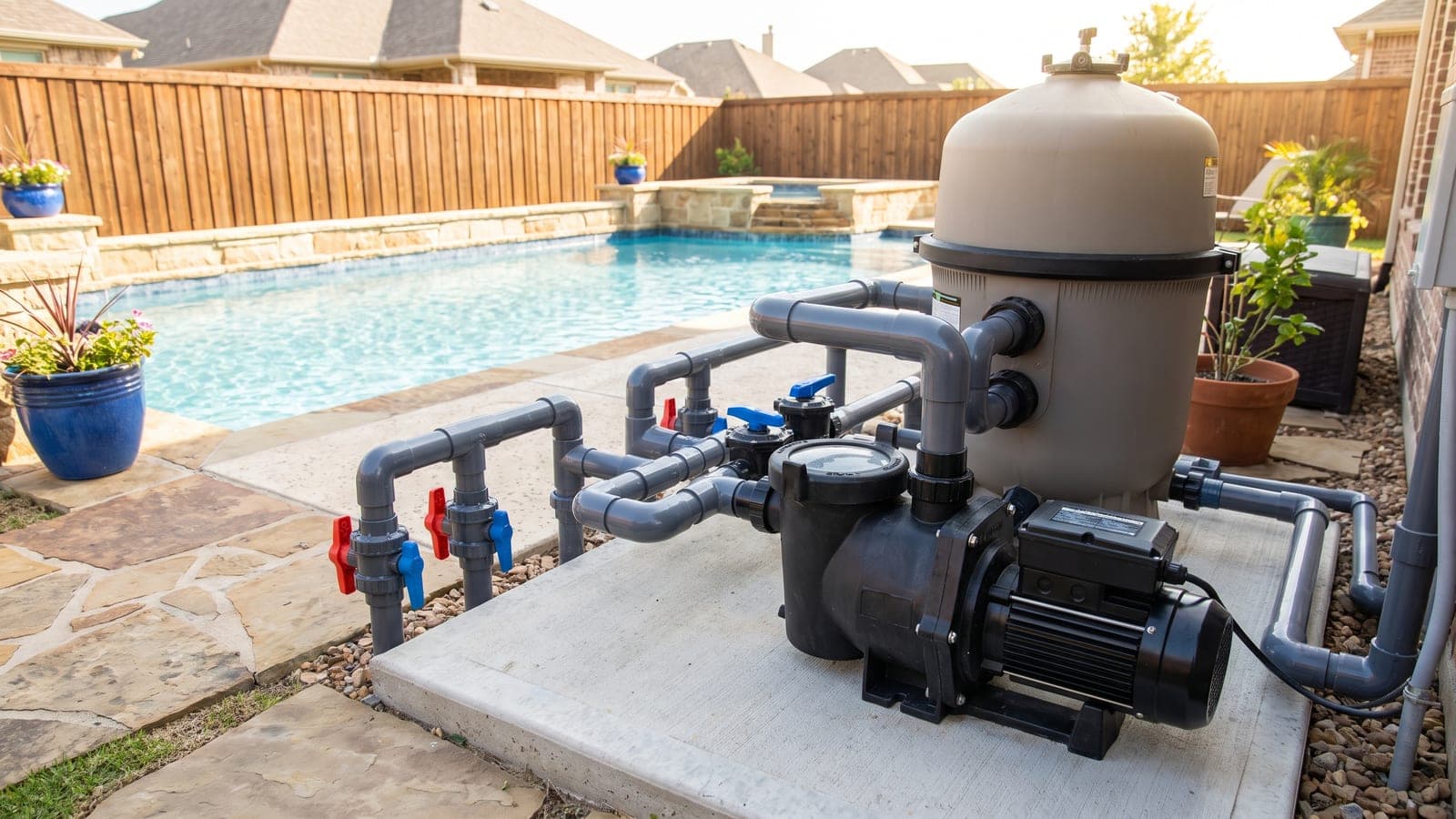
Most pool pumps last about 8 to 12 years, and a dying one usually tells you first: it gets loud, trips the breaker, leaks at the seal, or struggles to prime. The pump is the heart of your circulation system (it pulls water through the skimmer, pushes it through the filter, and sends it back clean), so a failing one shows up fast in cloudy water and weak returns.
Here is how to read the warning signs and decide whether to fix it or swap it.
How many years should a pool pump last?
Plan on roughly a decade. Single-speed pumps tend to land at the shorter end, while variable-speed models that spend most of their hours at low RPM often stretch longer because the motor runs cooler and slower.
Three things move that number. Run hours matter, sun and weather exposure matter (a pump baking in direct sun ages faster), and water chemistry matters because acidic or salty water is harder on seals and hardware. If you run a salt system, the guidance in our saltwater pool maintenance for beginners guide helps keep corrosion off your equipment pad.
What are the first signs a pool pump is dying?
Loud is the big one. A healthy pump makes a steady hum. When bearings start to fail you get a grinding, screeching, or growling noise that gets worse over weeks. Bearings can be replaced, but on an older motor that repair often is not worth it.
Watch for these other tells:
- It trips the breaker or GFCI. Occasional trips can be a bad capacitor or moisture; repeated trips point to a shorting motor.
- It leaks water. A drip from under the motor usually means a worn shaft seal. Left alone, that water gets into the bearings and takes out the motor next.
- It struggles to prime. If the basket takes forever to fill or the pump keeps losing prime, you may have air leaks on the suction side or a tired impeller.
- It runs hot or shuts off. A motor too hot to touch that keeps cycling off on its thermal overload is overheating, often from failing windings or blocked airflow.
- Weak returns and rising filter pressure. If the jets feel soft, confirm it is the pump and not just a dirty filter or clogged basket first.
Why is my pump humming but not spinning?
That hum without motion is a classic failed start capacitor, the small cylinder that gives the motor its kick to get moving. Sometimes a seized bearing is to blame instead.
Do not let it sit and buzz, because a stalled motor overheats quickly. Turn it off at the breaker. A capacitor is an inexpensive part and a common repair, but it involves stored electrical charge, so this is a job for a pro or a very experienced DIYer with the motor powered down.
Should I repair or replace it?
Use the age of the pump as your first filter. Under about 8 years with a good wet end (the housing, basket, and impeller), a targeted repair like a capacitor, shaft seal, or bearing usually pencils out. Past 10 years, or if the motor has already been rebuilt once, replacement tends to win.
Here is the part owners miss: a new variable-speed pump often pays for itself in a few seasons through lower energy use. Both the ENERGY STAR pool pump program and the U.S. Department of Energy note that variable-speed models can cut pumping energy dramatically compared with old single-speed units, because running longer at low RPM uses far less power than short bursts at full blast.
Which replacement pump should I look at?
Match the pump to your pool size and plumbing, then check the manual for the exact flow and horsepower your setup needs. For most residential in-ground pools, a variable-speed pump is the sensible default now.
The Pentair IntelliFlo3 VSF Pump and Hayward TriStar VS Pump are common full-size picks for larger pools or longer plumbing runs. For a mid-size backyard pool, the Pentair SuperFlo VS Variable-Speed Pump or Hayward MaxFlo VS Variable-Speed Pump are frequently recommended step-ups from an aging single-speed. Confirm the union and voltage match your pad before you buy, since swapping fittings adds cost.
While you have the pad open, it is worth checking your baskets, lids, and o-rings; our pool accessories page covers the small parts that keep a new pump sealed and quiet.
How do I make a pool pump last longer?
Keep it cool, keep it clean, and keep your water balanced. Give the motor airflow and shade if you can, empty the pump and skimmer baskets regularly so it is not straining against debris, and clean the filter when pressure climbs about 8 to 10 PSI over the clean reading.
Balanced water protects seals and hardware, so stay on top of pH and sanitizer. If chemistry is not your strong suit, pool chemistry basics without the lab coat walks through it plainly. The same care-for-your-equipment thinking applies to spas, which our hot tub maintenance for beginners guide covers.
When in doubt, get a diagnosis. A pool tech can test the capacitor and bearings in minutes and tell you whether you are looking at a cheap fix or a new pump.
Frequently asked questions
How many years should a pool pump last?
Most residential pool pumps last about 8 to 12 years. The exact number depends on run hours, water chemistry, and whether the motor is protected from sun and rain. A well-shaded variable-speed pump that runs at lower RPM often outlives an older single-speed unit.
Is a humming pump that will not start dangerous?
A pump that hums but does not spin is usually a failed start capacitor or a seized bearing, and leaving it powered can overheat the motor windings. Cut the power at the breaker rather than letting it sit and buzz. If a gentle nudge to the fan blade gets it going, the capacitor is the likely culprit and a pro can confirm.
Should I repair or replace an old pool pump?
If the pump is under about 8 years old and the wet end is fine, a motor, capacitor, or seal repair often makes sense. Past 10 years, or if the motor has been rebuilt before, replacement (ideally with a variable-speed model) usually wins on energy savings. It depends on your local labor rates and part availability.
Why is my pool pump so loud all of a sudden?
Sudden loud grinding or screeching almost always means the motor bearings are wearing out. A rattle can also come from debris in the impeller or a loose mount. Bearings are repairable, but on an aging motor many owners put that money toward a new pump instead.
Does running a pump longer wear it out faster?
Run hours do add up, but low-speed operation on a variable-speed pump is much easier on the motor than short bursts at full power. Undersized plumbing, a clogged filter, or a starved suction line stress a pump more than long gentle run times. Check your filter pressure and clean baskets to reduce strain.