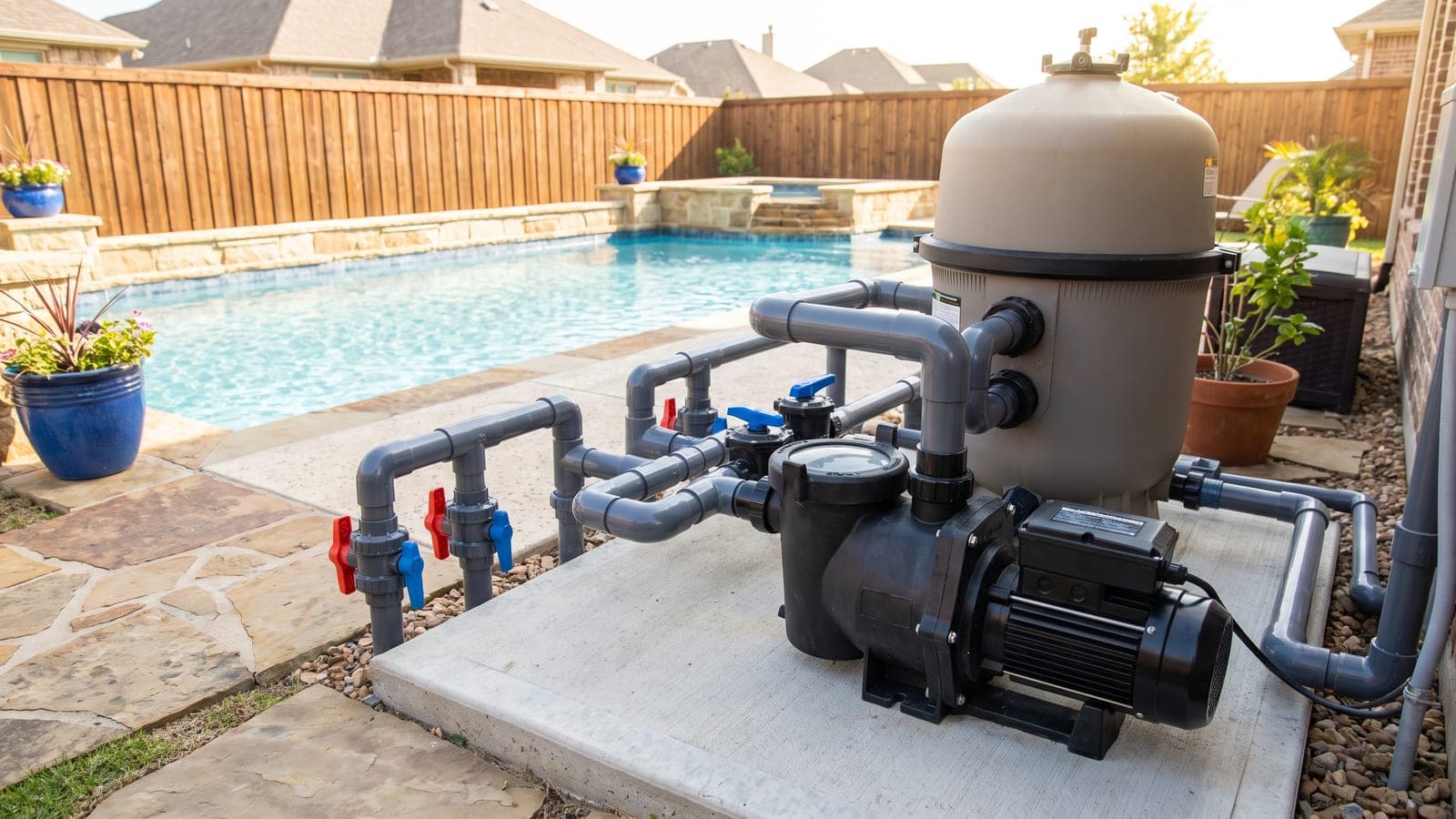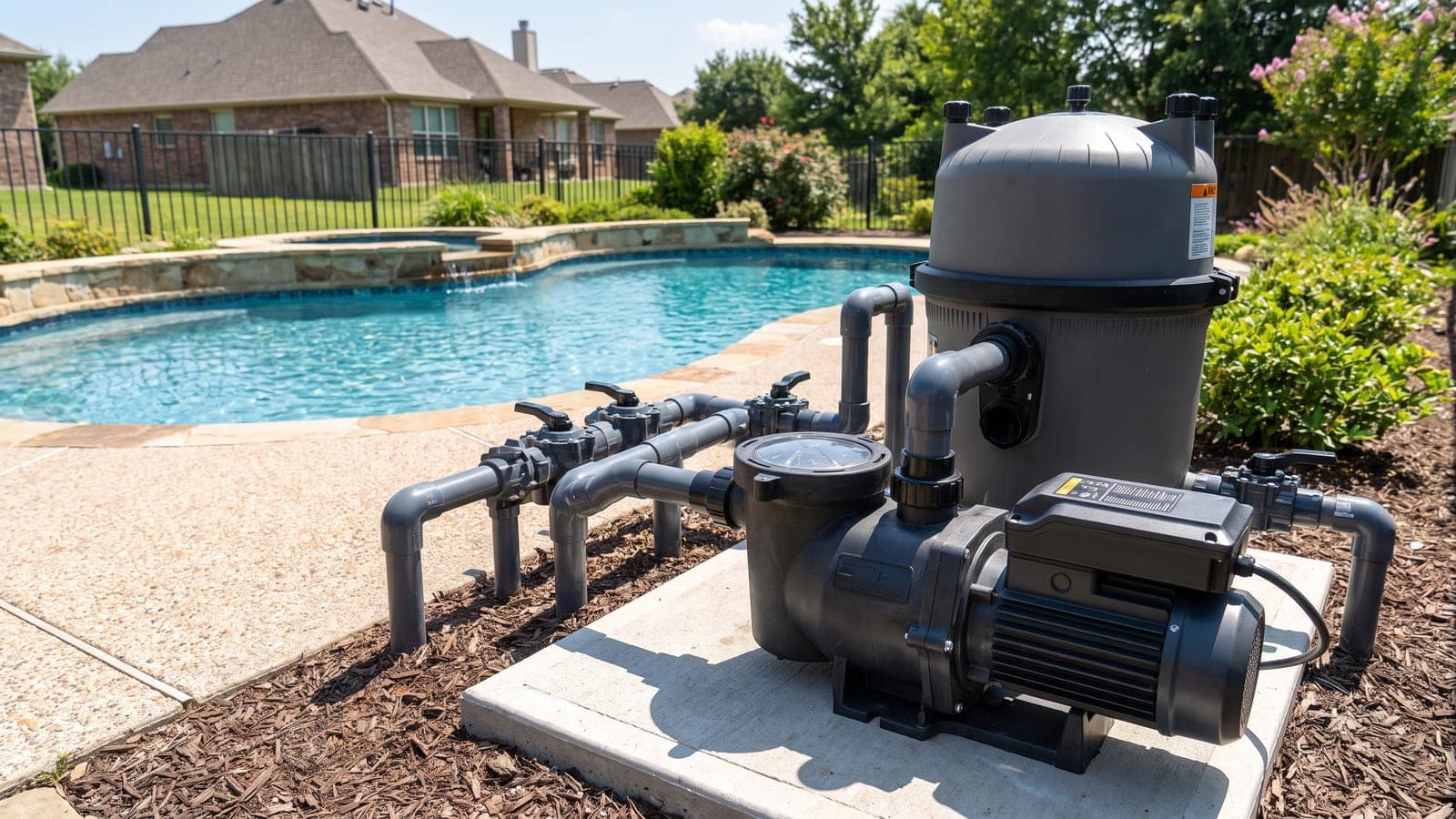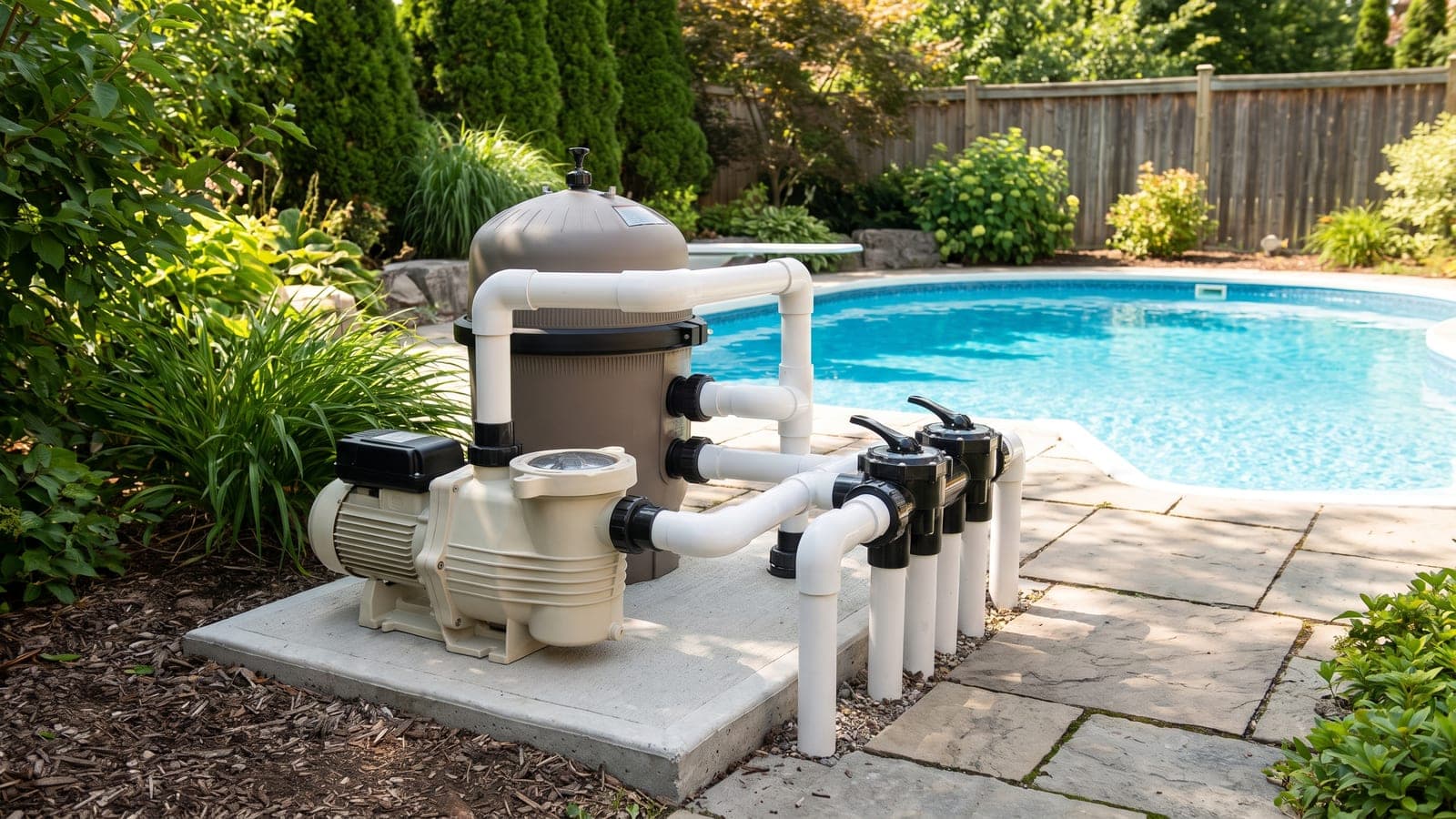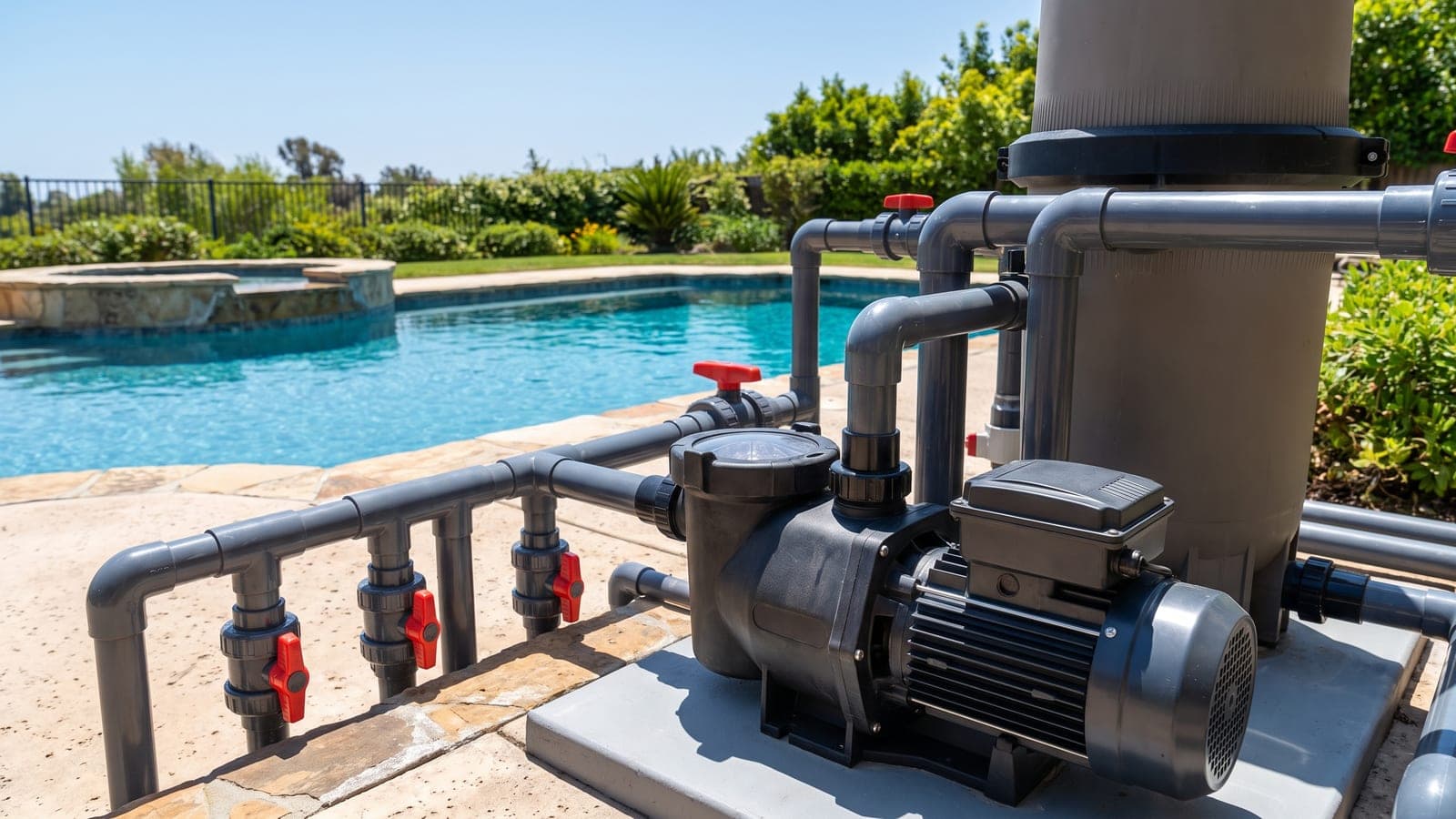
Run your variable-speed pool pump slow and long instead of fast and short, and the energy savings mostly take care of themselves. A variable-speed pump (a pump whose motor can spin at many speeds instead of just one) sips electricity at low RPM and gulps it at high RPM, so the money is made in the settings, not just in the purchase. Set it to move your water gently over many hours and you will spend a fraction of what a single-speed pump costs to run.
Use the calculator above to size this to your pool. Getting the runtime right starts with knowing your pool volume in gallons, and the sizing tool gives you a starting point before you touch the pump's control pad.
Why does a lower speed save so much money?
The physics are lopsided in your favor. A pump's energy use rises roughly with the cube of its speed, so cutting the speed in half does not halve the power draw, it cuts it by close to eight times. That is why moving the same water more slowly over a longer stretch of time costs far less than blasting it through quickly.
Both ENERGY STAR and the Department of Energy point to low-speed operation as the main reason variable-speed pumps earn back their higher sticker price. The pump only has to turn your water over about once a day to keep it clean. It does not care whether that turnover happens fast or slow, but your electric meter cares a lot.
What RPM should I actually set?
There is no single magic number, because it depends on your pool's volume, pipe size, and filter. That said, most owners settle into a pattern like this.
- Low speed for daily filtering: often 1,200 to 1,800 RPM. This is the quiet, cheap workhorse setting that runs most of the day.
- Medium speed for a salt cell or heater: enough flow to satisfy the equipment's minimum, usually 2,000 to 2,600 RPM.
- High speed for vacuuming, backwashing, or spa jets: 2,800 RPM up to full speed, used in short bursts.
Start your daily speed low and nudge it up only if the water looks cloudy or the skimmer stops pulling debris. A pump like the Hayward TriStar VS Pump or the Pentair IntelliFlo3 VSF Pump lets you save several named speed presets, so you set these once and forget them.
How many hours a day should it run?
Aim for one full turnover of your water per day. At a low speed that often means running 8 to 12 hours, sometimes longer in hot weather or a heavily used pool.
Here is the counterintuitive part. A longer run at low RPM almost always costs less than a shorter run at high RPM, even though the pump is on for more hours. Split the schedule if you like, for example a long low-speed block during off-peak electricity hours plus a short high-speed burst for cleaning. Most variable-speed pumps, including the Pentair SuperFlo VS Variable-Speed Pump, have an onboard scheduler that runs these blocks automatically.
Do I need a timer or extra automation?
Usually not for a single pump. The scheduler built into most variable-speed models handles speeds and times on its own. You only need a separate timer or automation panel if you want the pump to coordinate with a heater, an automatic cleaner, or pool lights.
If you do add a suction-side cleaner or a few gauges to dial things in, a flow meter and a plug-in kilowatt meter are cheap and clarifying. You can find those kinds of extras on our pool accessories page.
How do I find the lowest speed that still keeps the pool clean?
Test your way down. Set a daily speed, run it for a few days, and watch the water and the skimmer.
If the water stays clear, the skimmer keeps pulling floating debris, and your chlorine holds, you can try dropping another 100 to 200 RPM. When the water starts looking hazy or the skimmer weir stops swinging, you have gone one step too low, so bump it back up. Balanced water makes this easier, so keep your chemistry in range using our pool chemistry basics guide before you blame the pump.
One caveat for salt pools: a salt chlorinator has a minimum flow rate, and below it the cell may stop making chlorine or throw a low-flow error. Set your low speed just above that threshold, and lean on our saltwater pool maintenance guide if the cell keeps complaining.
What about smaller pumps and spas?
The same slow-and-long logic applies, just at smaller numbers. A compact unit like the Black+Decker Variable-Speed Pool Pump still saves the most at its lowest usable speed, so resist the urge to run everything at full tilt.
Spas and hot tubs run on their own rhythm because they heat a small volume and get used in short sessions. If you are juggling a spa alongside the pool, our hot tub maintenance guide covers the chemistry side without the panic.
When should I call a pro?
Call an installer if your pump keeps tripping the breaker, throws flow errors you cannot clear, or the plumbing looks undersized for the flow you need. Pipe that is too narrow forces the pump to work harder and eats into your savings, and fixing it is a job for someone who can cut and reglue PVC safely.
For everyday settings, though, you are in charge. Set a low daily speed, run it long enough to turn the water over once, reserve high speed for short cleaning bursts, and let the pump's scheduler do the rest. That is the whole recipe, and it is where a variable-speed pump quietly pays for itself.
Frequently asked questions
What RPM should I run my variable-speed pump at?
For everyday filtering, most owners land somewhere between 1,200 and 1,800 RPM, which turns the water over slowly and quietly. The exact number depends on your pool volume, plumbing size, and filter, so start low and raise it only until the water stays clear. Bump up to full speed only for vacuuming, heating, or running a chlorinator that needs flow.
How many hours a day should a variable-speed pump run?
Plan on roughly one full turnover of your water per day, which often works out to 8 to 12 hours at a low speed. Longer runtime at low RPM almost always costs less than shorter runtime at high RPM because energy use climbs steeply with speed. Warmer water, heavy swimmer loads, or a salt system may push you toward the higher end.
Does running the pump slower really save money?
Yes, and it is the whole point of a variable-speed pump. A pump uses dramatically less electricity at half speed than at full speed, so slow-and-long beats fast-and-short for the same water turnover. The Department of Energy and ENERGY STAR both point to lower speeds as the main source of the savings.
Will a low speed keep my pool clean and chlorinated?
Usually, as long as the water fully turns over each day and your chemistry is balanced. Skimming and filtering work fine at low flow, though a salt cell or automatic chlorinator may list a minimum flow rate you have to meet. Check your chlorinator manual, then set your low speed just above that threshold.
Can I put a variable-speed pump on a timer instead of buying automation?
Most variable-speed pumps have a built-in scheduler, so you program speeds and times right on the pump without extra hardware. A separate timer or automation panel helps if you want the pump to coordinate with a heater, cleaner, or lights. For a simple single-pump setup, the onboard schedule is usually all you need.